You're viewing 2 free preview questions for Biology HL — subscribe to unlock 46 more, plus the Full Question Bank, Mock Papers & Worksheets.Upgrade
Climate Change · Paper 2 — Free Biology HL Practice Questions
1MasterySAQ-SCauses and effects of climate change5 marksPaper 2~8 min

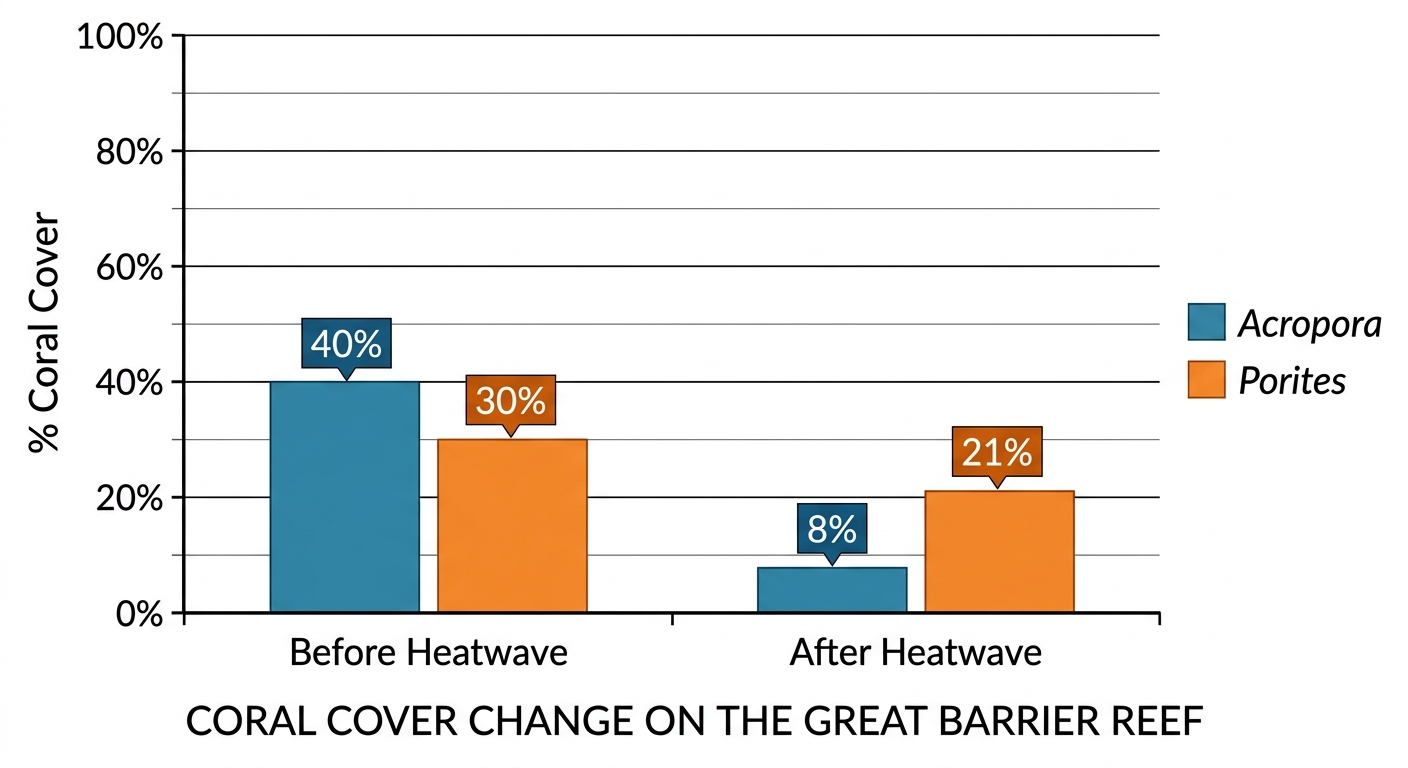
Coral reefs are highly sensitive to ocean warming. In 2016, a marine heatwave caused mass coral bleaching on the Great Barrier Reef. Scientists monitored two coral species: the branching coral Acropora and the massive coral Porites. Before the heatwave, Acropora covered of the reef area and Porites covered . After the heatwave, Acropora cover fell to and Porites cover fell to .
(a)
State the name of the photosynthetic symbiont expelled from coral tissues during bleaching. [1 mark]
(b)
Calculate the percentage decline in coral cover for each species. [2 marks]
(c)
Explain, using named biological processes, why the loss of the symbiont causes coral death if bleaching is prolonged. [2 marks]

Solutions
2ChallengeSAQ-LMitigation strategies and global agreements11 marksPaper 2~17 min
Data
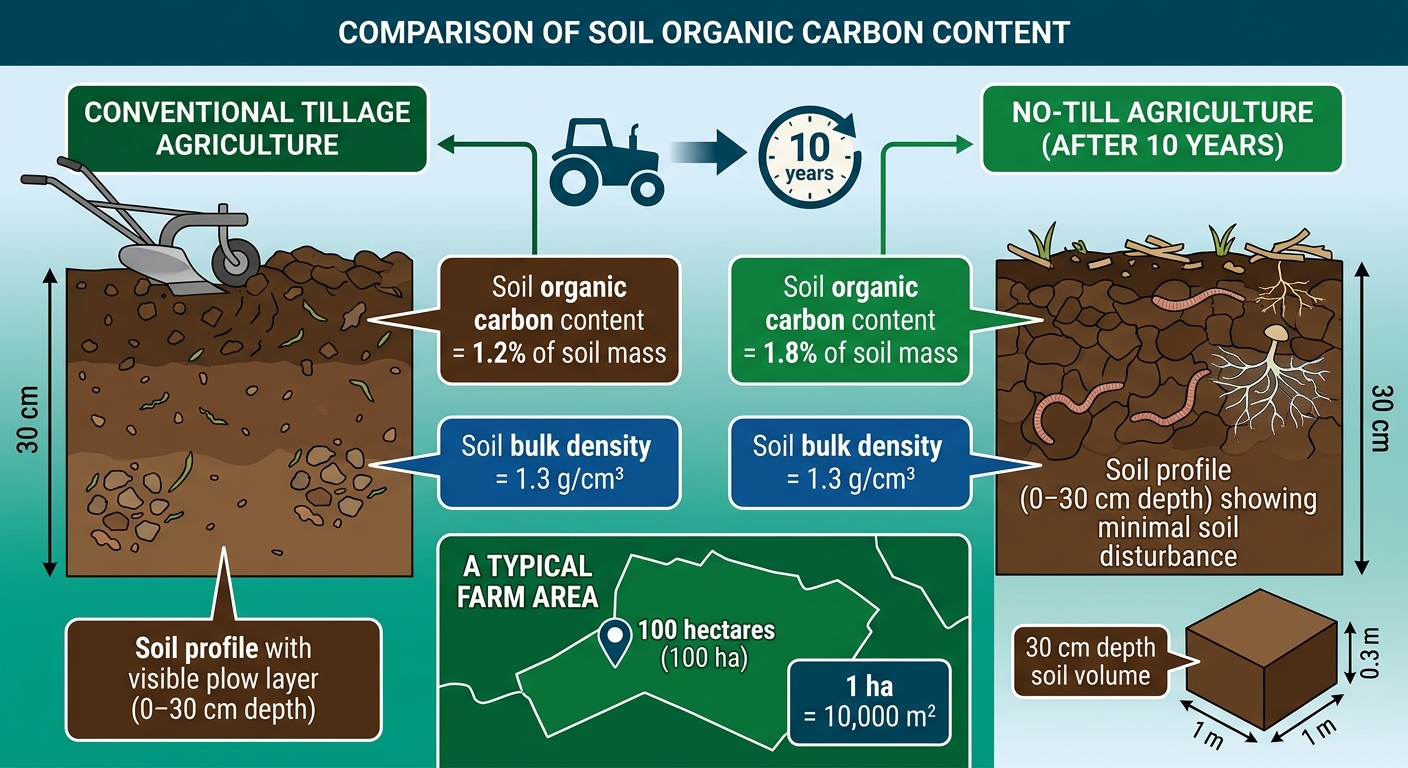
- Conventional tillage: soil organic carbon of soil mass (– depth)
- No-till agriculture after 10 years: soil organic carbon of soil mass
- Soil bulk density
- Farm area ;
- Soil depth considered
International climate agreements such as the Paris Agreement rely on Nationally Determined Contributions (NDCs), which are each country's self-defined targets for reducing greenhouse gas emissions. A key biological mitigation strategy promoted in many NDCs is the adoption of agricultural practices that increase soil carbon sequestration, including no-till farming, cover cropping, and agroforestry.
(a)
Calculate the additional mass of carbon, in tonnes, sequestered in the soil after converting a -hectare farm from conventional tillage to no-till agriculture over 10 years. [3 marks]
(b)
Explain one biological mechanism by which no-till agriculture reduces the rate of decomposition of soil organic matter compared to conventional tillage. [2 marks]
(c)
Explain one biological mechanism by which no-till agriculture increases the input of organic matter into the soil compared to conventional tillage. [2 marks]
(d)
Evaluate the extent to which agricultural soil carbon sequestration can realistically contribute to meeting NDC targets under the Paris Agreement. In your answer, refer to at least one scientific limitation, one economic factor, and one political factor. [4 marks]
Solutions
That's every free question here — 2 of 48.
+46 more questions, plus Mock Papers & Worksheets, are waiting in Premium.