You're viewing 2 free preview questions for Biology HL — subscribe to unlock 46 more, plus the Full Question Bank, Mock Papers & Worksheets.Upgrade
Homeostasis · Paper 2 — Free Biology HL Practice Questions
1MasterySAQ-SRegulation of blood glucose levels5 marksPaper 2~8 min

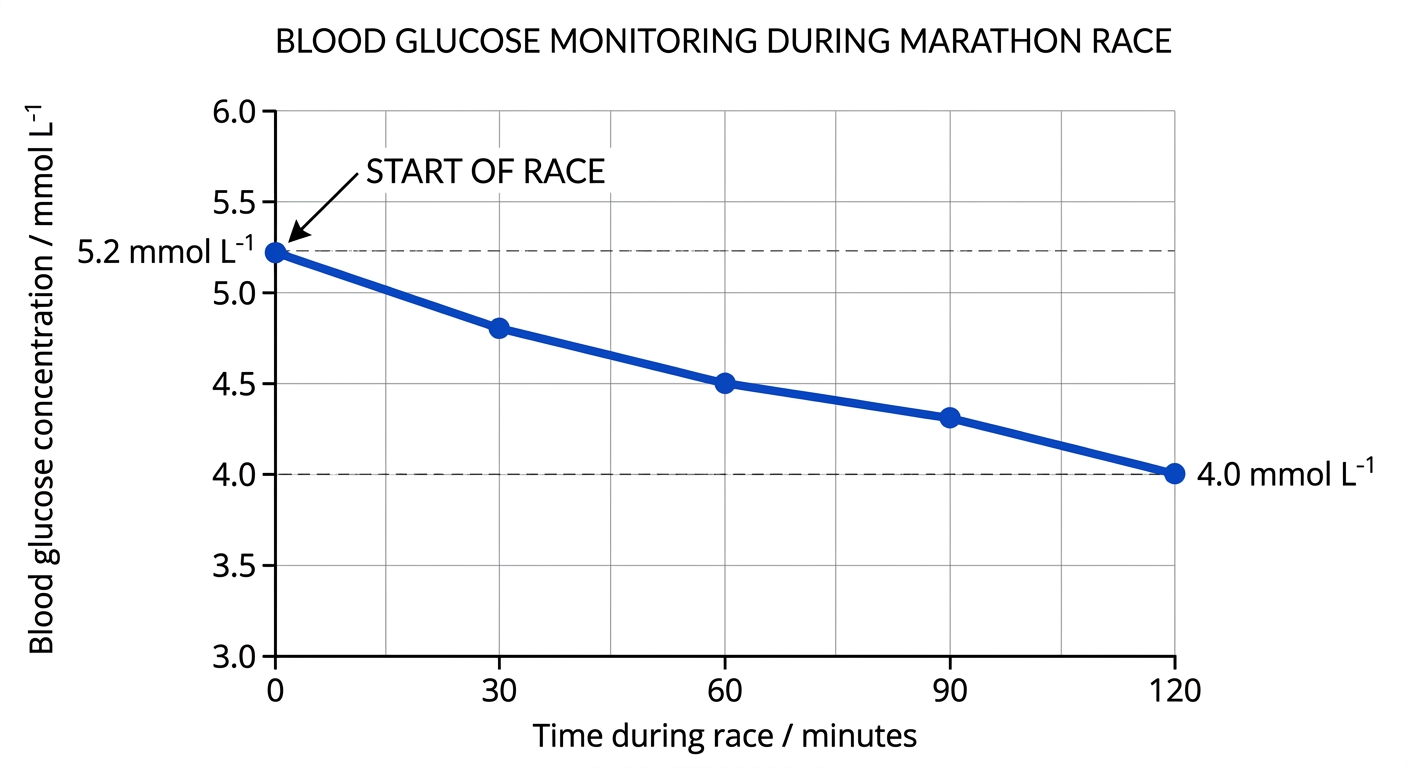
A marathon runner consumes a high-carbohydrate meal 2 hours before a race. During the race, her blood glucose concentration is monitored.
Time (min) — Blood glucose
0 — 5.2
30 — 4.8
60 — 4.5
90 — 4.3
120 — 4.0
(a)
State the hormone primarily responsible for raising blood glucose concentration during prolonged exercise. [1 mark]
(b)
Calculate the percentage decrease in blood glucose concentration from to . Show your working. [2 marks]
(c)
Using the data and your knowledge of homeostasis, evaluate whether the negative feedback mechanism controlling blood glucose is fully effective during this race. [2 marks]

Solutions
2MasterySAQ-SRegulation of blood glucose levels5 marksPaper 2~8 min
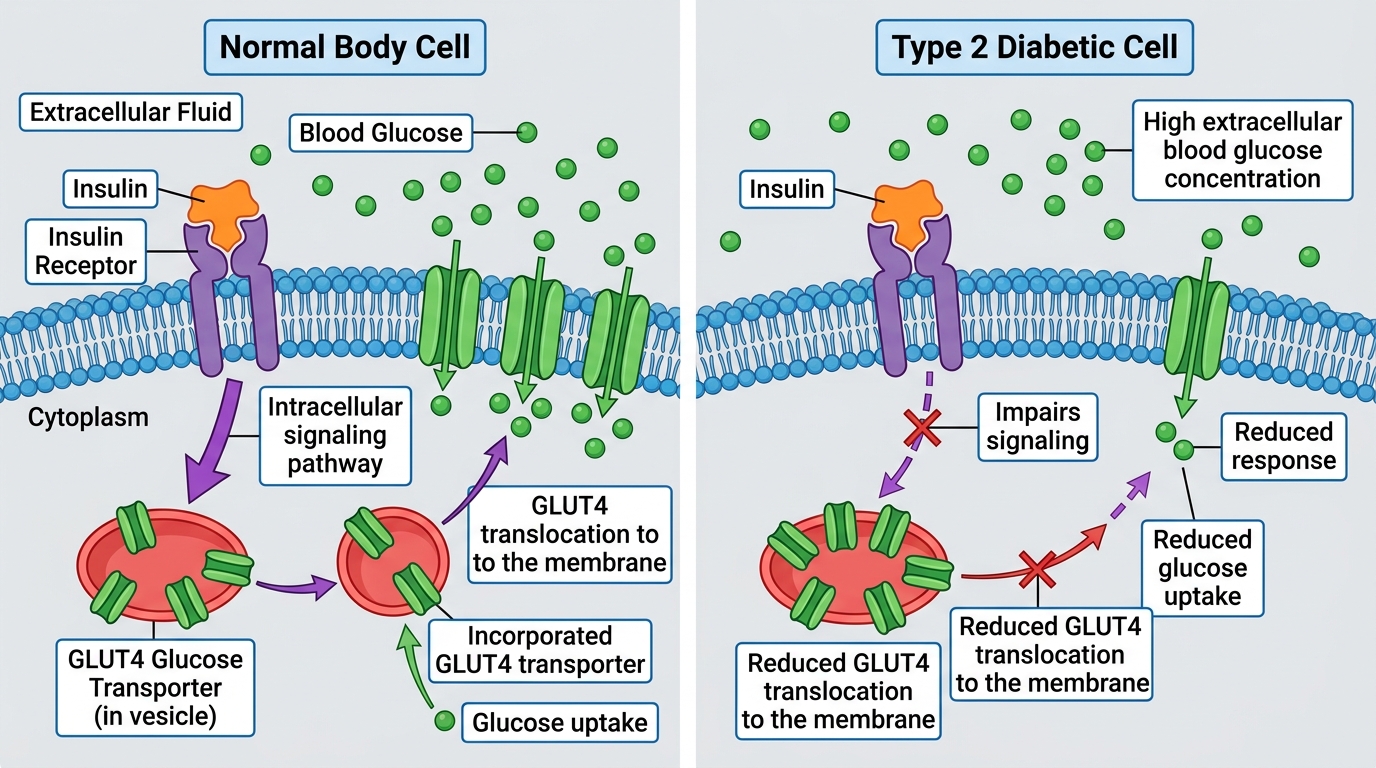
A patient with Type 2 diabetes mellitus has a fasting blood glucose concentration of (normal range: ). The patient's pancreatic beta cells still produce insulin, but body cells show reduced responsiveness to the hormone. A doctor prescribes Metformin, a drug that increases the sensitivity of liver and muscle cells to insulin.
(a)
Describe the mechanism by which insulin normally causes cells to absorb glucose from the blood. [2 marks]
(b)
Explain why the patient's blood glucose concentration remains elevated despite normal or raised insulin levels. [2 marks]
(c)
Deduce how Metformin could restore normal blood glucose concentration in this patient. [1 mark]
Solutions
That's every free question here — 2 of 48.
+46 more questions, plus Mock Papers & Worksheets, are waiting in Premium.