You're viewing 2 free preview questions for Biology HL — subscribe to unlock 46 more, plus the Full Question Bank, Mock Papers & Worksheets.Upgrade
Natural Selection · Paper 2 — Free Biology HL Practice Questions
1MasterySAQ-SMechanisms of natural selection6 marksPaper 2~9 min

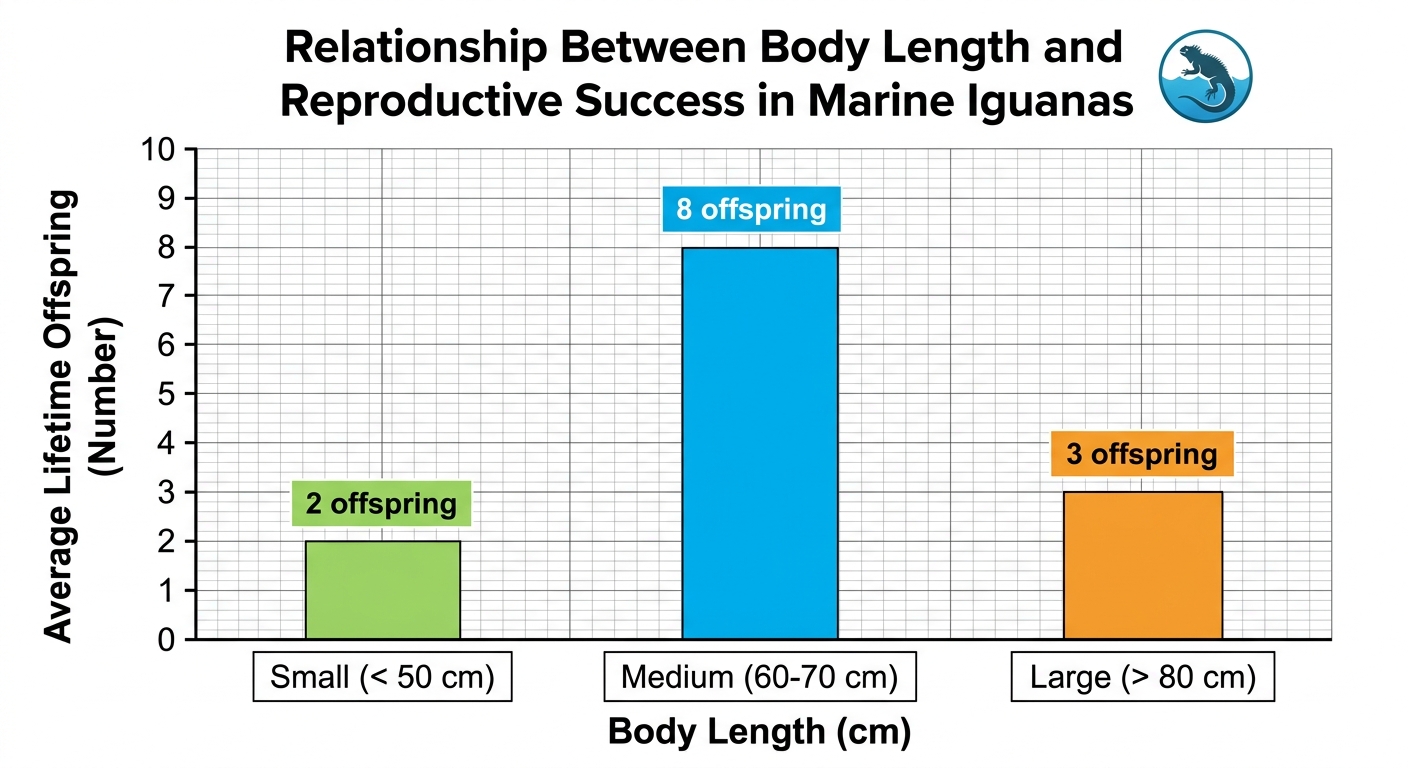
In a population of marine iguanas (Amblyrhynchus cristatus) on the Galápagos island of San Cristóbal, researchers measured the body length of 500 adult iguanas. Iguanas with a medium body length (–) were best able to dive and feed on algae in the intertidal zone. Very small iguanas (under ) were easily swept away by strong currents, while very large iguanas (over ) had difficulty manoeuvring in rocky crevices where algae grow.
Over a 10-year period, researchers recorded lifetime reproductive output:
Size class — Body length — Mean offspring per lifetime
Small — —
Medium — – —
Large — —
(a)
State the type of natural selection acting on body length in this population. [1 mark]
(b)
Explain why medium-sized iguanas have greater reproductive fitness than both small and large iguanas in this environment. [2 marks]
(c)
Explain the long-term effect of this selection pressure on the distribution of body lengths in the population. [3 marks]

Solutions
2MasterySAQ-SMechanisms of natural selection5 marksPaper 2~8 min
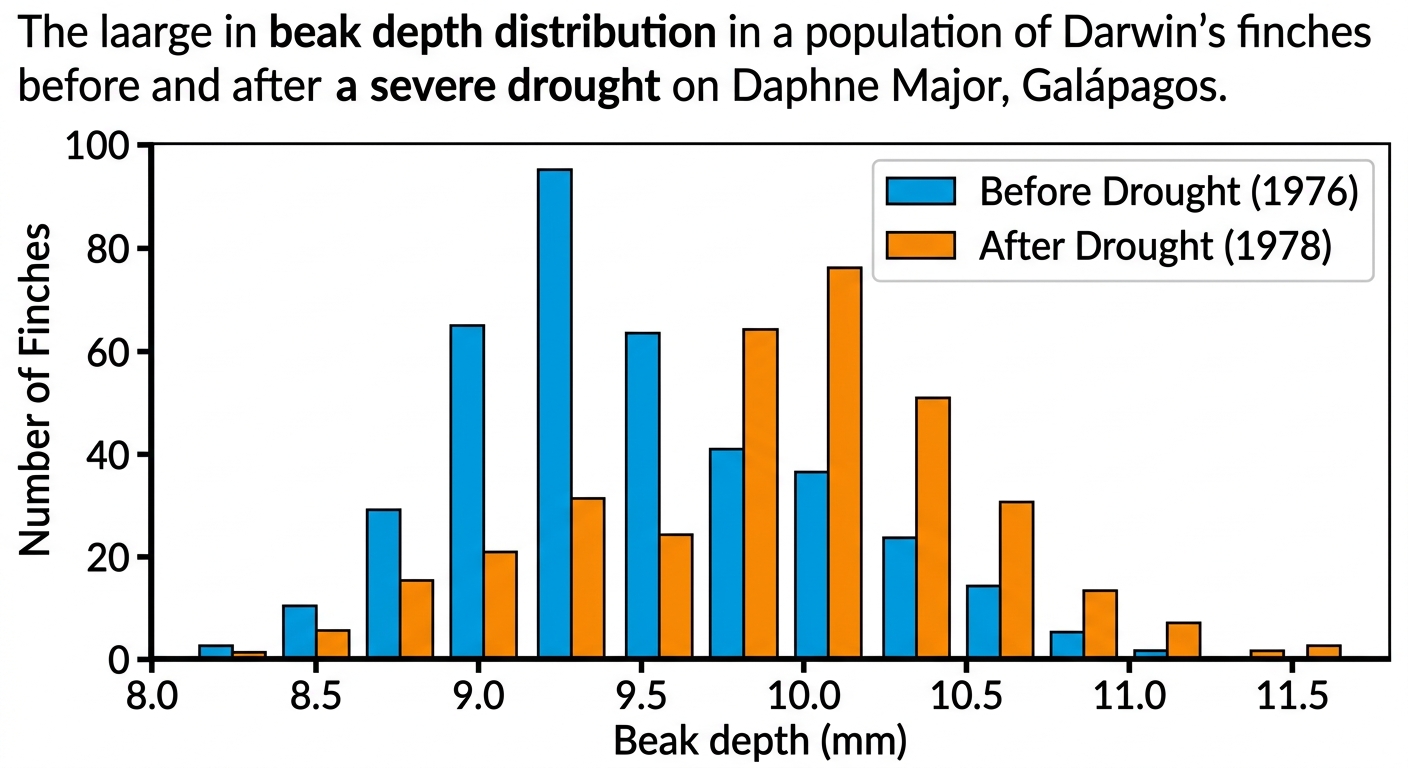
A population of Darwin's finches (Geospiza fortis) on the island of Daphne Major in the Galápagos experiences a severe drought in 1977. The drought reduces the availability of small, soft seeds, forcing finches to eat large, hard seeds that require a deep beak to crack open. Researchers measured beak depth (a heritable trait) before and after the drought.
Before drought (1976) — —
After drought (1978) — —
(a)
State the type of natural selection that occurred during the drought. [1 mark]
(b)
Calculate the change in mean beak depth between 1976 and 1978. [1 mark]
(c)
Calculate the change in standard deviation of beak depth between 1976 and 1978. [1 mark]
(d)
Explain, using the mechanism of natural selection, why the standard deviation of beak depth decreased after the drought, and evaluate what this change in variation suggests about the future adaptive potential of the population. [2 marks]
Solutions
That's every free question here — 2 of 48.
+46 more questions, plus Mock Papers & Worksheets, are waiting in Premium.