Reproduction · Paper 2 — Free Biology HL Practice Questions
Free questions
Open in full, with answers, mark scheme and examiner insights.
Asexual vs sexual reproduction
The domestic dog has a diploid chromosome number of 78.
State the number of chromosomes in a dog sperm cell.
Explain why gametes are produced by meiosis rather than by mitosis in a sexual life cycle.
A breeder mates the same two dogs and obtains a litter of six puppies. Explain how meiosis and fertilisation cause the puppies to differ genetically from each other.
Suggest one advantage to a population of dogs of the variation described in (c).
revisionprep.com
Summary Answer
Not available for this question.
Model Answer
Not available for this question.
Marking Scheme
Not available for this question.
Examiner Insights
Not available for this question.
Sexual cycles in animals and plants
The female reproductive system includes the ovaries, oviducts, uterus, cervix and vagina.
Draw a labelled diagram of the human female reproductive system.
Outline the route taken by sperm from the vagina to the usual site of fertilisation.
An egg survives for about one day after ovulation, while sperm can survive for several days inside the female reproductive system. Explain why fertilisation is most likely if intercourse occurs in the few days before ovulation.
revisionprep.com
Summary Answer
Not available for this question.
Model Answer
Not available for this question.
Marking Scheme
Not available for this question.
Examiner Insights
Not available for this question.
Asexual vs sexual reproduction
Water hyacinth is a floating plant that spreads across lakes by stolons, horizontal stems that grow daughter plants, which then separate. It also flowers and produces seeds that sink into the lake sediment. In one lake (hypothetical data), the area covered by water hyacinth doubled every 12 days during the warm season.
State the type of reproduction by which stolons produce daughter plants.
The plants covered 2.0 m² on day 0. Calculate the area covered on day 60, assuming the doubling time stayed the same.
Explain why reproduction by stolons allows water hyacinth to cover a lake rapidly.
Explain one advantage to water hyacinth of also producing seeds.
Suggest why removing the plants from the lake surface rarely eliminates water hyacinth from a lake.
revisionprep.com
Summary Answer
Not available for this question.
Model Answer
Not available for this question.
Marking Scheme
Not available for this question.
Examiner Insights
Not available for this question.
Sexual cycles in animals and plants
A pea pod develops from the ovary of a pea flower. One pod contained 9 ovules, of which 7 developed into peas.
State what each pea developed from.
State what the pod developed from.
Suggest two reasons why two of the ovules did not develop into peas.
State the minimum number of pollen grains needed for 7 peas to form.
Outline what happens to the zygote inside each ovule after fertilisation.
revisionprep.com
Summary Answer
Not available for this question.
Model Answer
Not available for this question.
Marking Scheme
Not available for this question.
Examiner Insights
Not available for this question.
Reproductive strategies
This question is about pollination strategies.
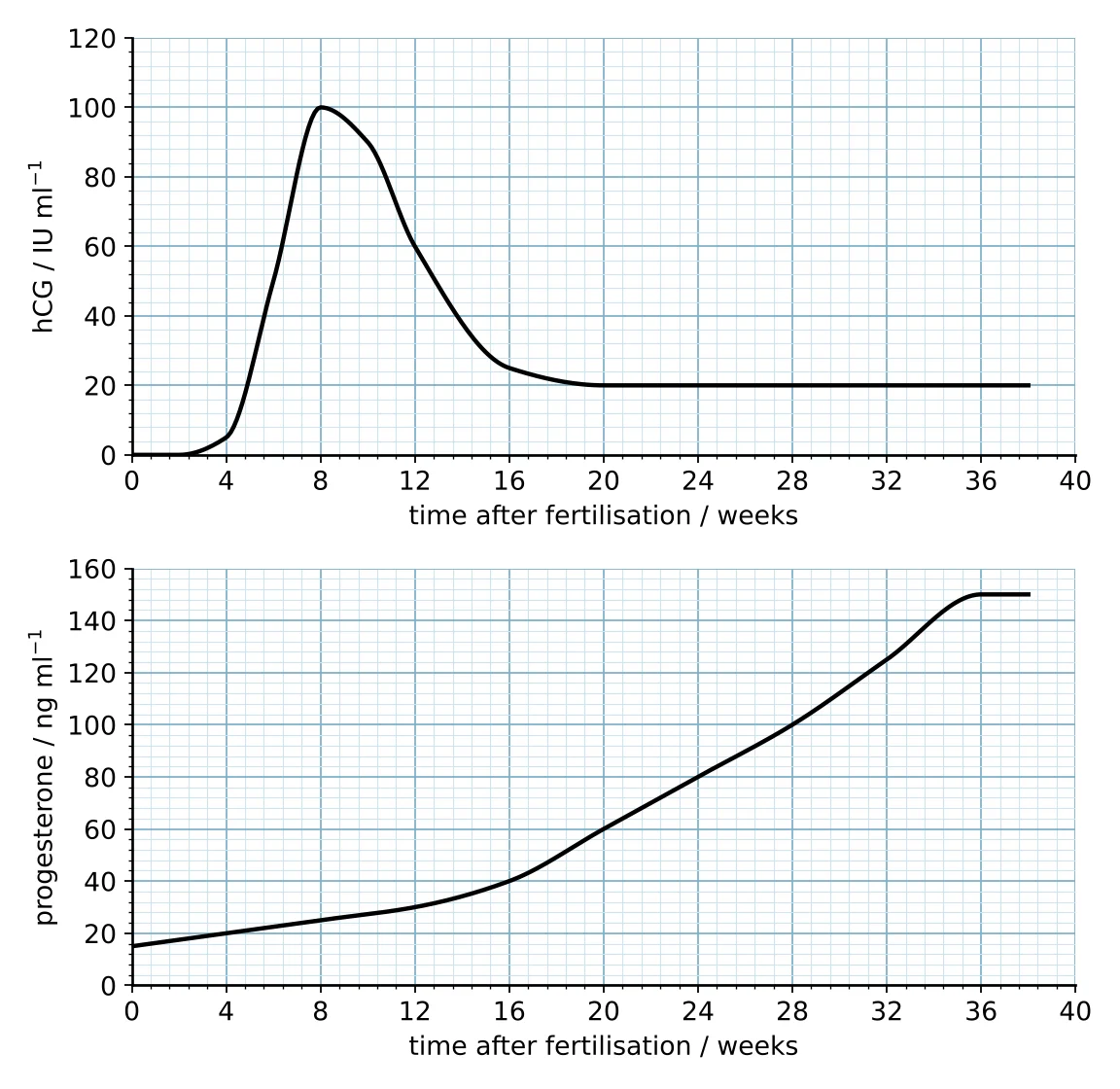
Outline the effects of repeated self-pollination over many generations in a plant species that is normally cross-pollinated.
Compare wind pollination and insect pollination as ways of achieving cross-pollination.
Evaluate self-pollination and cross-pollination as reproductive strategies for a plant species that has just colonised a remote island from a single seed.
revisionprep.com
Summary Answer
Not available for this question.
Model Answer
Not available for this question.
Marking Scheme
Not available for this question.
Examiner Insights
Not available for this question.
Sexual cycles in animals and plants
The graphs show the blood concentrations of oestradiol, LH and progesterone in a woman during one menstrual cycle.
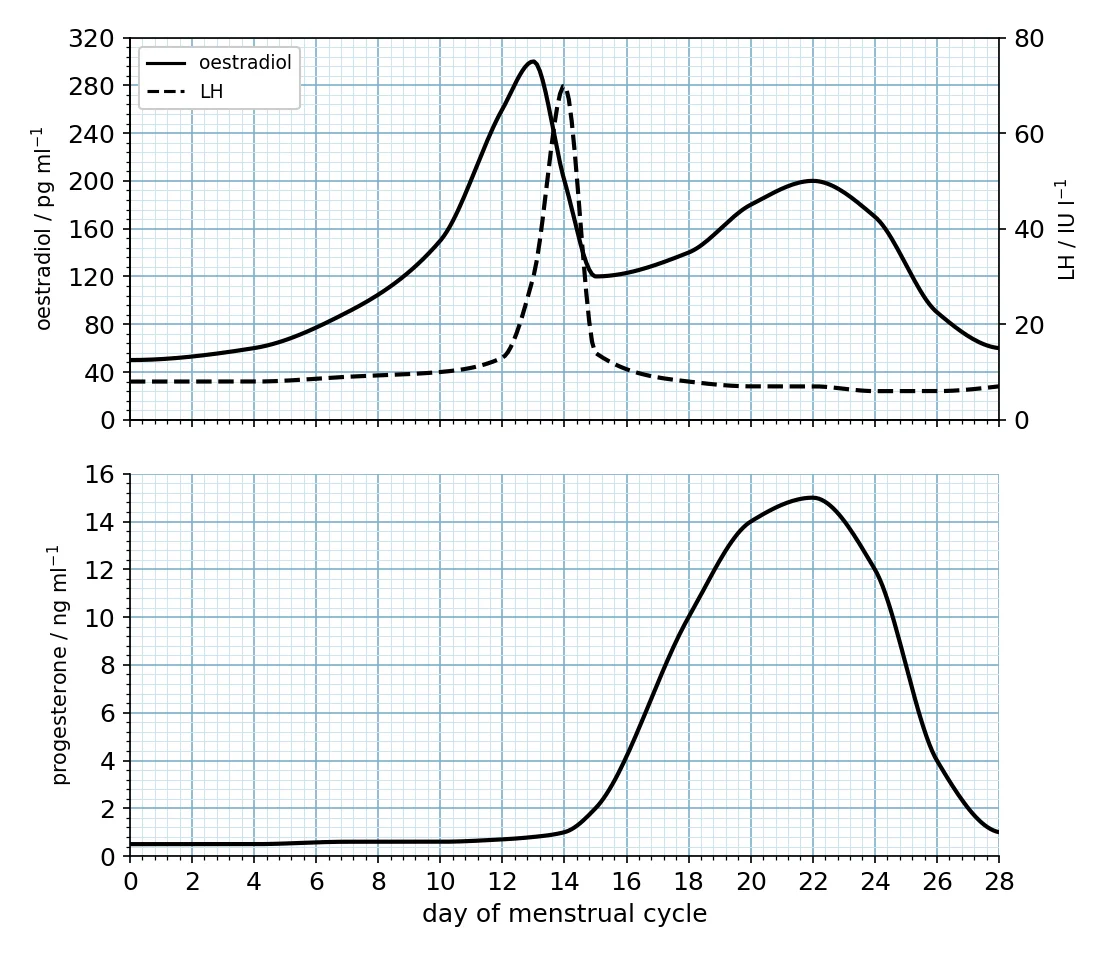
Identify the day on which ovulation most likely occurred, giving a reason from the graph.
Explain the change in LH concentration between day 10 and day 14.
Describe the change in progesterone concentration between day 14 and day 22, and state where this progesterone comes from.
Explain why no further LH surge occurs while progesterone concentration is high.
Calculate the percentage increase in oestradiol concentration between day 4 and day 13.
Explain how the hormones secreted after ovulation prepare the uterus for a possible pregnancy.
Predict, with a reason from the graphs, what happens to the endometrium in the last days of this cycle.
revisionprep.com
Summary Answer
Not available for this question.
Model Answer
Not available for this question.
Marking Scheme
Not available for this question.
Examiner Insights
Not available for this question.
That's every free question here — 6 of 76.
+70 more questions, plus Mock Papers & Worksheets, are waiting in Premium.