You're viewing 2 free preview questions for Biology HL — subscribe to unlock 46 more, plus the Full Question Bank, Mock Papers & Worksheets.Upgrade
Sustainability and Change · Paper 2 — Free Biology HL Practice Questions
1ChallengeSAQ-LRenewable resources and ecological conservation7 marksPaper 2~11 min

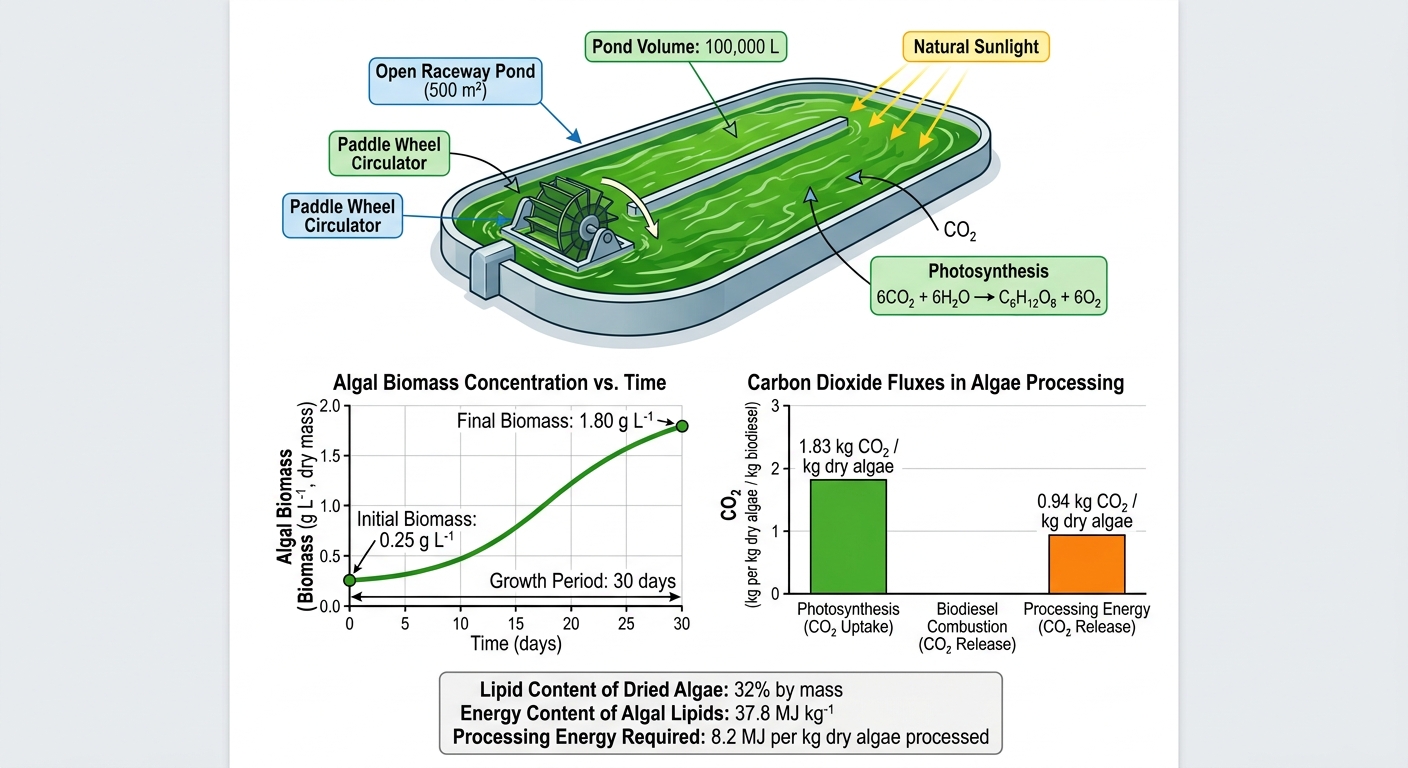
A research team investigated the use of microalgae (Chlorella vulgaris) as a renewable biofuel feedstock. The algae were grown in open raceway ponds ( each) under natural sunlight over a 30-day growth period.
Data collected:
- Initial algal biomass: (dry mass)
- Final algal biomass: (dry mass)
- Pond volume:
- Lipid content of dried algae: by mass
- Energy content of algal lipids:
- Energy required for harvesting and lipid extraction: per kg of dry algae processed
- absorbed during growth: per kg dry algae
- emitted during biodiesel combustion: per kg biodiesel
- emitted from processing energy: per kg dry algae
Useful relationships:
(a)
Calculate the net energy yield (in MJ) from the algae grown in one pond over 30 days. [3 marks]
(b)
Explain how using algal biodiesel contributes to renewable energy sustainability, with reference to the carbon cycle. [2 marks]
(c)
Using the data provided, calculate the net balance (in kg) for one pond over 30 days and determine whether this system is carbon-neutral. [2 marks]

Solutions
2ChallengeSAQ-LRenewable resources and ecological conservation7 marksPaper 2~11 min
Data
Maximum sustainable yield (MSY) is the largest catch that can be taken from a population without reducing its size over time.
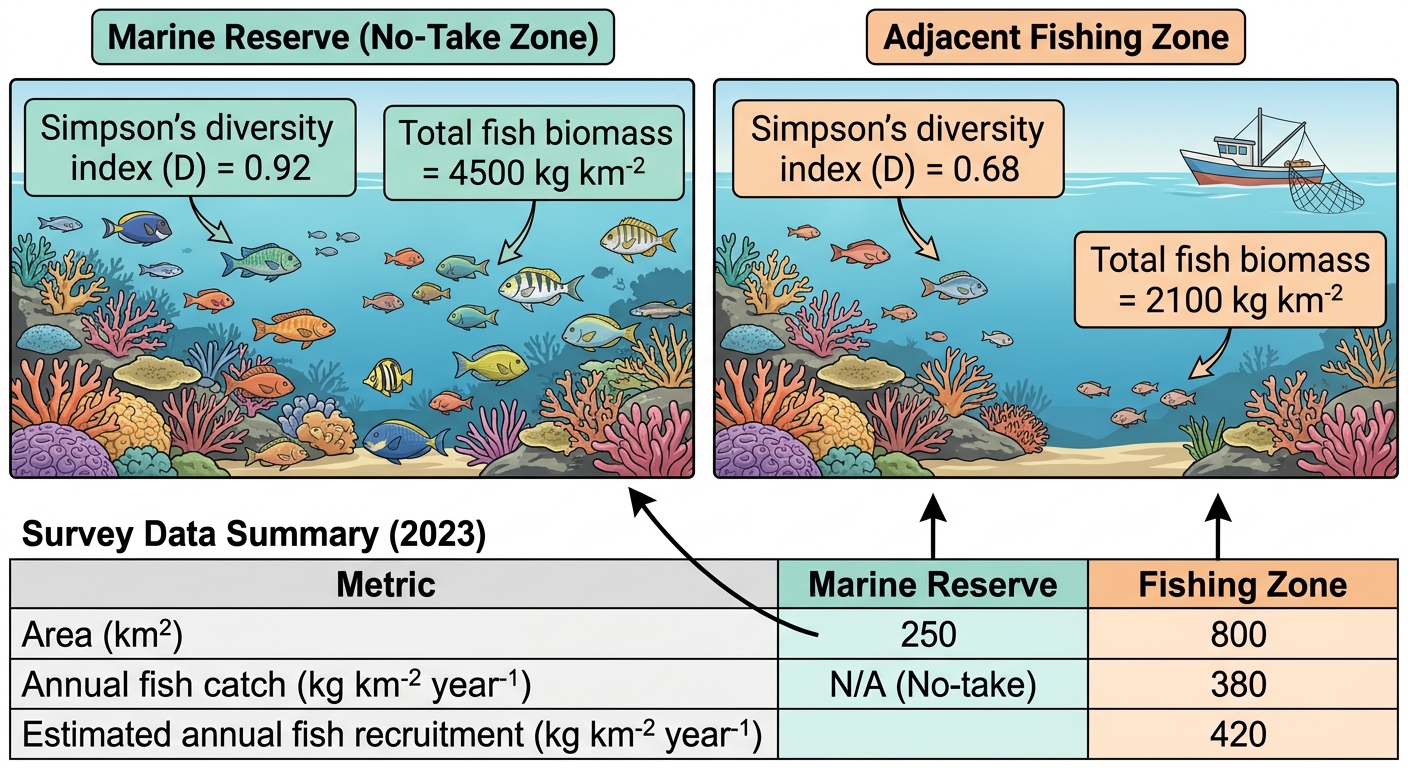
The island nation of Palau has committed to protecting of its marine territory as a 'no-take' marine reserve. A team of ecologists is evaluating the sustainability of this conservation strategy by comparing fish communities inside the reserve with those in adjacent fishing zones.
Data from a 2023 survey:
- Simpson's diversity index () inside the reserve:
- Simpson's diversity index () in the fishing zone:
- Total fish biomass inside the reserve:
- Total fish biomass in the fishing zone:
- Annual fish catch in the fishing zone:
- Estimated annual fish recruitment in the fishing zone:
- Reserve area: ; fishing zone area:
(a)
State the Simpson's diversity index value for the reserve and identify which zone has the higher value. [1 mark]
(b)
Explain what the difference in Simpson's diversity index between the two zones suggests about the ecological stability of the reserve compared with the fishing zone. [2 marks]
(c)
Using the biomass and recruitment data, determine whether the current fishing rate in the fishing zone is sustainable with reference to maximum sustainable yield. [2 marks]
(d)
Evaluate the effectiveness of the marine reserve as a conservation tool. In your answer, discuss one reason why the data collected may not be sufficient to conclude that the reserve alone guarantees long-term sustainability of the fishing zone. [2 marks]
Solutions
That's every free question here — 2 of 48.
+46 more questions, plus Mock Papers & Worksheets, are waiting in Premium.