Cell Specialization · Paper 1 — Free Biology HL Practice Questions
Free questions
Open in full, with answers, mark scheme and examiner insights.
Adaptations of specialized cells (alveolar, cardiac muscle, sperm, egg)
The micrograph shows a blood smear. Using the scale bar, what is the approximate diameter of the monocyte?
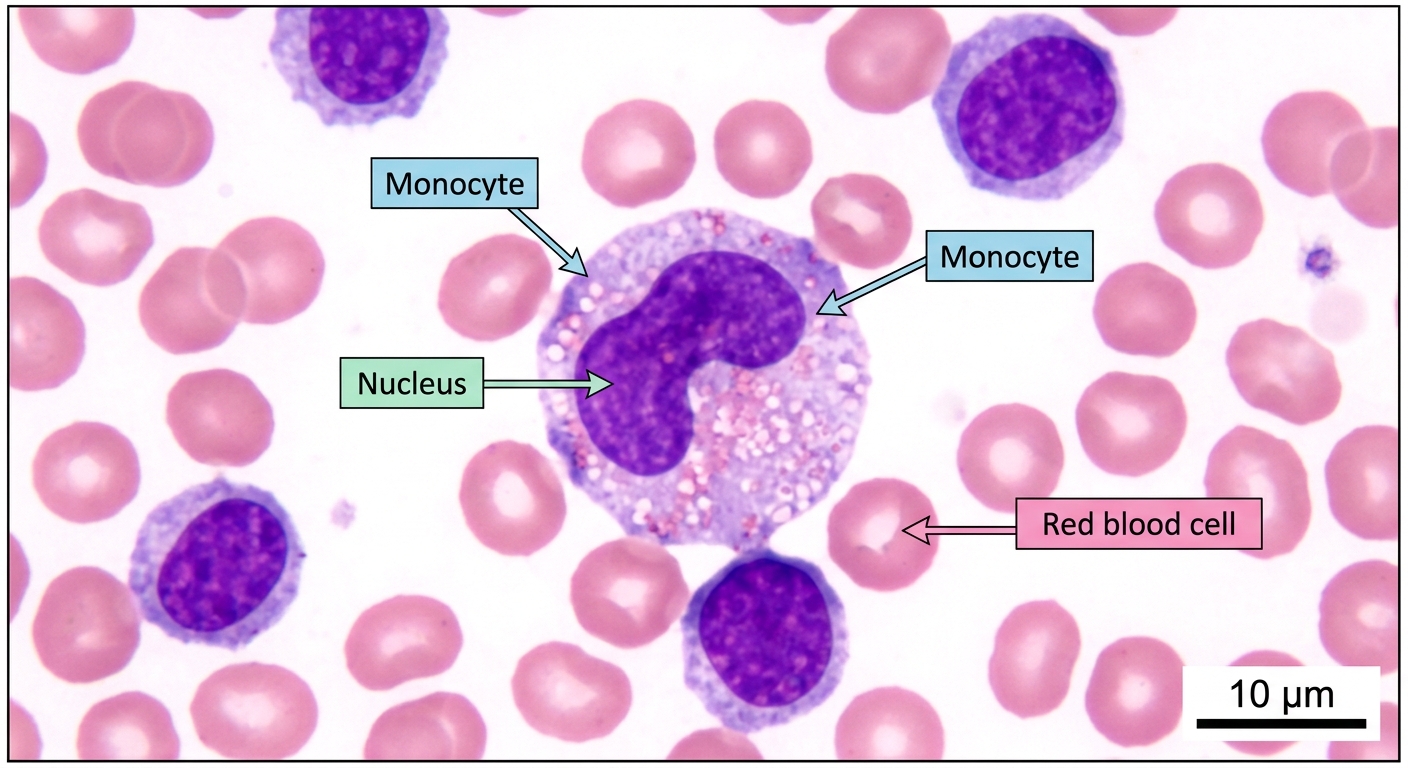
revisionprep.com
Summary Answer
Not available for this question.
Model Answer
Not available for this question.
Marking Scheme
Not available for this question.
Examiner Insights
Not available for this question.
Cell size and surface area-to-volume ratio
The shows part of the wall of an alveolus. The thin cells lining the air space are type I pneumocytes. Which feature of type I pneumocytes makes gas exchange efficient?
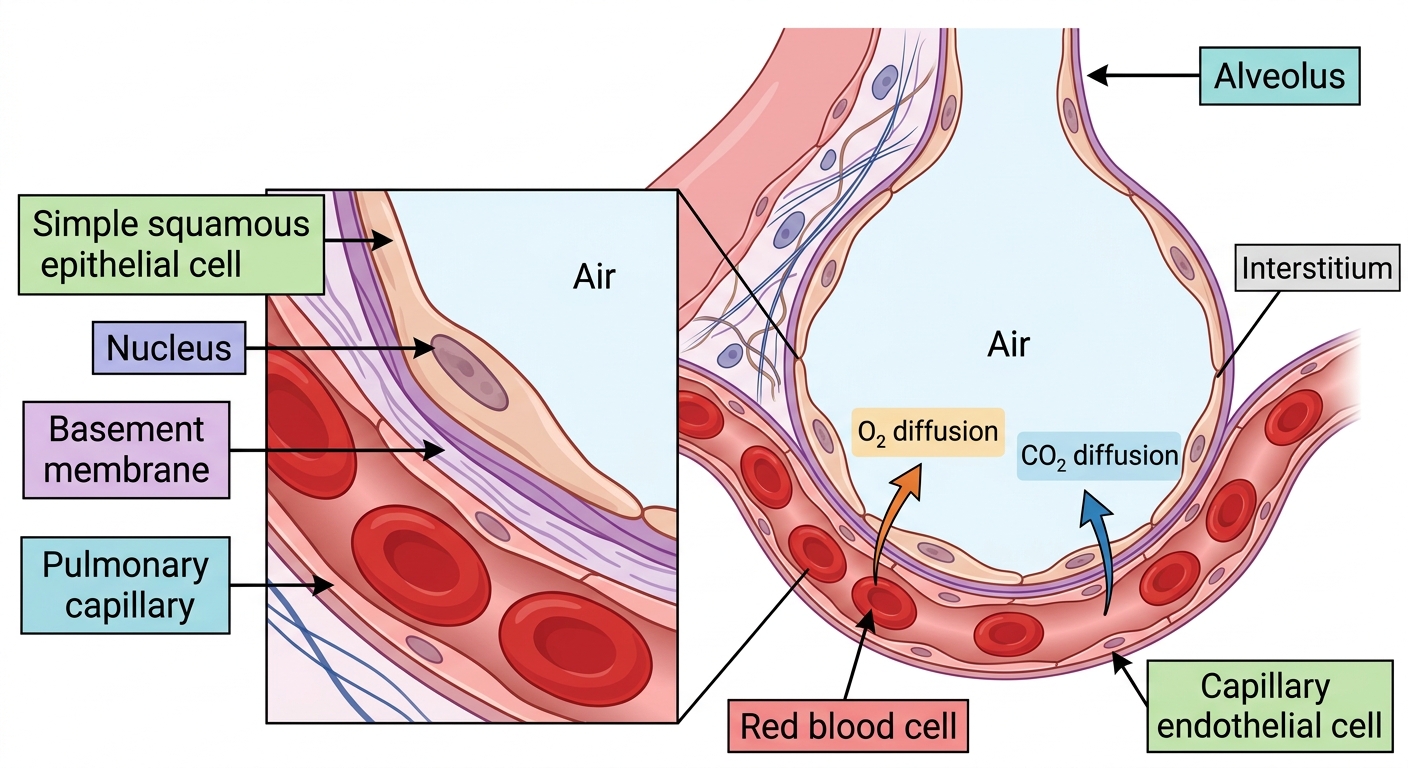
revisionprep.com
Summary Answer
Not available for this question.
Model Answer
Not available for this question.
Marking Scheme
Not available for this question.
Examiner Insights
Not available for this question.
Adaptations of specialized cells (alveolar, cardiac muscle, sperm, egg)
A researcher measured ATP use per gram of muscle at rest and during maximal activity. The table shows the results.

Calculate the fold increase in ATP use from rest to maximal activity for each tissue.
Explain why cardiac muscle uses ATP at a relatively high rate even at rest.
Suggest why mitochondria alone cannot supply the ATP for the rise in skeletal muscle.
revisionprep.com
Summary Answer
Not available for this question.
Model Answer
Not available for this question.
Marking Scheme
Not available for this question.
Examiner Insights
Not available for this question.
Cell size and surface area-to-volume ratio
Agar cubes containing a pink indicator were placed in dilute acid. As acid diffuses in from all faces, the agar turns colourless. After 5 minutes the cubes were cut in half and the percentage of each cube's volume that had turned colourless was estimated. The table shows the results.
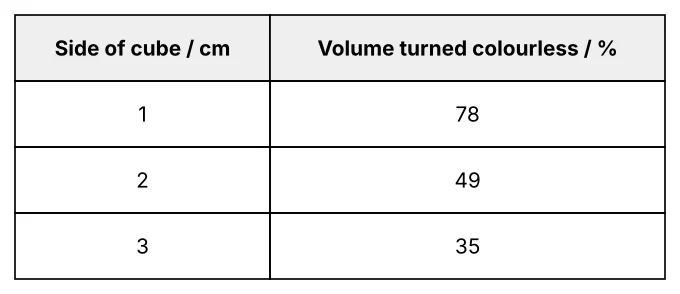
Calculate the surface area to volume ratio of the 2 cm cube.
Describe the relationship between SA:V and the percentage of the cube that turned colourless.
Acid reached the same depth, about 0.2 cm, into every cube. Explain why a larger percentage of the 1 cm cube turned colourless.
Using these results, explain why most cells are small.
revisionprep.com
Summary Answer
Not available for this question.
Model Answer
Not available for this question.
Marking Scheme
Not available for this question.
Examiner Insights
Not available for this question.
Adaptations of specialized cells (alveolar, cardiac muscle, sperm, egg)
A muscle biopsy from a patient with a neuromuscular disorder is compared with a healthy control. ATP is needed for contraction and for pumping calcium ions back into the sarcoplasmic reticulum. The table shows the results.
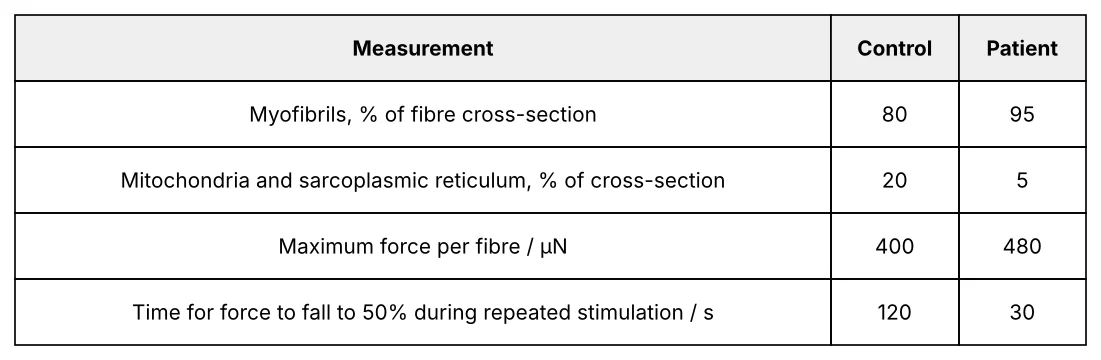
Calculate the percentage increase in myofibril area and the percentage decrease in mitochondria and sarcoplasmic reticulum area in the patient.
Explain how the structural differences account for the patient's higher maximum force and faster fatigue.
Evaluate whether the patient's muscle fibres are better adapted for producing force than healthy fibres.
revisionprep.com
Summary Answer
Not available for this question.
Model Answer
Not available for this question.
Marking Scheme
Not available for this question.
Examiner Insights
Not available for this question.
Cell size and surface area-to-volume ratio
Cisplatin is an anticancer drug that can damage the cells of the proximal convoluted tubule (PCT). Rats were given one injection of cisplatin (hypothetical data). The height of the microvilli on PCT cells was measured on electron micrographs, and the glucose lost in the urine each day was measured. The graphs show the results.
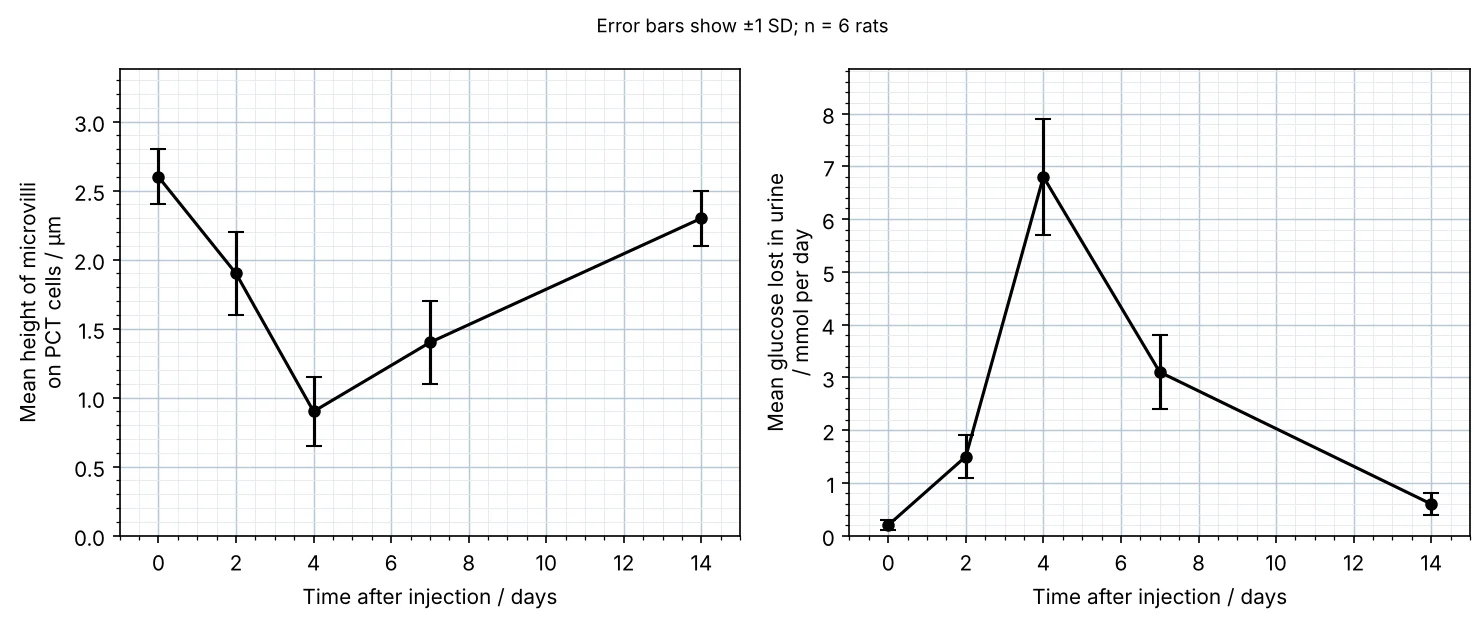
Calculate the percentage decrease in the mean height of the microvilli from day 0 to day 4.
Describe the relationship between the height of the microvilli and the glucose lost in the urine.
Explain how a loss of microvilli can lead to glucose appearing in the urine.
Evaluate the conclusion that the loss of microvilli caused the glucose to appear in the urine.
Suggest why a control group of rats injected with saline should be included.
revisionprep.com
Summary Answer
Not available for this question.
Model Answer
Not available for this question.
Marking Scheme
Not available for this question.
Examiner Insights
Not available for this question.
That's every free question here — 6 of 78.
+72 more questions, plus Mock Papers & Worksheets, are waiting in Premium.