Ecological Niches · Paper 1 — Free Biology HL Practice Questions
Free questions
Open in full, with answers, mark scheme and examiner insights.
Ecological niche concept
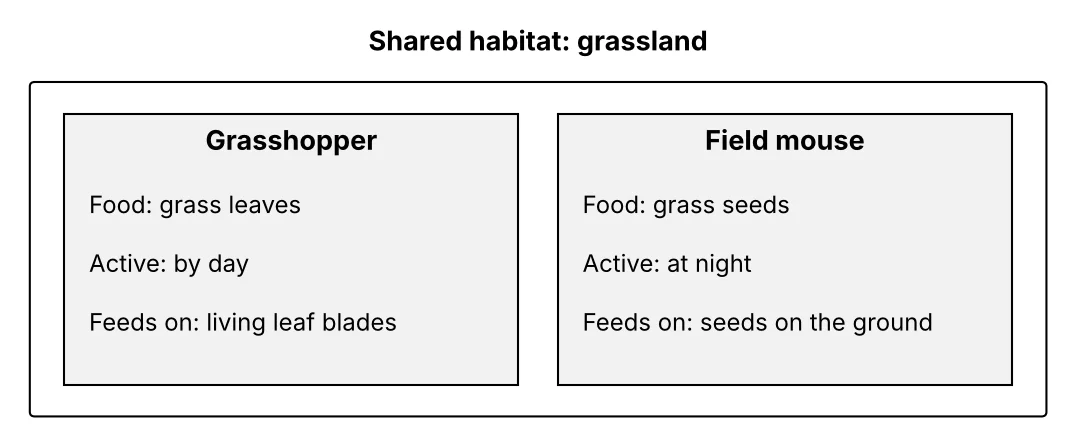
The shows how a grasshopper and a field mouse use the same grassland. Which statement about the ecological niches of the two species is correct?
revisionprep.com
Summary Answer
Not available for this question.
Model Answer
Not available for this question.
Marking Scheme
Not available for this question.
Examiner Insights
Not available for this question.
Role of organisms in ecosystems
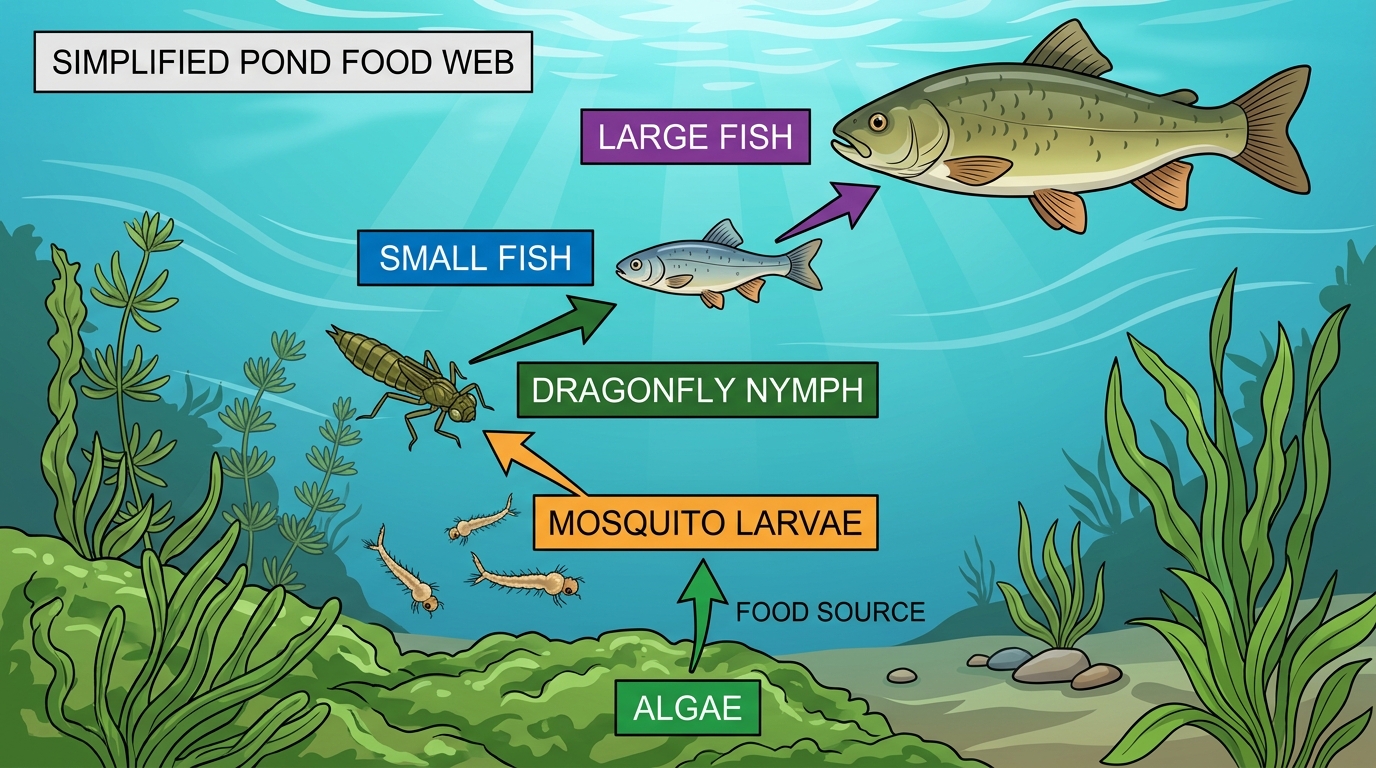
The shows organisms in a pond food chain. Which statement correctly describes how these organisms obtain their nutrition?
revisionprep.com
Summary Answer
Not available for this question.
Model Answer
Not available for this question.
Marking Scheme
Not available for this question.
Examiner Insights
Not available for this question.
Ecological niche concept
In a rainforest in Borneo, three species of fig wasp are the only pollinators of three related fig tree species. Each wasp species lays its eggs in the figs of its host tree and pollinates the flowers there. The graph shows the mean number of wasps of each species captured per hour near each fig species. Species A is active at dawn, B at midday and C at dusk.
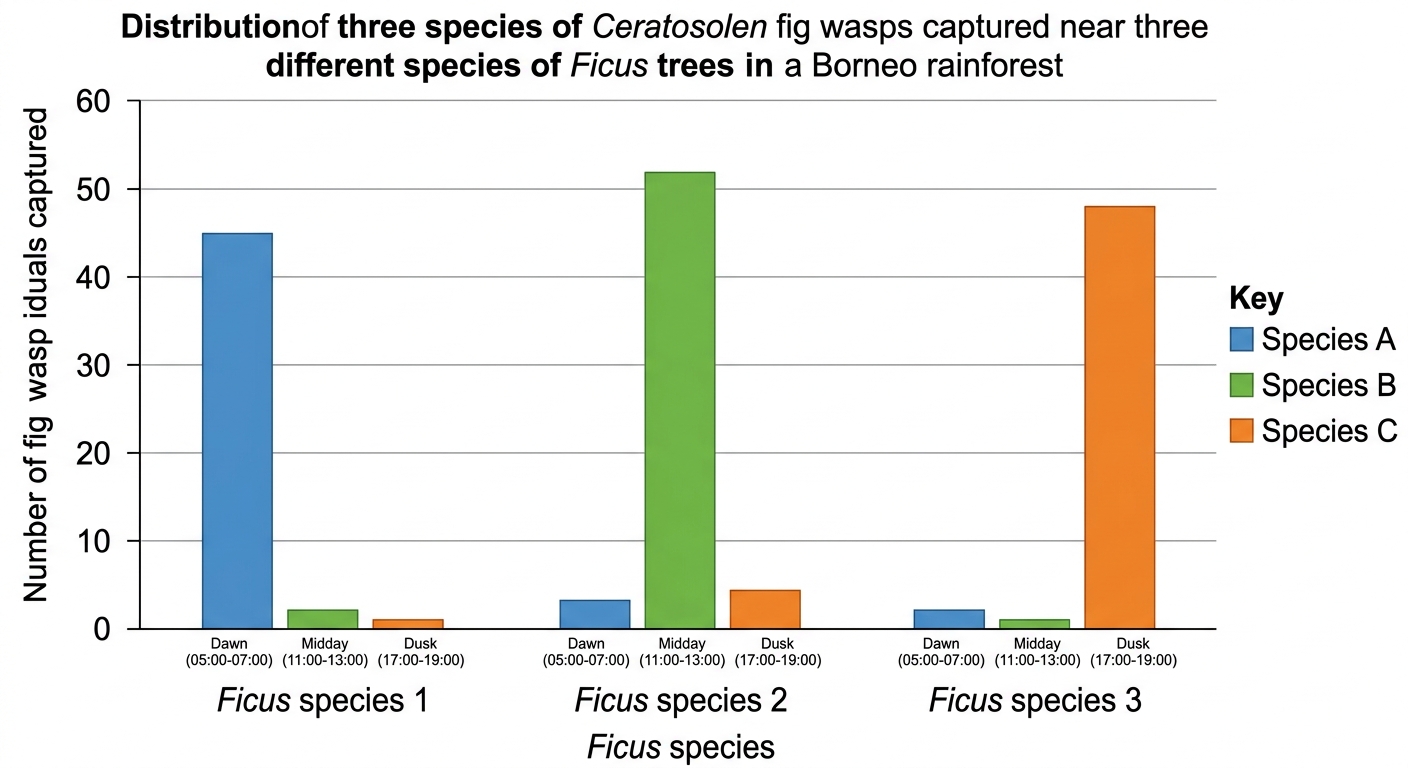
Identify the main host fig of wasp species B and state the evidence from the graph.
Calculate the percentage of all wasps captured near Ficus species 2 that were species B.
Explain how differences in their niches allow the three wasp species to live in the same forest.
Suggest one limitation of using the number of wasps captured near a tree as evidence of which fig each species uses.
revisionprep.com
Summary Answer
Not available for this question.
Model Answer
Not available for this question.
Marking Scheme
Not available for this question.
Examiner Insights
Not available for this question.
Modes of nutrition: autotrophs, heterotrophs, mixotrophs, saprotrophs
Euglena gracilis was grown in four cultures for 7 days. Each started with 10 thousand cells per cm. The results are shown in the table.
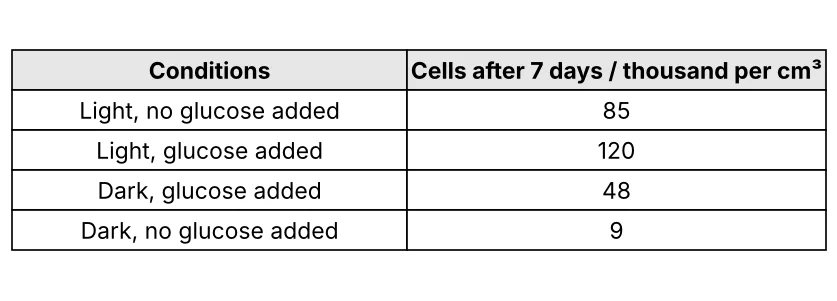
State how Euglena obtains organic compounds in the dark culture with glucose.
Calculate the percentage increase in final cell number when glucose was added to cultures in the light.
Explain how the data indicate that Euglena is a mixotroph.
Suggest an advantage of mixotrophic nutrition for Euglena in a pond that is shaded by floating plants for part of the summer.
Explain the result for the culture kept in the dark with no glucose added.
revisionprep.com
Summary Answer
Not available for this question.
Model Answer
Not available for this question.
Marking Scheme
Not available for this question.
Examiner Insights
Not available for this question.
Ecological niche concept
A strangler fig seed germinates on a high branch of a rainforest tree. Its roots grow down the trunk to the soil, and over many years it surrounds the host, which may die. How does this growth form help it harvest light?
revisionprep.com
Summary Answer
Not available for this question.
Model Answer
Not available for this question.
Marking Scheme
Not available for this question.
Examiner Insights
Not available for this question.
Modes of nutrition: autotrophs, heterotrophs, mixotrophs, saprotrophs
Methanogenic archaea living in a cow's rumen make methane from hydrogen and carbon dioxide. What is their source of energy?
revisionprep.com
Summary Answer
Not available for this question.
Model Answer
Not available for this question.
Marking Scheme
Not available for this question.
Examiner Insights
Not available for this question.
That's every free question here — 6 of 127.
+121 more questions, plus Mock Papers & Worksheets, are waiting in Premium.