Organelles and Compartmentalization · Paper 1 — Free Biology HL Practice Questions
Free questions
Open in full, with answers, mark scheme and examiner insights.
Compartmentalization of processes in eukaryotic cells
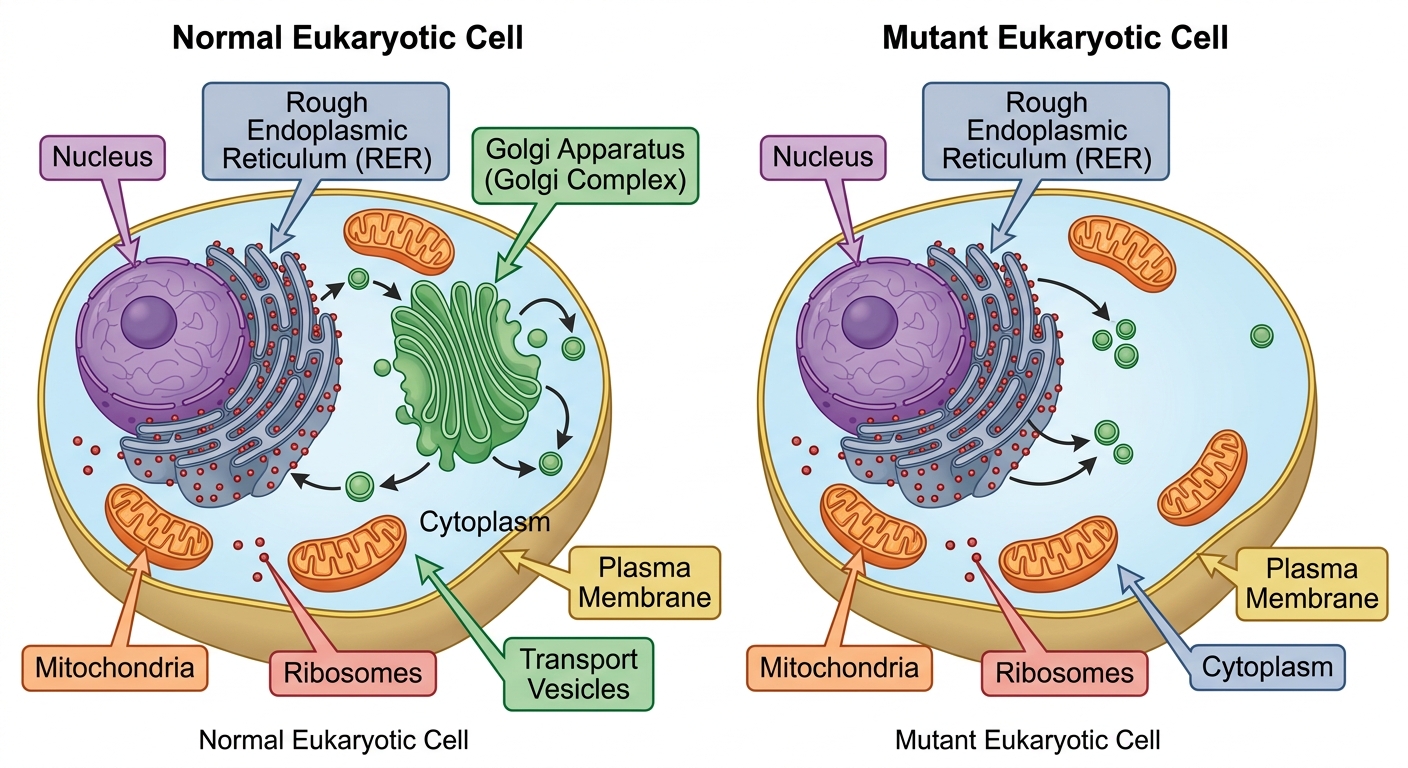
The compares a normal eukaryotic cell with a mutant cell that cannot form a Golgi apparatus. Which process is most directly disrupted in the mutant cell?
revisionprep.com
Summary Answer
Not available for this question.
Model Answer
Not available for this question.
Marking Scheme
Not available for this question.
Examiner Insights
Not available for this question.
Role of organelles in cellular function
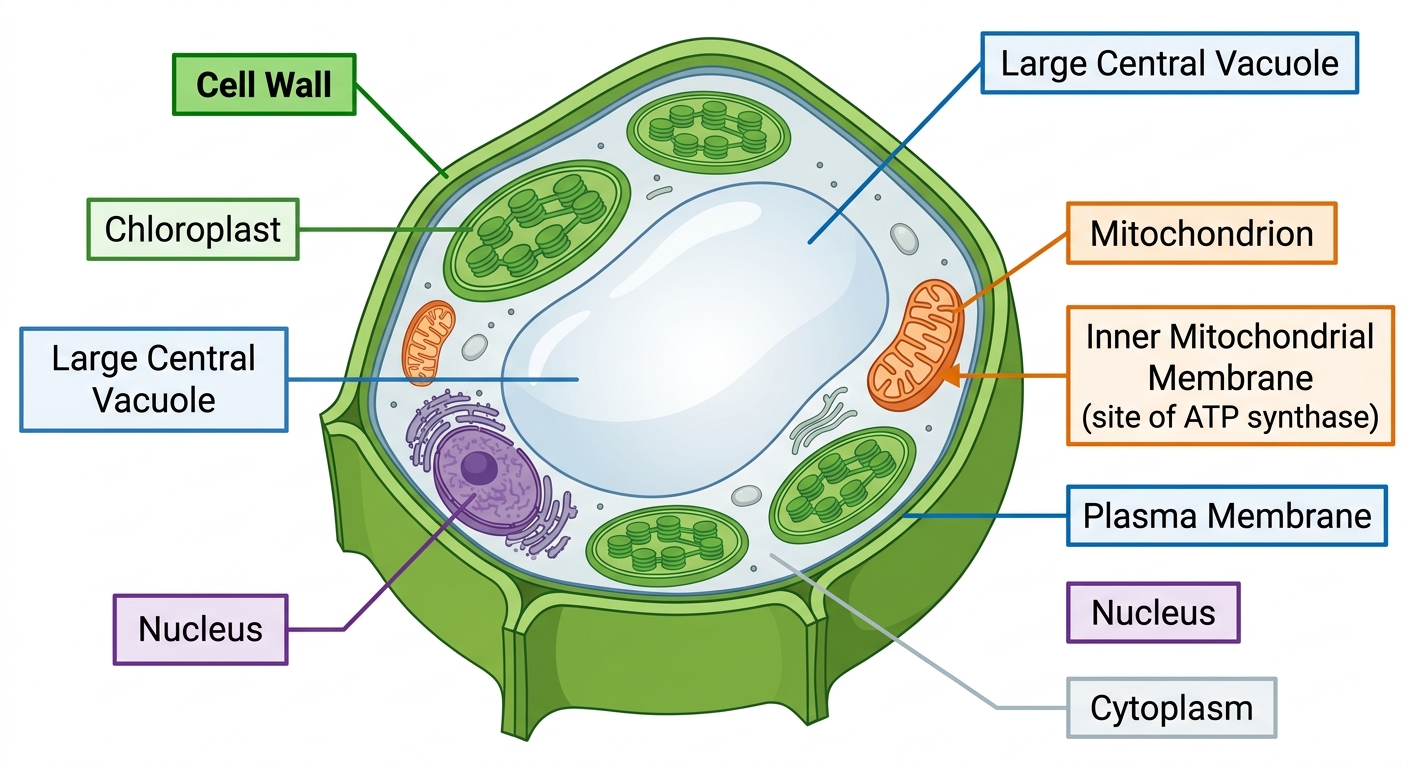
The shows a palisade cell from a leaf. Which labelled organelle would be absent from a root cell of the same plant?
revisionprep.com
Summary Answer
Not available for this question.
Model Answer
Not available for this question.
Marking Scheme
Not available for this question.
Examiner Insights
Not available for this question.
Endoplasmic reticulum, Golgi apparatus, mitochondria, and nucleus
Students measured the concentration of a digestive enzyme secreted into the medium by pancreatic cells over 35 minutes. One group of cells had a disrupted Golgi apparatus. The graph shows the results.
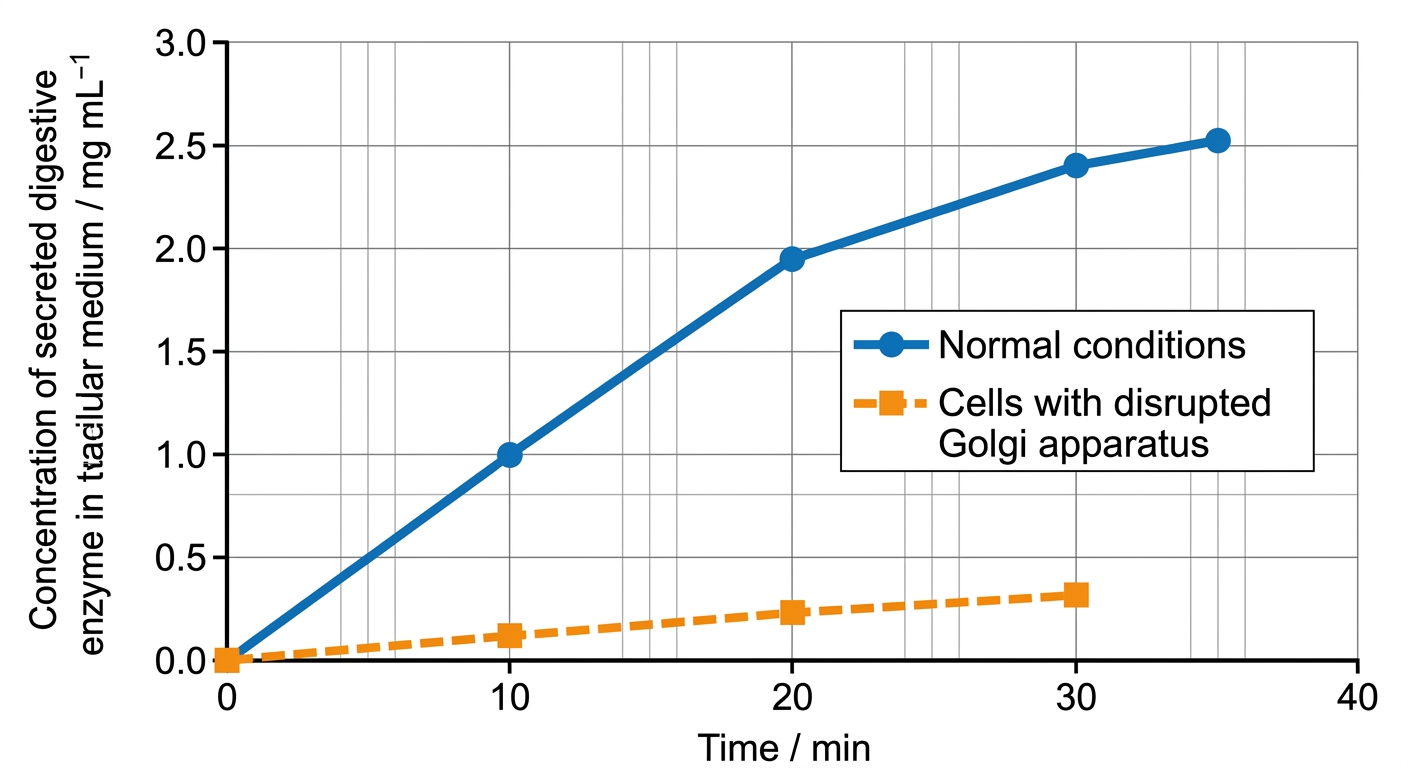
Using the graph, determine the mean rate of enzyme secretion by normal cells over the first . Give the units.
Calculate the percentage reduction in enzyme concentration at caused by disrupting the Golgi apparatus.
Explain why disrupting the Golgi apparatus reduces secretion of the enzyme.
Suggest one reason why the rate of secretion by normal cells decreases after .
State one variable, other than time, that should be kept the same for both groups of cells.
revisionprep.com
Summary Answer
Not available for this question.
Model Answer
Not available for this question.
Marking Scheme
Not available for this question.
Examiner Insights
Not available for this question.
Role of organelles in cellular function
The diagram compares liver cells and mature red blood cells, which have similar volumes. Both were given excess glucose and oxygen at 37 °C.
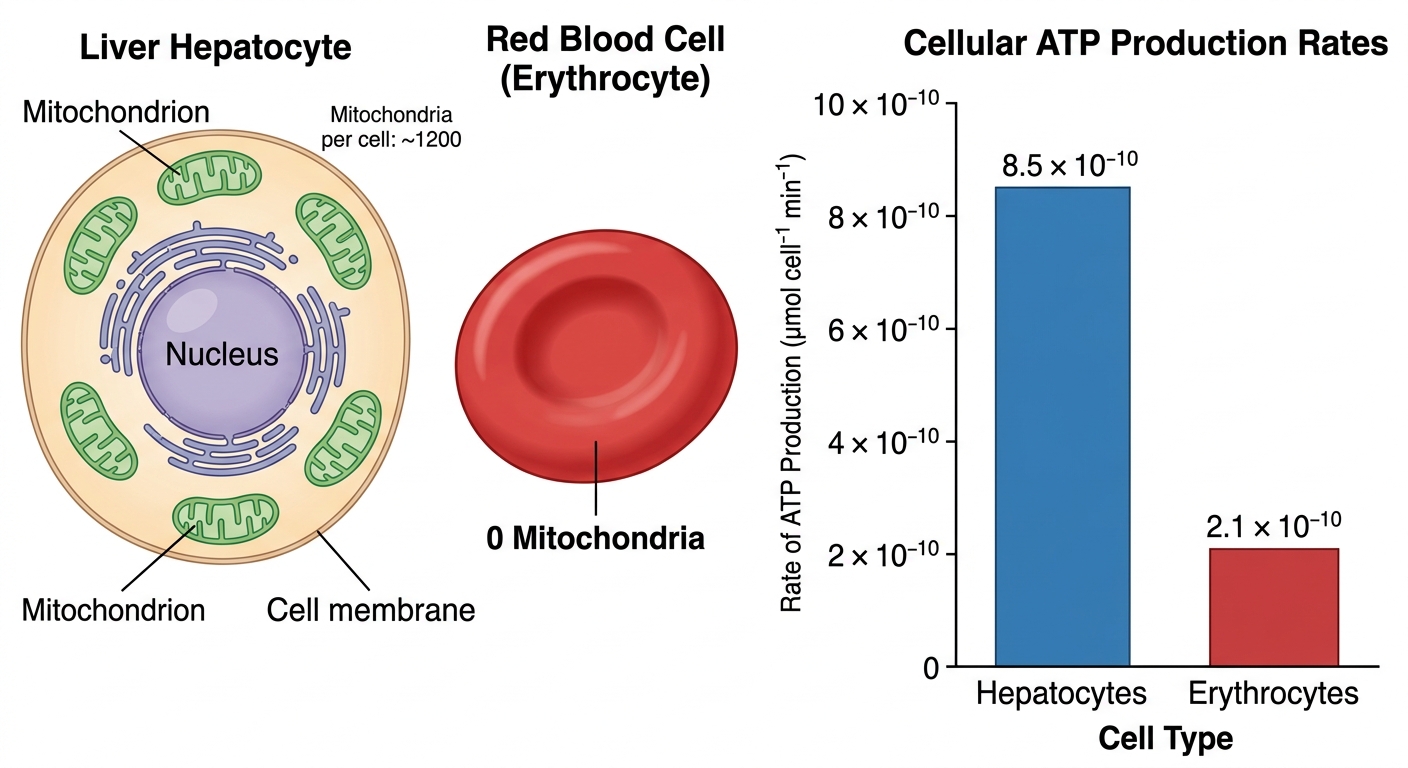
State one advantage to a red blood cell of having no mitochondria.
Using the bar chart, calculate how many times faster ATP is produced by a liver cell than by a red blood cell.
Explain why the liver cell produces ATP faster, even though both cells have the same supply of glucose and oxygen.
Red blood cells carry oxygen to tissues. Suggest why it is an advantage that they do not respire aerobically.
Mature red blood cells also have no nucleus. State one consequence of this for the cell.
revisionprep.com
Summary Answer
Not available for this question.
Model Answer
Not available for this question.
Marking Scheme
Not available for this question.
Examiner Insights
Not available for this question.
Endoplasmic reticulum, Golgi apparatus, mitochondria, and nucleus
Muscle tissue from an endurance-trained athlete and from an untrained person was compared.
The table shows the results.
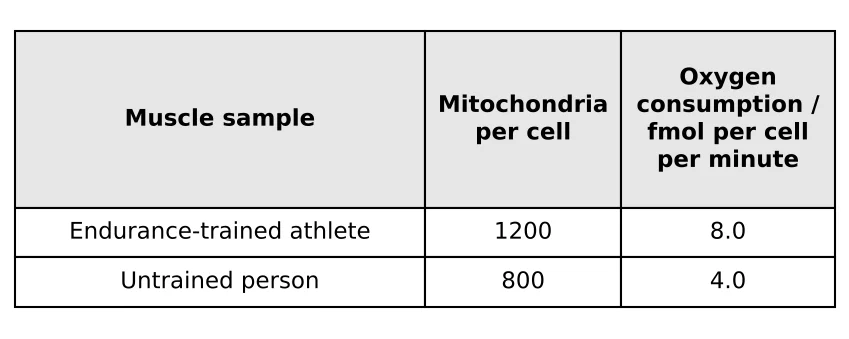
State the process in mitochondria that uses oxygen.
Calculate the oxygen consumption per mitochondrion for each person.
Using your answers to (b), explain whether the athlete's extra oxygen use is due only to having more mitochondria.
Suggest one benefit to the athlete of this difference.
revisionprep.com
Summary Answer
Not available for this question.
Model Answer
Not available for this question.
Marking Scheme
Not available for this question.
Examiner Insights
Not available for this question.
Role of organelles in cellular function
A student grew the single-celled alga Euglena in the light and in the dark for two weeks, then counted organelles in electron micrographs of 20 cells from each culture.
The bar chart shows the results.
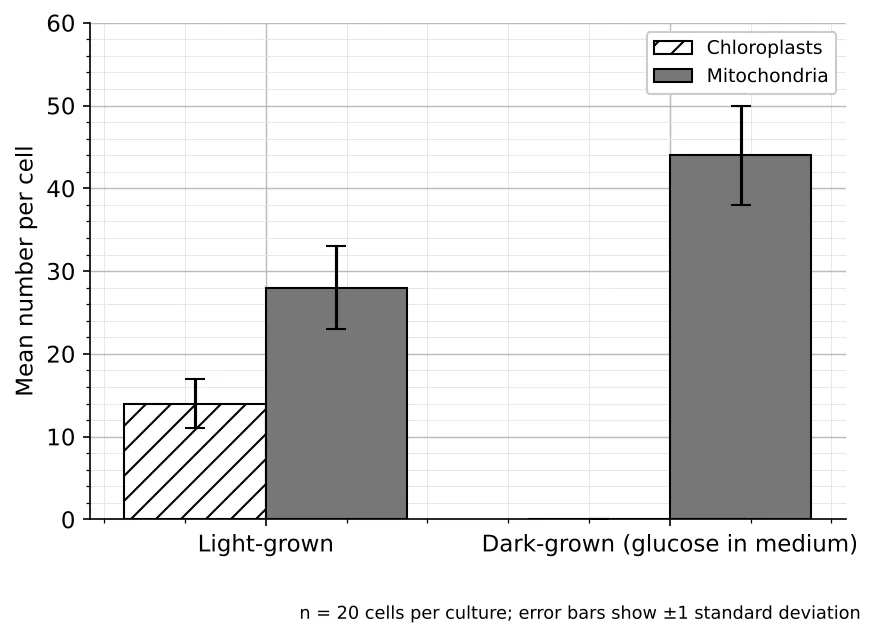
Describe the differences between the two cultures.
Explain why dark-grown cells have more mitochondria.
Suggest why the dark-grown cells do not keep chloroplasts.
Predict, with a reason, the change in chloroplast number when dark-grown cells are moved into light.
Suggest why the student counted organelles in 20 cells from each culture rather than in one cell.
revisionprep.com
Summary Answer
Not available for this question.
Model Answer
Not available for this question.
Marking Scheme
Not available for this question.
Examiner Insights
Not available for this question.
That's every free question here — 6 of 104.
+98 more questions, plus Mock Papers & Worksheets, are waiting in Premium.