You're viewing 3 free preview questions for Biology HL — subscribe to unlock 93 more, plus the Full Question Bank, Mock Papers & Worksheets.Upgrade
Transport · Paper 1 — Free Biology HL Practice Questions

1FoundationMCQCirculatory systems: Open vs closed1 markPaper 1~2 min
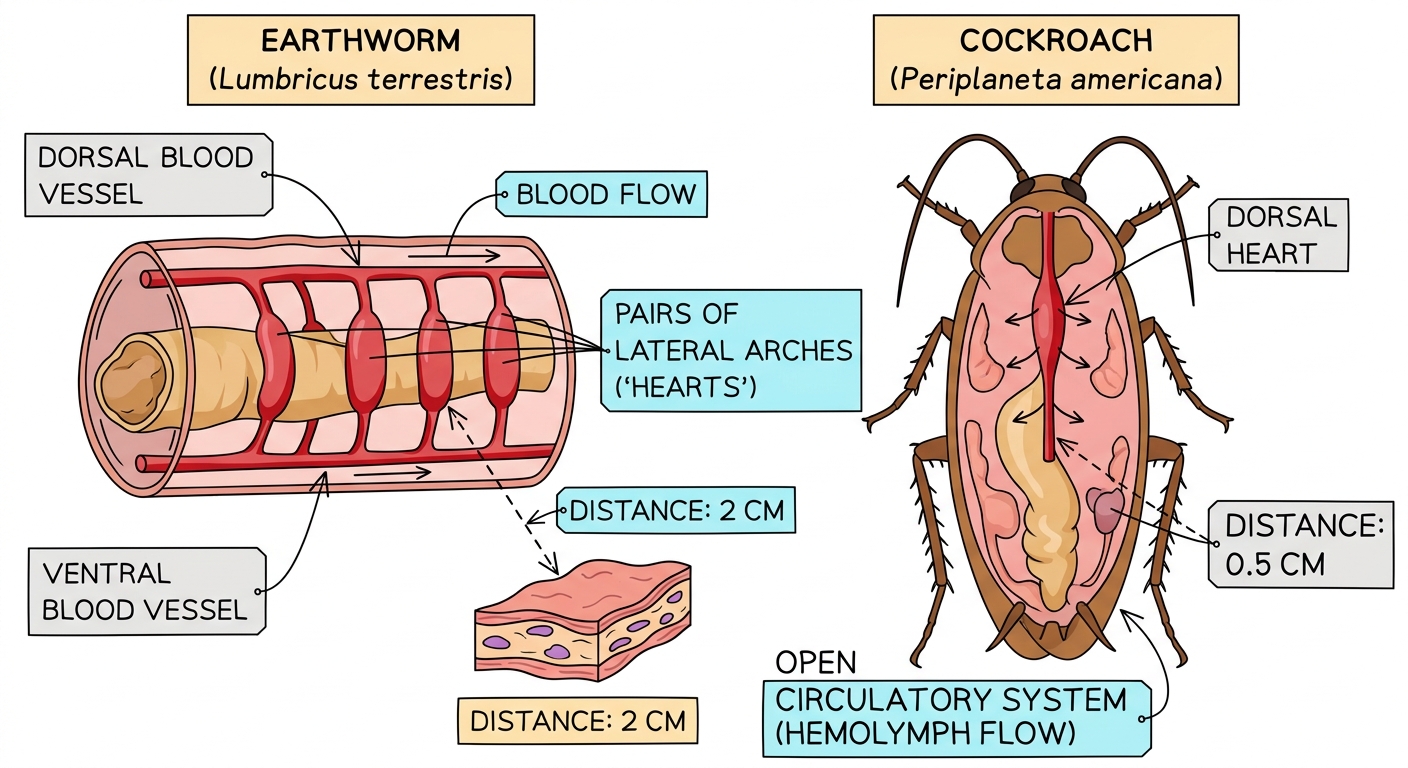
An earthworm has a closed circulatory system with five pairs of aortic arches connecting a dorsal and a ventral longitudinal vessel. A cockroach has an open circulatory system with a single dorsal tubular heart. The maximum distance blood must travel from the heart to the most distant tissue is 2 cm in the earthworm and 0.5 cm in the cockroach. What is the most likely advantage of the earthworm's closed circulatory system over the cockroach's open system?

Solutions
2FoundationMCQCirculatory systems: Open vs closed1 markPaper 1~2 min
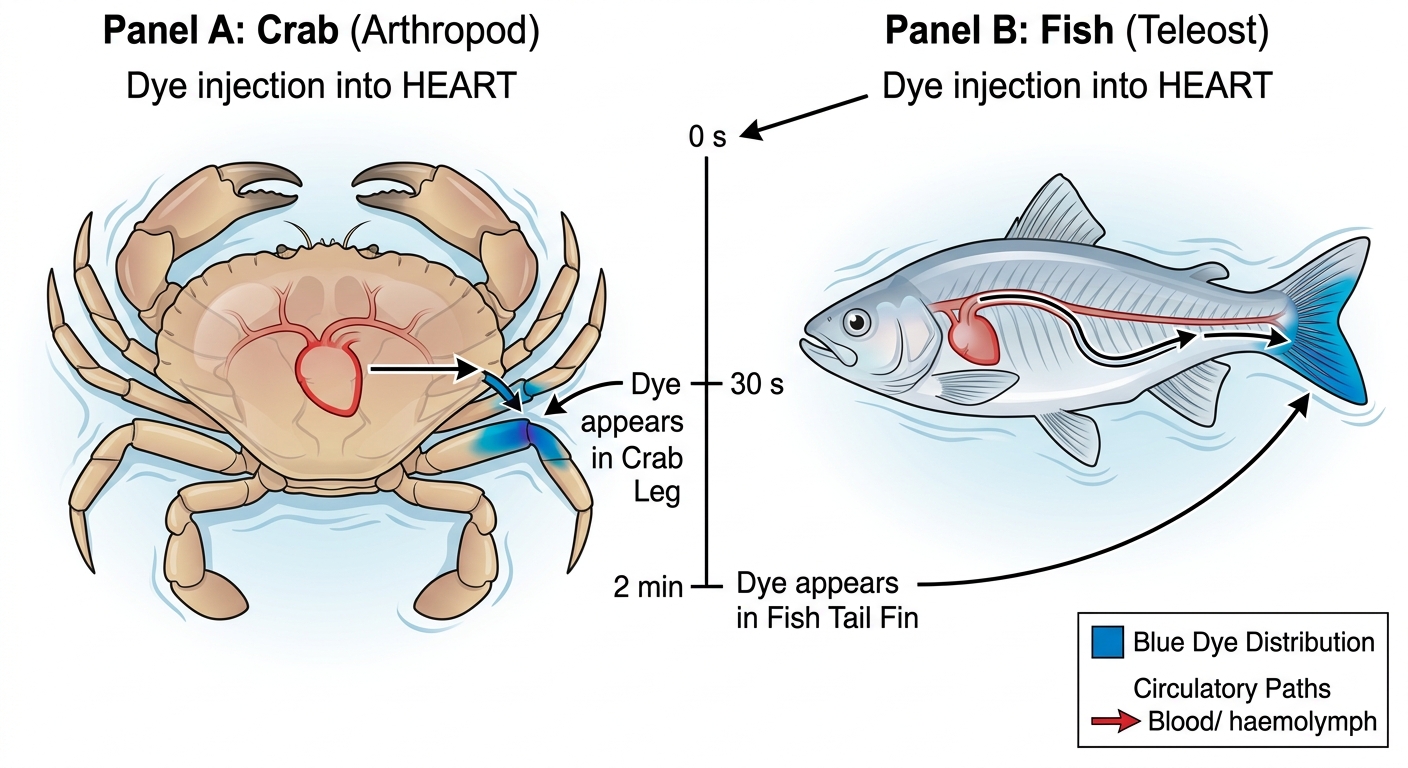
A biologist injects a blue dye into the heart of a live crab and into the heart of a live fish. The dye appears in the crab's leg joints within 30 seconds, but takes 2 minutes to appear in the fish's tail fin. Which conclusion is best supported by this observation?
Solutions
3MasteryMCQCirculatory systems: Open vs closed1 markPaper 1~2 min
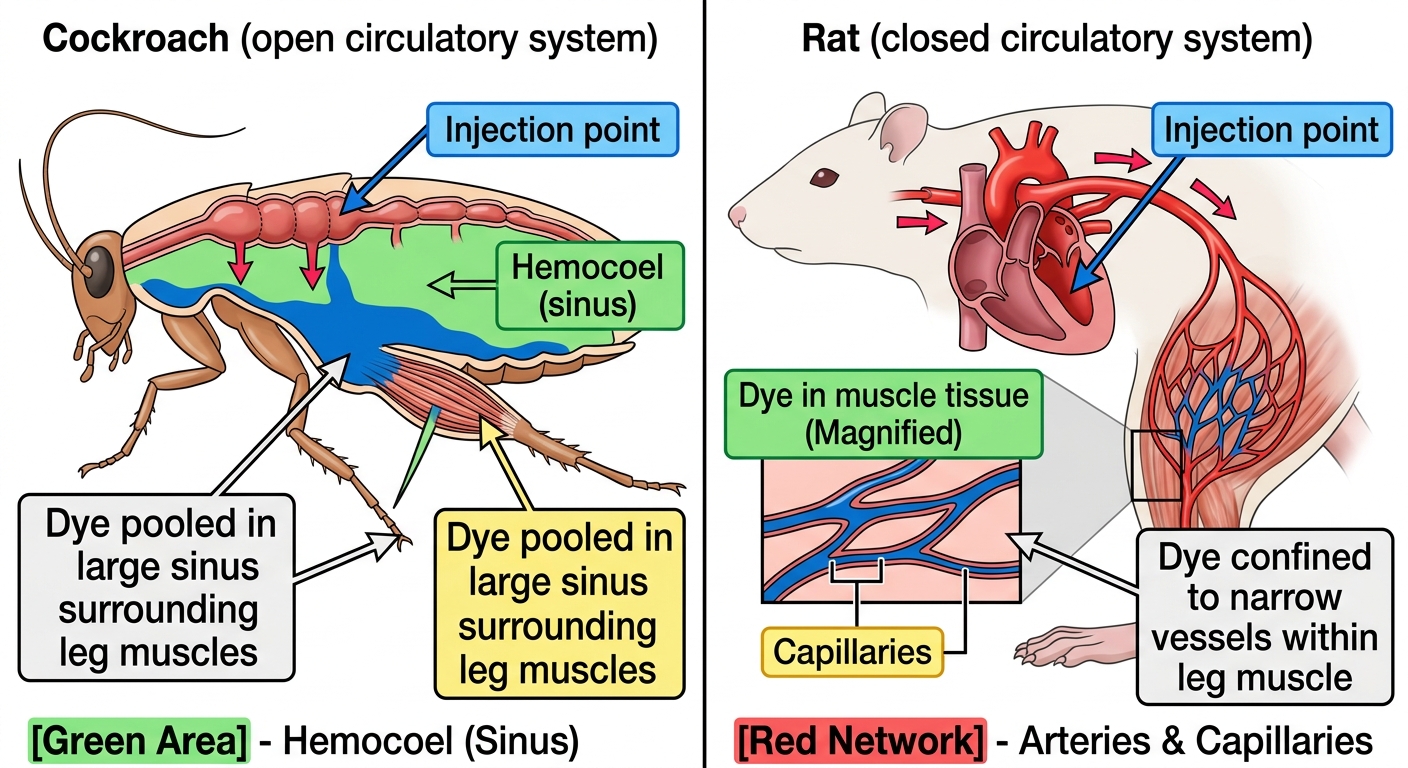
A researcher injects an equal volume of blue dye into the dorsal vessel of a cockroach (open circulatory system) and into the left ventricle of a rat (closed circulatory system). Both animals are similar in mass. After 10 seconds, the dye in the cockroach is found spread throughout a large haemocoel sinus surrounding the leg muscles, while in the rat the dye remains confined within narrow capillaries inside the leg muscles. Which conclusion about fluid pressure is best supported by these observations?
Solutions
That's every free question here — 3 of 96.
+93 more questions, plus Mock Papers & Worksheets, are waiting in Premium.