Cell Specialization · Paper 2 — Free Biology HL Practice Questions
Free questions
Open in full, with answers, mark scheme and examiner insights.
Adaptations of specialized cells (alveolar, cardiac muscle, sperm, egg)
An electron micrograph of a human sperm cell has a magnification of . On the micrograph the head of the sperm is 20 mm long. A human egg cell is about 120 µm in diameter.
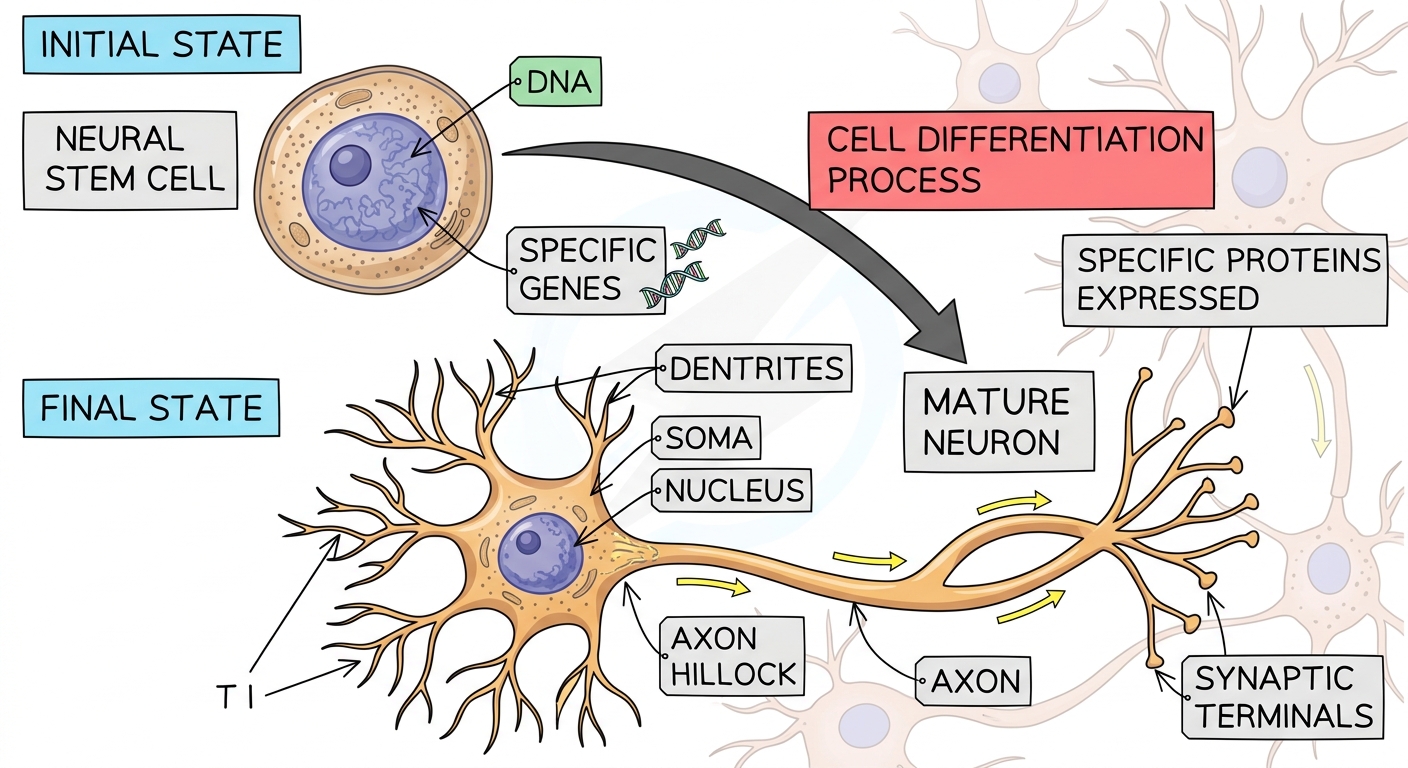
Calculate the actual length of the sperm head in µm.
Calculate how many times greater the diameter of the egg is than the length of the sperm head.
Outline why the small size of the sperm suits its function.
revisionprep.com
Summary Answer
Not available for this question.
Model Answer
Not available for this question.
Marking Scheme
Not available for this question.
Examiner Insights
Not available for this question.
Adaptations of specialized cells (alveolar, cardiac muscle, sperm, egg)
The diagram shows a human egg cell surrounded by the layers that sperm must pass through.
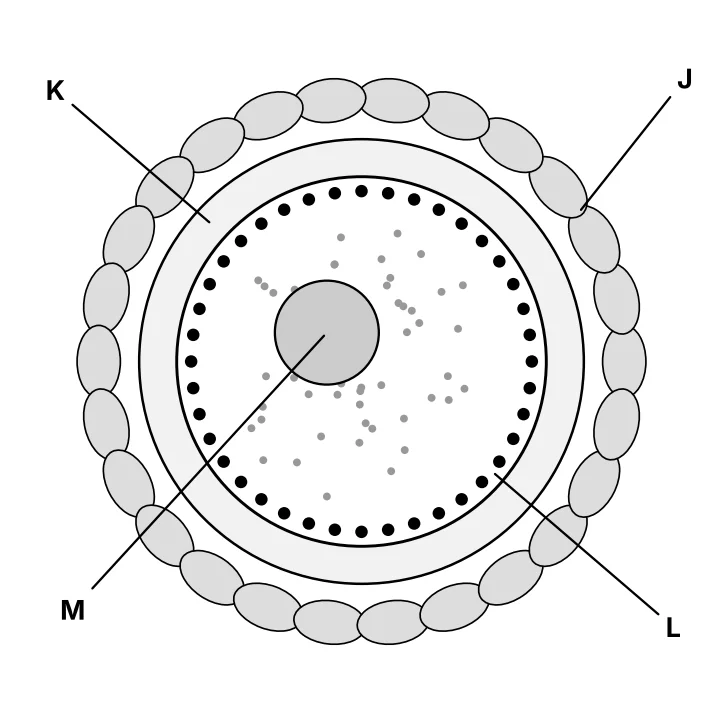
Identify the structures labelled J, K and L.
Outline the role of the structures labelled L after a sperm has fused with the egg.
revisionprep.com
Summary Answer
Not available for this question.
Model Answer
Not available for this question.
Marking Scheme
Not available for this question.
Examiner Insights
Not available for this question.
Adaptations of specialized cells (alveolar, cardiac muscle, sperm, egg)
The diagram shows the structure of a human sperm cell.
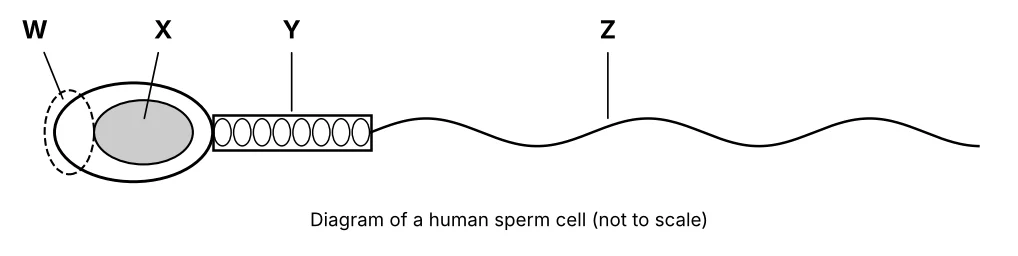
Identify the structures labelled W, X and Z.
Outline the role of structure Y.
A sperm cell 55 µm long swims 3.3 mm in one minute. Calculate how many of its own lengths it swims per second.
revisionprep.com
Summary Answer
Not available for this question.
Model Answer
Not available for this question.
Marking Scheme
Not available for this question.
Examiner Insights
Not available for this question.
Stem cells and differentiation
The figure shows three model cells, A, B and C, drawn as cuboids. Each has a volume of 1000 µm³.
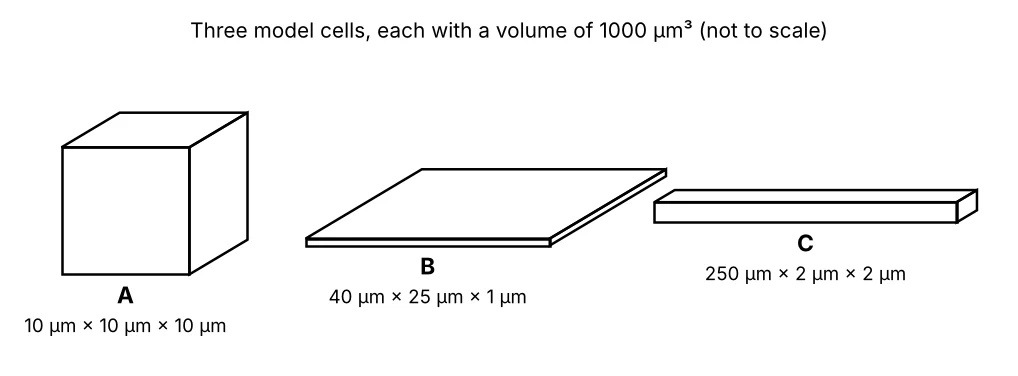
Calculate the surface area to volume ratio (SA:V) of cell A.
Calculate the SA:V of cell B.
Explain how a flattened shape such as cell B increases the rate of exchange of materials, using type I pneumocytes as an example.
Cell C has an SA:V of 2.0 µm⁻¹. Suggest how a long, thin shape allows cells such as striated muscle fibres to be very long without a low SA:V.
revisionprep.com
Summary Answer
Not available for this question.
Model Answer
Not available for this question.
Marking Scheme
Not available for this question.
Examiner Insights
Not available for this question.
Adaptations of specialized cells (alveolar, cardiac muscle, sperm, egg)
Muscle biopsies of 10 000 fibres were taken from a marathon runner and a sprinter. The figure shows the fibre composition of each biopsy and the properties of the three fibre types.
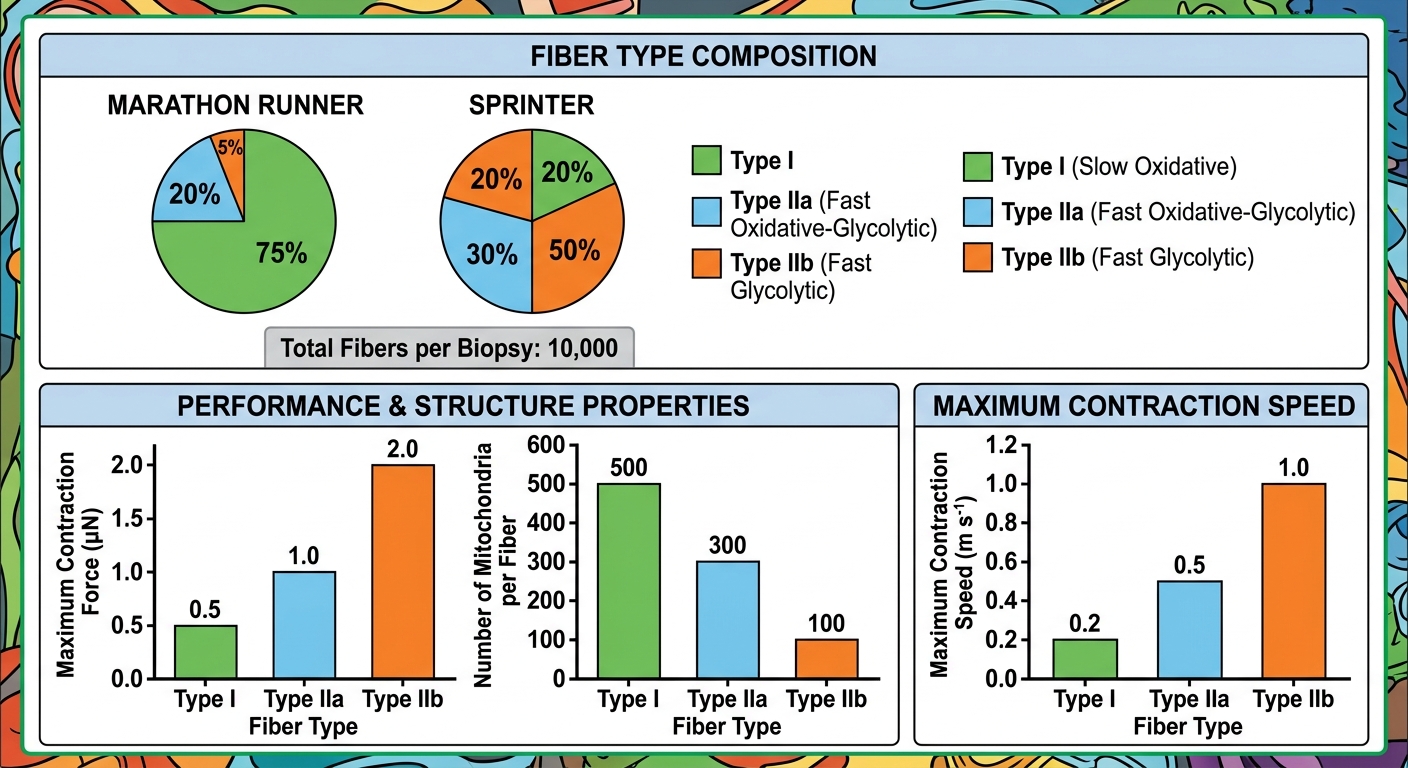
Calculate the total maximum force of each biopsy.
Calculate the mean contraction speed of the fibres in each biopsy.
Explain how the fibre composition of each athlete suits their event.
Evaluate the hypothesis that more mitochondria per fibre is always better for athletic performance.
The biopsies came from one marathon runner and one sprinter. Suggest two ways the investigation could be improved before drawing general conclusions.
State two structural features, other than mitochondria, that all three fibre types share as striated muscle fibres, and outline the role of one of them.
revisionprep.com
Summary Answer
Not available for this question.
Model Answer
Not available for this question.
Marking Scheme
Not available for this question.
Examiner Insights
Not available for this question.
Stem cells and differentiation
In a clinical trial, mesenchymal stem cells (MSCs) from bone marrow were injected into knees damaged by osteoarthritis. Group 1: MSCs grown in standard medium. Group 2: MSCs grown for 7 days with growth factors that promote cartilage formation. Group 3: saline injection (placebo). Cartilage thickness was measured before and after 12 months (mean ± uncertainty). Normal knee cartilage stains strongly for collagen type II and aggrecan and weakly for collagen type I. The figure shows the method, the results and a stained section of new tissue from Group 2.
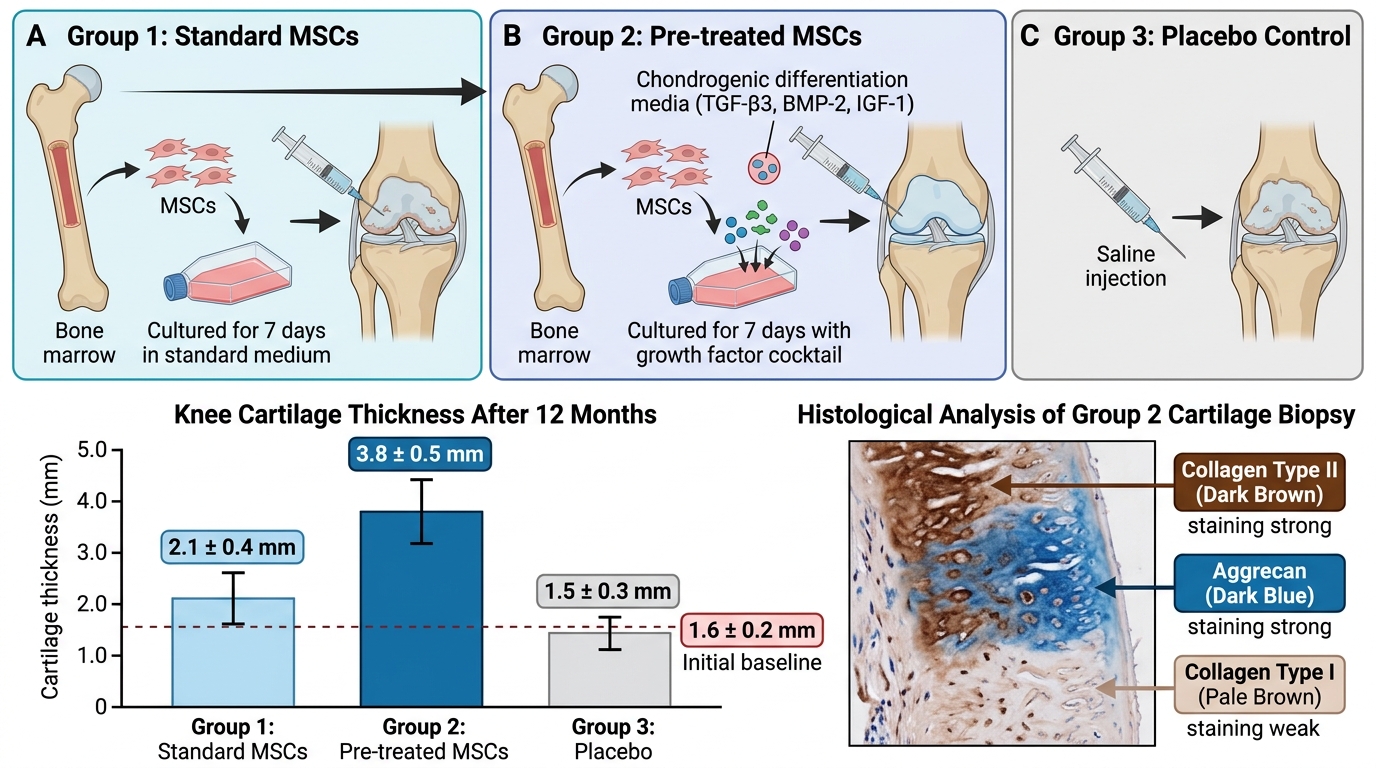
Identify the group with the greatest mean increase in thickness and calculate that increase.
Explain whether the data show a real decrease in cartilage thickness in Group 3.
Explain how the growth factors caused the MSCs to form cartilage cells.
Evaluate the claim that the treatment in Group 2 restored normal knee cartilage.
Identify the independent variable in this trial and one variable that should have been controlled.
Suggest why Group 3 was included.
State the potency of MSCs.
revisionprep.com
Summary Answer
Not available for this question.
Model Answer
Not available for this question.
Marking Scheme
Not available for this question.
Examiner Insights
Not available for this question.
That's every free question here — 6 of 78.
+72 more questions, plus Mock Papers & Worksheets, are waiting in Premium.