Organelles and Compartmentalization · Paper 2 — Free Biology HL Practice Questions
Free questions
Open in full, with answers, mark scheme and examiner insights.
Endoplasmic reticulum, Golgi apparatus, mitochondria, and nucleus
An electron micrograph of a liver cell shows these structures: P: bounded by two membranes, the inner one folded Q: a network of flattened membrane sacs covered with ribosomes R: a stack of curved, flattened sacs without ribosomes, surrounded by small vesicles S: a large structure bounded by two membranes with pores
Identify structures P, Q, R and S.
State the function of Q and of R.
State which of the structures P to S contain DNA.
revisionprep.com
Summary Answer
Not available for this question.
Model Answer
Not available for this question.
Marking Scheme
Not available for this question.
Examiner Insights
Not available for this question.
Adaptations of mitochondria and chloroplasts; nuclear pores; vesicles (AHL)
A macrophage in tissue fluid engulfs and destroys a bacterium.
Outline how the bacterium enters the macrophage.
Describe how the bacterium is digested once it is inside the macrophage.
Explain the advantage of digesting the bacterium inside a membrane-bound compartment rather than in the cytosol.
revisionprep.com
Summary Answer
Not available for this question.
Model Answer
Not available for this question.
Marking Scheme
Not available for this question.
Examiner Insights
Not available for this question.
Endoplasmic reticulum, Golgi apparatus, mitochondria, and nucleus
GLUT4 is a glucose transport protein that is moved to the plasma membrane in vesicles when muscle cells are stimulated by insulin. Cells were treated with brefeldin A (BFA), which stops vesicles forming from the Golgi apparatus; mitochondrial ATP production is not affected by BFA at this concentration. The bar chart shows GLUT4 at the plasma membrane.
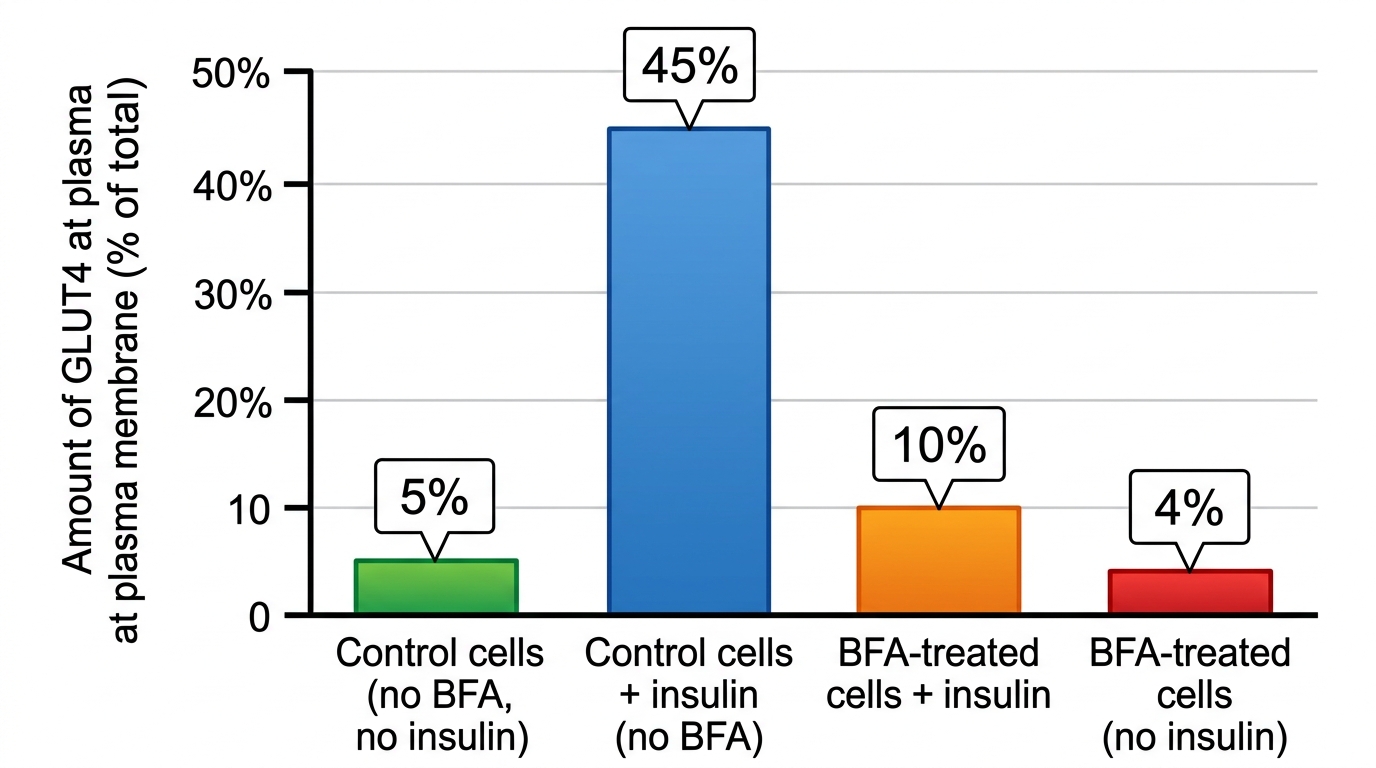
Determine the percentage-point increase in GLUT4 at the plasma membrane caused by insulin in cells without BFA.
Explain why BFA greatly reduces the effect of insulin on GLUT4 at the plasma membrane.
Evaluate the claim that mitochondria are not involved in the response to insulin.
Suggest why 10% of GLUT4 still reaches the plasma membrane in BFA-treated cells given insulin.
State the type of membrane transport carried out by GLUT4.
Explain why moving more GLUT4 into the plasma membrane increases glucose uptake by the muscle cell.
revisionprep.com
Summary Answer
Not available for this question.
Model Answer
Not available for this question.
Marking Scheme
Not available for this question.
Examiner Insights
Not available for this question.
Role of organelles in cellular function
The graph shows the effect of pH on the activity of acid phosphatase, a hydrolase found in lysosomes. The pH inside a lysosome is about 4.8; the pH of the cytosol is about 7.2.
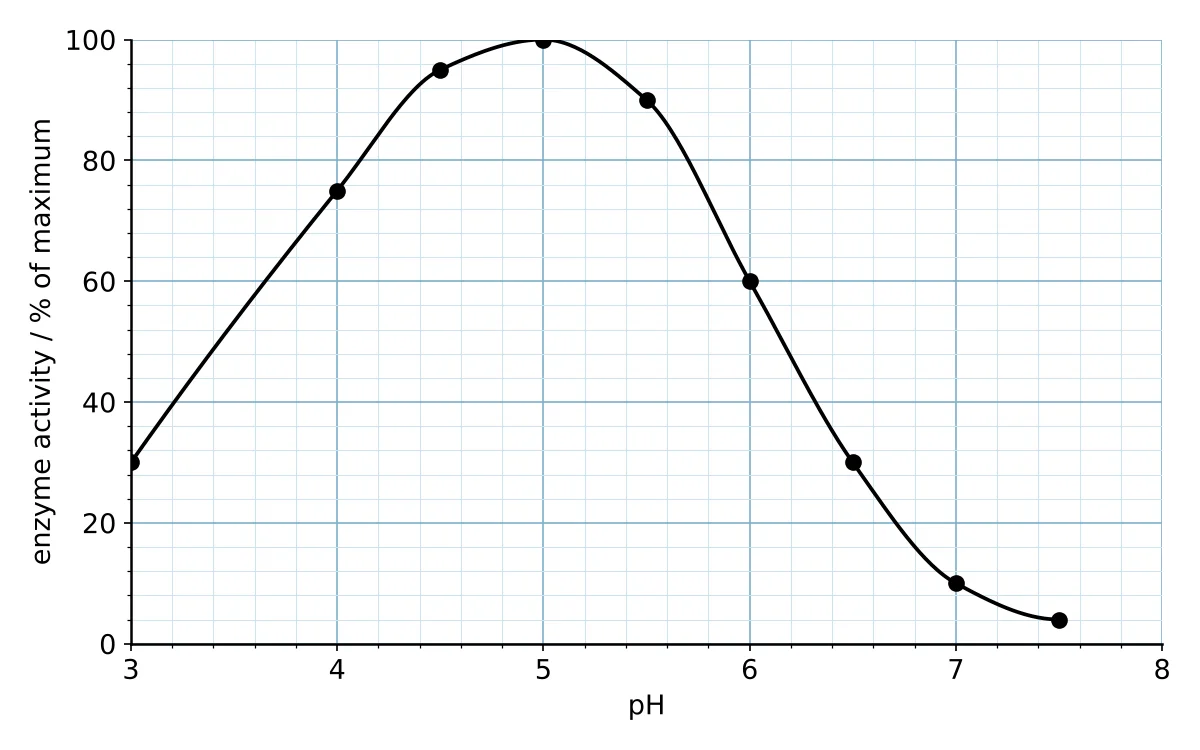
State the optimum pH of acid phosphatase.
Use the graph to estimate the activity of the enzyme at the pH of the cytosol.
Explain how the data suggest the cell is protected if a single lysosome bursts.
Explain how the lysosome keeps its internal pH low.
Outline how acid phosphatase comes to be inside lysosomes.
revisionprep.com
Summary Answer
Not available for this question.
Model Answer
Not available for this question.
Marking Scheme
Not available for this question.
Examiner Insights
Not available for this question.
Compartmentalization of processes in eukaryotic cells
The graph shows how the activity of cathepsin D, a lysosomal protease, varies with pH. Fibroblasts were treated with a drug that makes lysosome membranes leaky. Cathepsin D activity measured at pH 7.2 in the cytosol was 2 units per mg protein before treatment and 8 units after 30 minutes. After 60 minutes, the cells began to die.
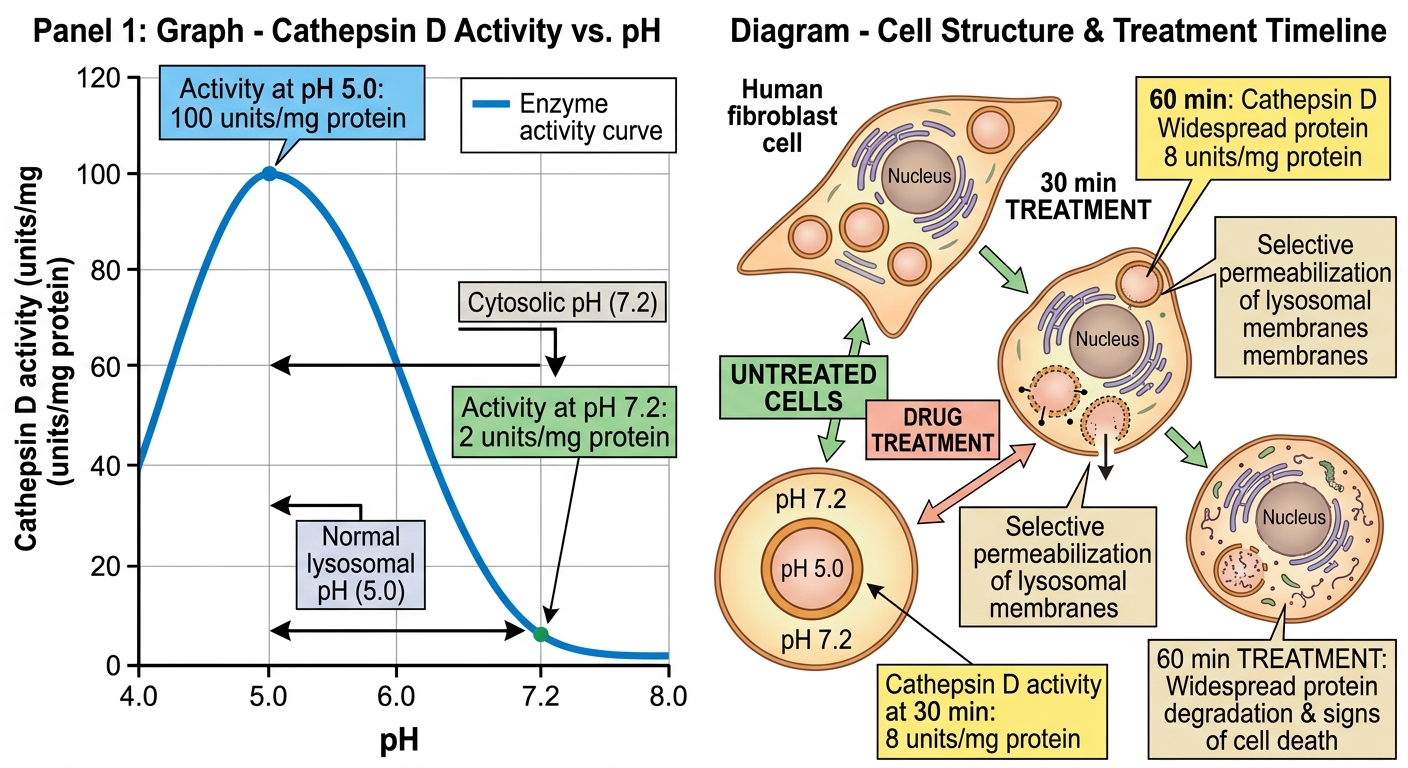
State the pH at which cathepsin D is most active.
Using the graph, compare the activity of cathepsin D in the lysosome (pH 5.0) with its activity in the cytosol (pH 7.2).
Explain why activity in the cytosol rose after drug treatment.
Discuss whether the low pH inside lysosomes or the lysosome membrane does more to protect the cell from its own enzymes.
Suggest why the cells began to die only after 60 minutes.
Outline two advantages to a cell of keeping its hydrolytic enzymes inside lysosomes.
revisionprep.com
Summary Answer
Not available for this question.
Model Answer
Not available for this question.
Marking Scheme
Not available for this question.
Examiner Insights
Not available for this question.
Role of organelles in cellular function
A drug, Compartmentin-X, is thought to block transport of proteins from the rough ER to the Golgi apparatus. Fibroblasts, which secrete collagen, were treated for 6 hours. The bar charts compare treated and control cells.
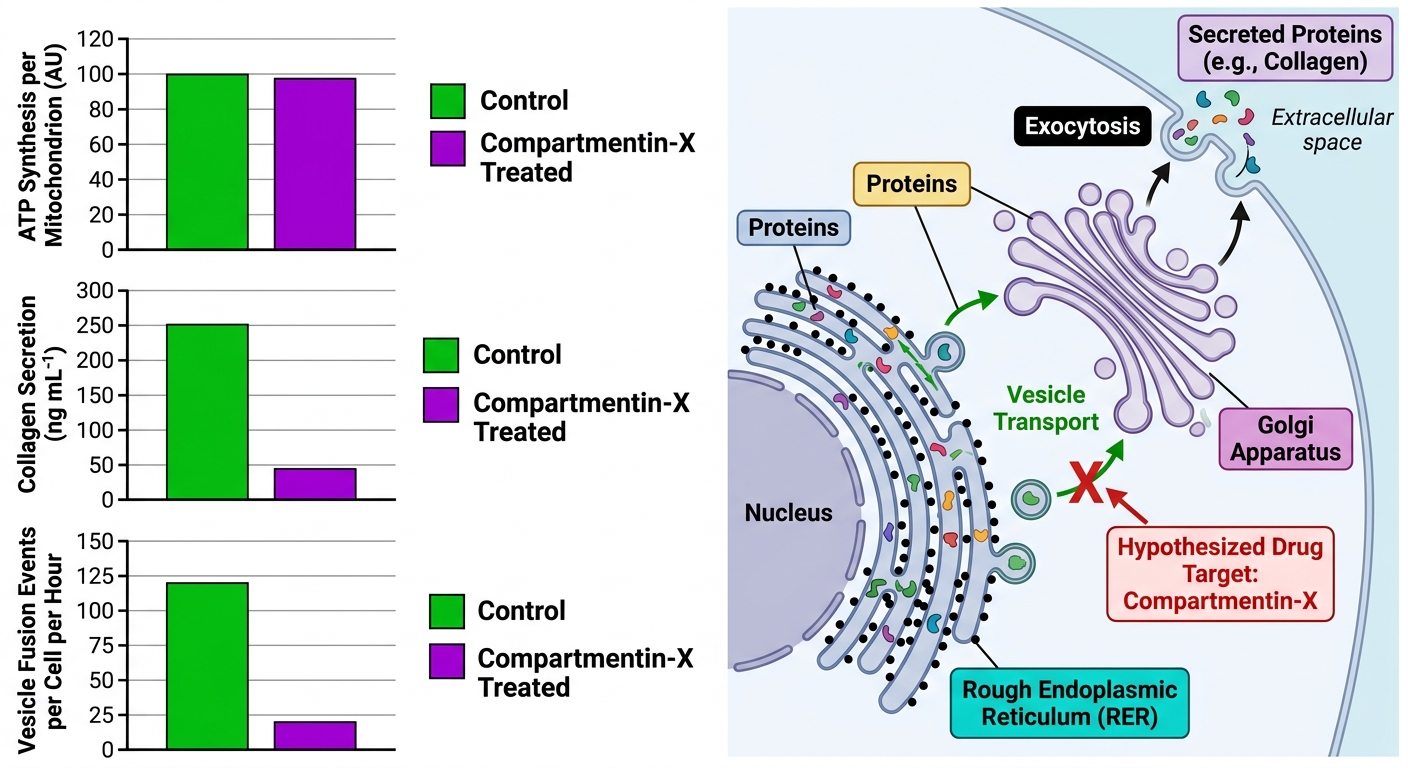
Using the charts, calculate the percentage decrease in collagen secretion and in vesicle fusion events with the Golgi.
Explain why blocking transport from the rough ER to the Golgi reduces collagen secretion.
Evaluate whether the data support the idea that the drug acts specifically on rough ER to Golgi transport.
State the organelle in which collagen is synthesised.
State two variables that should be kept the same for the control and the treated cells.
Suggest one further measurement that would test whether the drug also blocks the step from the Golgi apparatus to the plasma membrane.
revisionprep.com
Summary Answer
Not available for this question.
Model Answer
Not available for this question.
Marking Scheme
Not available for this question.
Examiner Insights
Not available for this question.
That's every free question here — 6 of 105.
+99 more questions, plus Mock Papers & Worksheets, are waiting in Premium.