You're viewing 2 free preview questions for Biology HL — subscribe to unlock 74 more, plus the Full Question Bank, Mock Papers & Worksheets.Upgrade
Transport · Paper 2 — Free Biology HL Practice Questions
1MasterySAQ-SBlood circulation in mammals (cardiovascular system)6 marksPaper 2~9 min

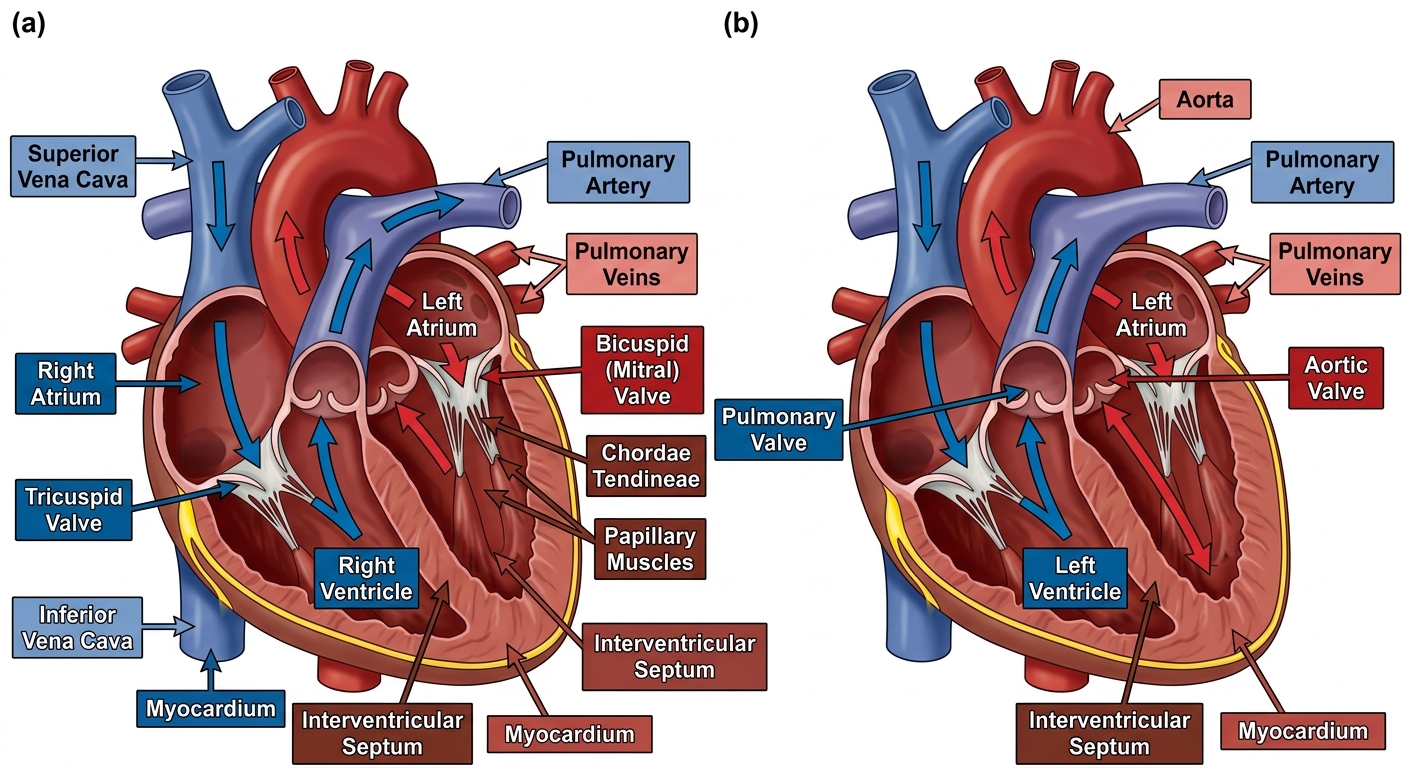
During a medical examination, a doctor uses a stethoscope to listen to the heart sounds of a healthy adult. The characteristic 'lub-dub' sound is heard.
(a)
State what causes the first heart sound ('lub') and the second heart sound ('dub'). [1 mark]
(b)
Describe the function of chordae tendineae and papillary muscles during ventricular contraction. [2 marks]
(c)
A runner has a stroke volume of and a heart rate of immediately after a sprint. Determine the cardiac output in . [1 mark]
(d)
Explain why heart rate increases during exercise, referring to the role of concentration in the blood. [2 marks]

Solutions
2MasterySAQ-SBlood circulation in mammals (cardiovascular system)5 marksPaper 2~8 min
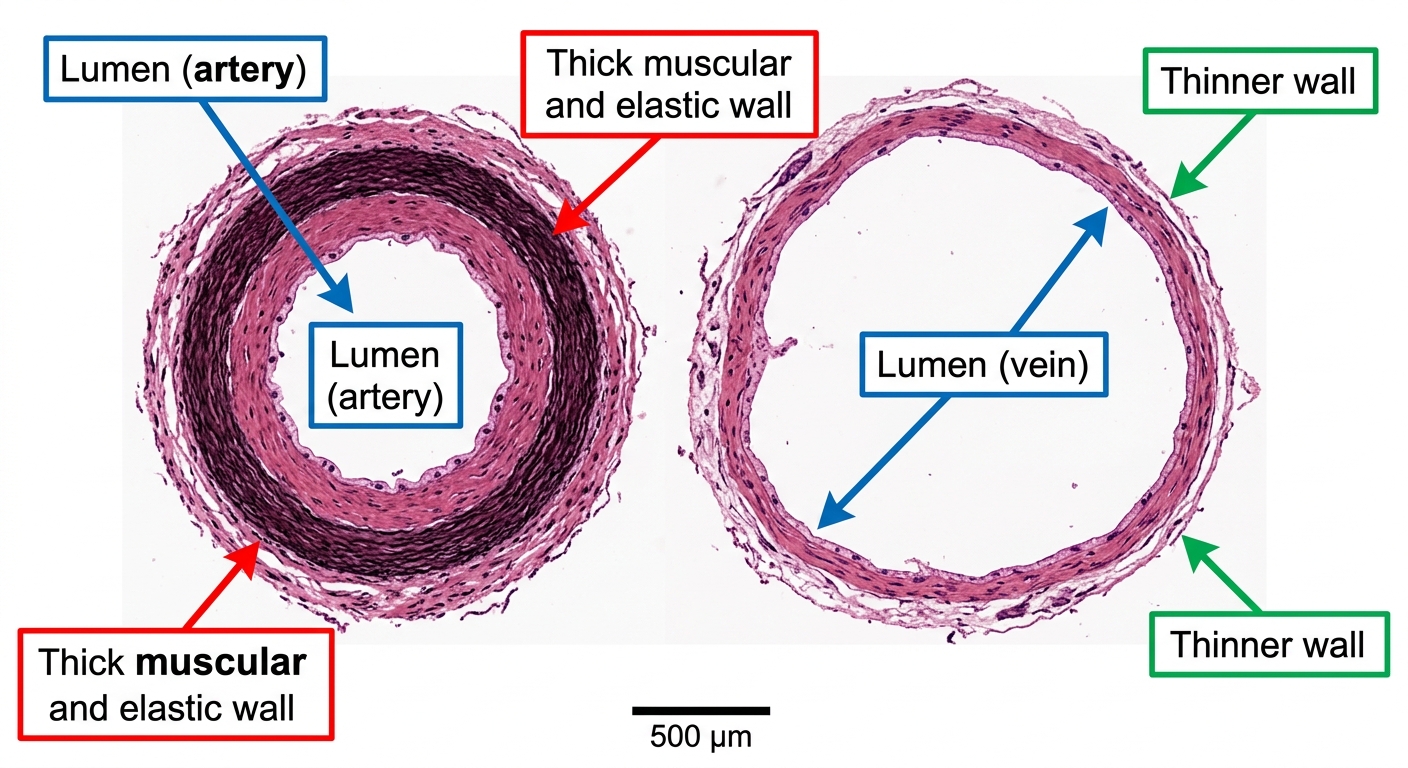
A scientist investigates the structure of mammalian arteries and veins using a light microscope. She observes that the wall of an artery is much thicker and more muscular than the wall of a vein of similar diameter.
(a)
State how the thick, muscular wall of an artery relates to its function. [1 mark]
(b)
State the role of valves in veins. [1 mark]
(c)
Calculate the mean arterial pressure (MAP) for a patient with blood pressure , using the formula:
[1 mark]
(d)
A patient is diagnosed with venous valve incompetence (leaky valves) in the legs. Explain the physiological consequences of this condition for venous return and tissue fluid balance. [2 marks]
Solutions
That's every free question here — 2 of 76.
+74 more questions, plus Mock Papers & Worksheets, are waiting in Premium.