Chemical Signalling · Paper 1 — Free Biology HL Practice Questions
Free questions
Open in full, with answers, mark scheme and examiner insights.
Transmembrane receptors and signal transduction
What is a G protein-coupled receptor?
revisionprep.com
Summary Answer
Not available for this question.
Model Answer
Not available for this question.
Marking Scheme
Not available for this question.
Examiner Insights
Not available for this question.
Cell communication and signaling
Which statement describes a receptor in cell signalling?
revisionprep.com
Summary Answer
Not available for this question.
Model Answer
Not available for this question.
Marking Scheme
Not available for this question.
Examiner Insights
Not available for this question.
Transmembrane receptors and signal transduction
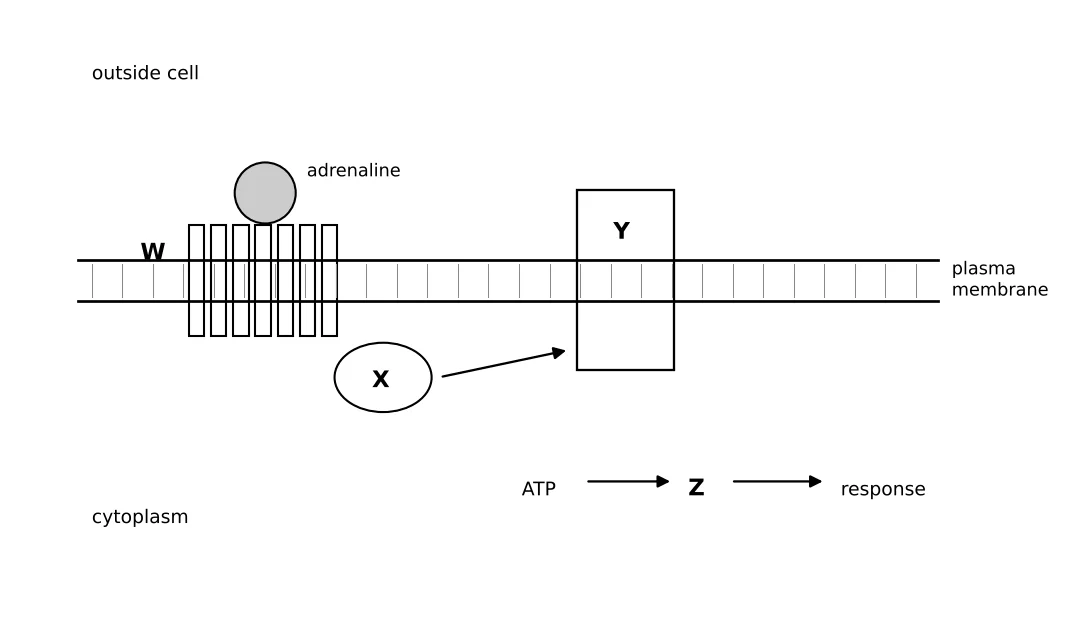
The shows a signalling pathway in the plasma membrane of a liver cell. Which labelled structure catalyses the conversion of ATP to the second messenger?
revisionprep.com
Summary Answer
Not available for this question.
Model Answer
Not available for this question.
Marking Scheme
Not available for this question.
Examiner Insights
Not available for this question.
Cell communication and signaling
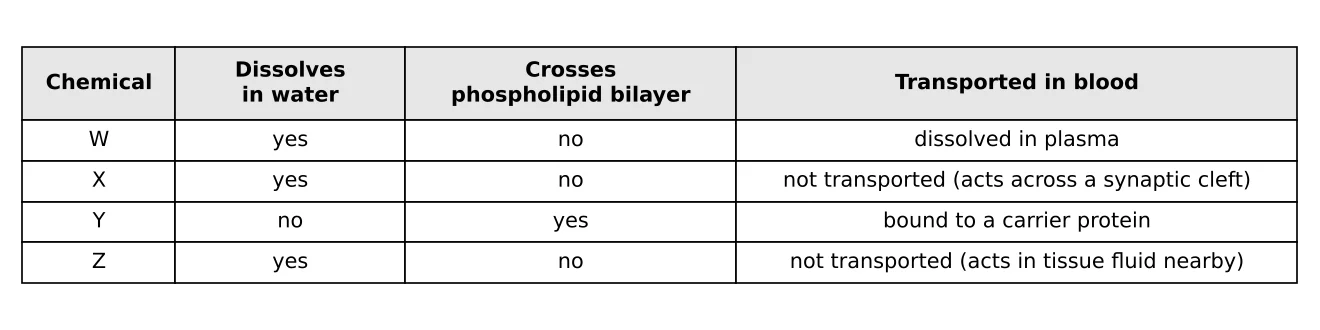
The table shows properties of four signalling chemicals, W, X, Y and Z. Which is most likely to be a steroid hormone?
revisionprep.com
Summary Answer
Not available for this question.
Model Answer
Not available for this question.
Marking Scheme
Not available for this question.
Examiner Insights
Not available for this question.
Cell communication and signaling
Cholera toxin alters the α subunit of the G protein in intestinal cells so that it cannot hydrolyse GTP. Pieces of intestine were treated with cholera toxin, inhibitor A (which inhibits adenylyl cyclase), both or neither. cAMP and chloride ion secretion were measured (hypothetical data).
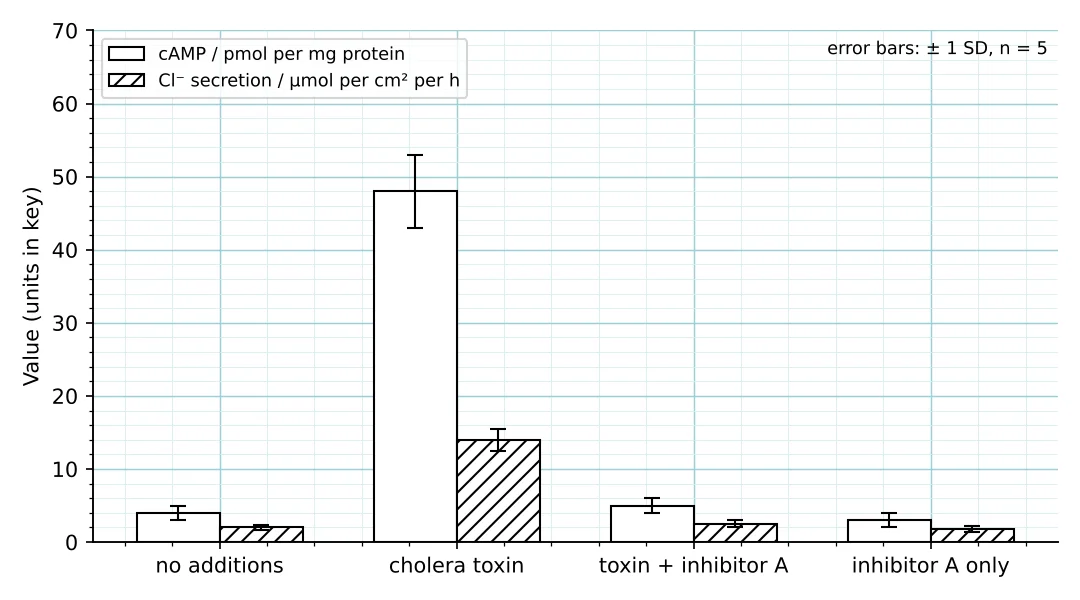
Calculate the factor by which cholera toxin increases the cAMP concentration.
Deduce, with evidence, the role of adenylyl cyclase in the effect of cholera toxin.
Explain why cholera toxin causes cAMP to stay high.
Suggest why the increased chloride secretion causes a large loss of water from the intestine.
revisionprep.com
Summary Answer
Not available for this question.
Model Answer
Not available for this question.
Marking Scheme
Not available for this question.
Examiner Insights
Not available for this question.
Cell communication and signaling
Cells with receptors for a natural ligand N were incubated with labelled N plus increasing concentrations of one of three unlabelled competitor molecules, A, B or C. The graph shows the binding of labelled N as a percentage of its binding with no competitor (hypothetical data).
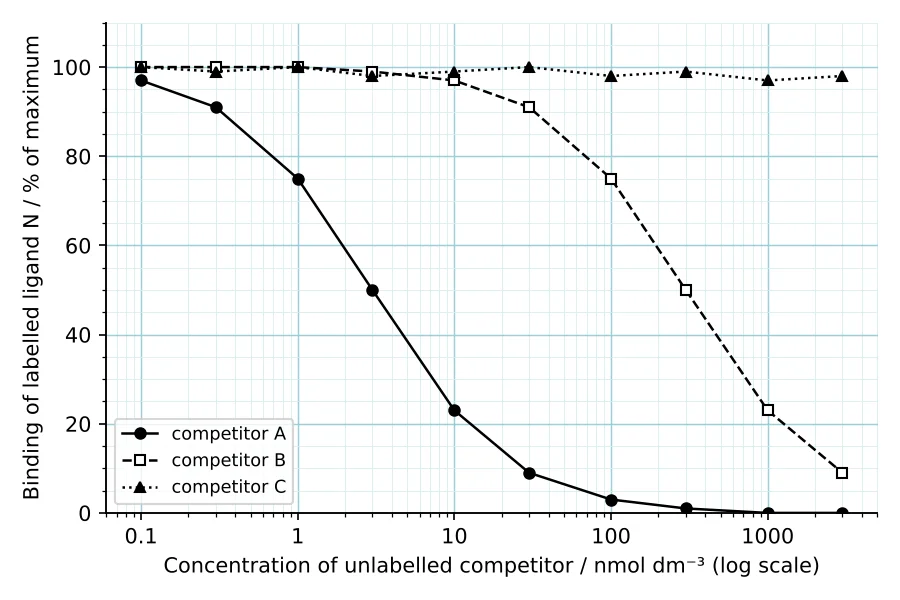
Determine the concentration of competitor A and of competitor B that reduces binding of labelled N by 50%.
Deduce which competitor binds to the receptor with the highest affinity.
Explain the results for competitor C in terms of the receptor binding site.
Competitor A binds to the receptor but causes no response in the cells. Suggest how A can bind without causing a response, and predict its effect on signalling by N.
revisionprep.com
Summary Answer
Not available for this question.
Model Answer
Not available for this question.
Marking Scheme
Not available for this question.
Examiner Insights
Not available for this question.
That's every free question here — 6 of 130.
+124 more questions, plus Mock Papers & Worksheets, are waiting in Premium.