Enzymes and Metabolism · Paper 1 — Free Biology HL Practice Questions
Free questions
Open in full, with answers, mark scheme and examiner insights.
Enzyme structure and function
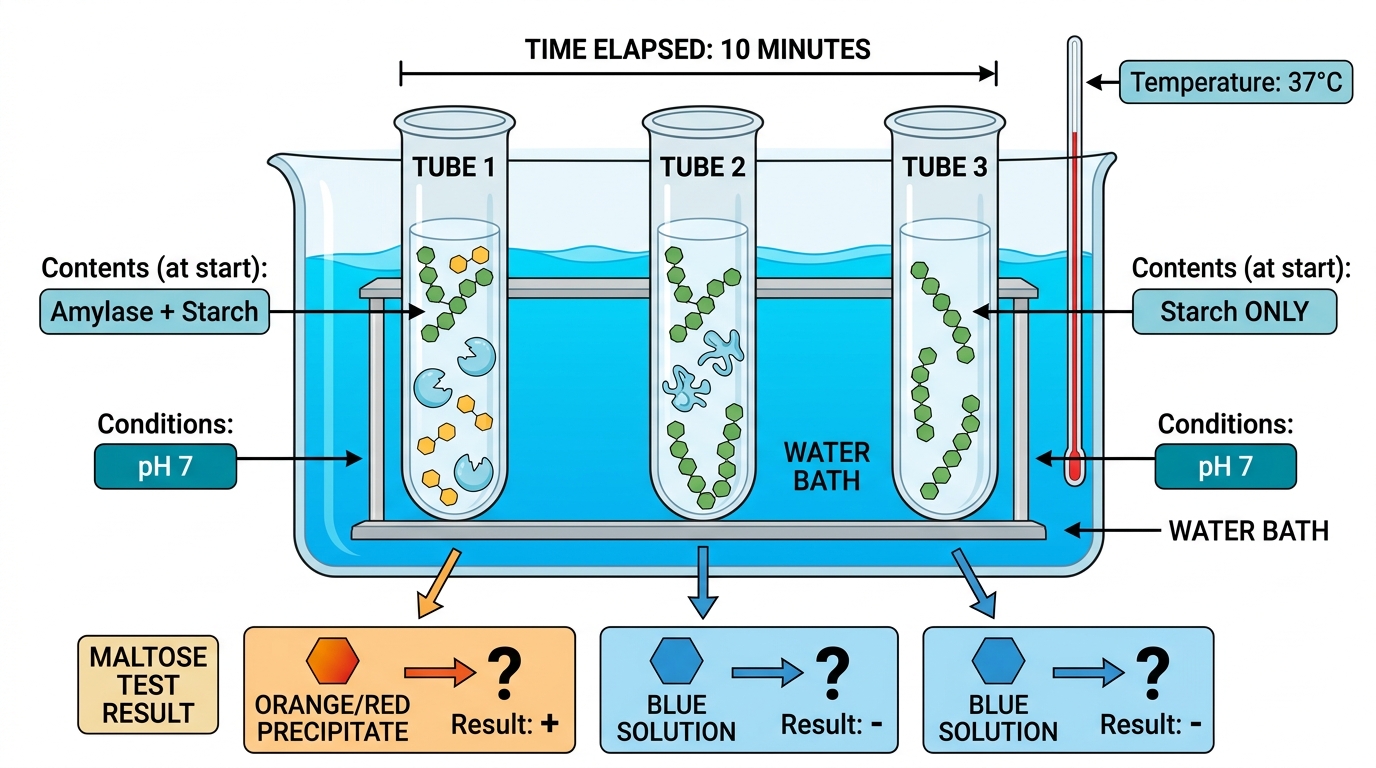
A student investigates amylase activity by setting up three test tubes, all incubated at 37 °C for 10 minutes. Tube 1 contains amylase and starch at pH 7; Tube 2 contains amylase and starch at pH 3; Tube 3 contains starch only at pH 7. After incubation, each tube is tested for maltose using Benedict's reagent. Only Tube 1 gives a positive result. What is the most likely explanation for the absence of maltose in Tube 2?
revisionprep.com
Summary Answer
Not available for this question.
Model Answer
Not available for this question.
Marking Scheme
Not available for this question.
Examiner Insights
Not available for this question.
Metabolic pathways: Anabolism and catabolism
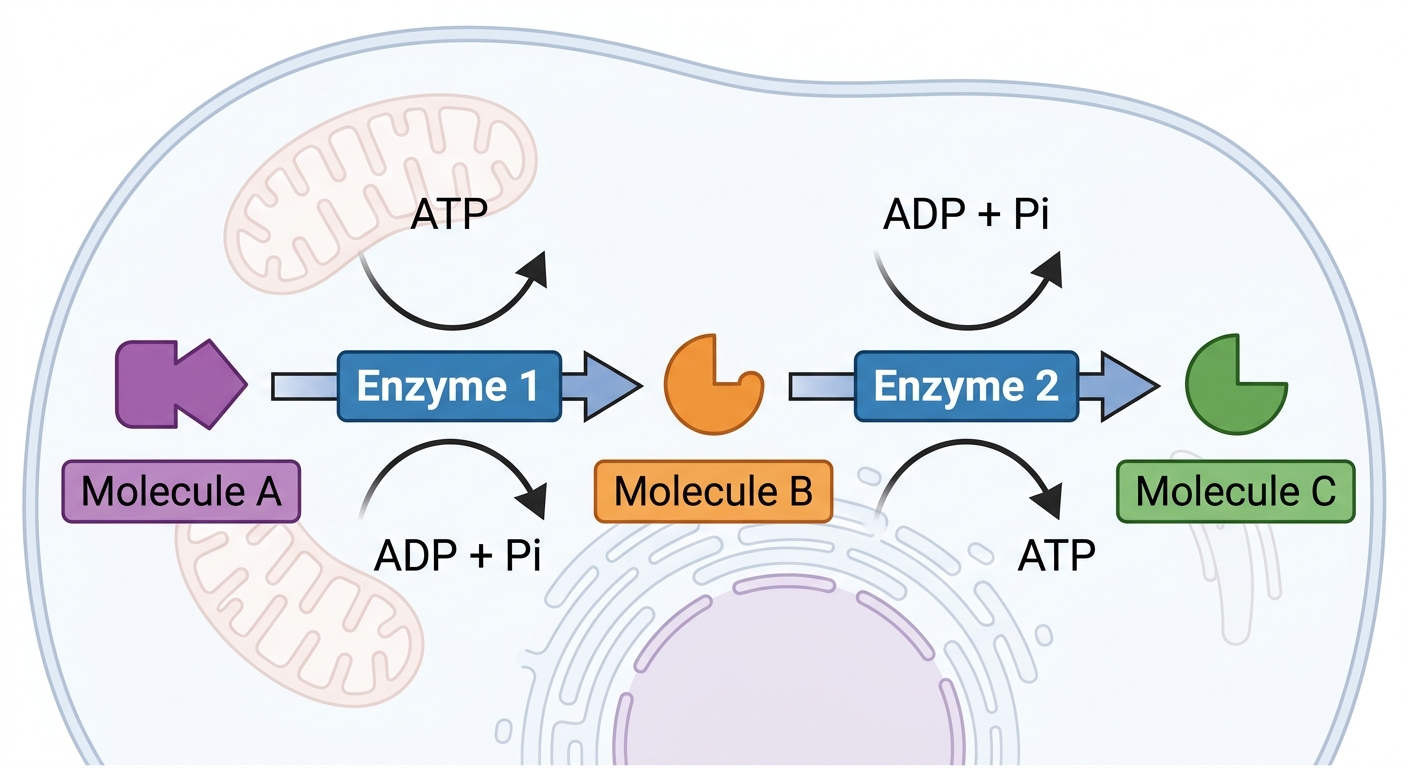
A metabolic pathway in a liver cell involves two sequential enzyme-catalysed reactions. Enzyme 1 converts molecule A into molecule B using ATP, and enzyme 2 converts molecule B into molecule C, releasing ATP. Which statement correctly classifies these two reactions?
revisionprep.com
Summary Answer
Not available for this question.
Model Answer
Not available for this question.
Marking Scheme
Not available for this question.
Examiner Insights
Not available for this question.
Enzyme structure and function
Lactase, produced by cells lining the small intestine, hydrolyses lactose into glucose and galactose. The rate of lactose hydrolysis by lactase was measured at different pH values at 37 °C. The table shows the results.
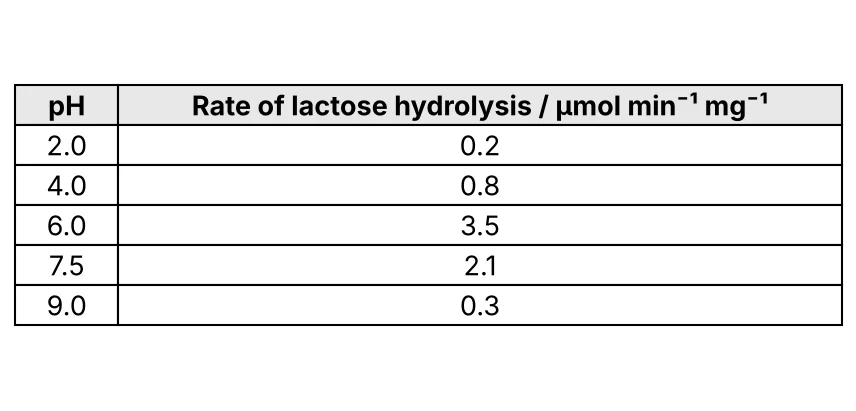
State the optimum pH for lactase shown by these data.
Calculate the percentage decrease in rate when the pH is changed from the optimum to pH 9.0.
Explain, with reference to the tertiary structure of lactase, why the rate is very low at pH 2.0.
Describe a simple test to find out whether the loss of activity at pH 2.0 is permanent.
revisionprep.com
Summary Answer
Not available for this question.
Model Answer
Not available for this question.
Marking Scheme
Not available for this question.
Examiner Insights
Not available for this question.
Metabolic pathways: Anabolism and catabolism
The mould Aspergillus niger was grown in a liquid medium containing starch. Each day a sample was taken. The hyphae were filtered off and washed, and amylase activity was measured in the culture medium and in an extract of ground-up hyphae. The graph shows the results.
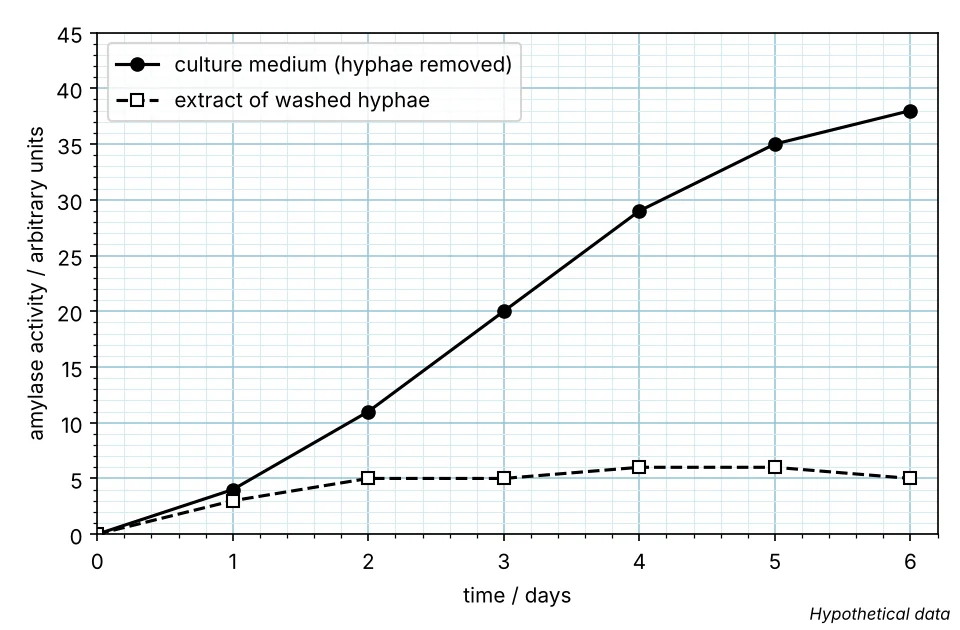
State the amylase activity in the culture medium on day 4.
Calculate the percentage of the total amylase activity that was in the culture medium on day 5.
Deduce, using the data, whether amylase catalyses an intracellular or an extracellular reaction in this mould.
Suggest why the hyphae were washed before they were ground up.
revisionprep.com
Summary Answer
Not available for this question.
Model Answer
Not available for this question.
Marking Scheme
Not available for this question.
Examiner Insights
Not available for this question.
Enzyme structure and function
In a laboratory experiment, students investigate the effect of pH on the activity of an amylase, which hydrolyses starch into maltose. Six test tubes each contain 2 cm³ of 1 % starch solution and 1 cm³ of amylase solution at 0.1 mg cm⁻³. The pH of each tube is adjusted using buffer solutions. After 10 minutes at 37 °C, the concentration of maltose produced is measured. The graph shows the results.
The students conclude: "The optimum pH for this amylase is exactly 6.0, and the enzyme is permanently denatured at pH 4.0 and pH 9.0."
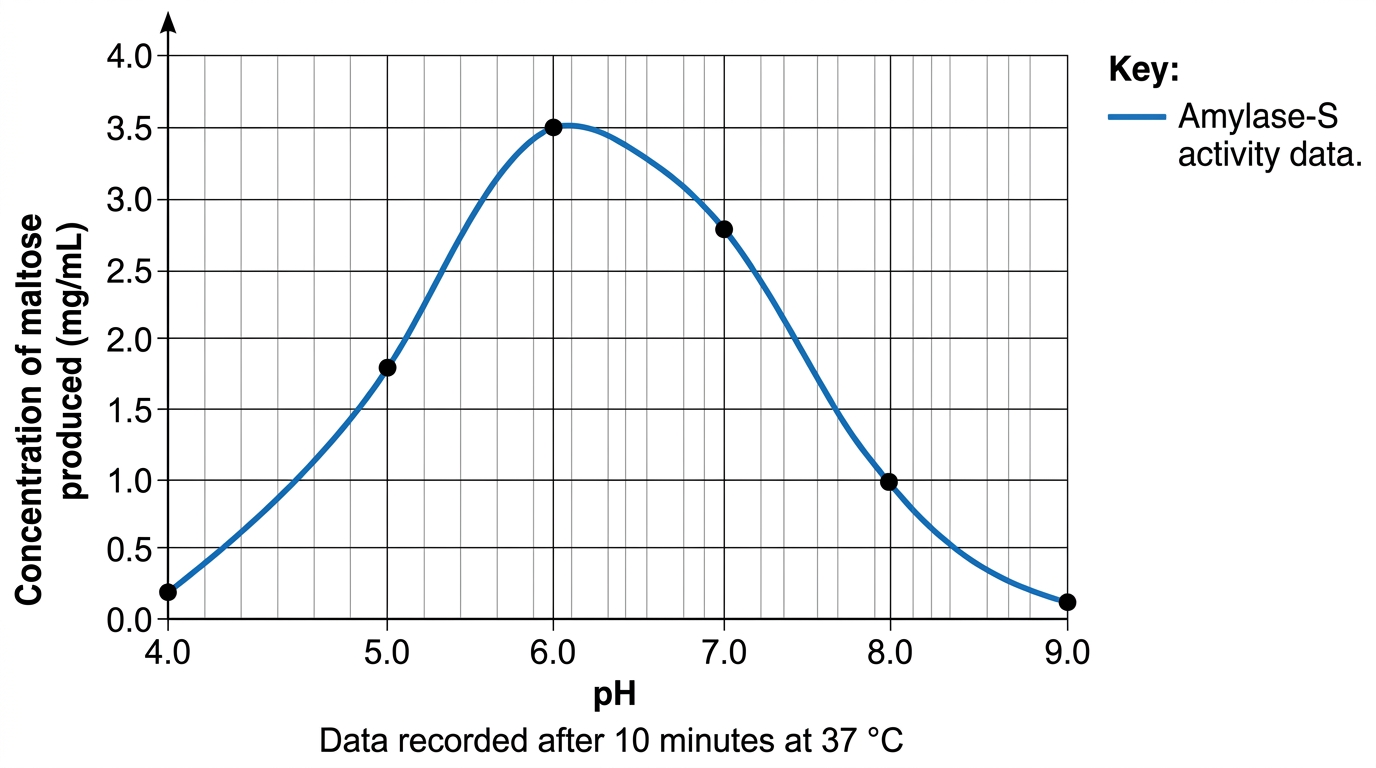
Calculate the percentage increase in maltose production when pH is changed from to .
Explain the mechanism by which pH affects the rate of an enzyme-catalysed reaction, with reference to the amylase.
Evaluate the students' claim that the optimum pH is exactly and that activity is permanently lost at pH and pH .
Design an experiment to test whether the loss of the amylase activity at pH is due to permanent denaturation or a reversible change in shape.
revisionprep.com
Summary Answer
Not available for this question.
Model Answer
Not available for this question.
Marking Scheme
Not available for this question.
Examiner Insights
Not available for this question.
Inhibition: competitive, non-competitive, end-product, mechanism-based (AHL)
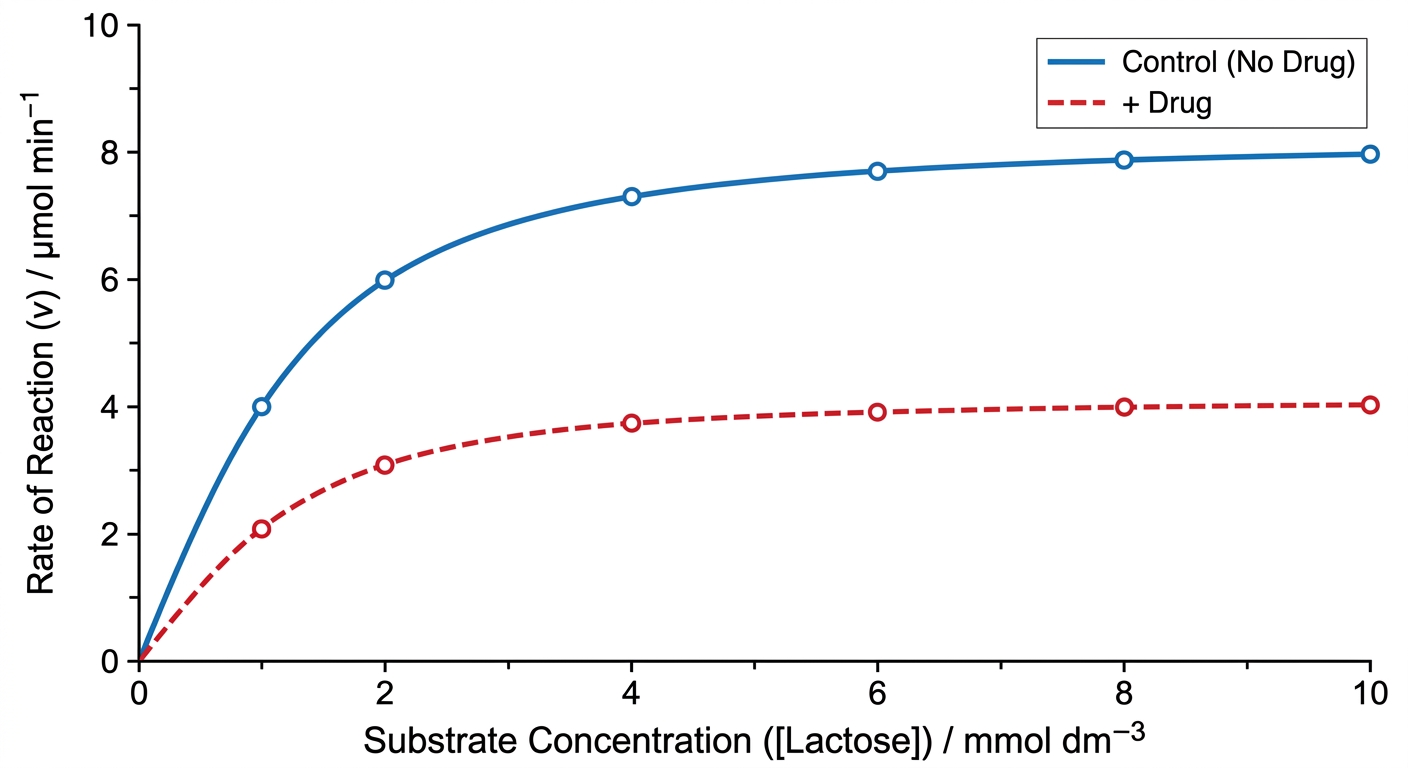
Lactase activity was measured at different lactose concentrations, without and with a drug that binds reversibly to lactase. The graph shows the results. A student claims that the drug is a competitive inhibitor. Which statement evaluates this claim?
revisionprep.com
Summary Answer
Not available for this question.
Model Answer
Not available for this question.
Marking Scheme
Not available for this question.
Examiner Insights
Not available for this question.
That's every free question here — 6 of 99.
+93 more questions, plus Mock Papers & Worksheets, are waiting in Premium.