Photosynthesis · Paper 1 — Free Biology HL Practice Questions
Free questions
Open in full, with answers, mark scheme and examiner insights.
Photosystem II and I
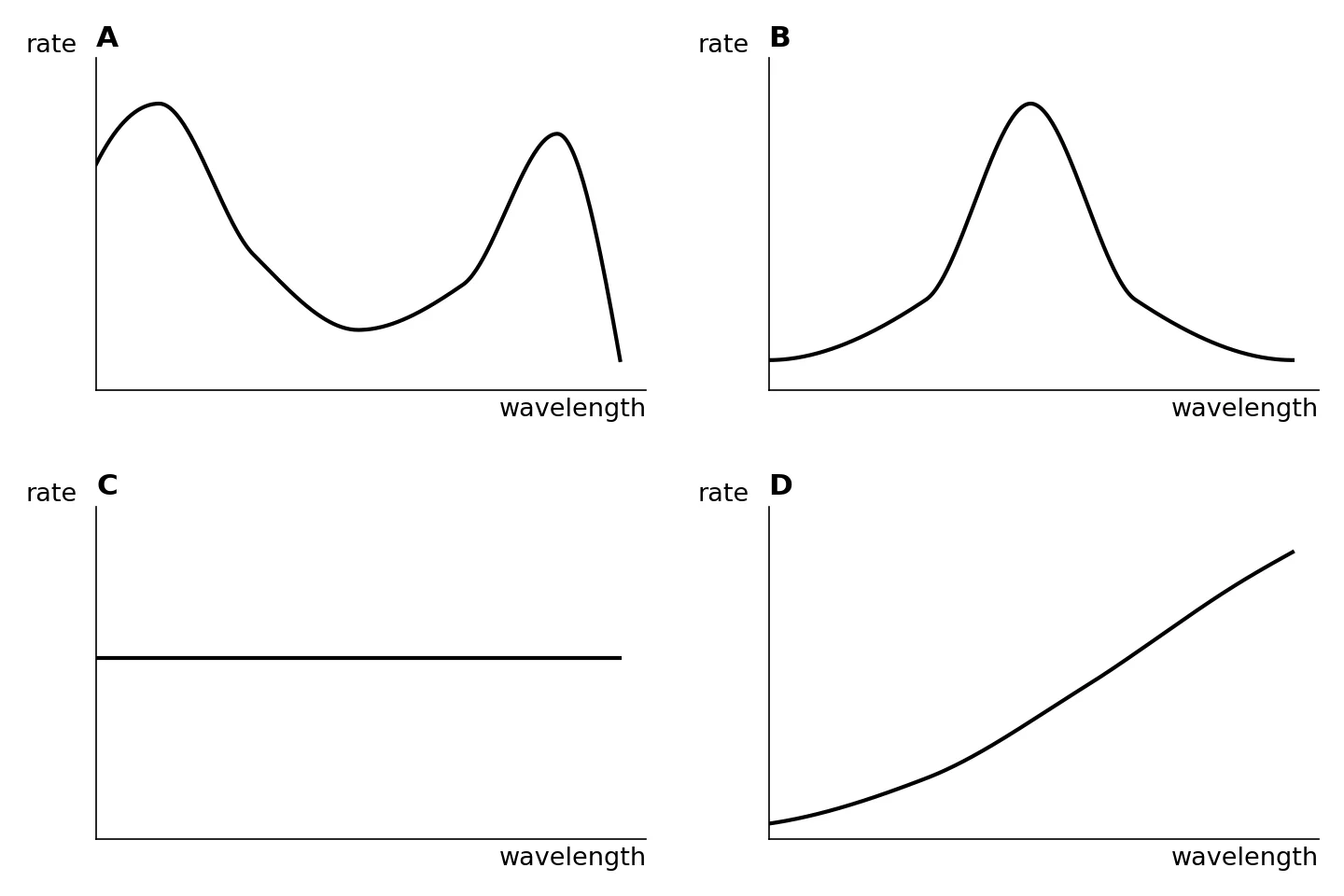
The four graphs are sketches of rate of photosynthesis against wavelength, from 400 nm (left) to 700 nm (right). Which graph shows the action spectrum of a typical green plant?
revisionprep.com
Summary Answer
Not available for this question.
Model Answer
Not available for this question.
Marking Scheme
Not available for this question.
Examiner Insights
Not available for this question.
The light-dependent and light-independent reactions
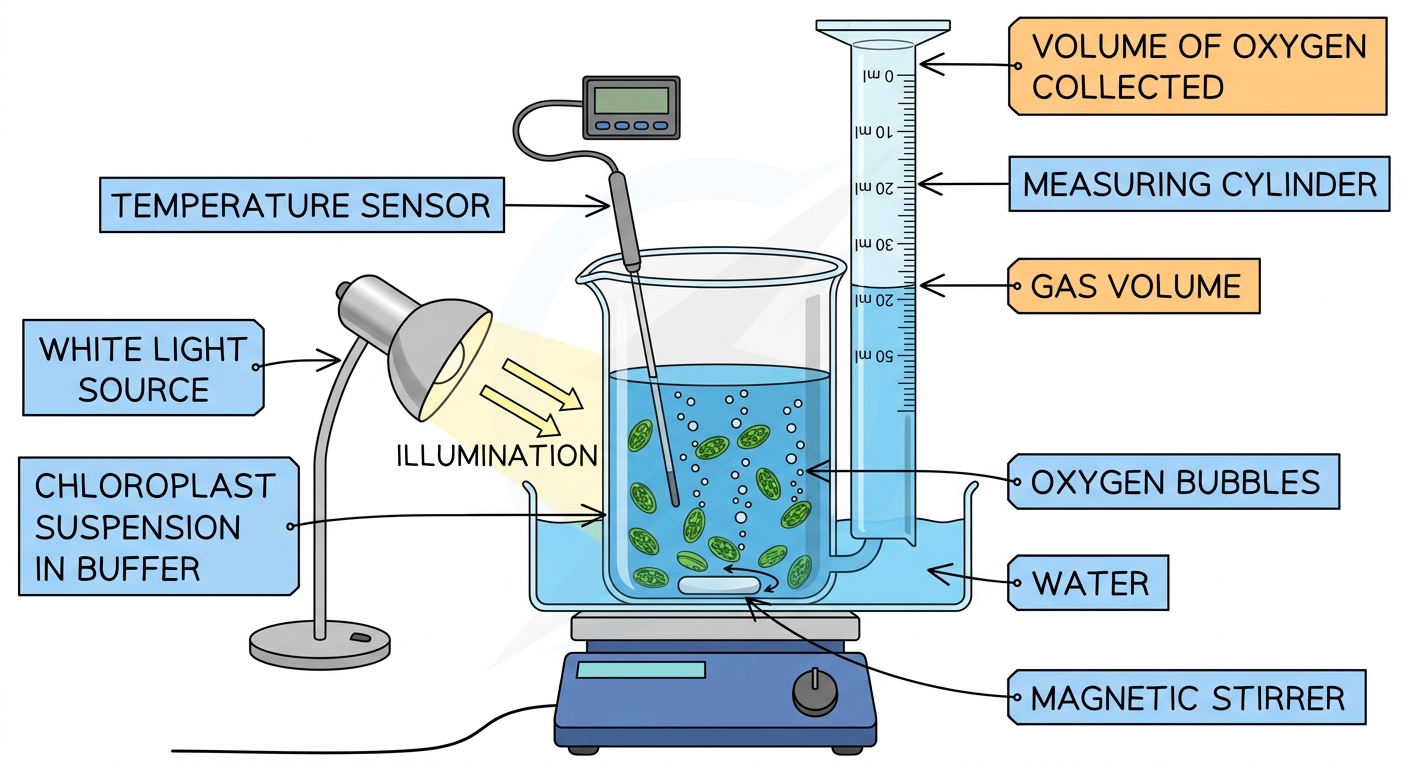
The apparatus in the figure is used to investigate how light intensity affects photosynthesis in a suspension of isolated chloroplasts. Which measurement gives the rate of photosynthesis?
revisionprep.com
Summary Answer
Not available for this question.
Model Answer
Not available for this question.
Marking Scheme
Not available for this question.
Examiner Insights
Not available for this question.
Receptors and signalling chemicals
Chloroplasts isolated from spinach were suspended in a buffer containing DCPIP, a blue dye that becomes colourless when it is reduced. The blue colour was measured as absorbance at the start and after 10 minutes. The results are shown in the table.
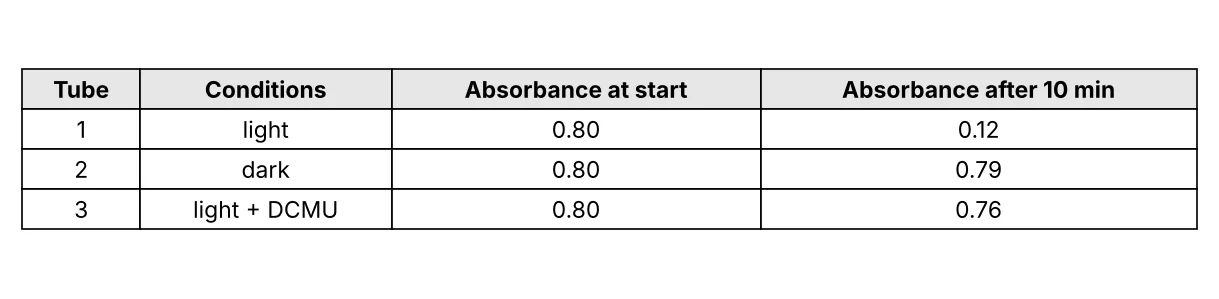
Calculate the percentage decrease in absorbance in tube 1.
Explain the result in tube 1.
DCMU blocks the transfer of electrons from photosystem II to the electron carriers. Explain the result in tube 3.
Predict, with a reason, whether oxygen would be released in tube 3.
revisionprep.com
Summary Answer
Not available for this question.
Model Answer
Not available for this question.
Marking Scheme
Not available for this question.
Examiner Insights
Not available for this question.
The light-dependent and light-independent reactions
The graph shows the effect of pH on the activity of Rubisco extracted from spinach leaves. In a chloroplast, the pH of the stroma is about 7.0 in the dark and about 8.0 in the light.
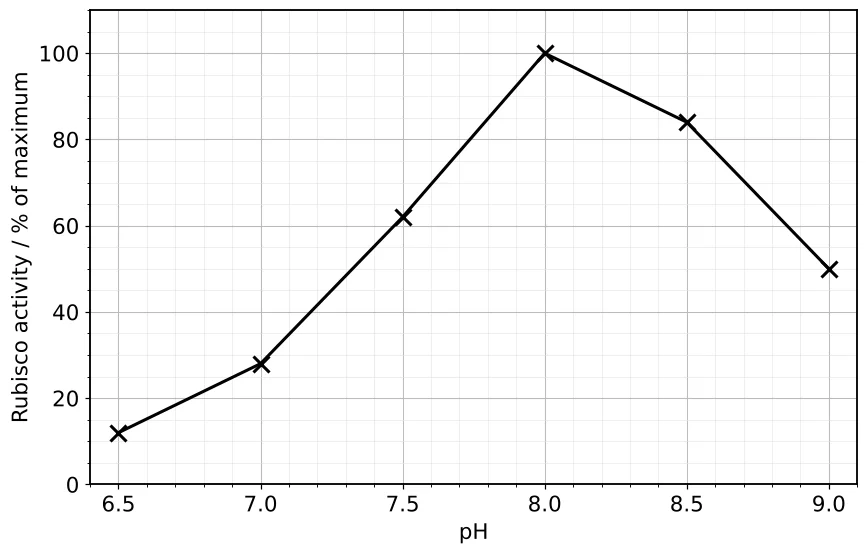
State the pH at which Rubisco activity is highest.
Calculate how many times greater Rubisco activity is at the stroma pH in the light than at the stroma pH in the dark.
Explain why the pH of the stroma rises when a chloroplast is illuminated.
Suggest one advantage to the plant of Rubisco being less active in the dark.
revisionprep.com
Summary Answer
Not available for this question.
Model Answer
Not available for this question.
Marking Scheme
Not available for this question.
Examiner Insights
Not available for this question.
Photosystem II and I
Isolated thylakoids were soaked in the dark in a buffer at pH 4 until their lumen reached pH 4. They were then moved quickly, still in the dark, into a buffer at pH 8. The graph shows the ATP formed in four treatments.
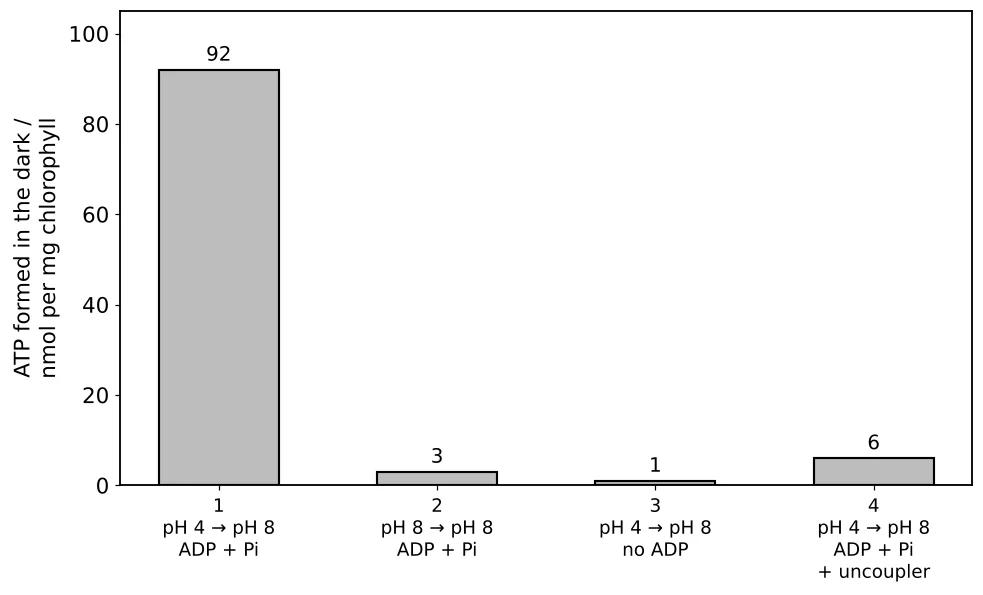
State why the whole experiment was done in the dark.
Explain the result of treatment 1.
Explain the result of treatment 2.
Uncouplers make membranes permeable to protons. Explain the result of treatment 4.
Outline how these results support the theory of chemiosmosis.
revisionprep.com
Summary Answer
Not available for this question.
Model Answer
Not available for this question.
Marking Scheme
Not available for this question.
Examiner Insights
Not available for this question.
The light-dependent and light-independent reactions
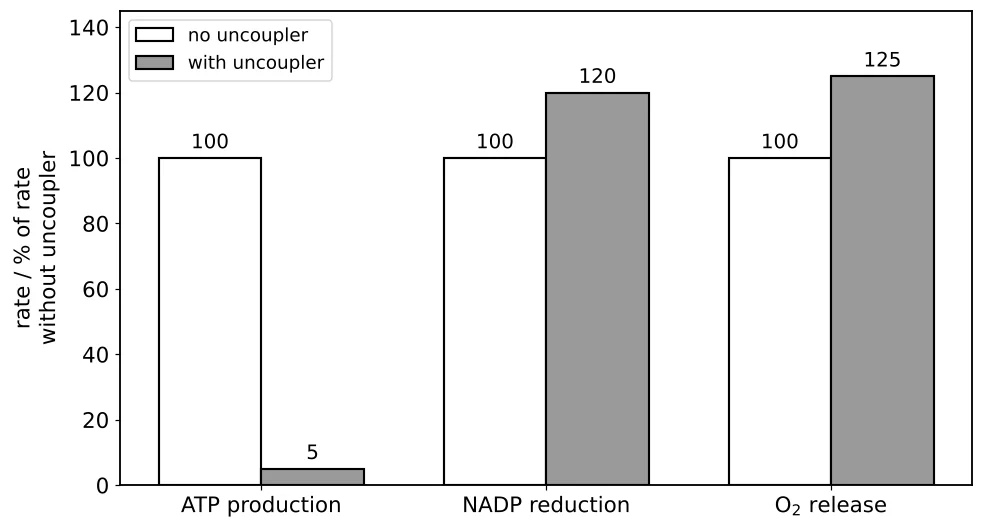
An uncoupler makes the thylakoid membrane permeable to protons. The graph shows the effect of an uncoupler on three processes in illuminated chloroplasts supplied with ADP, phosphate and NADP⁺. Which statement explains the results?
revisionprep.com
Summary Answer
Not available for this question.
Model Answer
Not available for this question.
Marking Scheme
Not available for this question.
Examiner Insights
Not available for this question.
That's every free question here — 6 of 132.
+126 more questions, plus Mock Papers & Worksheets, are waiting in Premium.