Nucleic Acids · Paper 1 — Free Biology HL Practice Questions
Free questions
Open in full, with answers, mark scheme and examiner insights.
Nucleotide structure and the sugar–phosphate backbone
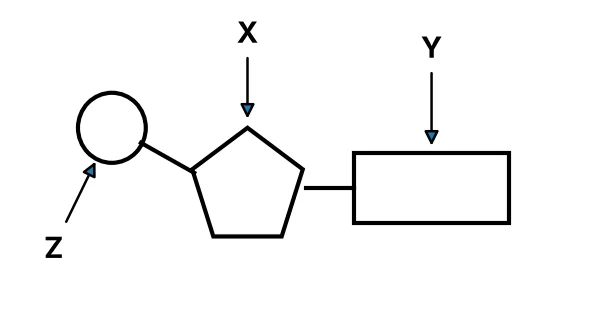
The shows one nucleotide. Which row identifies X, Y and Z?
revisionprep.com
Summary Answer
Not available for this question.
Model Answer
Not available for this question.
Marking Scheme
Not available for this question.
Examiner Insights
Not available for this question.
Structure of DNA and RNA
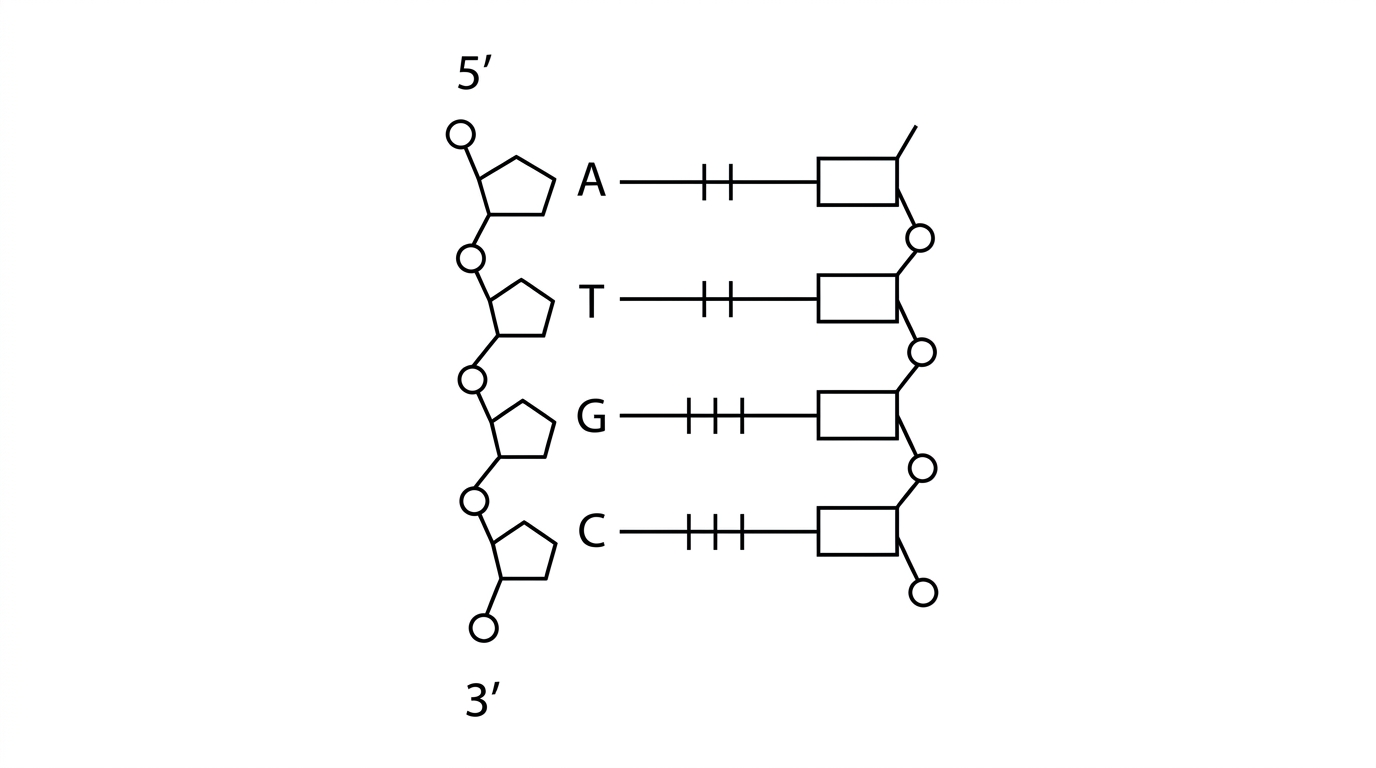
The shows part of a DNA molecule. The bases on the right-hand strand are drawn as empty boxes. Which row identifies what the short lines between the bases represent and the base in the lowest box?
revisionprep.com
Summary Answer
Not available for this question.
Model Answer
Not available for this question.
Marking Scheme
Not available for this question.
Examiner Insights
Not available for this question.
DNA double helix and complementary base pairing
Table 1 shows the number of each type of nucleotide in one strand of a DNA molecule of 800 base pairs. A–T and A–U base pairs are held by two hydrogen bonds and G–C base pairs by three.
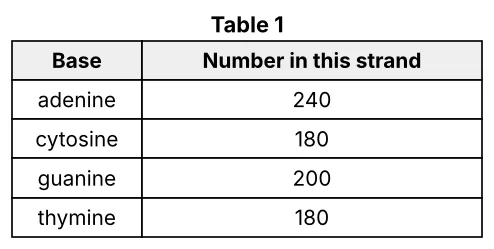
State the number of thymine nucleotides in the complementary strand.
Calculate the total number of hydrogen bonds holding the two strands together.
Calculate the percentage of guanine in the whole double-stranded molecule.
revisionprep.com
Summary Answer
Not available for this question.
Model Answer
Not available for this question.
Marking Scheme
Not available for this question.
Examiner Insights
Not available for this question.
Nucleotide structure and the sugar–phosphate backbone
A DNA synthesiser builds single strands by joining one nucleotide at a time in a cycle of condensation reactions. In each cycle 99 % of the growing strands gain a nucleotide; the rest stop growing. The graph shows the percentage of strands that reach the intended length.
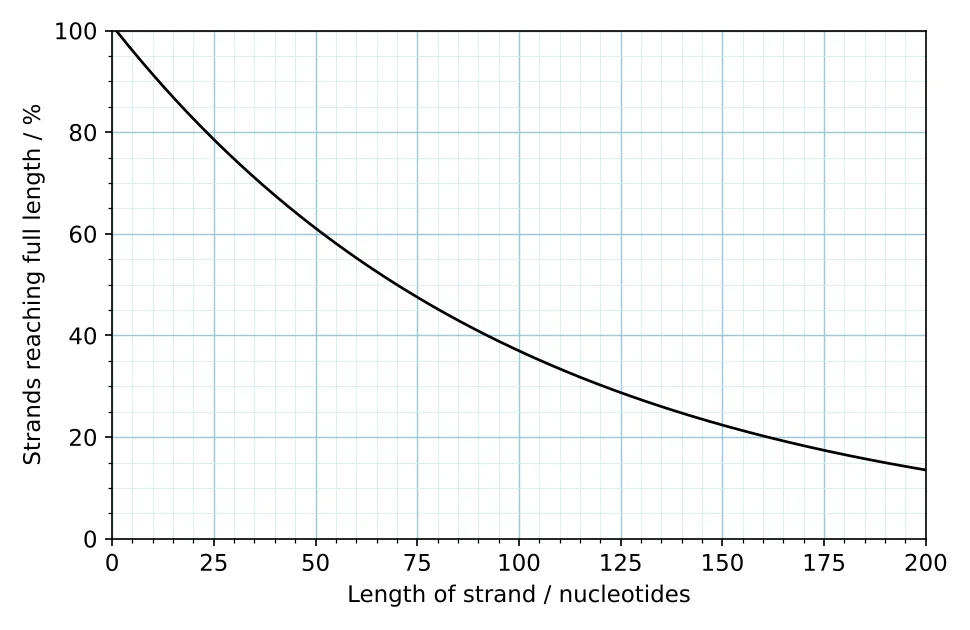
State the number of condensation reactions needed to make one strand of 50 nucleotides.
Estimate the length of strand for which half of the strands reach full length.
Calculate the percentage of 120-nucleotide strands that would be shorter than full length.
Explain why the percentage of full-length strands falls as the intended length increases.
revisionprep.com
Summary Answer
Not available for this question.
Model Answer
Not available for this question.
Marking Scheme
Not available for this question.
Examiner Insights
Not available for this question.
DNA double helix and complementary base pairing
A research team investigates the relationship between DNA base composition and thermal stability in two bacterial species: Thermus aquaticus (optimal growth at ) and Escherichia coli (optimal growth at ). DNA isolated from each species was found to be linear and double-stranded.
Table 1 shows the GC content of the DNA of each species. A–T and A–U base pairs are held by two hydrogen bonds and G–C base pairs by three.

Calculate the number of hydrogen bonds per 100 base pairs in the DNA of T. aquaticus.
State the percentage of adenine bases in T. aquaticus DNA and identify the rule that allows this to be determined.
Explain how a higher GC content contributes to thermal stability of DNA.
Evaluate the hypothesis that the higher GC content of T. aquaticus DNA is the sole reason for its ability to withstand higher temperatures, using the data provided and your knowledge of DNA structure.
revisionprep.com
Summary Answer
Not available for this question.
Model Answer
Not available for this question.
Marking Scheme
Not available for this question.
Examiner Insights
Not available for this question.
Nucleotide structure and the sugar–phosphate backbone
Radioactive phosphate (³²P) was added to a culture of dividing yeast cells. Samples were taken and the radioactivity in the DNA and in the RNA of the cells was measured (mean ± SD, n = 3, hypothetical data).
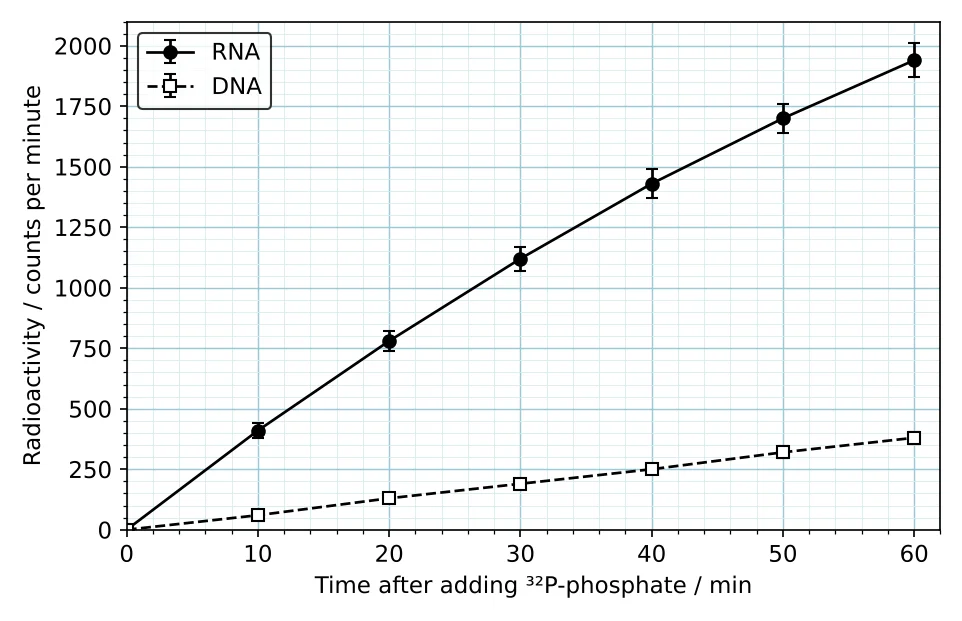
State the radioactivity of the RNA after 30 minutes.
Calculate the mean rate of incorporation of ³²P into DNA over the 60 minutes.
Explain why ³²P from phosphate is incorporated into nucleic acids.
Suggest two reasons why the RNA becomes labelled faster than the DNA.
Suggest why a radioactive form of thymine would label only DNA.
Evaluate whether these data show that the cells are making more RNA than DNA.
revisionprep.com
Summary Answer
Not available for this question.
Model Answer
Not available for this question.
Marking Scheme
Not available for this question.
Examiner Insights
Not available for this question.
That's every free question here — 6 of 156.
+150 more questions, plus Mock Papers & Worksheets, are waiting in Premium.