Viruses · Paper 1 — Free Biology HL Practice Questions
Free questions
Open in full, with answers, mark scheme and examiner insights.
Replication of viruses
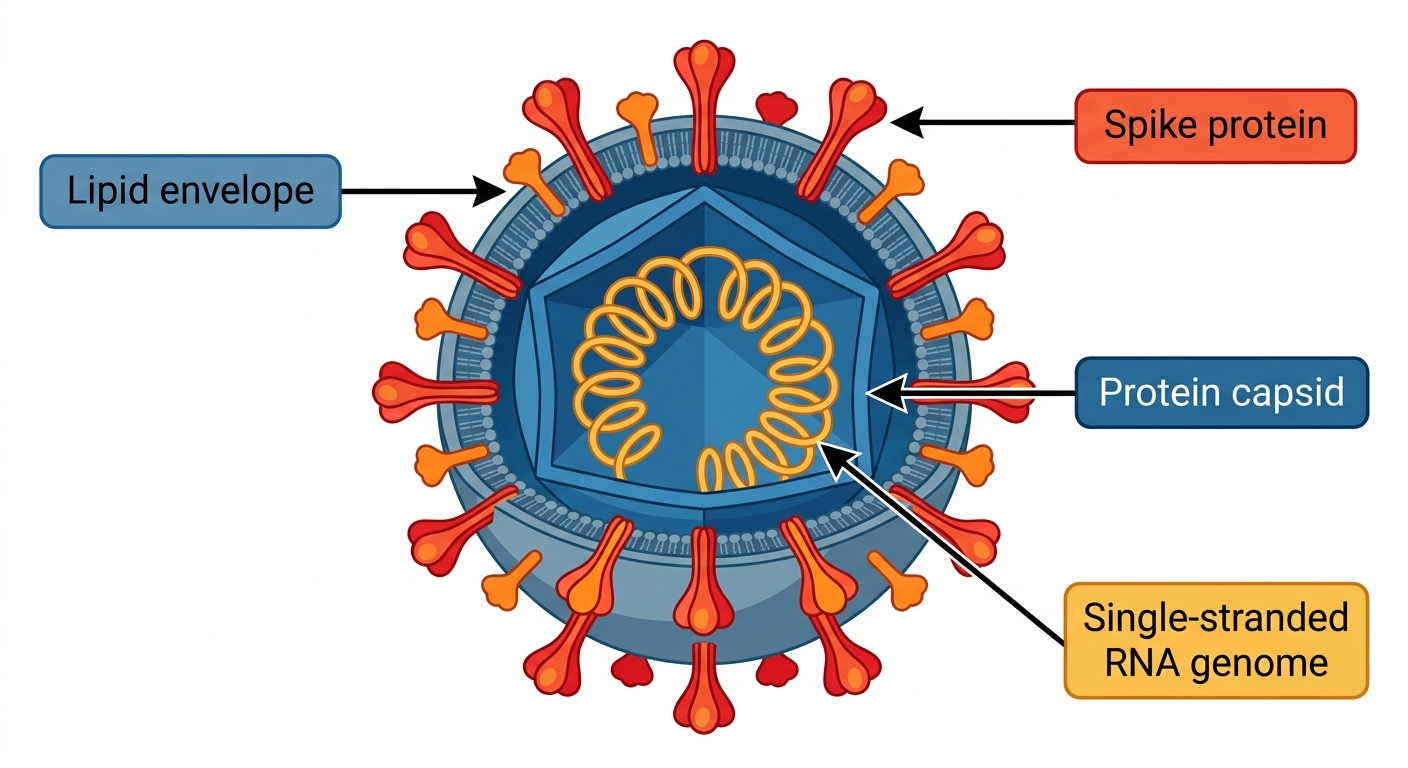
A virus has an outer lipid envelope with spike proteins, a protein capsid, and a single-stranded RNA genome. A student claims this virus is released from its host cell by lysis rather than by budding. Which feature of this virus most directly contradicts the student's claim?
revisionprep.com
Summary Answer
Not available for this question.
Model Answer
Not available for this question.
Marking Scheme
Not available for this question.
Examiner Insights
Not available for this question.
Viral infections and diseases
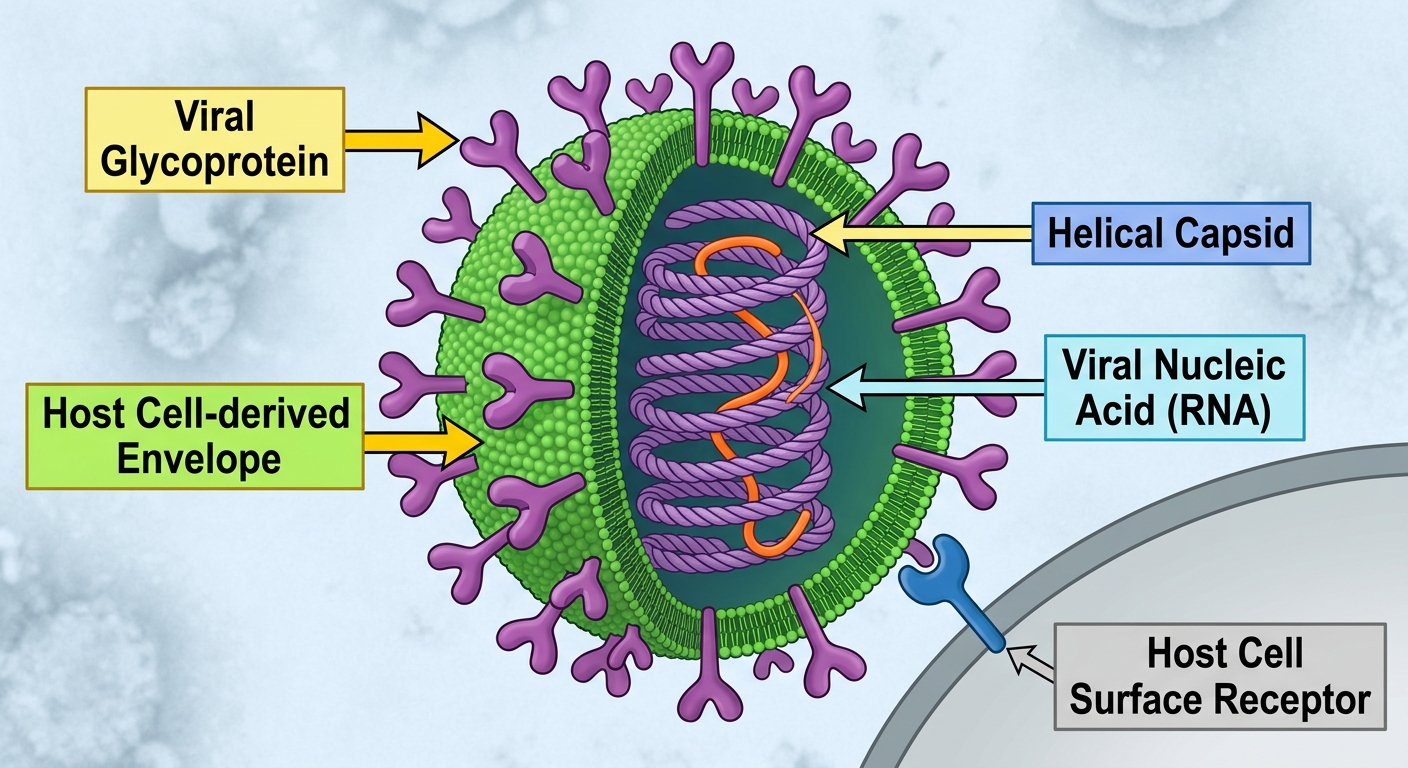
A virologist examines an electron micrograph of an enveloped virus with a helical capsid. The envelope is derived from the host cell's plasma membrane and studded with viral glycoproteins. Which statement correctly describes the primary function of these glycoproteins during infection?
revisionprep.com
Summary Answer
Not available for this question.
Model Answer
Not available for this question.
Marking Scheme
Not available for this question.
Examiner Insights
Not available for this question.
Replication of viruses
E. coli cells were infected with a lytic bacteriophage. After 25 minutes, shortly before lysis was expected, the cells were broken open and the contents were centrifuged. The pellet contained large structures such as phage particles and cell debris; the supernatant contained small soluble molecules and proteins. Viral DNA and viral protein in each fraction were measured. The figure shows the results.
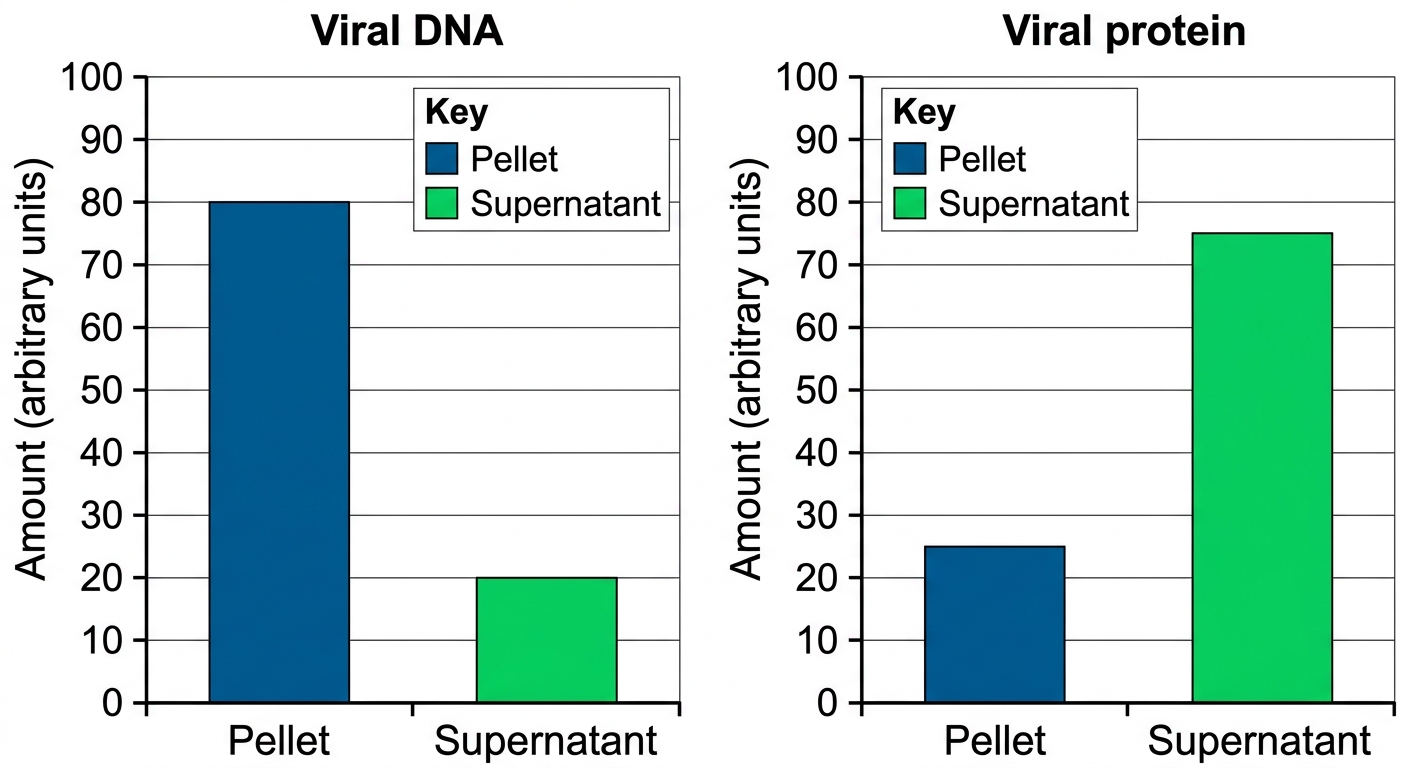
Calculate the percentage of the viral DNA that was in the pellet.
Calculate the ratio of viral protein in the supernatant to viral protein in the pellet.
Explain why most of the viral DNA was found in the pellet.
Suggest why most of the viral protein was found in the supernatant.
Predict, with a reason, how the distribution of viral DNA would differ if the cells had been broken open 5 minutes after infection.
Suggest one improvement to this method.
revisionprep.com
Summary Answer
Not available for this question.
Model Answer
Not available for this question.
Marking Scheme
Not available for this question.
Examiner Insights
Not available for this question.
Viral infections and diseases
A sample of nasal fluid from a patient with influenza was diluted in a series of tenfold steps. 0.1 cm³ of each dilution was added to a layer of cultured airway cells. Each infectious virion infects one cell, and the infection spreads to neighbouring cells to form a clear area called a plaque. The figure shows the plates after 3 days.
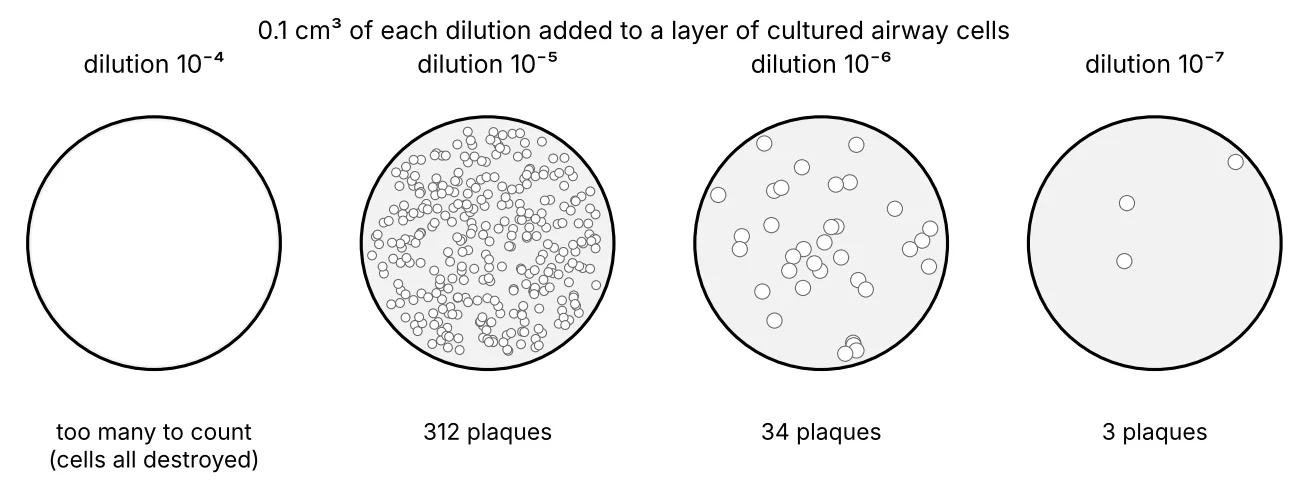
State why the number of plaques can be used to estimate the number of infectious virions.
Calculate the concentration of infectious virus in the undiluted sample, in plaque-forming units (PFU) per cm³, using the 10⁻⁶ plate.
Explain why the 10⁻⁶ plate gives a more reliable estimate than the 10⁻⁷ plate.
Suggest why the 10⁻⁴ plate cannot be used.
In this patient the titre fell to PFU cm⁻³ by day 6 of illness. Explain this fall.
revisionprep.com
Summary Answer
Not available for this question.
Model Answer
Not available for this question.
Marking Scheme
Not available for this question.
Examiner Insights
Not available for this question.
Replication of viruses
When phage lambda infects E. coli, each infected cell follows either the lytic cycle or the lysogenic cycle. Researchers infected cultures under different conditions and recorded the percentage of infected cells that became lysogens. MOI is the mean number of phages added per bacterium.
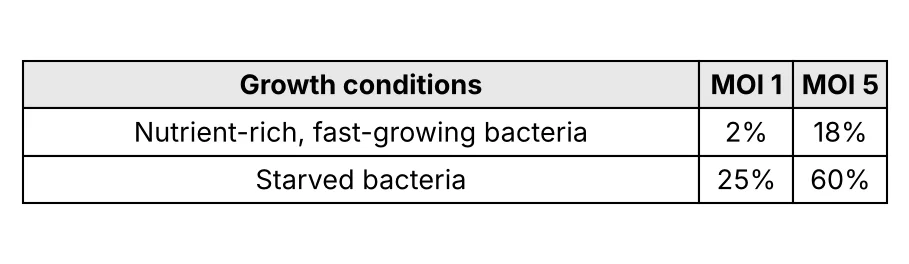
State what happens to the host cell in each of the two cycles.
Describe the effects of MOI and of nutrient supply on the percentage of cells that become lysogens.
Calculate the number of lysogens expected when starved cells are infected at MOI 5.
Suggest why lysogeny is favoured when the bacteria are starved or when many phages infect each cell.
revisionprep.com
Summary Answer
Not available for this question.
Model Answer
Not available for this question.
Marking Scheme
Not available for this question.
Examiner Insights
Not available for this question.
Viral infections and diseases
A patient with HIV was given a single antiretroviral drug. Samples of the virus in the patient's blood were tested for a mutation that makes reverse transcriptase resistant to the drug.

Describe the change in the percentage of resistant virus.
Explain the change using the theory of natural selection.
Explain why HIV can evolve so quickly within one patient.
revisionprep.com
Summary Answer
Not available for this question.
Model Answer
Not available for this question.
Marking Scheme
Not available for this question.
Examiner Insights
Not available for this question.
That's every free question here — 6 of 139.
+133 more questions, plus Mock Papers & Worksheets, are waiting in Premium.