You're viewing 3 free preview questions for Biology HL — subscribe to unlock 105 more, plus the Full Question Bank, Mock Papers & Worksheets.Upgrade
Origins of Cells · Paper 2 — Free Biology HL Practice Questions
1MasterySAQ-SEndosymbiotic theory9 marksPaper 2~14 min

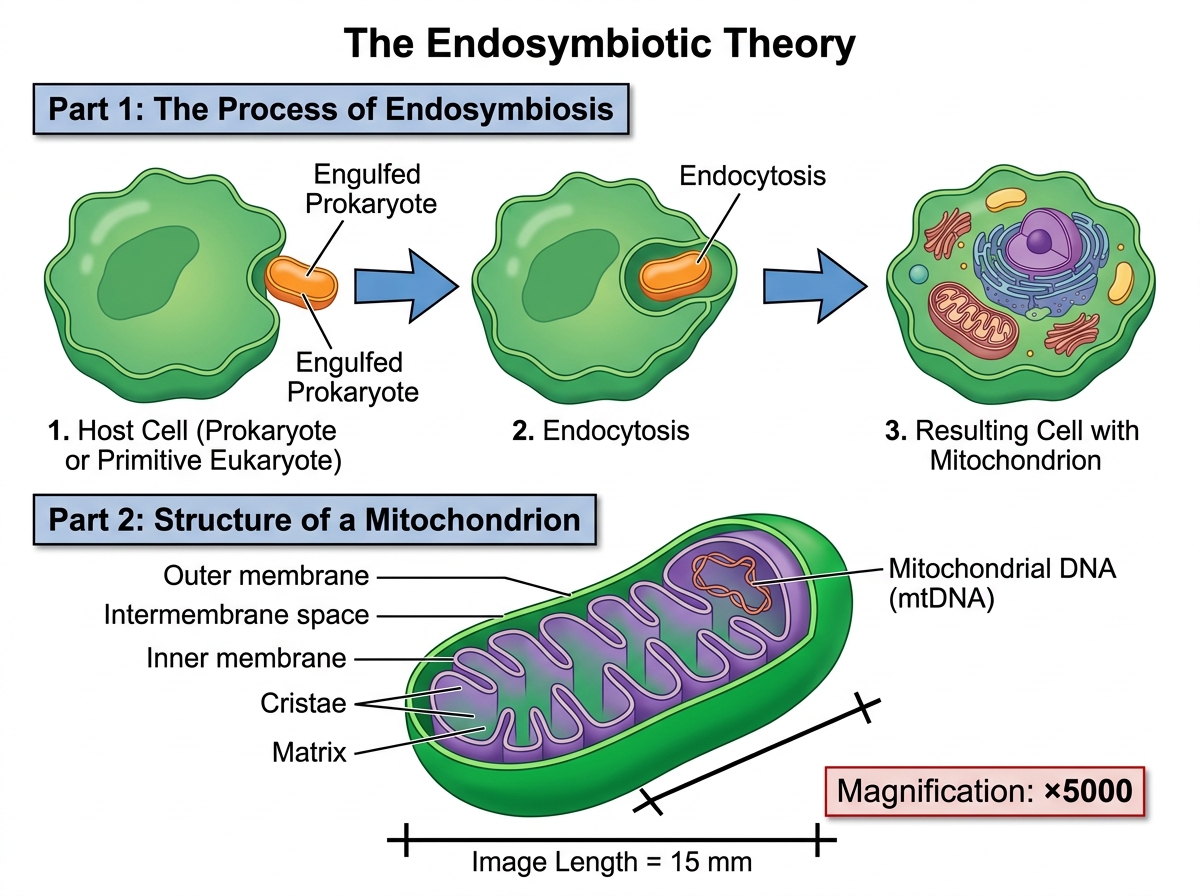
The endosymbiotic theory proposes that mitochondria originated from free-living prokaryotes that were engulfed by a host cell.
(a)
State the type of prokaryote that is believed to have given rise to mitochondria. [1 mark]
(b)
A mitochondrion appears an image of length at a magnification of . Calculate the actual length of the mitochondrion in micrometres (). [2 marks]
(c)
Explain how the double membrane of mitochondria provides evidence for the endosymbiotic theory. [2 marks]
(d)
Evaluate the strength of the evidence for the endosymbiotic theory by discussing two additional features of mitochondria, other than the double membrane, that support this theory. [4 marks]

Solutions
2MasterySAQ-SEndosymbiotic theory6 marksPaper 2~9 min
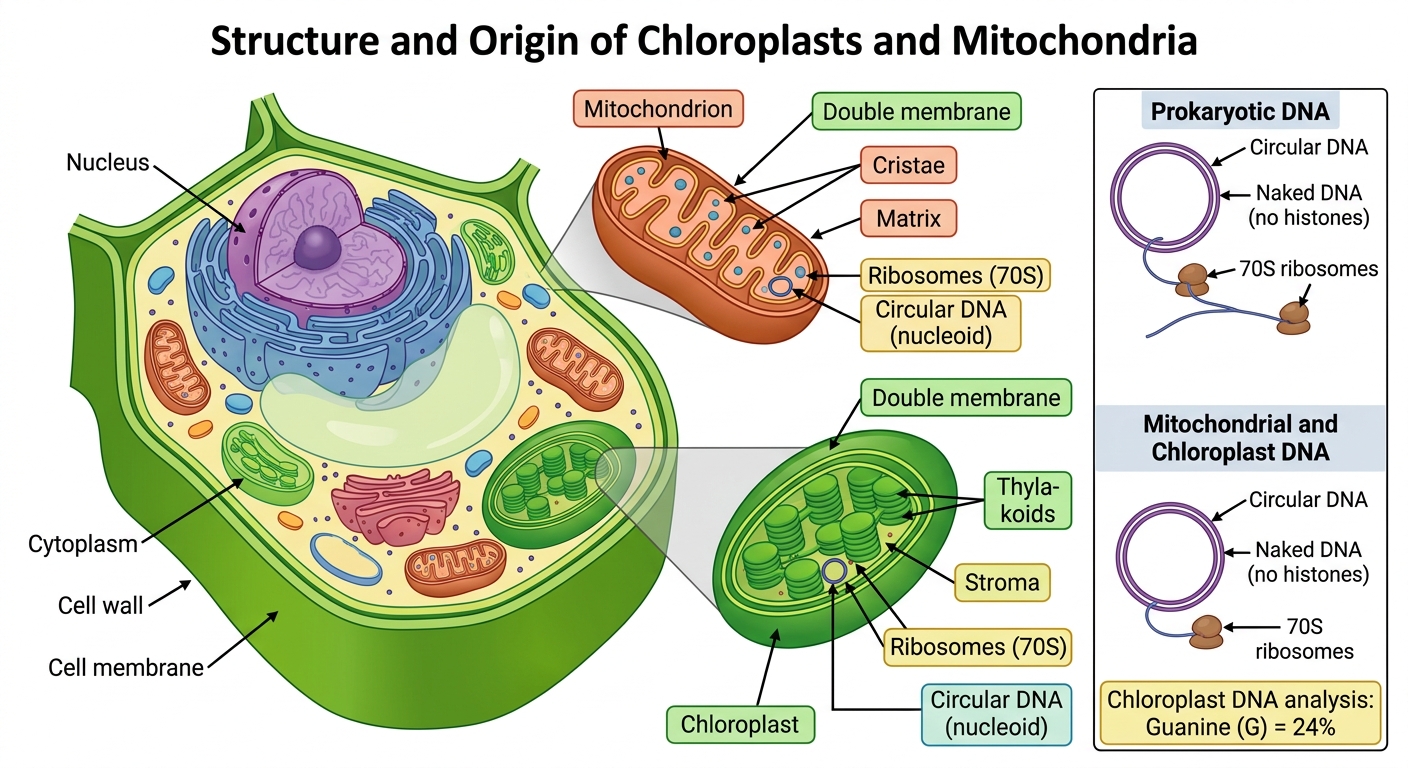
Endosymbiotic theory proposes that mitochondria and chloroplasts evolved from free-living prokaryotes that were engulfed by a host eukaryotic cell.
(a)
State two features of mitochondrial DNA that are similar to prokaryotic DNA. [2 marks]
(b)
A chloroplast genome is found to be in length and replicates independently of the nuclear genome. Deduce how independent replication of the chloroplast genome supports the endosymbiotic theory. [2 marks]
(c)
Explain how the presence of ribosomes in chloroplasts provides evidence for the endosymbiotic theory. [2 marks]
Solutions
3ChallengeLAQOrigin of eukaryotic cells10 marksPaper 2~15 min
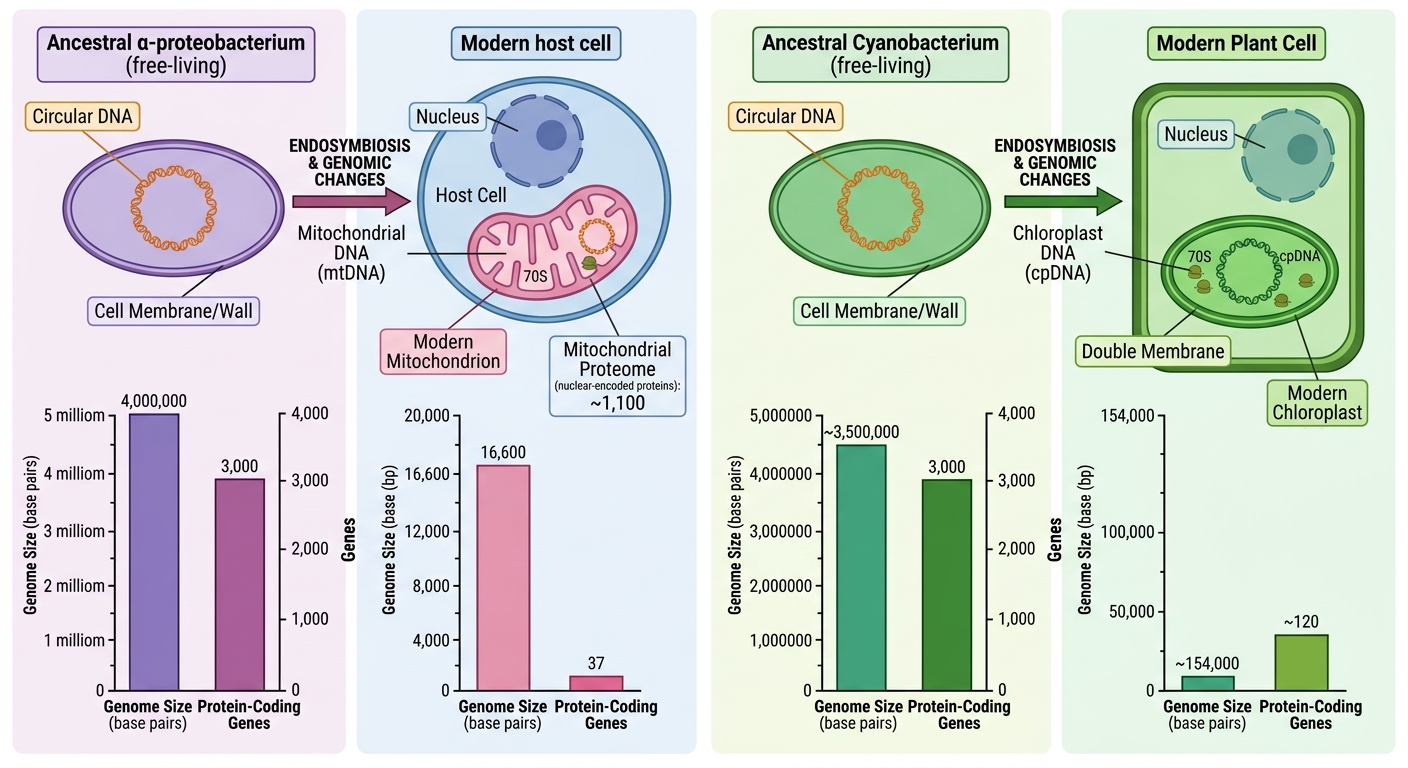
The endosymbiotic theory proposes that mitochondria and chloroplasts originated from free-living prokaryotes engulfed by a host cell. The following data were obtained from comparative genomic studies.
Parameter — Value
Genome size of free-living -proteobacterium (ancestral to mitochondria) —
Genome size of modern human mitochondrial DNA (mtDNA) —
Genome size of free-living cyanobacterium (ancestral to chloroplasts) —
Genome size of modern chloroplast DNA (cpDNA) in Arabidopsis thaliana —
Protein-coding genes in free-living -proteobacterium —
Protein-coding genes in modern human mtDNA —
Mitochondrial proteins in humans (nuclear-encoded) —
(a)
Using only the data in the table, analyse the evidence that supports the endosymbiotic theory. [4 marks]
(b)
Explain the discrepancy between the number of protein-coding genes retained in modern human mtDNA and the total number of mitochondrial proteins found in human cells. [2 marks]
(c)
Evaluate the strengths and limitations of the endosymbiotic theory in explaining the origin of eukaryotic cells, with reference to both mitochondria and chloroplasts. [4 marks]
Solutions
That's every free question here — 3 of 108.
+105 more questions, plus Mock Papers & Worksheets, are waiting in Premium.