Protein Synthesis · Paper 1 — Free Biology SL Practice Questions
Free questions
Open in full, with answers, mark scheme and examiner insights.
Transcription and translation processes
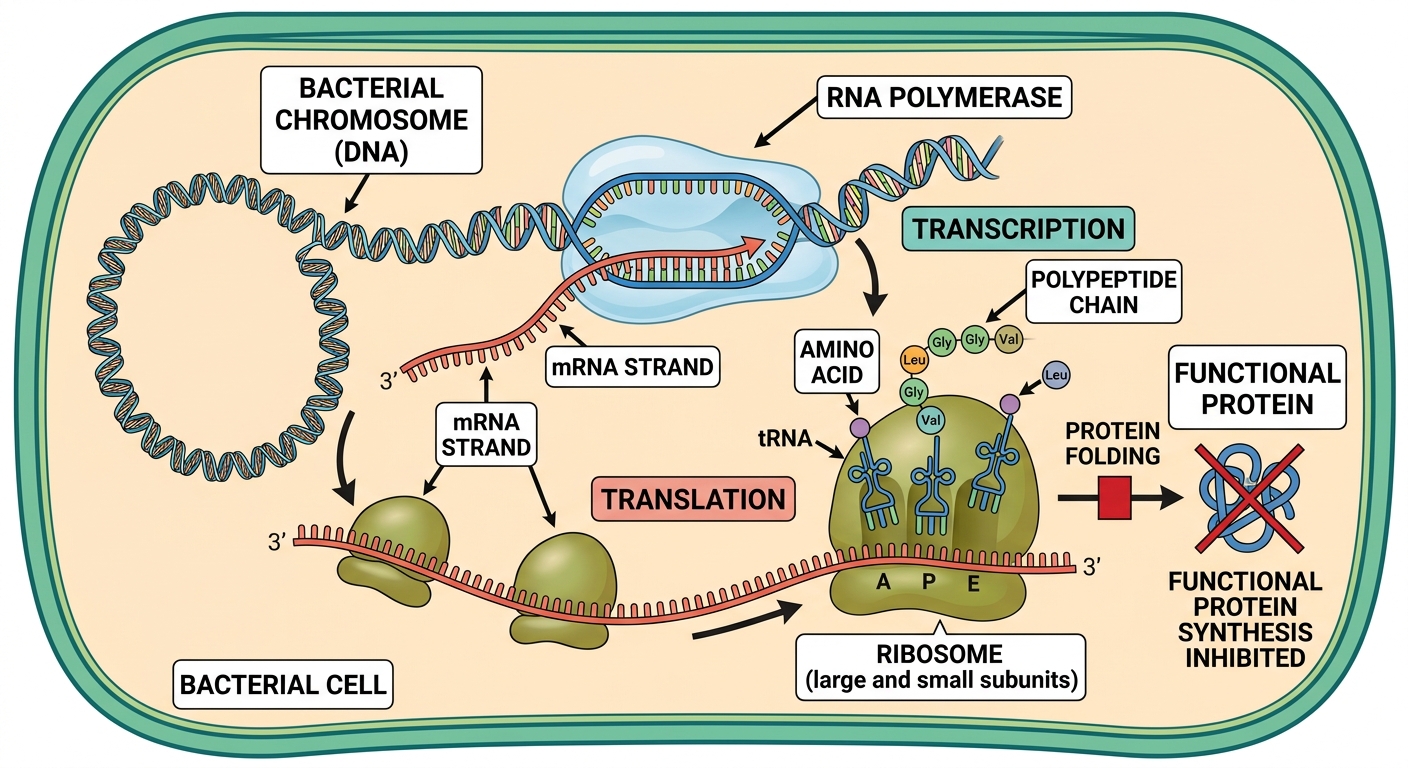
The shows transcription and translation in a bacterial cell. An antibiotic is added. Transcription continues and mRNA is still produced, but no complete polypeptides are made. Which process is most likely blocked by the antibiotic?
revisionprep.com
Summary Answer
Not available for this question.
Model Answer
Not available for this question.
Marking Scheme
Not available for this question.
Examiner Insights
Not available for this question.
Role of mRNA, tRNA, and ribosomes
Which row gives the role of each molecule in translation?
revisionprep.com
Summary Answer
Not available for this question.
Model Answer
Not available for this question.
Marking Scheme
Not available for this question.
Examiner Insights
Not available for this question.
Transcription and translation processes
Scientists tested samples of three human tissues for the DNA and the mRNA of three genes. The table shows the results.
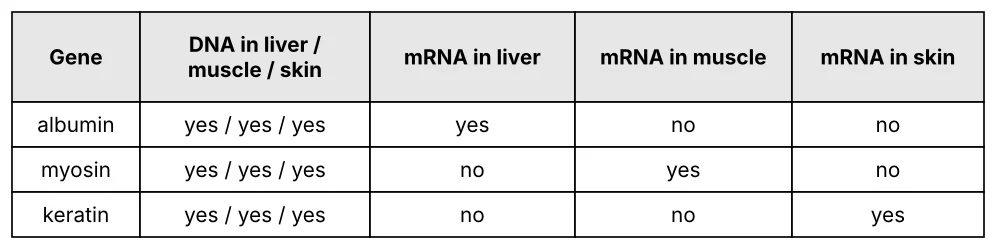
State the process that produces mRNA from a gene.
Explain why all three genes are present in every tissue.
Deduce what the data show about gene expression in different cells.
Suggest why measuring mRNA is a better indicator of which proteins a cell makes than measuring DNA.
Each tissue was sampled once, from one person. Suggest two changes to the method that would make the conclusion in (c) more reliable.
revisionprep.com
Summary Answer
Not available for this question.
Model Answer
Not available for this question.
Marking Scheme
Not available for this question.
Examiner Insights
Not available for this question.
Role of mRNA, tRNA, and ribosomes
Tetracycline is an antibiotic that stops tRNA molecules binding to bacterial ribosomes. The table shows the rate of translation of a bacterial protein of amino acids with and without a low dose of tetracycline.
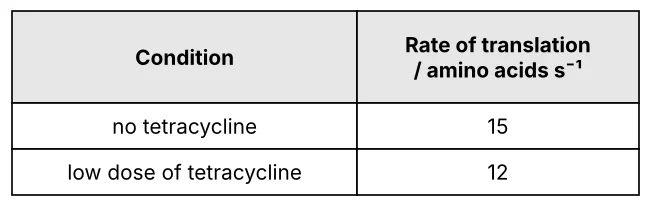
Calculate the time to make one protein with and without tetracycline.
Explain why stopping tRNA binding prevents a polypeptide being made.
Suggest why tetracycline can treat a bacterial infection without stopping protein synthesis in human cells.
revisionprep.com
Summary Answer
Not available for this question.
Model Answer
Not available for this question.
Marking Scheme
Not available for this question.
Examiner Insights
Not available for this question.
Transcription and translation processes
Every cell in the human body contains the gene for β-globin, a polypeptide in haemoglobin. The graph shows the amount of β-globin mRNA in four types of cell.
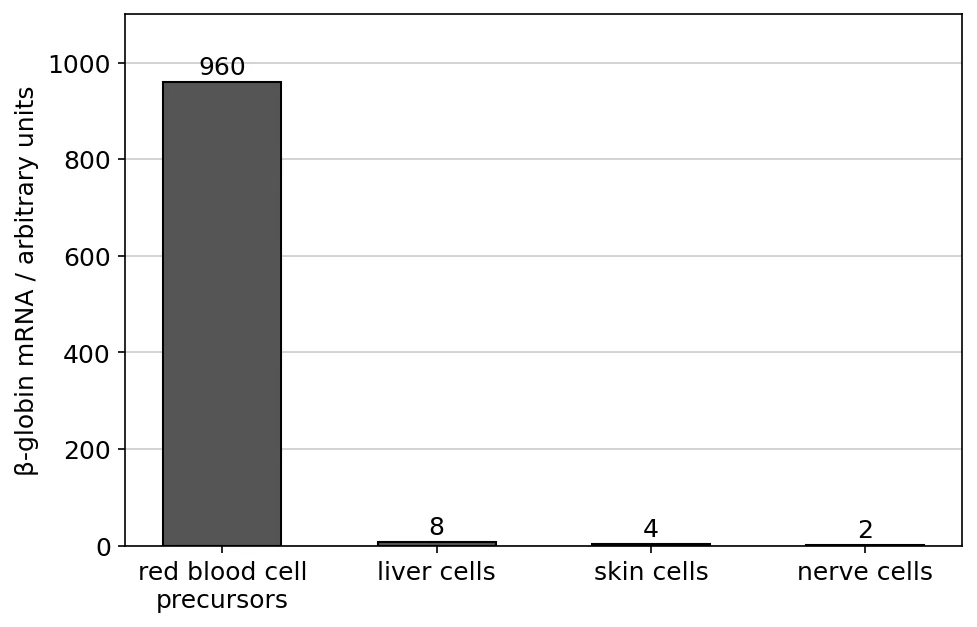
Identify the cell type with the most β-globin mRNA.
Calculate how many times more β-globin mRNA there is in red blood cell precursors than in liver cells.
Explain the differences in β-globin mRNA between the cell types.
Mature red blood cells in humans have no nucleus, but they still make β-globin for a short time. Explain how this is possible.
Each value comes from one tissue sample. Suggest two ways to make the comparison between cell types more reliable.
revisionprep.com
Summary Answer
Not available for this question.
Model Answer
Not available for this question.
Marking Scheme
Not available for this question.
Examiner Insights
Not available for this question.
Role of mRNA, tRNA, and ribosomes
A cell-free system contains every component needed for translation except tRNA carrying leucine. An mRNA codes for a polypeptide that has leucine at position 12. What is the most likely result?
revisionprep.com
Summary Answer
Not available for this question.
Model Answer
Not available for this question.
Marking Scheme
Not available for this question.
Examiner Insights
Not available for this question.
That's every free question here — 6 of 91.
+85 more questions, plus Mock Papers & Worksheets, are waiting in Premium.