Reproduction · Paper 1 — Free Biology SL Practice Questions
Free questions
Open in full, with answers, mark scheme and examiner insights.
Asexual vs sexual reproduction
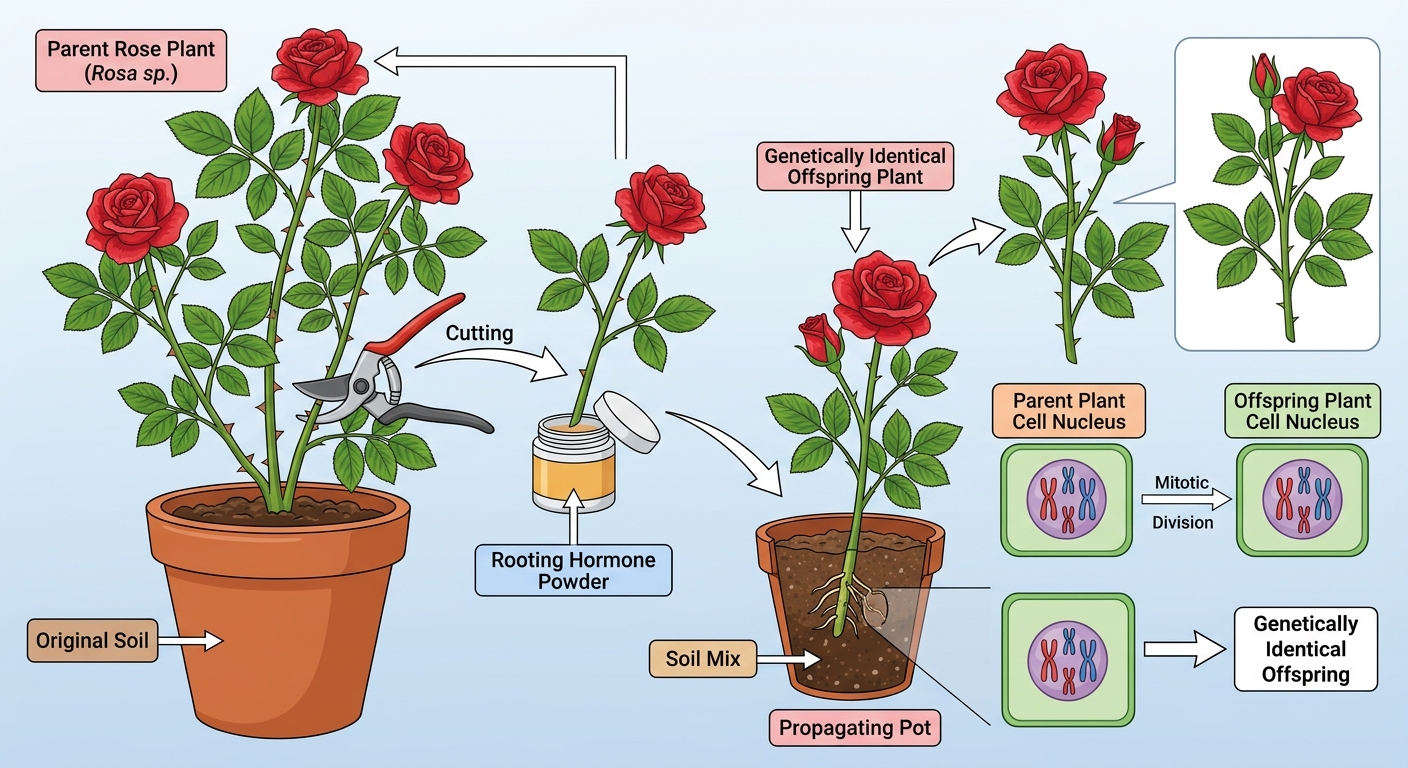
A gardener propagates a rose by taking a stem cutting from a parent plant and growing it in soil. The new plant is genetically identical to the parent. Which statement correctly identifies the type of reproduction and its most significant advantage in this context?
revisionprep.com
Summary Answer
Not available for this question.
Model Answer
Not available for this question.
Marking Scheme
Not available for this question.
Examiner Insights
Not available for this question.
Sexual cycles in animals and plants
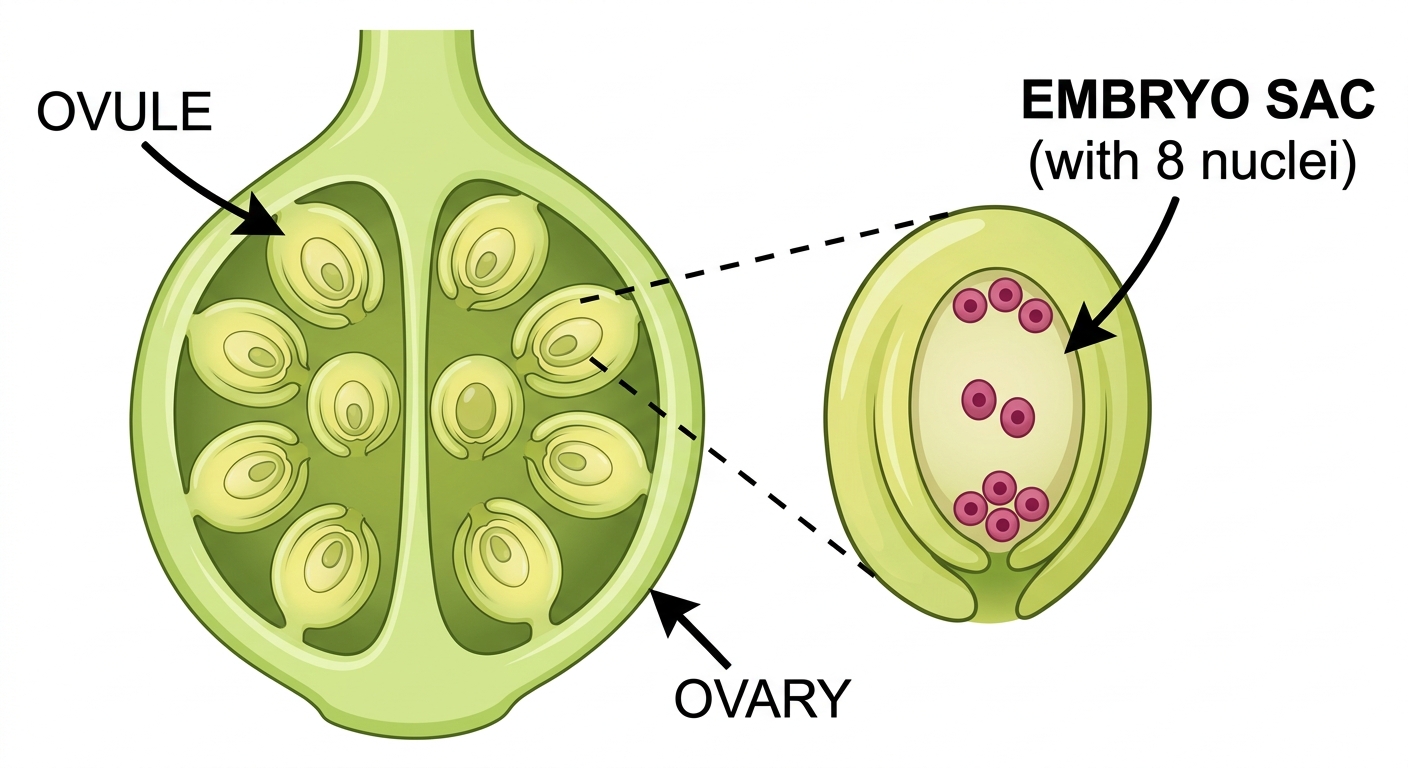
The figure shows a section through the ovary of a flower containing many ovules. After pollination, every ovule is fertilised. Which row shows what each structure develops into?
revisionprep.com
Summary Answer
Not available for this question.
Model Answer
Not available for this question.
Marking Scheme
Not available for this question.
Examiner Insights
Not available for this question.
Asexual vs sexual reproduction
Daphnia pulex (a water flea) reproduces asexually when conditions are stable and switches to sexual reproduction when conditions are stressful. Dugesia tigrina (a flatworm) reproduces by fragmentation in both conditions. The table shows the mean number of offspring produced per individual per week.

Calculate the percentage decrease in offspring production for each species from stable to stressful conditions.
Explain one advantage to Daphnia pulex of switching to sexual reproduction under stressful conditions.
Suggest two reasons why offspring production falls much more in Daphnia pulex than in Dugesia tigrina.
revisionprep.com
Summary Answer
Not available for this question.
Model Answer
Not available for this question.
Marking Scheme
Not available for this question.
Examiner Insights
Not available for this question.
Sexual cycles in animals and plants
Sperm are produced in the testes. The graph shows the rate of sperm production in three groups of adult male rats.
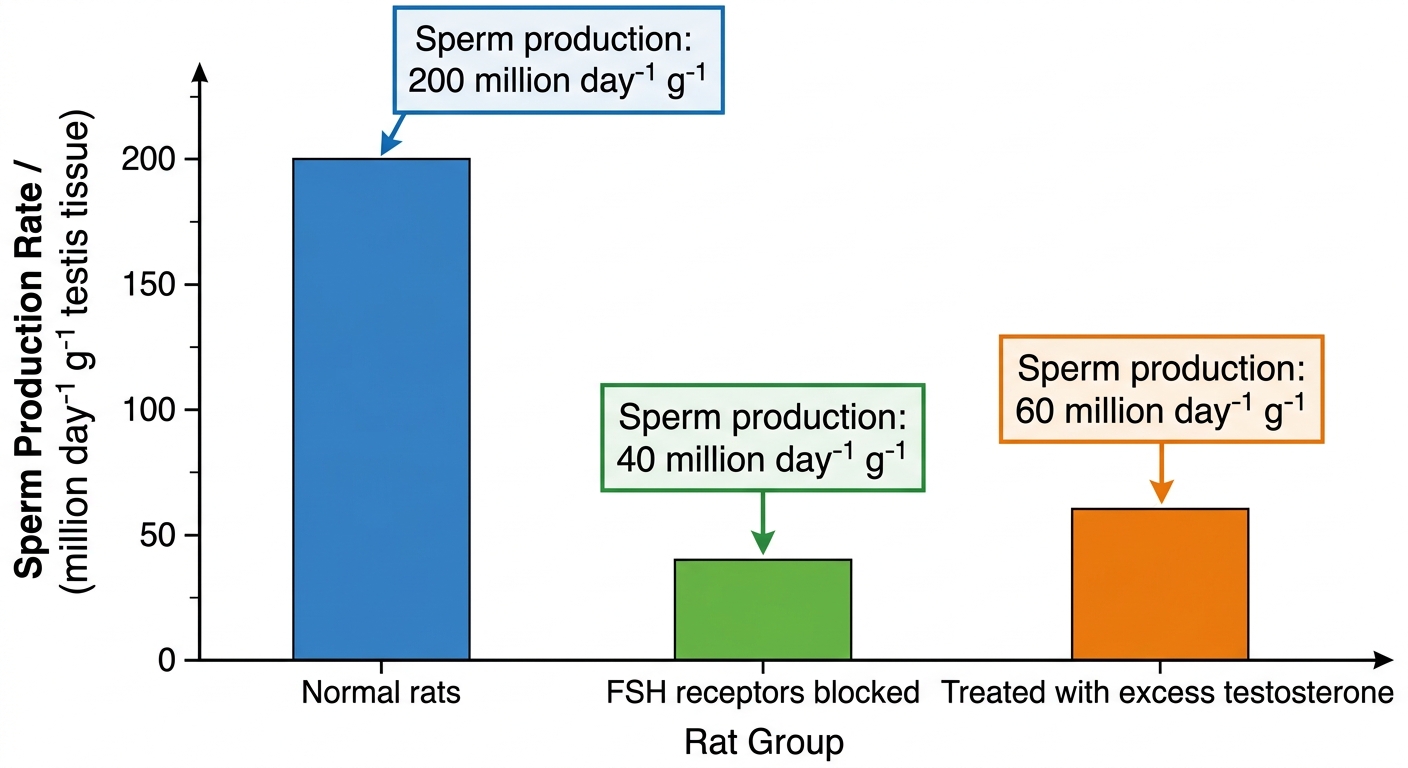
Calculate the percentage reduction in sperm production, compared with normal rats, for rats with FSH receptors blocked and for rats treated with excess testosterone.
Identify the control group in this investigation.
FSH from the pituitary gland stimulates sperm production, and testosterone reduces the secretion of FSH. Using this information, explain the result for rats given excess testosterone, naming the type of control involved.
Suggest why the researchers measured sperm production per gram of testis tissue.
revisionprep.com
Summary Answer
Not available for this question.
Model Answer
Not available for this question.
Marking Scheme
Not available for this question.
Examiner Insights
Not available for this question.
Asexual vs sexual reproduction
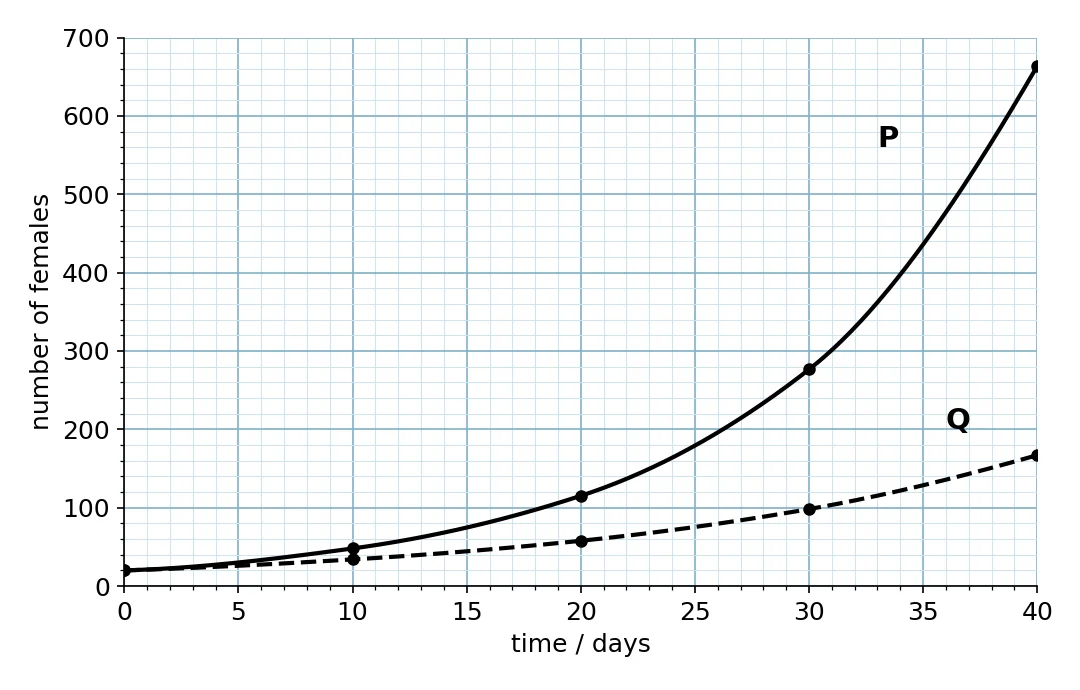
Two populations of a water flea each started with 20 females and were kept in identical conditions. One population reproduced by parthenogenesis, producing only female offspring. The other reproduced sexually, producing equal numbers of male and female offspring. Every female produced the same number of offspring. The graph shows the number of females in each population. Which statement identifies population P and explains the difference?
revisionprep.com
Summary Answer
Not available for this question.
Model Answer
Not available for this question.
Marking Scheme
Not available for this question.
Examiner Insights
Not available for this question.
Reproductive strategies
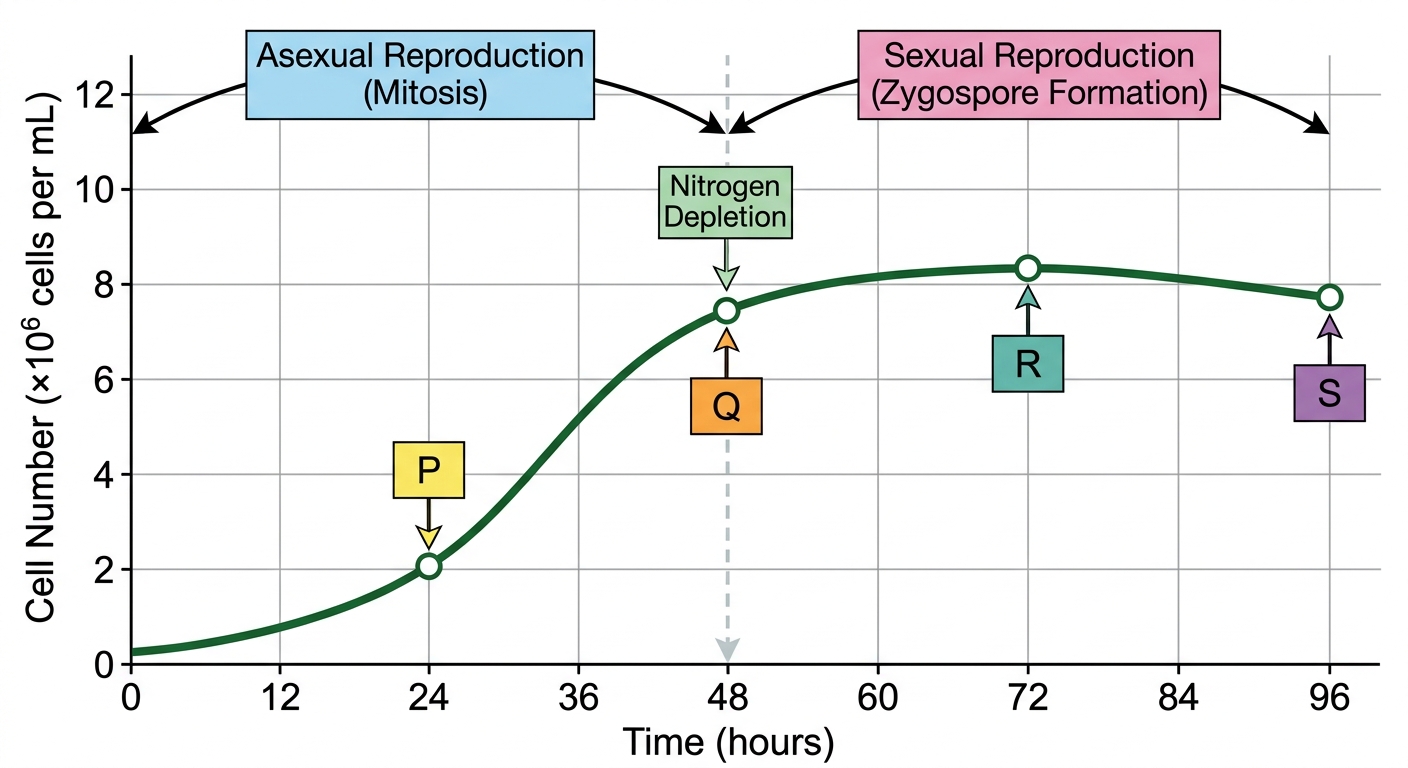
The graph shows the number of Chlamydomonas cells in a culture. Up to 48 hours the cells reproduced asexually by mitosis. At 48 hours, nitrogen ran out and cells began to form gametes, which fused in pairs to form zygospores. Which statement best explains why cell number stopped rising after point Q?
revisionprep.com
Summary Answer
Not available for this question.
Model Answer
Not available for this question.
Marking Scheme
Not available for this question.
Examiner Insights
Not available for this question.
That's every free question here — 6 of 56.
+50 more questions, plus Mock Papers & Worksheets, are waiting in Premium.