You're viewing 3 free preview questions for Biology SL — subscribe to unlock 45 more, plus the Full Question Bank, Mock Papers & Worksheets.Upgrade
Homeostasis · Paper 2 — Free Biology SL Practice Questions
1MasterySAQ-SRegulation of blood glucose levels6 marksPaper 2~9 min

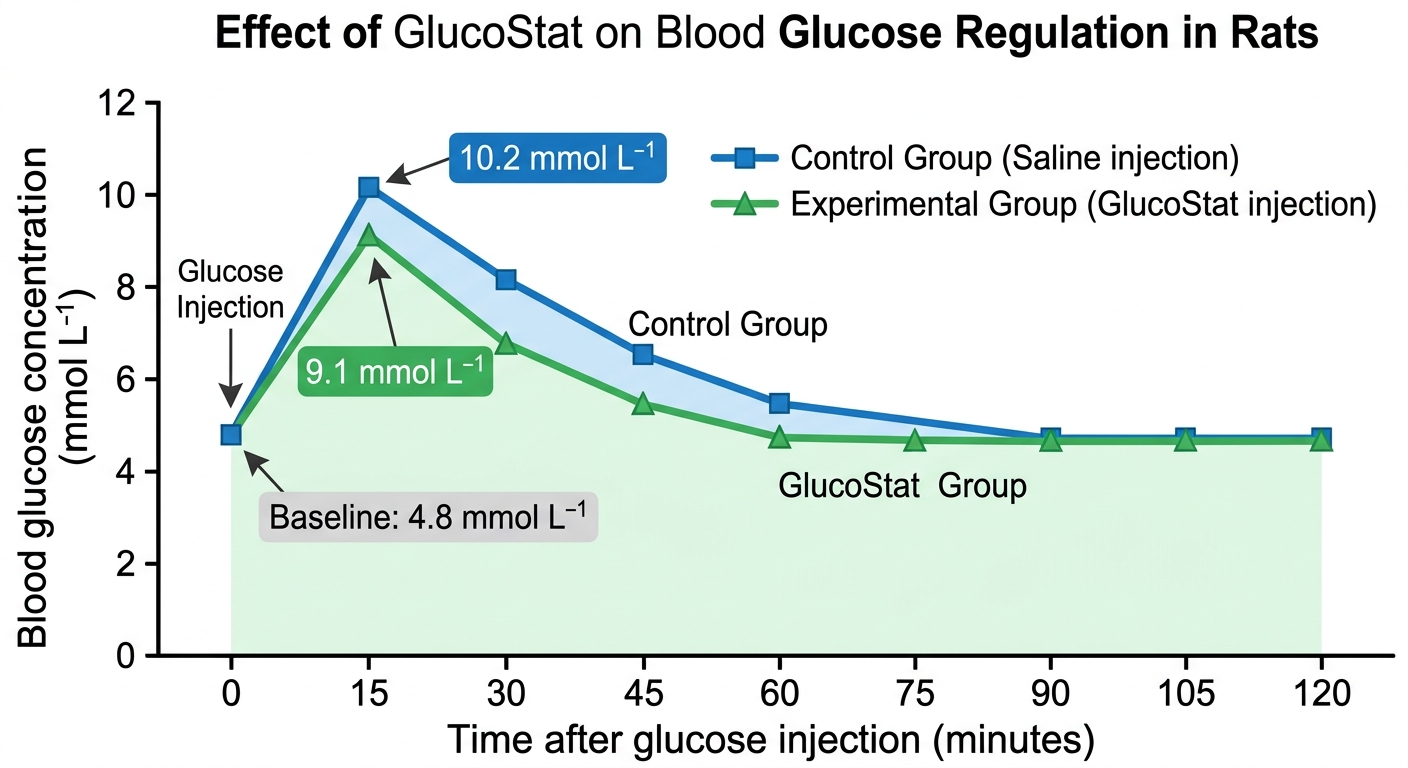
A research team investigates the effect of a new drug, GlucoStat, on blood glucose regulation in healthy laboratory rats. Rats are divided into a control group (injected with saline) and an experimental group (injected with GlucoStat). After 30 minutes, both groups receive an intravenous injection of glucose solution ( body mass). Blood glucose concentration is measured every 15 minutes for 120 minutes.
- Baseline blood glucose (both groups):
- Control group: peak at 15 min = ; returns to baseline by 90 min
- GlucoStat group: peak at 15 min = ; returns to baseline by 60 min
(a)
Describe the mechanism by which a rise in blood glucose concentration leads to insulin secretion from pancreatic beta cells. [2 marks]
(b)
Calculate the mean rate of blood glucose clearance in the GlucoStat group, from peak to baseline. Express your answer in . [2 marks]
(c)
Using the data, evaluate the effect of GlucoStat on blood glucose regulation. [2 marks]

Solutions
2MasterySAQ-SRegulation of blood glucose levels5 marksPaper 2~8 min
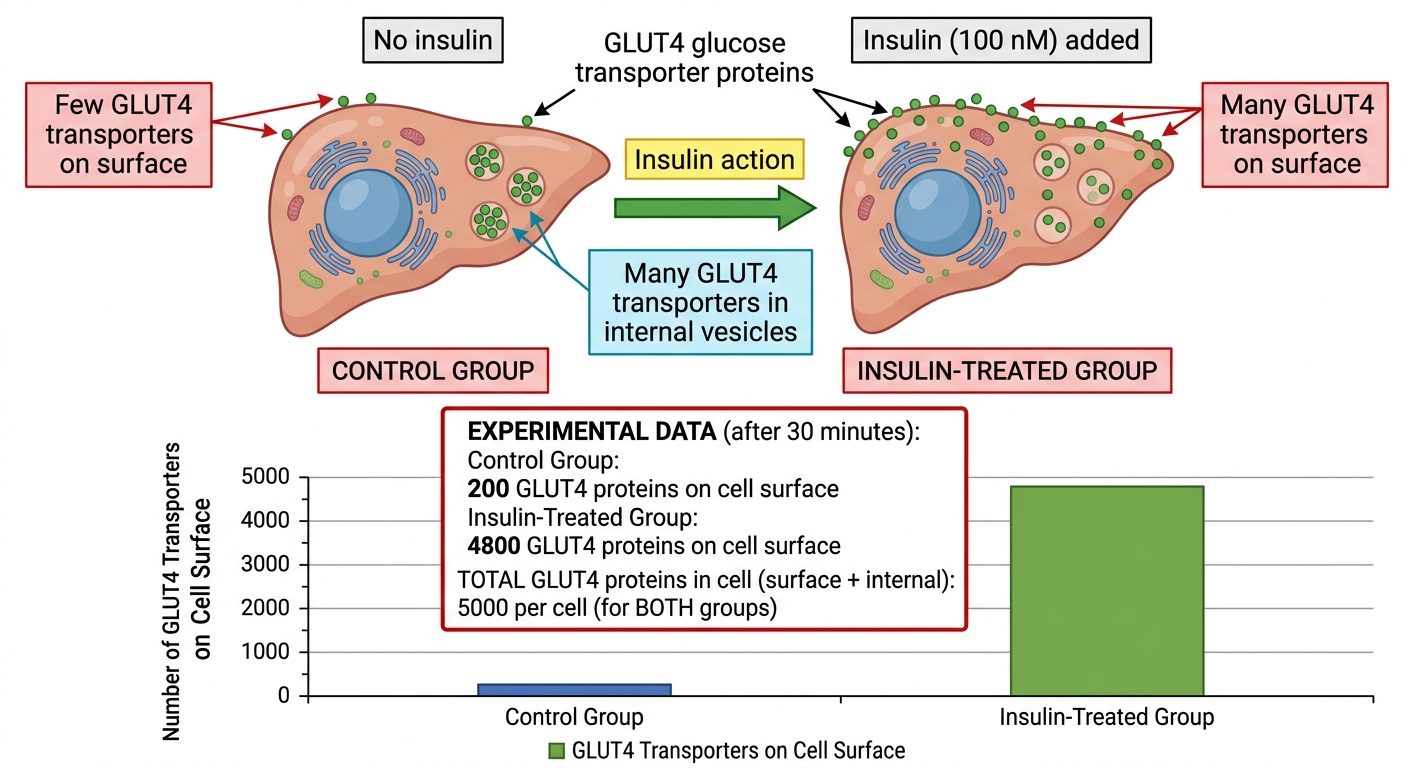
A researcher investigates insulin action using cultured human skeletal muscle cells (myocytes). Cells are incubated in medium containing glucose. One group is treated with insulin; a control group receives no insulin. After 30 minutes, GLUT4 glucose transporter proteins are counted.
Group — GLUT4 on cell surface membrane — GLUT4 internal vesicles
Control — 200 per cell — 4800 per cell
Insulin-treated — 4800 per cell — 200 per cell
Total GLUT4 per cell (surface + internal) = 5000 in both groups.
(a)
Describe the mechanism by which insulin causes an increase in the number of GLUT4 transporters on the cell surface membrane. [2 marks]
(b)
Calculate the percentage of total GLUT4 proteins located on the cell surface membrane in the insulin-treated group. Show your working. [2 marks]
(c)
Using the data and your knowledge of membrane transport, evaluate whether the rate of glucose uptake in the insulin-treated cells would increase proportionally with the increase in surface GLUT4 number. [1 mark]
Solutions
3ChallengeSAQ-LRegulation of blood glucose levels8 marksPaper 2~12 min
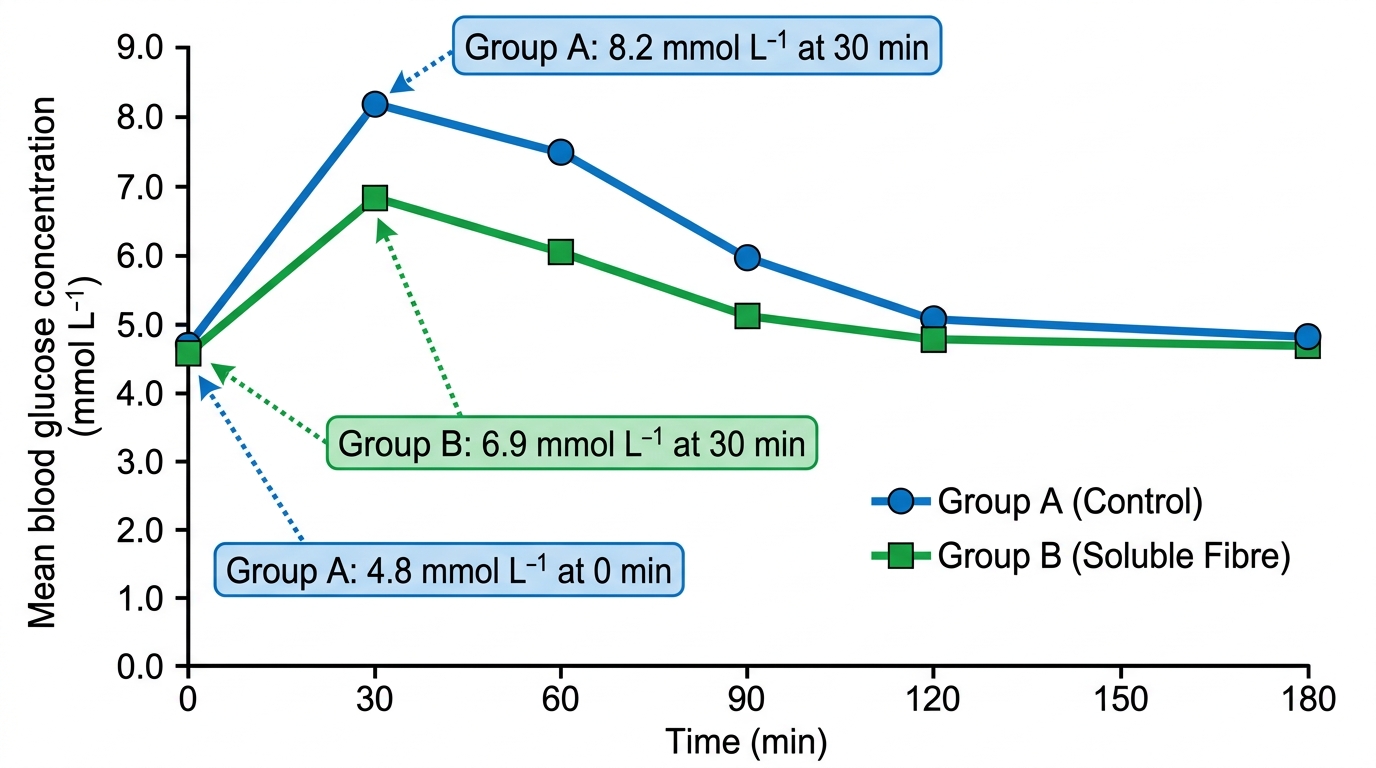
A clinical study investigated blood glucose regulation in two groups of healthy adults ( each) following an oral glucose tolerance test (OGTT). Participants fasted for 12 hours, then consumed of glucose dissolved in water. Blood samples were taken every 30 minutes for 180 minutes.
Mean blood glucose concentration ():
Time (min) — Group A (control) — Group B (soluble fibre)
0 — 4.8 — 4.7
30 — 8.2 — 6.9
60 — 7.5 — 6.1
90 — 6.0 — 5.2
120 — 5.1 — 4.9
180 — 4.9 — 4.8
Group B consumed of soluble fibre 30 minutes before the glucose drink.
(a)
Calculate the percentage change in blood glucose concentration from to for Group A. [2 marks]
(b)
Explain how blood glucose concentration is returned to baseline after the peak at in Group A, including the role of insulin and its mechanism of action target cells. [3 marks]
(c)
Evaluate the hypothesis that soluble fibre supplementation improves glucose regulation by slowing glucose absorption, using both the data provided and your knowledge of blood glucose homeostasis. [3 marks]
Solutions
That's every free question here — 3 of 48.
+45 more questions, plus Mock Papers & Worksheets, are waiting in Premium.