You're viewing 3 free preview questions for Biology SL — subscribe to unlock 45 more, plus the Full Question Bank, Mock Papers & Worksheets.Upgrade
Reproduction · Paper 2 — Free Biology SL Practice Questions
1MasterySAQ-SSexual cycles in animals and plants6 marksPaper 2~9 min

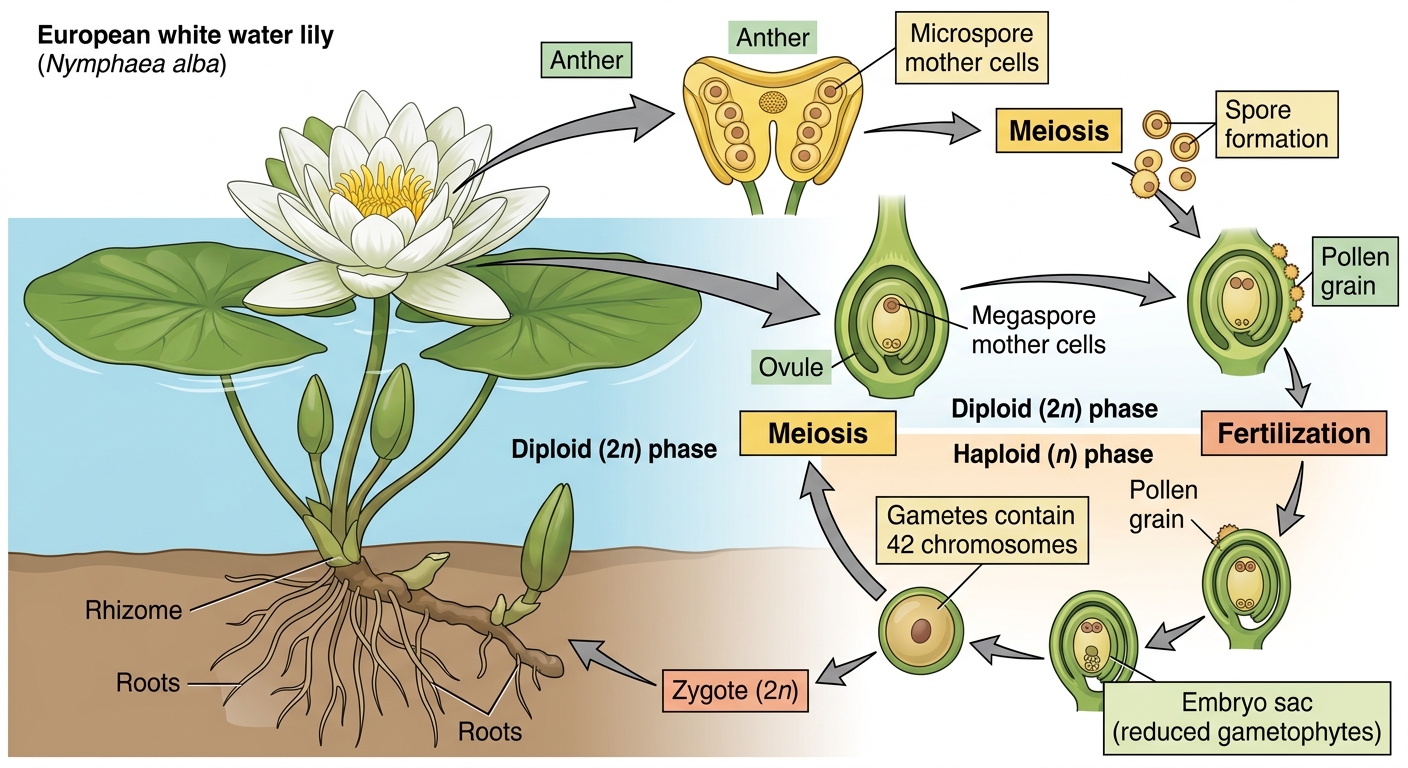
The European white water lily (Nymphaea alba) is a flowering plant that reproduces sexually. Its life cycle involves alternation of generations, with both haploid () and diploid () stages. The gametophyte generation is reduced and dependent on the sporophyte.
(a)
Describe the process of gametogenesis in the anthers of Nymphaea alba, including the change in chromosome number. [3 marks]
(b)
Calculate the number of chromosomes in a zygote of Nymphaea alba if each gamete contains chromosomes. [1 mark]
(c)
Explain one advantage of sexual reproduction over asexual reproduction for Nymphaea alba in a changing environment. [2 marks]

Solutions
2ChallengeSAQ-LAsexual vs sexual reproduction8 marksPaper 2~12 min
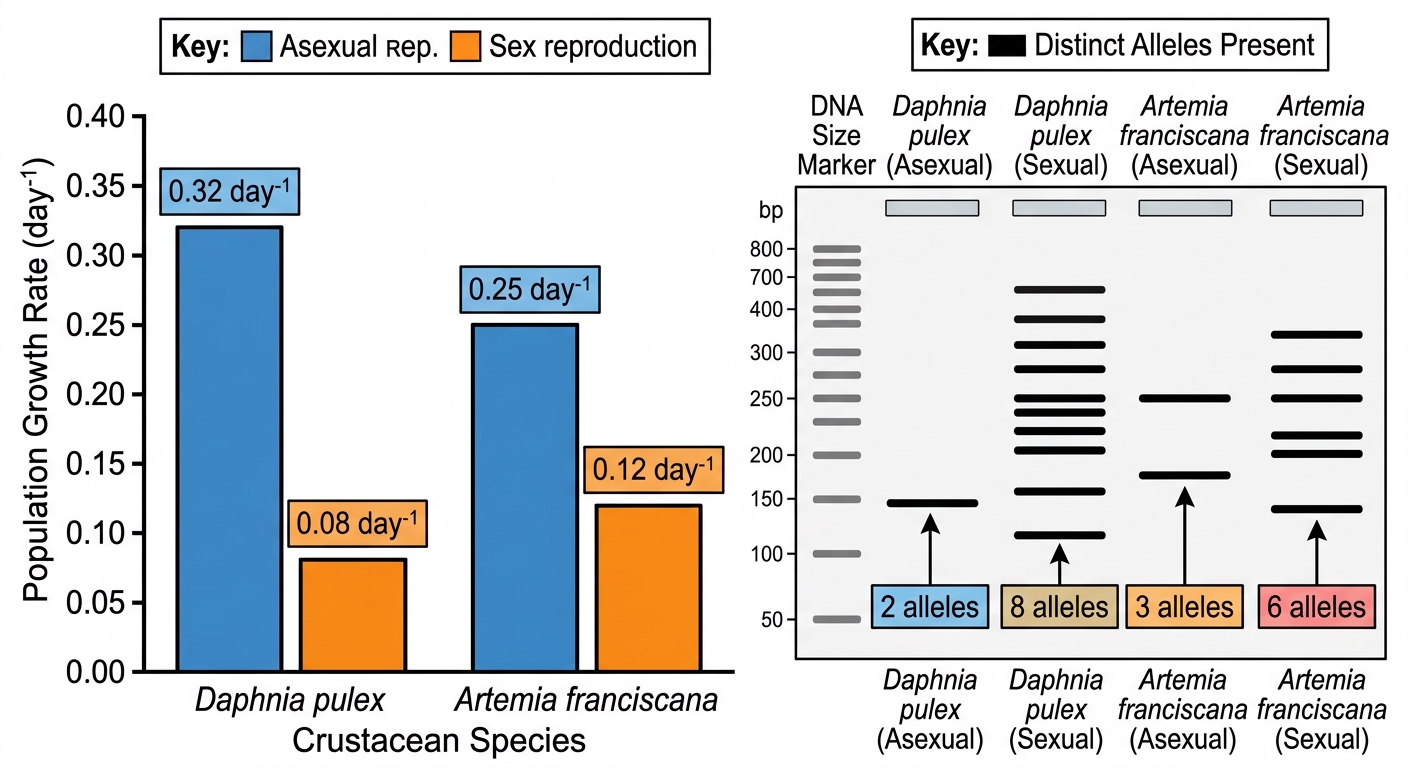
A study investigated the reproductive strategies of two freshwater crustacean species, Daphnia pulex and Artemia franciscana. Both species can reproduce asexually (parthenogenesis) or sexually, depending on environmental cues.
Population growth rates were measured in controlled laboratory cultures over 30 days:
Species — Asexual rate — Sexual rate
Daphnia pulex — —
Artemia franciscana — —
Genetic diversity was assed using gel electrophoresis of a polymorphic enzyme locus. The number of distinct alleles present in a population of 100 individuals after 30 days was:
Species — Asexual reproduction — Sexual reproduction
Daphnia pulex — 2 alleles — 8 alleles
Artemia franciscana — 3 alleles — 6 alleles
(a)
(i) Calculate the percentage advantage in population growth rate of asexual over sexual reproduction for each species. [2]
(ii) State which species would benefit more from asexual reproduction in a stable, resource-rich environment, justifying your answer using your calculated values. [1 mark]
(ii) State which species would benefit more from asexual reproduction in a stable, resource-rich environment, justifying your answer using your calculated values. [1 mark]
(b)
Explain the biological mechanisms by which sexual reproduction generates greater genetic diversity than asexual reproduction, and use the allele data to support your answer. [3 marks]
(c)
Evaluate the hypothesis that sexual reproduction is more advantageous than asexual reproduction in environments that change unpredictably over time, using both the data and your knowledge of the costs and benefits of each reproductive mode. Reach a reasoned, qualified conclusion.
Total: 10 marks [4 marks]
Solutions
3ChallengeSAQ-LAsexual vs sexual reproduction17 marksPaper 2~26 min
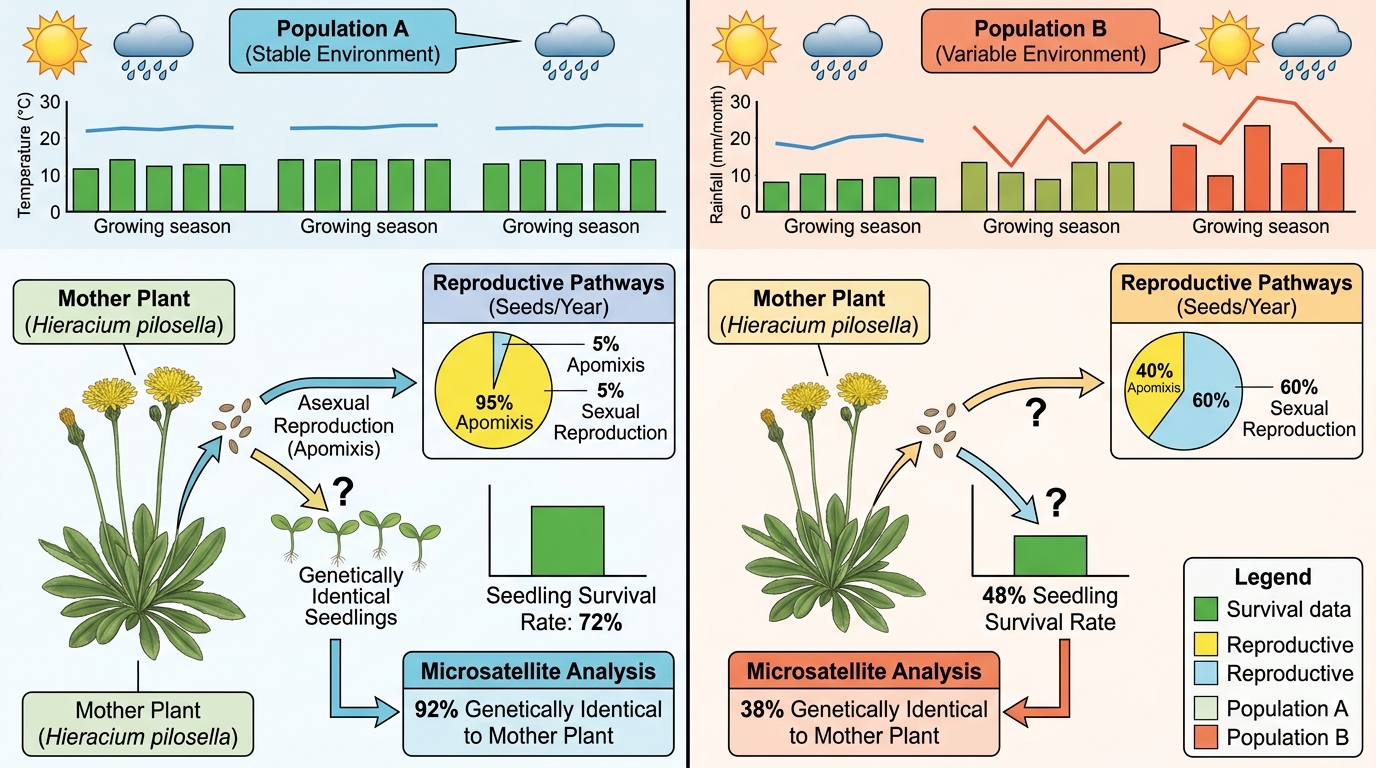
Hieracium pilosella (mouse-ear hawkweed) reproduces both asexually via apomixis (seed production without fertilisation) and sexually. A research team monitored two populations over three growing seasons.
Population A (stable field — consistent rainfall and temperature):
- Average seed set per plant:
- of seeds produced via apomixis; via sexual reproduction
- Seedling survival rate:
- of seedlings genetically identical to mother plant (microsatellite analysis)
Population B (variable field — unpredictable rainfall, frequent pest outbreaks):
- Average seed set per plant:
- of seeds produced via apomixis; via sexual reproduction
- Seedling survival rate:
- of seedlings genetically identical to mother plant (microsatellite analysis)
(a)
(i) Calculate the number of sexually produced seeds per plant per year for each population. [2]
(ii) State which population produces more sexually derived seeds and suggest one reason for this difference based on the environmental conditions described. [2 marks]
(ii) State which population produces more sexually derived seeds and suggest one reason for this difference based on the environmental conditions described. [2 marks]
(b)
Explain the cellular mechanism of apomixis that results in offspring genetically identical to the mother plant, and contrast this with the mechanism of sexual reproduction that generates genetic variation. [3 marks]
(c)
Evaluate the hypothesis: "Environmental stability favours asexual reproduction, while environmental variability favours sexual reproduction." Use the data provided to support your evaluation. [5]
Total: [12 marks]
Solutions
That's every free question here — 3 of 48.
+45 more questions, plus Mock Papers & Worksheets, are waiting in Premium.