Ecological Niches · Paper 1 — Free Biology SL Practice Questions
Free questions
Open in full, with answers, mark scheme and examiner insights.
Ecological niche concept
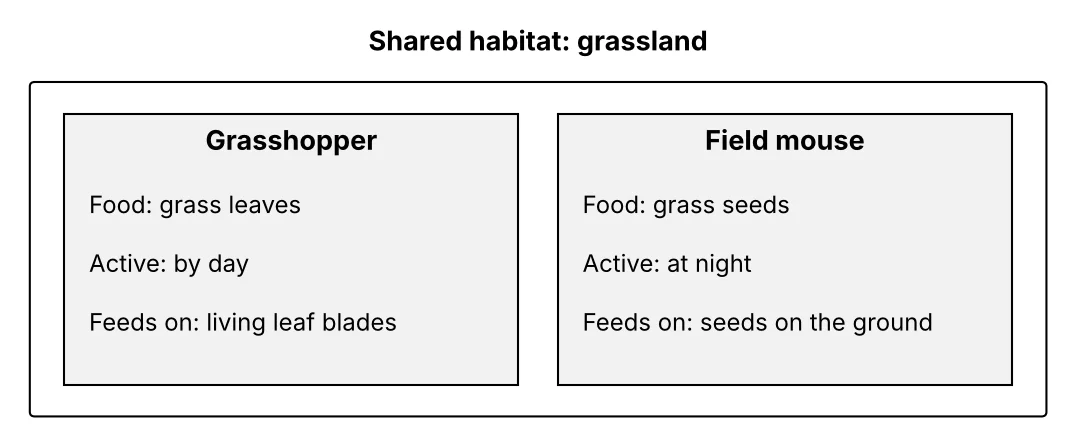
The shows how a grasshopper and a field mouse use the same grassland. Which statement about the ecological niches of the two species is correct?
revisionprep.com
Summary Answer
Not available for this question.
Model Answer
Not available for this question.
Marking Scheme
Not available for this question.
Examiner Insights
Not available for this question.
Role of organisms in ecosystems
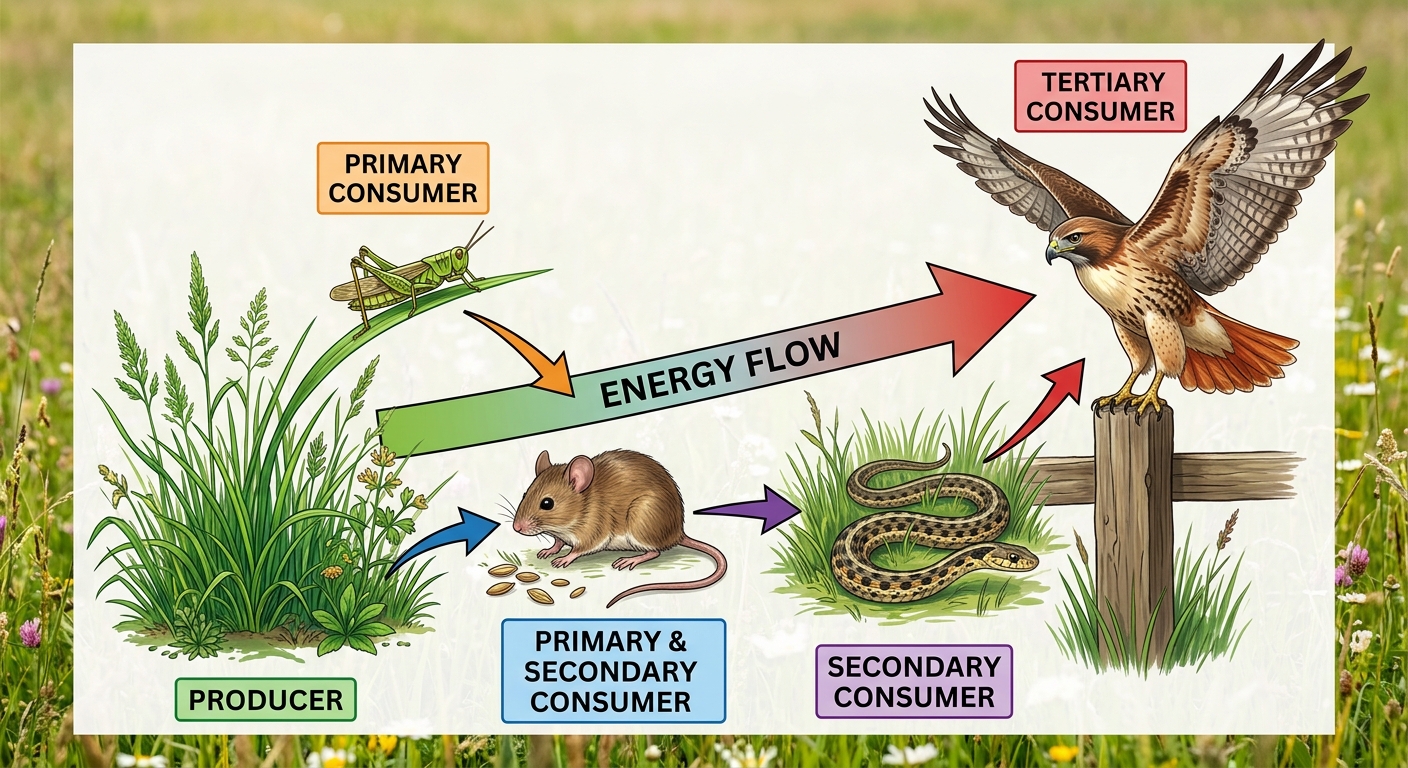
In the food chain shown, the mouse is labelled as both a primary and a secondary consumer. What does this show about the niche of the mouse?
revisionprep.com
Summary Answer
Not available for this question.
Model Answer
Not available for this question.
Marking Scheme
Not available for this question.
Examiner Insights
Not available for this question.
Ecological niche concept
In a rainforest in Borneo, three species of fig wasp are the only pollinators of three related fig tree species. Each wasp species lays its eggs in the figs of its host tree and pollinates the flowers there. The graph shows the mean number of wasps of each species captured per hour near each fig species. Species A is active at dawn, B at midday and C at dusk.
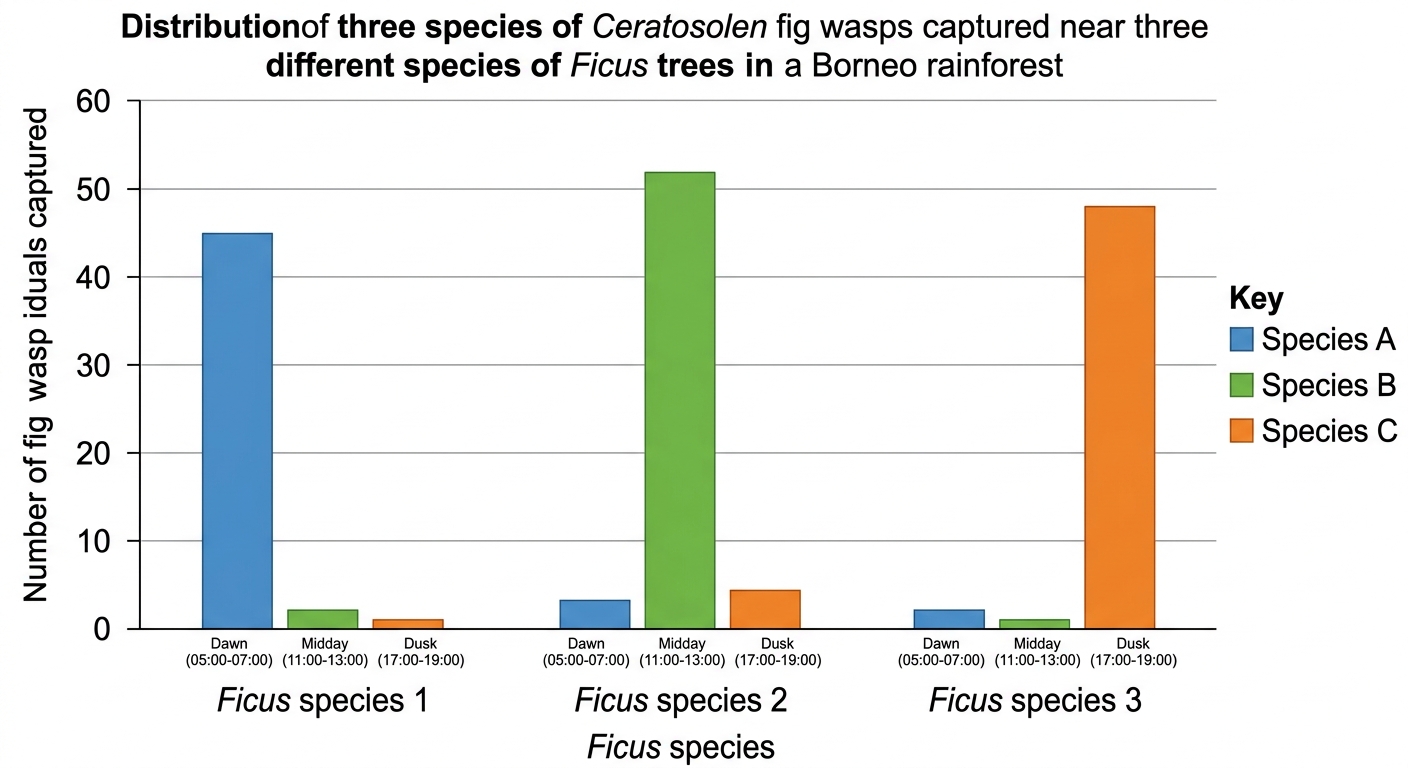
Identify the main host fig of wasp species B and state the evidence from the graph.
Calculate the percentage of all wasps captured near Ficus species 2 that were species B.
Explain how differences in their niches allow the three wasp species to live in the same forest.
Suggest one limitation of using the number of wasps captured near a tree as evidence of which fig each species uses.
revisionprep.com
Summary Answer
Not available for this question.
Model Answer
Not available for this question.
Marking Scheme
Not available for this question.
Examiner Insights
Not available for this question.
Ecological niche concept
Three species of soil bacteria, P, Q and R, were spread on agar plates. One set of plates was incubated in air and a second set in a sealed jar from which all oxygen had been removed. The number of colonies after 48 hours is shown in the table.
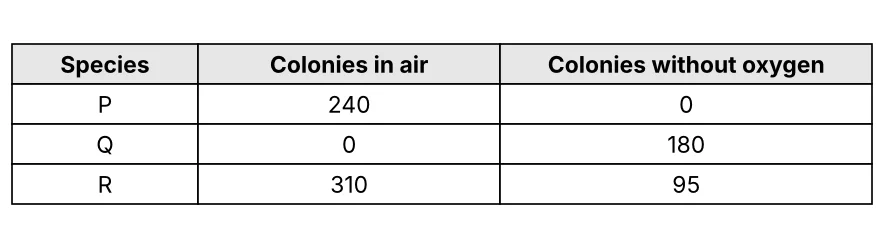
Identify which species is an obligate anaerobe.
Calculate the percentage decrease in the number of colonies of R when oxygen was removed.
Explain why R formed more colonies in air than without oxygen.
Suggest, with a reason, which species could live in waterlogged mud and how oxygen availability forms part of its niche.
Suggest two variables, other than oxygen, that should be kept the same for both sets of plates.
revisionprep.com
Summary Answer
Not available for this question.
Model Answer
Not available for this question.
Marking Scheme
Not available for this question.
Examiner Insights
Not available for this question.
Ecological niche concept
A strangler fig seed germinates on a high branch of a rainforest tree. Its roots grow down the trunk to the soil, and over many years it surrounds the host, which may die. How does this growth form help it harvest light?
revisionprep.com
Summary Answer
Not available for this question.
Model Answer
Not available for this question.
Marking Scheme
Not available for this question.
Examiner Insights
Not available for this question.
Role of organisms in ecosystems
Two plant species, P and Q, were grown in pots that were kept flooded for different numbers of days. The results are shown in the table. P has air spaces (aerenchyma) in its roots that carry oxygen down from the leaves; Q does not.
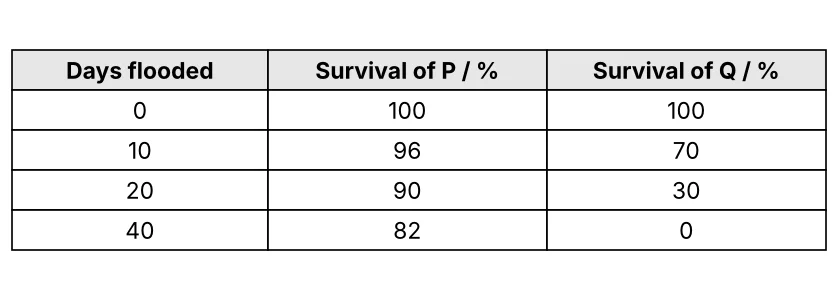
Compare the effect of flooding on the two species.
Calculate the percentage decrease in survival of Q after 20 days of flooding.
Explain why flooding kills the roots of Q.
Explain where each species would be expected to grow around the edge of a lake whose level rises and falls.
revisionprep.com
Summary Answer
Not available for this question.
Model Answer
Not available for this question.
Marking Scheme
Not available for this question.
Examiner Insights
Not available for this question.
That's every free question here — 6 of 67.
+61 more questions, plus Mock Papers & Worksheets, are waiting in Premium.