Membranes and Membrane Transport · Paper 1 — Free Biology SL Practice Questions
Free questions
Open in full, with answers, mark scheme and examiner insights.
Simple diffusion, osmosis and channel proteins
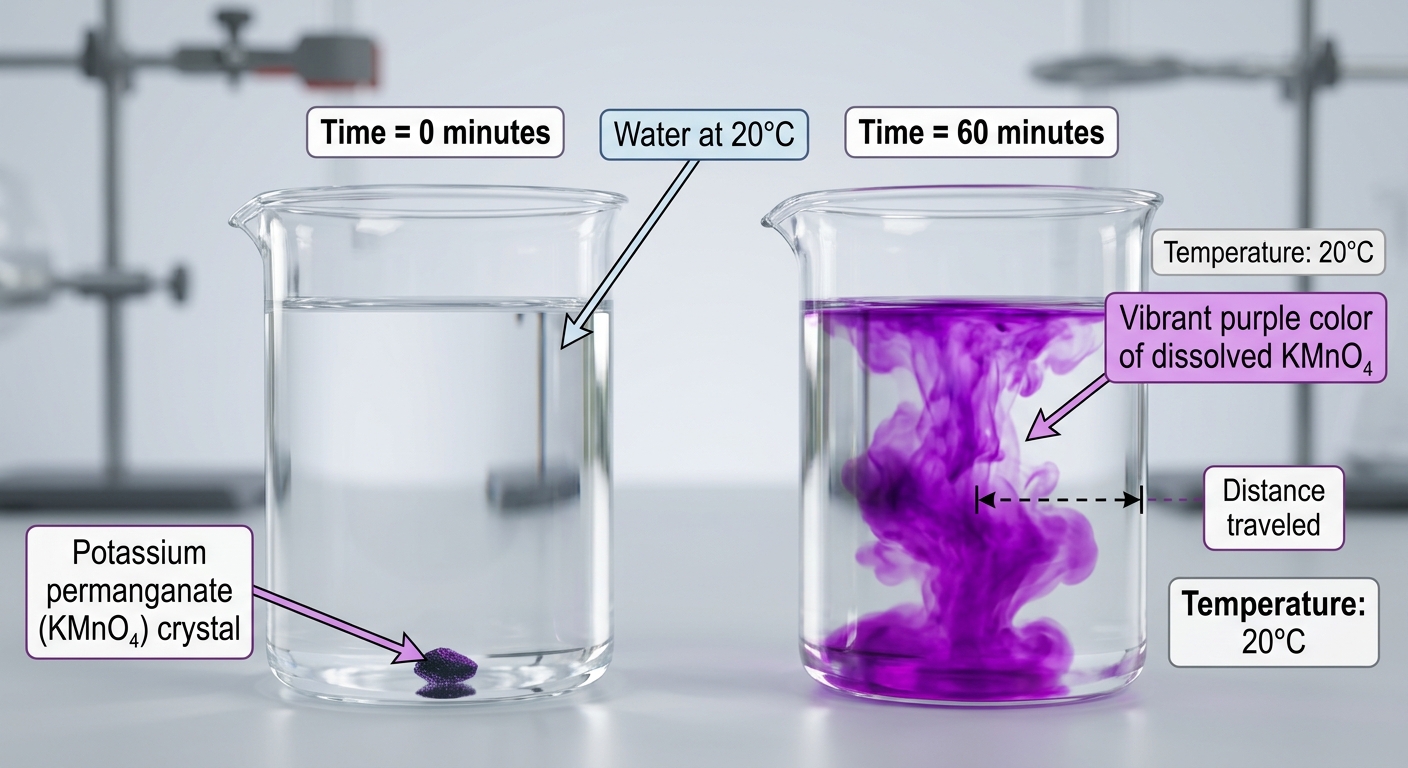
A crystal of potassium permanganate is placed at the bottom of a beaker of still water at 20 °C. After 30 minutes, a purple colour is observed 2 cm from the crystal; after 60 minutes, the colour has spread to 4 cm. Which statement best explains this pattern of spreading?
revisionprep.com
Summary Answer
Not available for this question.
Model Answer
Not available for this question.
Marking Scheme
Not available for this question.
Examiner Insights
Not available for this question.
Active transport, pumps, endocytosis and exocytosis
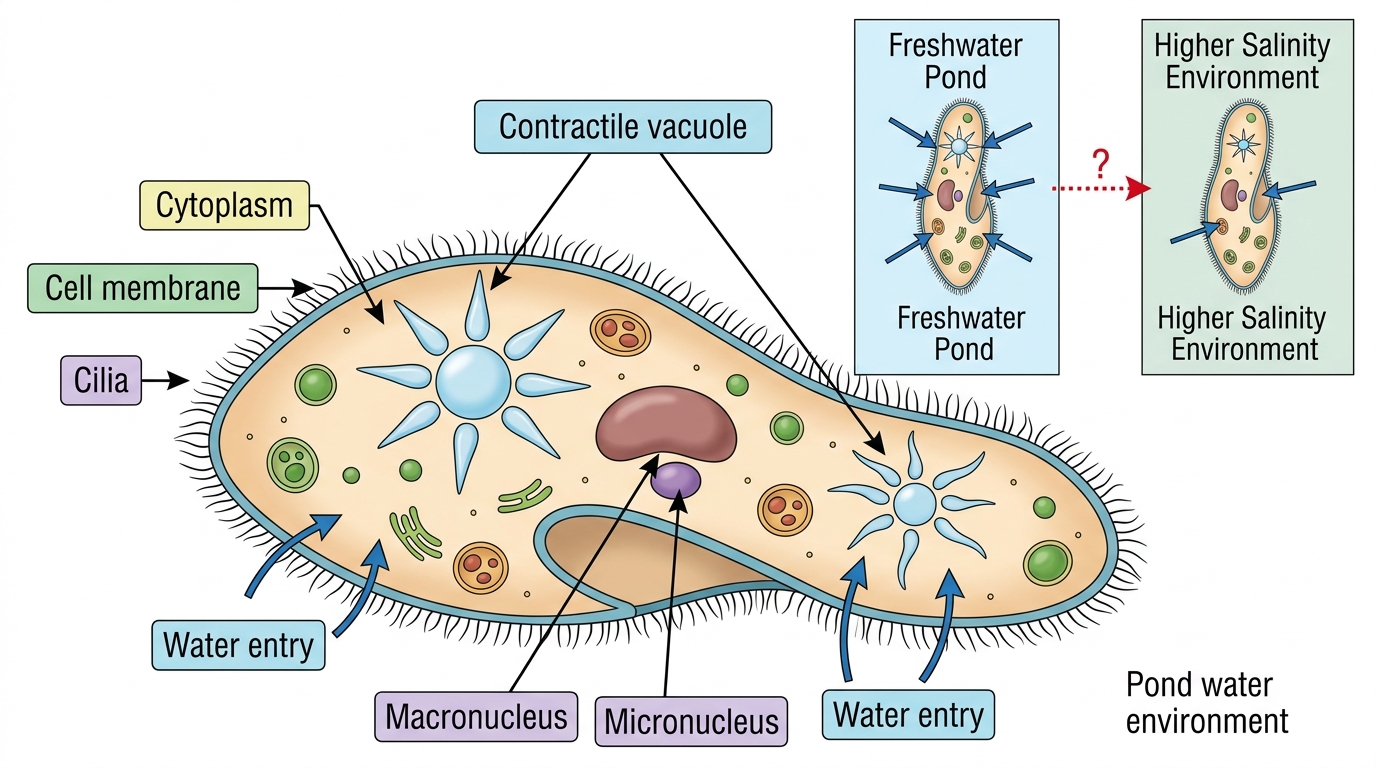
A Paramecium lives in a freshwater pond where its contractile vacuole expels excess water that enters by osmosis. The pond water gradually becomes saltier until its solute concentration approaches that of the Paramecium's cytoplasm. What is the expected effect on the contractile vacuole?
revisionprep.com
Summary Answer
Not available for this question.
Model Answer
Not available for this question.
Marking Scheme
Not available for this question.
Examiner Insights
Not available for this question.
Simple diffusion, osmosis and channel proteins
Potato cylinders were weighed, placed in sucrose solutions for 24 hours, then reweighed. The results are shown in the table.

Estimate the sucrose concentration at which there is no change in mass.
Explain the change in mass at 0.0 mol dm⁻³.
Explain the change in mass at 0.8 mol dm⁻³.
Suggest why percentage change in mass is used rather than change in mass.
revisionprep.com
Summary Answer
Not available for this question.
Model Answer
Not available for this question.
Marking Scheme
Not available for this question.
Examiner Insights
Not available for this question.
Active transport, pumps, endocytosis and exocytosis
Cells lining the small intestine take up amino acids. Pieces of intestine were placed in a solution of an amino acid at 2 mmol dm⁻³. Some were also given cyanide, which stops aerobic respiration. The results are shown in the table.

State the evidence that the amino acid is moved against its concentration gradient without cyanide.
Explain the effect of cyanide.
Identify the type of membrane protein needed for this uptake and state how it differs from a channel protein.
Suggest why the concentration with cyanide reached 2 mmol dm⁻³ and no higher.
revisionprep.com
Summary Answer
Not available for this question.
Model Answer
Not available for this question.
Marking Scheme
Not available for this question.
Examiner Insights
Not available for this question.
Simple diffusion, osmosis and channel proteins
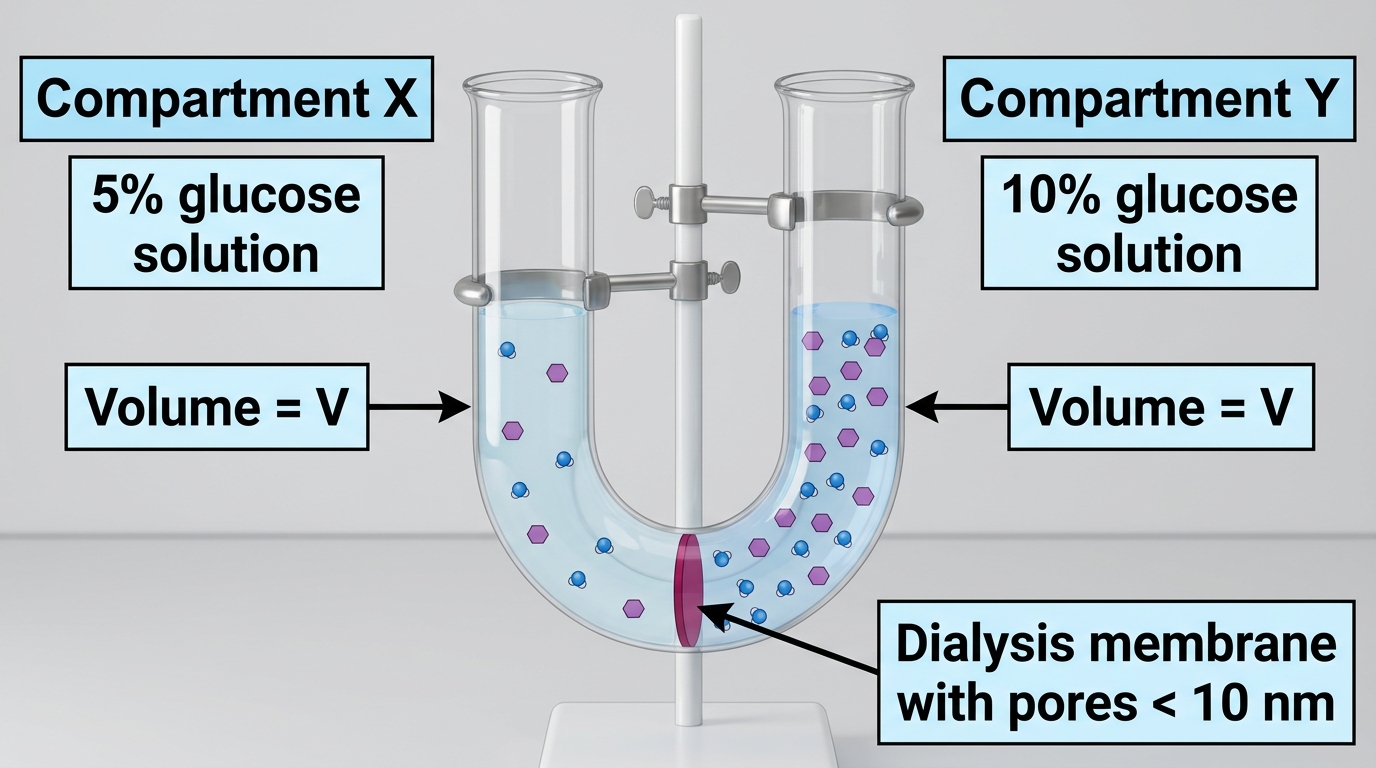
The shows two compartments of equal volume separated by a dialysis membrane. Its pores let water molecules and glucose molecules pass but stop larger molecules. Compartment X contains 5 % glucose solution and compartment Y contains 10 % glucose solution. The apparatus is left for several hours until no further net change occurs. Which statement describes the two compartments at the end?
revisionprep.com
Summary Answer
Not available for this question.
Model Answer
Not available for this question.
Marking Scheme
Not available for this question.
Examiner Insights
Not available for this question.
Active transport, pumps, endocytosis and exocytosis
As the oxygen concentration around roots increases, the rate of active uptake of phosphate rises and then levels off. Which explains the levelling off?
revisionprep.com
Summary Answer
Not available for this question.
Model Answer
Not available for this question.
Marking Scheme
Not available for this question.
Examiner Insights
Not available for this question.
That's every free question here — 6 of 119.
+113 more questions, plus Mock Papers & Worksheets, are waiting in Premium.