Transport · Paper 1 — Free Biology SL Practice Questions
Free questions
Open in full, with answers, mark scheme and examiner insights.
Xylem structure and transpiration
A student measured the rate of water uptake by leafy shoots of the same species in a potometer under four conditions. All shoots were at 20 °C. The results are shown in the figure.
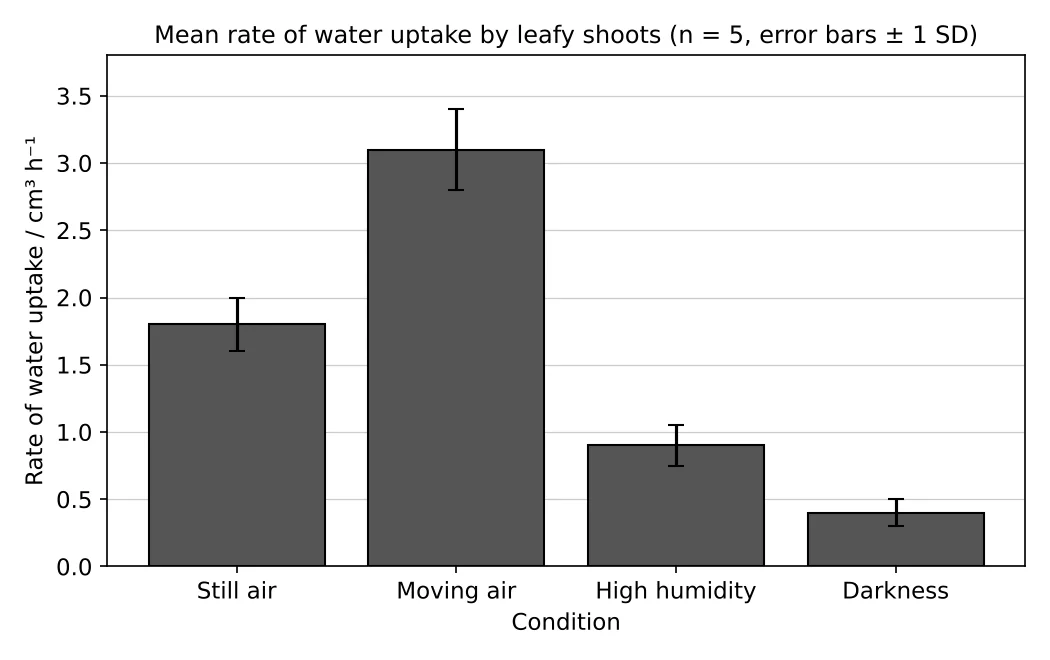
State the condition that gave the lowest rate of water uptake.
Calculate the percentage increase in the mean rate of water uptake when the shoots were moved from still air to moving air.
Identify one variable, other than temperature, that should have been kept constant between the shoots.
Explain why the rate of water uptake was higher in moving air than in still air.
revisionprep.com
Summary Answer
Not available for this question.
Model Answer
Not available for this question.
Marking Scheme
Not available for this question.
Examiner Insights
Not available for this question.
Blood circulation in mammals (cardiovascular system)
Blood samples were taken from four vessels of a healthy person and the percentage saturation of haemoglobin with oxygen was measured. Vessel 1 is an artery supplying the leg. Vessels 2, 3 and 4 are veins draining the leg muscles when the person was resting, walking and running. The figure shows the results.
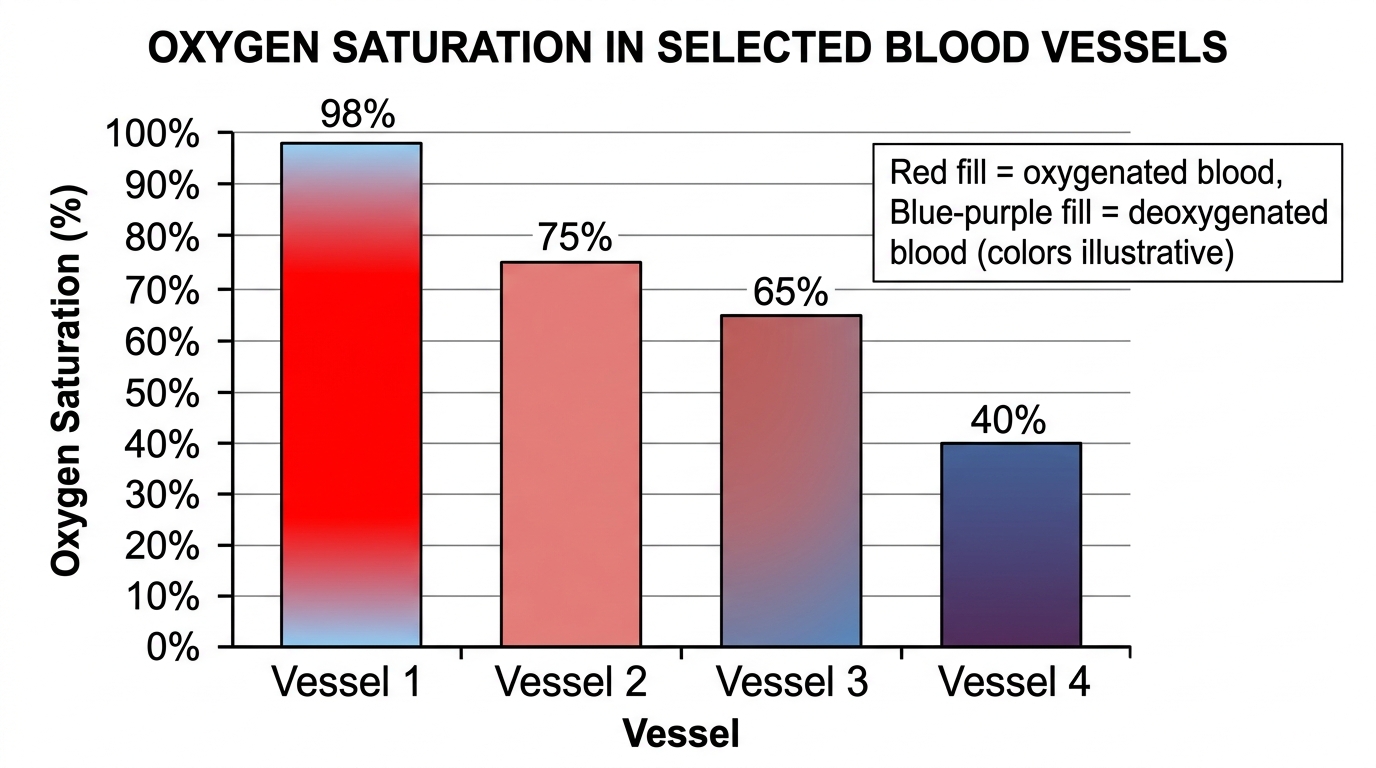
State which vessel carries blood that has not yet passed through the capillaries of the leg muscles.
Calculate the decrease in oxygen saturation between vessel 1 and vessel 4 as a percentage of the value in vessel 1.
Explain why the oxygen saturation of blood in vessel 4 is lower than in vessel 2.
State the type of blood vessel in which oxygen leaves the blood to enter the muscle cells.
revisionprep.com
Summary Answer
Not available for this question.
Model Answer
Not available for this question.
Marking Scheme
Not available for this question.
Examiner Insights
Not available for this question.
Xylem structure and transpiration
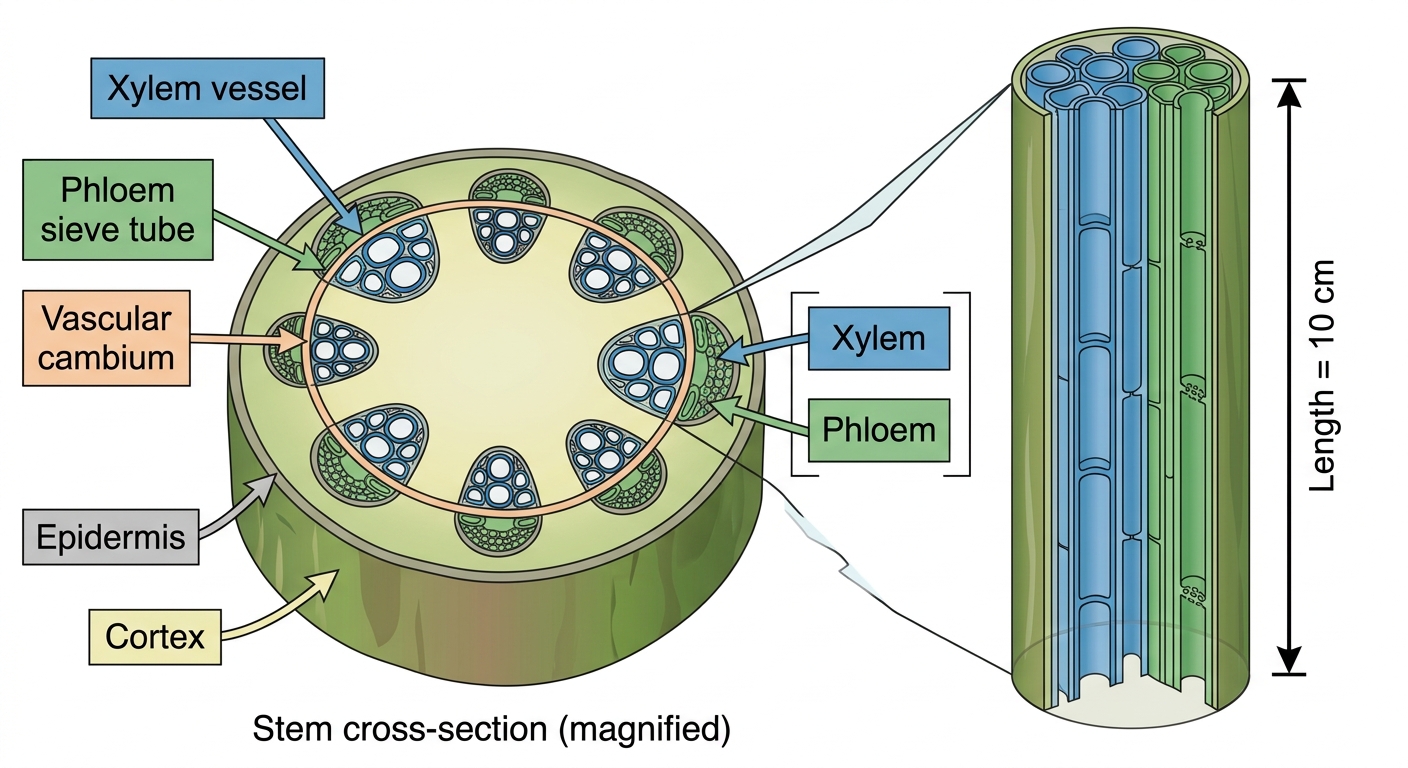
The figure shows a stem section of length 10 cm. The cut base of a similar leafy shoot was stood in a red dye for one hour, and a transverse section was then cut near the top. Where would the red dye be found in this section?
revisionprep.com
Summary Answer
Not available for this question.
Model Answer
Not available for this question.
Marking Scheme
Not available for this question.
Examiner Insights
Not available for this question.
Blood circulation in mammals (cardiovascular system)
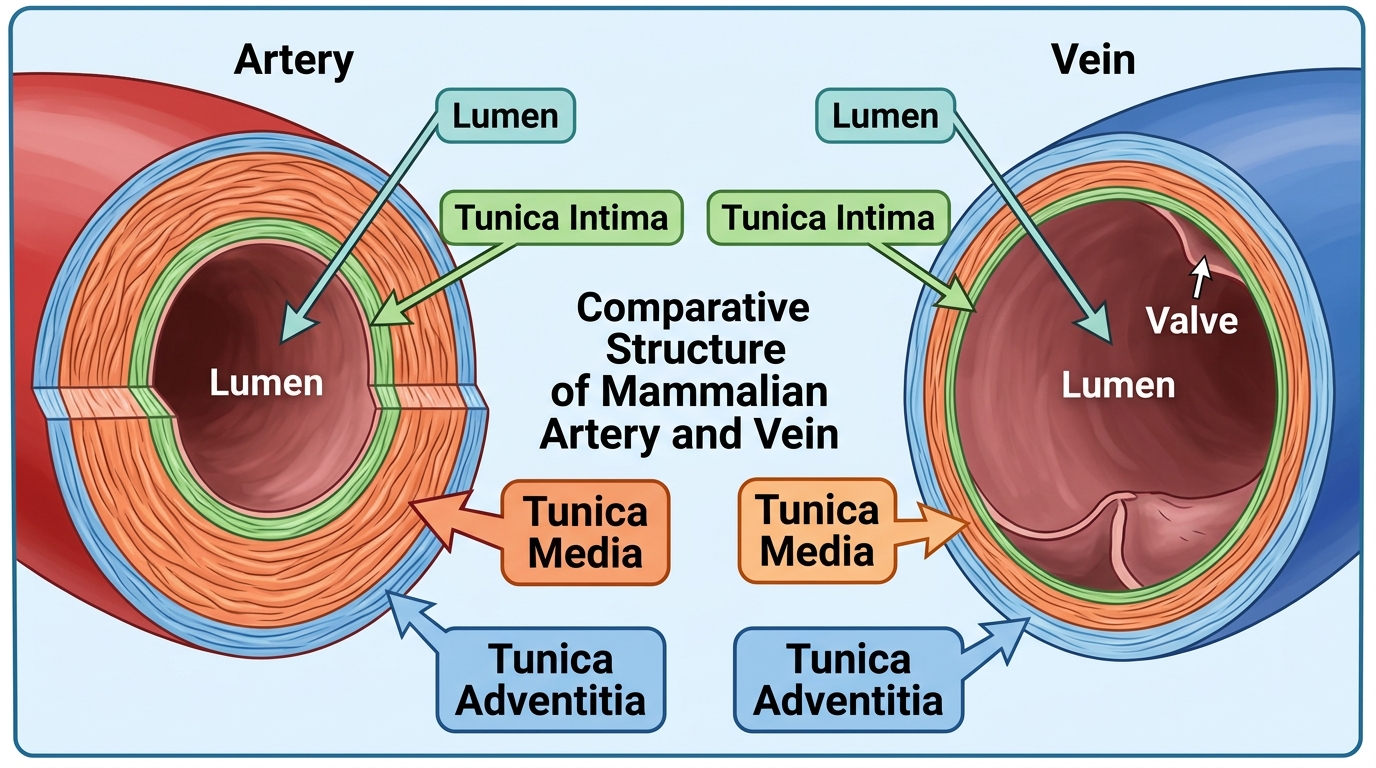
The figure compares the structure of an artery and a vein. Which feature of the vein best explains how veins can hold a large volume of blood at low pressure?
revisionprep.com
Summary Answer
Not available for this question.
Model Answer
Not available for this question.
Marking Scheme
Not available for this question.
Examiner Insights
Not available for this question.
Xylem structure and transpiration
Four groups of detached leaves of the same species were hung in the same room. One group was uncoated, one had the upper surface coated with petroleum jelly, one had the lower surface coated and one had both surfaces coated. The leaves were weighed each day. The figure shows the mean cumulative loss of mass.
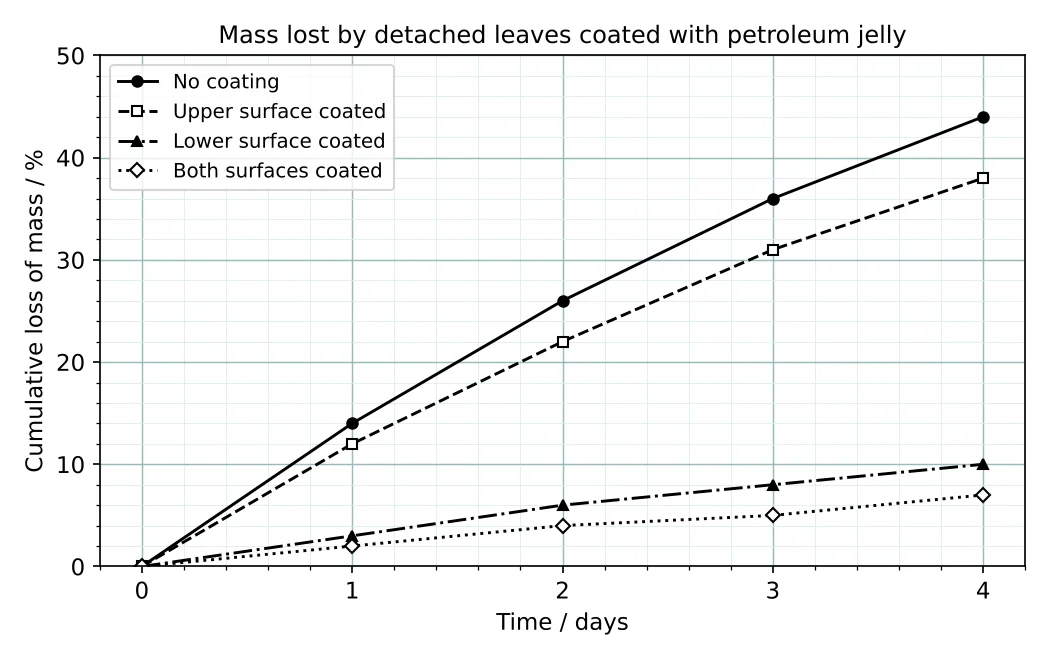
Calculate the mean rate of mass loss of the uncoated leaves over the four days, in % per day.
Compare the loss of mass of leaves coated on the upper surface with leaves coated on the lower surface.
Explain the difference you described in (b).
Suggest why the leaves coated on both surfaces still lost some mass.
Evaluate the use of loss of mass of detached leaves as a measure of transpiration.
revisionprep.com
Summary Answer
Not available for this question.
Model Answer
Not available for this question.
Marking Scheme
Not available for this question.
Examiner Insights
Not available for this question.
Blood circulation in mammals (cardiovascular system)
In a study of 10 untrained adults, the number of capillaries around each fibre in a leg muscle was measured from biopsies. Each person then cycled at a fixed, moderate power until exhaustion. The figure shows the results.
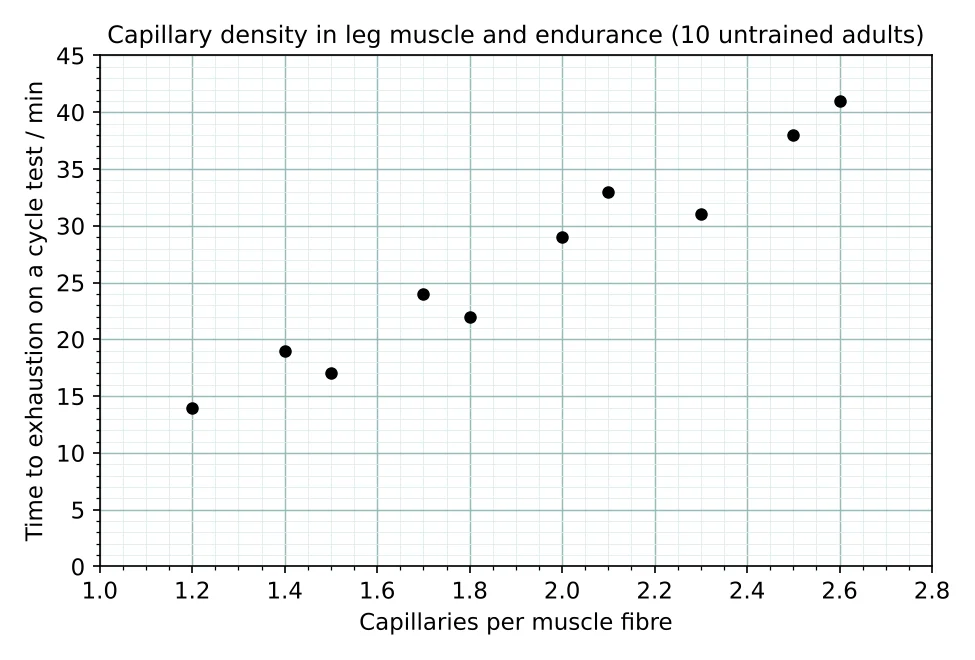
Describe the relationship between capillaries per muscle fibre and time to exhaustion.
Calculate the mean time to exhaustion for subjects with 2.0 or more capillaries per fibre and for those with fewer than 2.0.
Explain how a higher number of capillaries per muscle fibre could increase endurance.
Evaluate the claim that a higher number of capillaries per muscle fibre causes greater endurance.
revisionprep.com
Summary Answer
Not available for this question.
Model Answer
Not available for this question.
Marking Scheme
Not available for this question.
Examiner Insights
Not available for this question.
That's every free question here — 6 of 88.
+82 more questions, plus Mock Papers & Worksheets, are waiting in Premium.