You're viewing 3 free preview questions for Biology SL — subscribe to unlock 73 more, plus the Full Question Bank, Mock Papers & Worksheets.Upgrade
Transport · Paper 2 — Free Biology SL Practice Questions
1MasterySAQ-SBlood circulation in mammals (cardiovascular system)6 marksPaper 2~9 min

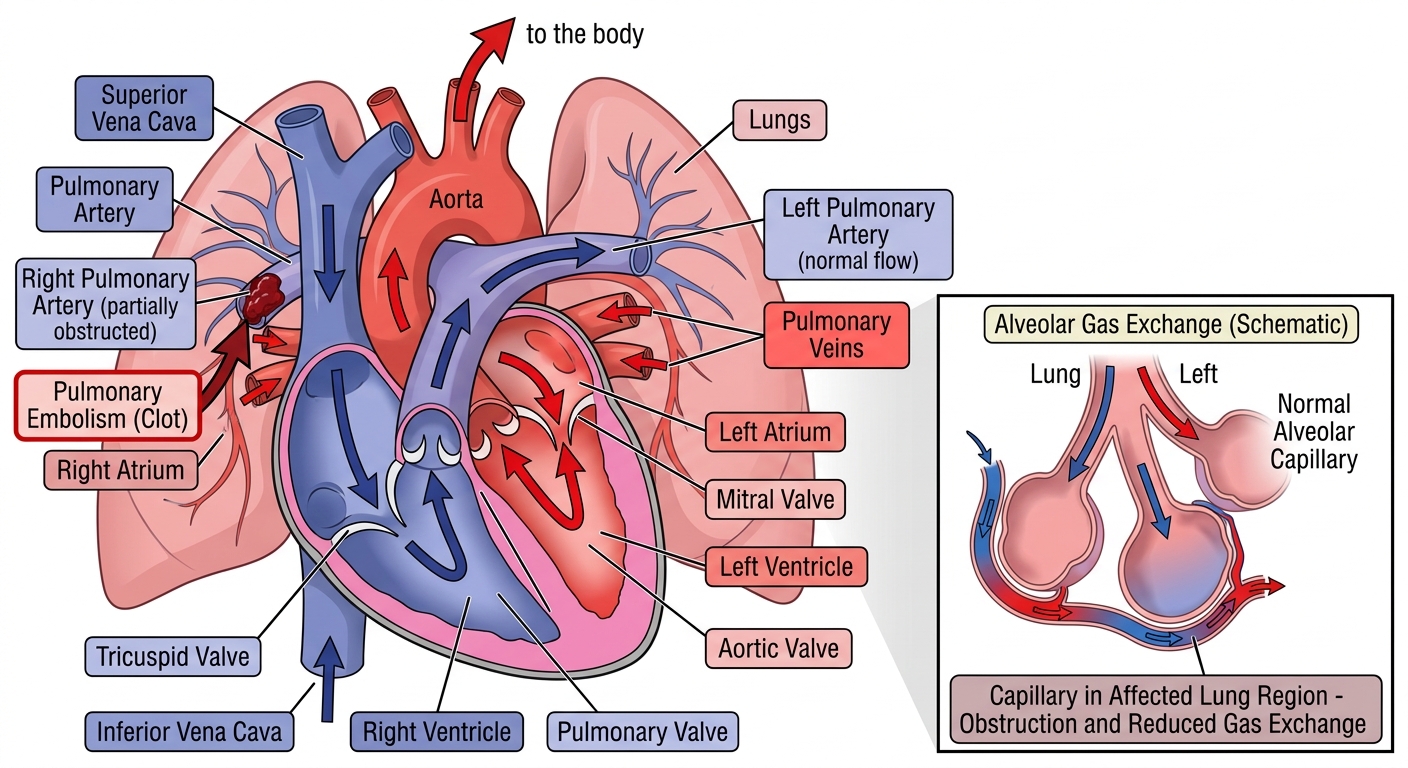
A patient is admitted to the emergency department with a suspected pulmonary embolism. A blood clot has lodged in a branch of the pulmonary artery, obstructing blood flow to a portion of the right lung.
(a)
State the type of blood vessel that carries oxygenated blood from the lungs to the heart, and name the heart chamber it empties into. [1 mark]
(b)
Calculate the stroke volume of the patient's heart. The cardiac output is and the heart rate is . [2 marks]
(c)
Explain why the oxygen concentration of blood arriving at the left atrium is lower than normal as a result of the pulmonary embolism. [3 marks]

Solutions
2MasterySAQ-SBlood circulation in mammals (cardiovascular system)5 marksPaper 2~8 min
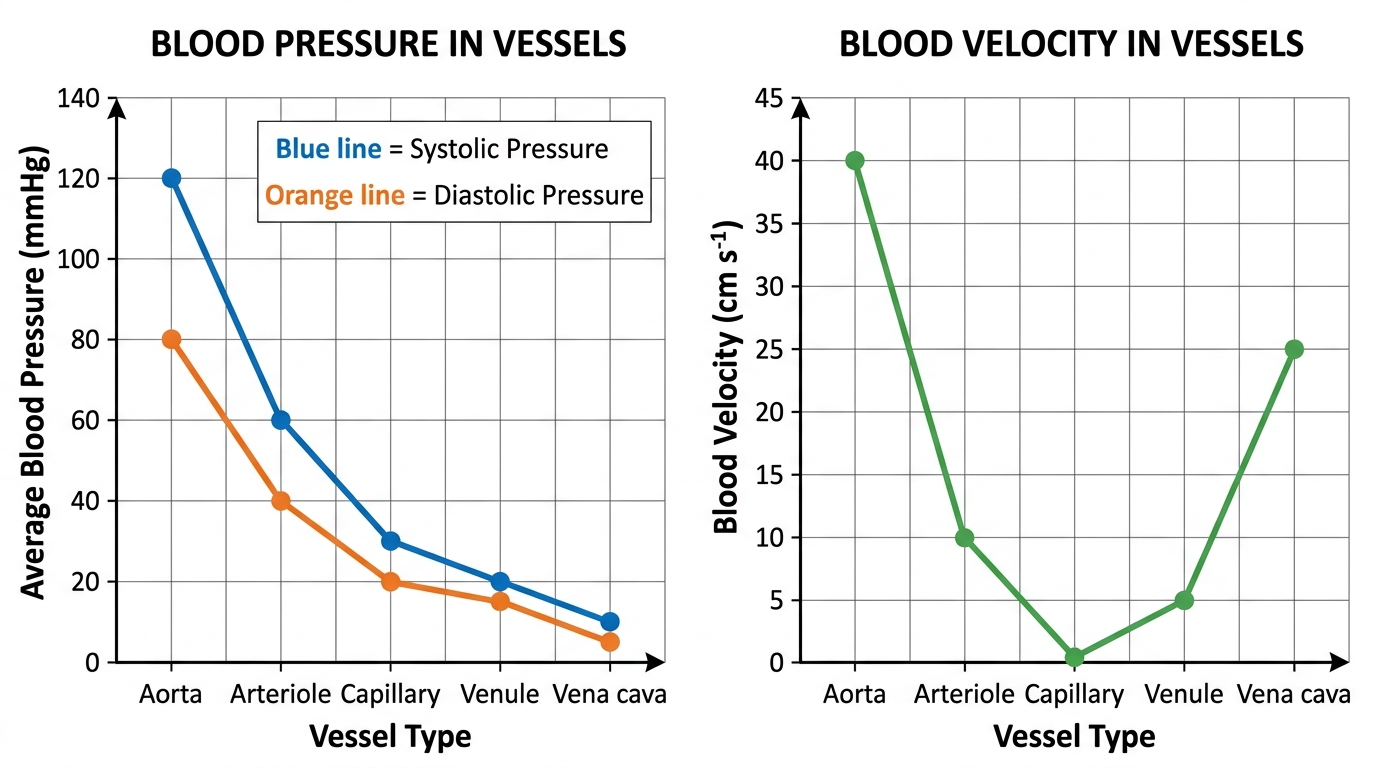
A researcher measures blood pressure and blood velocity in different blood vessels of a mammalian circulatory system.
Vessel — Systolic / diastolic pressure (mmHg) — Mean blood velocity ()
Aorta — 120 / 80 — 40
Arteriole — 60 / 40 — 10
Capillary — 30 / 20 — 0.5
Venule — 20 / 15
Vena cava — 10 / 5 — 25
(a)
Describe the relationship between blood velocity and vessel type, and explain this pattern in terms of total cross-sectional area. [2 marks]
(b)
Calculate the pulse pressure in the aorta. [1 mark]
(c)
Explain how the structural features of capillary walls allow efficient exchange of substances between blood and tissues, and explain why a reduction in blood velocity at capillaries important for this exchange. [2 marks]
Solutions
3ChallengeSAQ-LRole of the heart and blood vessels7 marksPaper 2~11 min
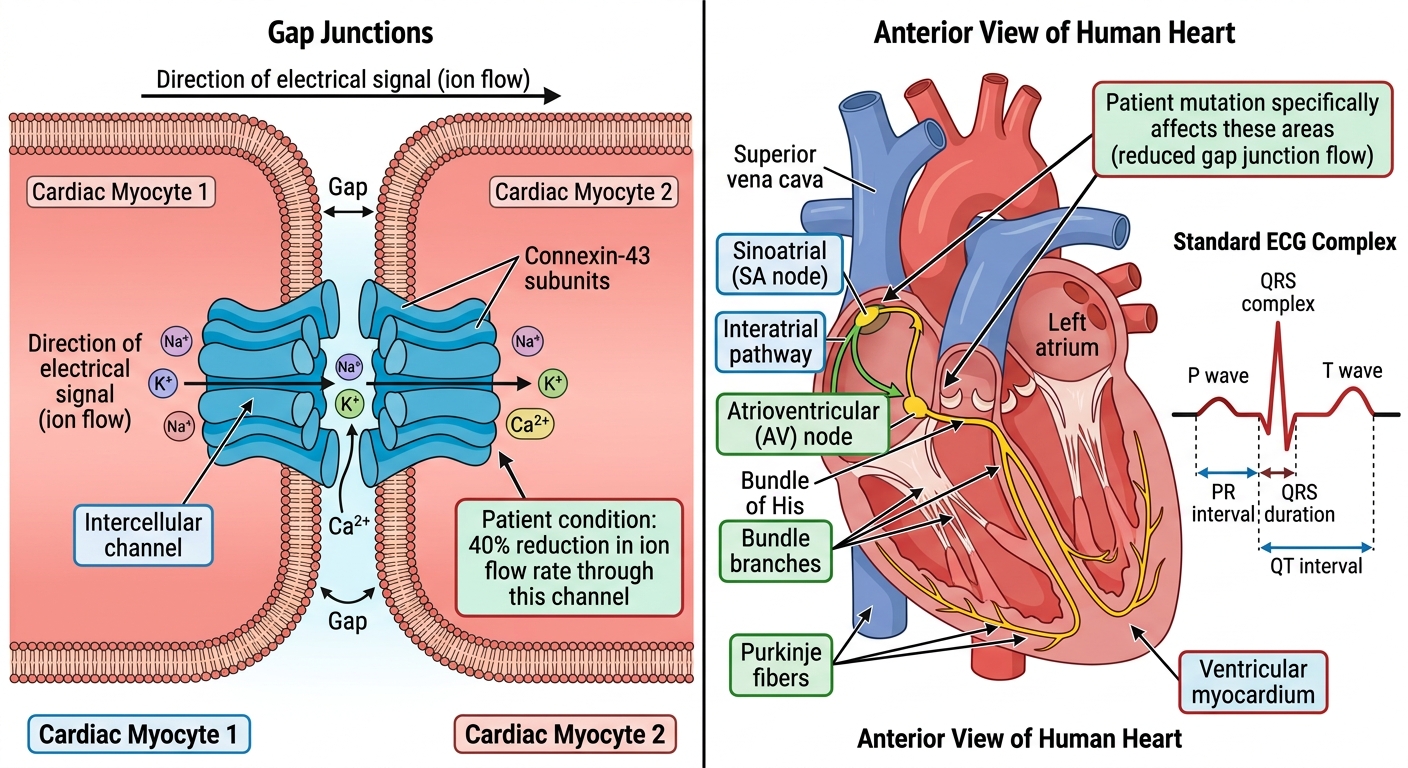
A medical researcher is investigating a newly discovered mutation in the gene encoding connexin-43, a protein that forms gap junctions in the sinoatrial (SA) node and atrioventricular (AV) node of the human heart. The mutation causes a reduction in the rate of ion flow through these gap junctions. A patient with this mutation has a resting heart rate of and a stroke volume of .
Reference values:
- Normal PR interval: –
- Normal QRS duration:
- Normal corrected QT interval:
-
(a)
Calculate the cardiac output of this patient at rest. [1 mark]
(b)
Explain the likely effect of the mutation the PR interval seen in the patient's ECG. [2 marks]
(c)
During moderate exercise the patient's heart rate rises to and stroke volume increases by from its resting value. In a healthy individual, stroke volume would increase by from the same resting value at the same heart rate. Determine the patient's cardiac output during this exercise and the cardiac output a healthy individual would achieve under the same conditions. [2 marks]
(d)
Using your answer to (c) and your knowledge of cardiovascular physiology, evaluate whether the mutation is likely to limit the patient's maximum exercise capacity. [2 marks]
Solutions
That's every free question here — 3 of 76.
+73 more questions, plus Mock Papers & Worksheets, are waiting in Premium.