You're viewing 181 free preview questions for Biology SL — subscribe to unlock 1 more, plus the Full Question Bank, Mock Papers & Worksheets.Upgrade
Water · Paper 1 — Free Biology SL Practice Questions

1FoundationMCQWater as a solvent1 markPaper 1~2 min
A student adds a drop of vegetable oil to a test tube of water and shakes the mixture. The oil initially disperses into small droplets but quickly coalesces into a separate layer above the water. Which property of water best explains why oil does not dissolve in water?
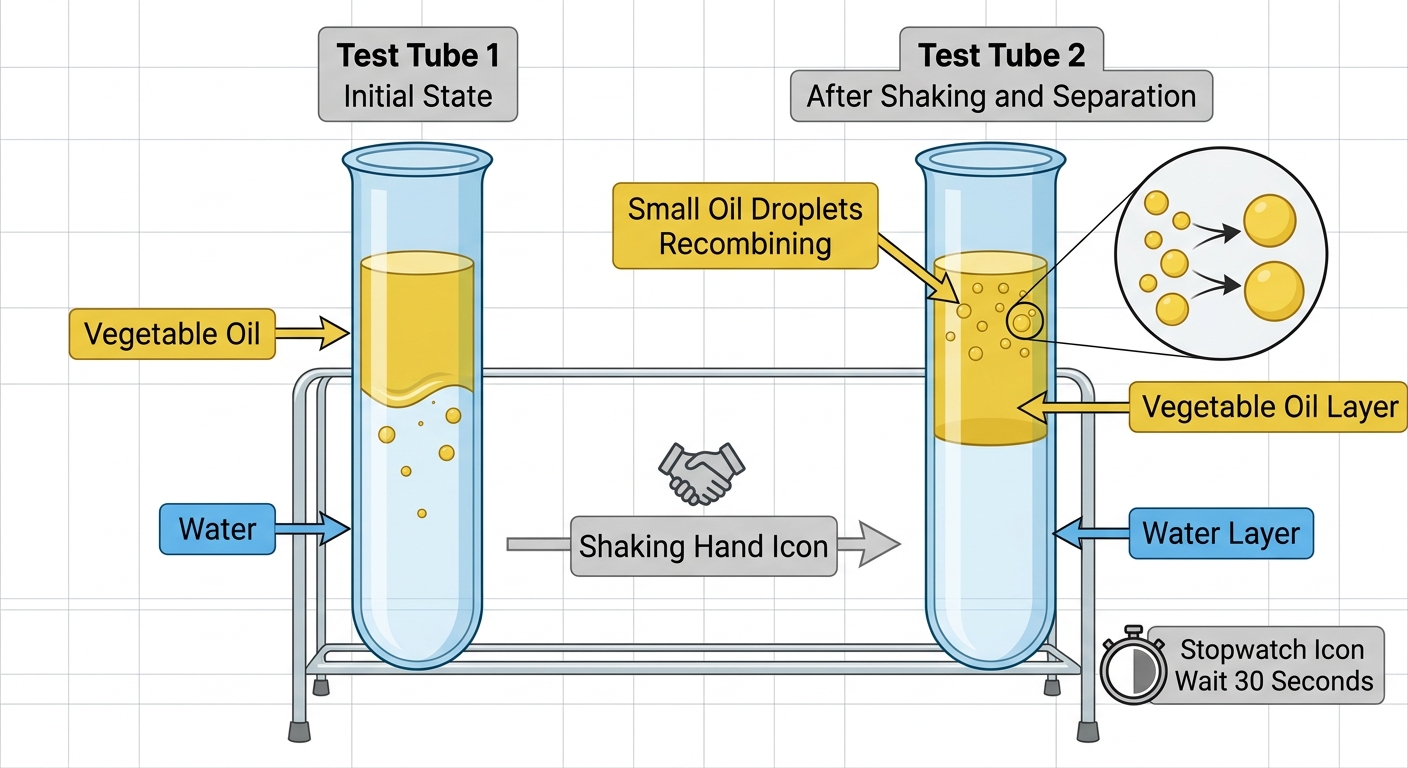

Solutions
2FoundationMCQWater’s role in temperature regulation1 markPaper 1~2 min
A 1.5 kg sample of water in a calorimeter absorbs 6270 J of thermal energy from an electric heater. The specific heat capacity of water is 4180 J kg⁻¹ K⁻¹. What is the temperature increase of the water?
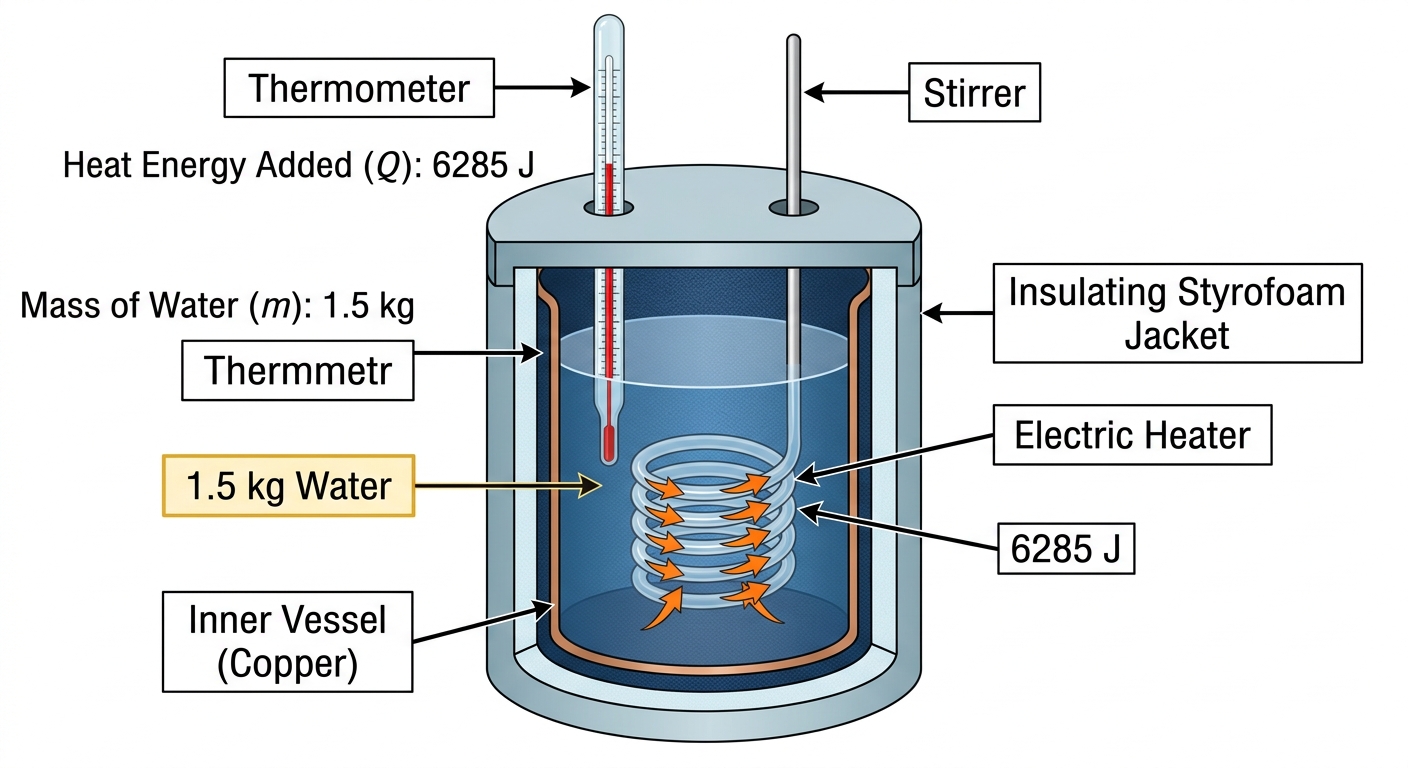
Solutions
3FoundationMCQWater’s role in temperature regulation1 markPaper 1~2 min
A student heats of water initially at . The water absorbs of energy. The specific heat capacity of water is . What is the final temperature of the water?
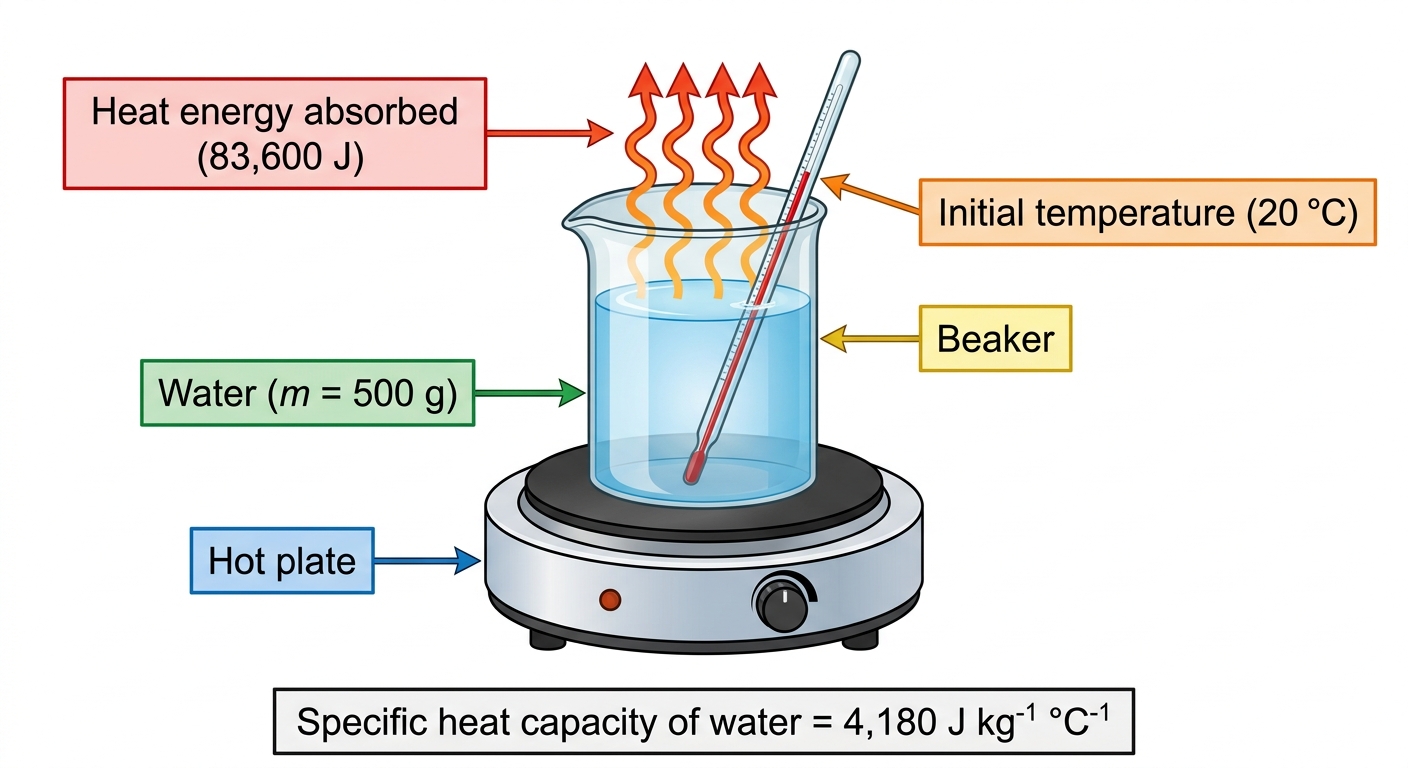
Solutions
4FoundationMCQWater as a solvent1 markPaper 1~2 min
When sodium chloride dissolves in water, water molecules orientate themselves around each ion. Which orientation correctly shows how a water molecule is attracted to a chloride ion (Cl⁻)?
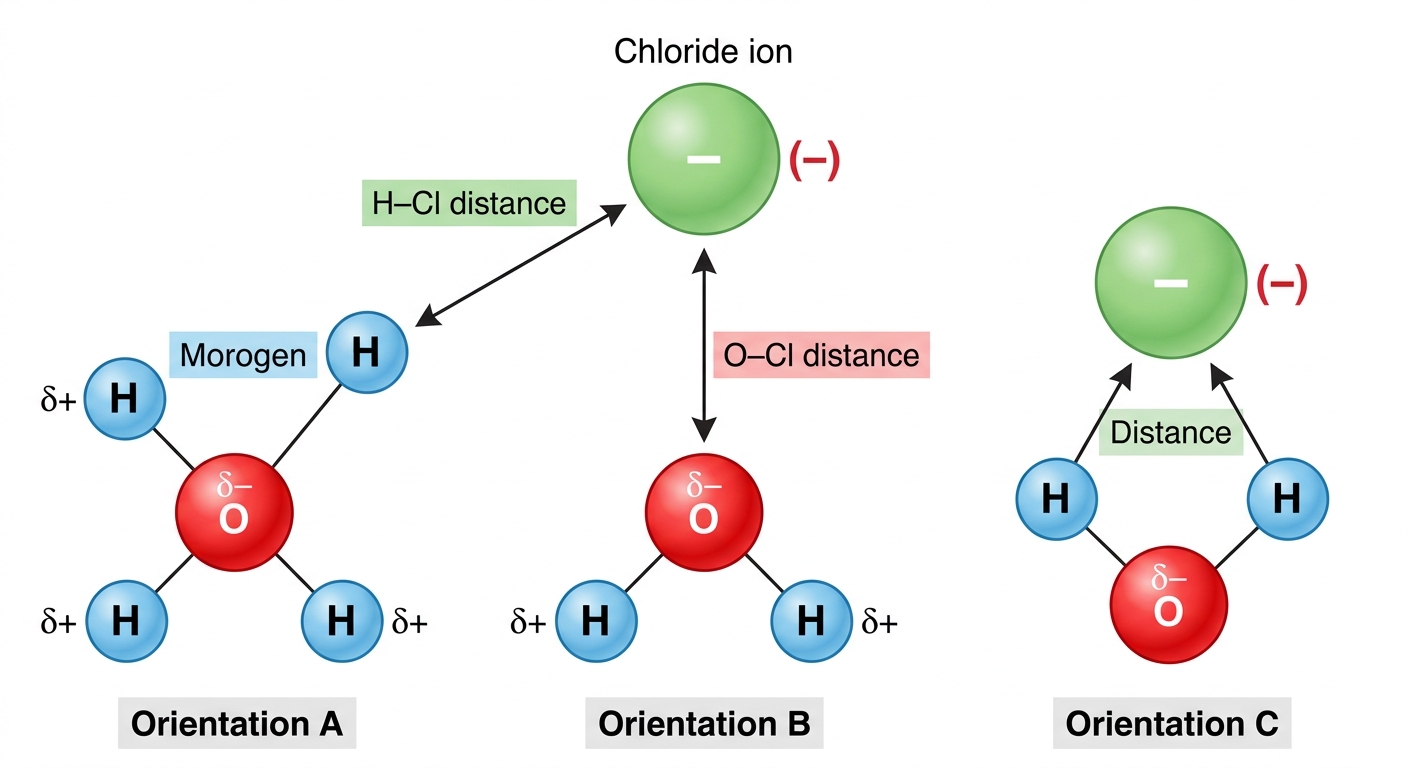
Solutions
5FoundationMCQWater as a solvent1 markPaper 1~2 min
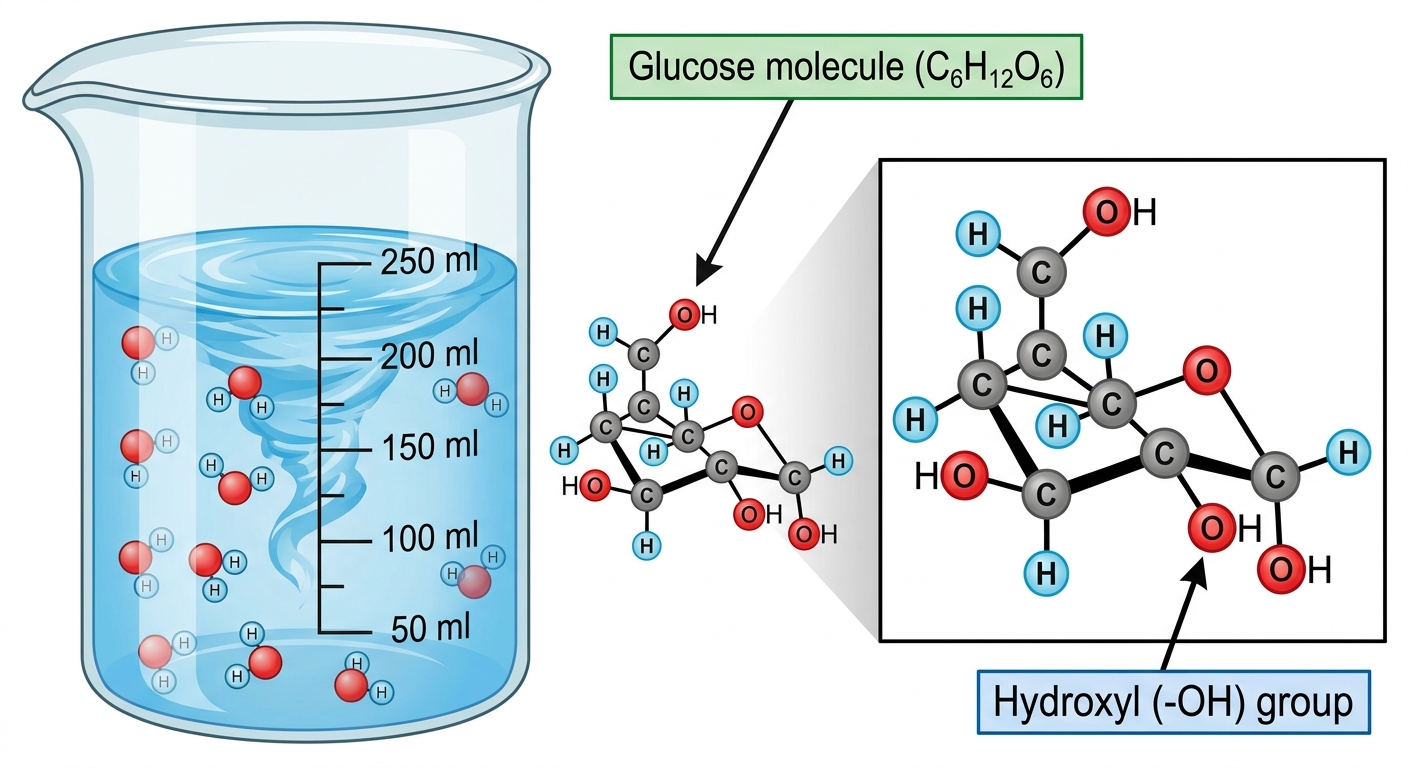
Which property of glucose molecules is primarily responsible for their solubility in water?
Solutions
6FoundationMCQWater potential in plants1 markPaper 1~2 min
A plant cell has a water potential of . It is placed in a solution with a water potential of . Which statement correctly describes the relationship between the solution and the cell, and the direction of net water movement?
Solutions
7FoundationMCQWater as a solvent1 markPaper 1~2 min
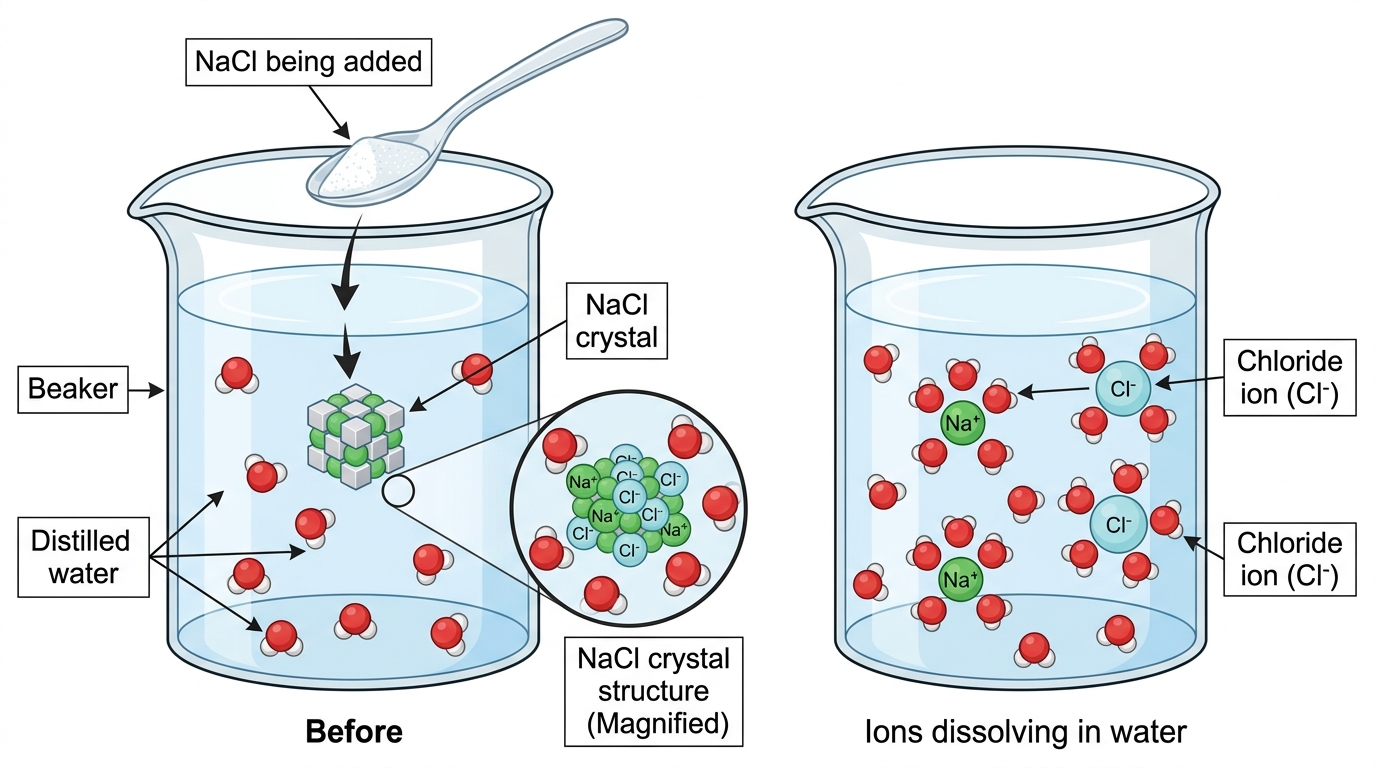
A crystal of sodium chloride is added to distilled water. The and ions separate from the lattice and become individually surrounded by water molecules. Which property of water most directly explains why the ionic lattice is disrupted?
Solutions
8FoundationMCQWater as a solvent1 markPaper 1~2 min
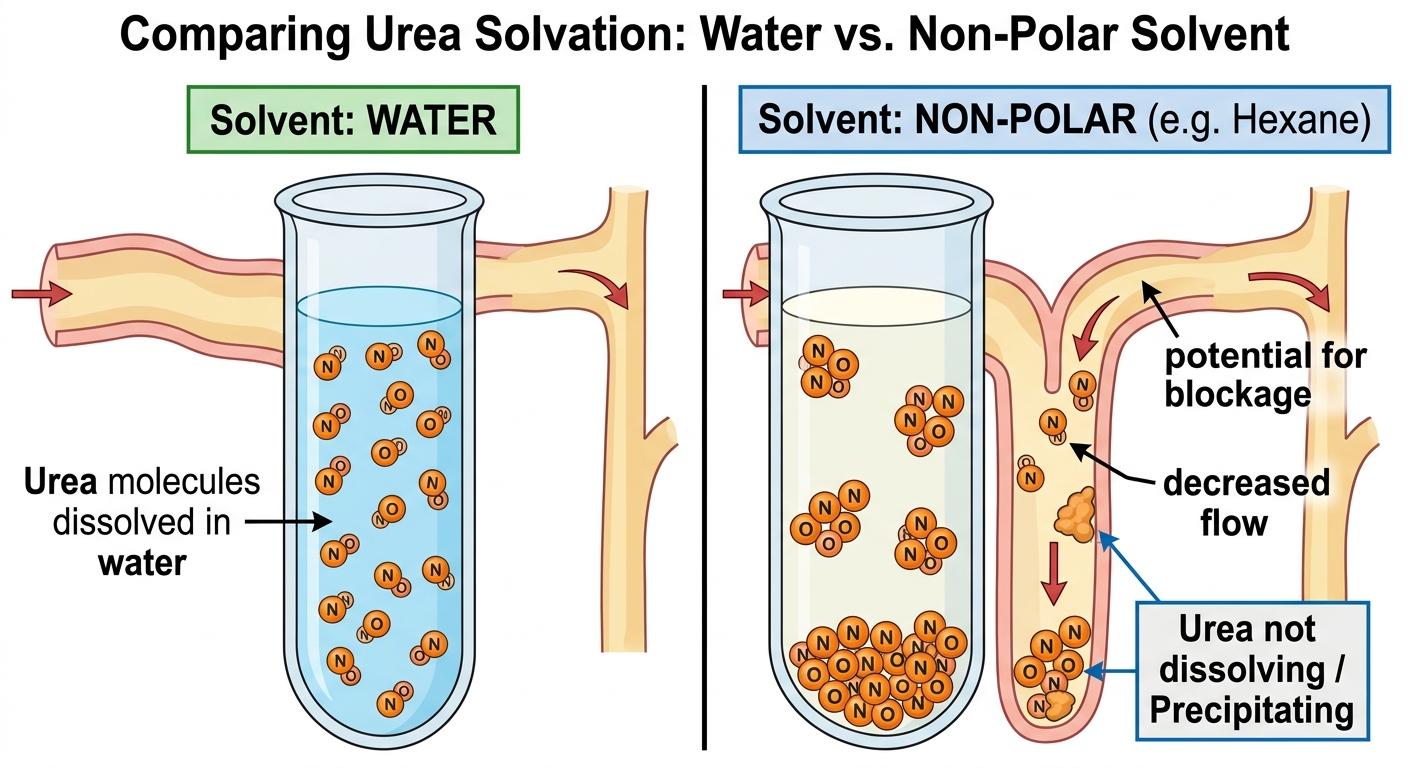
A student proposes replacing water in the kidney filtrate with a non-polar solvent. Urea is a small, polar molecule that is normally excreted dissolved in urine. Which of the following would most likely occur?
Solutions
9FoundationMCQWater as a solvent1 markPaper 1~2 min
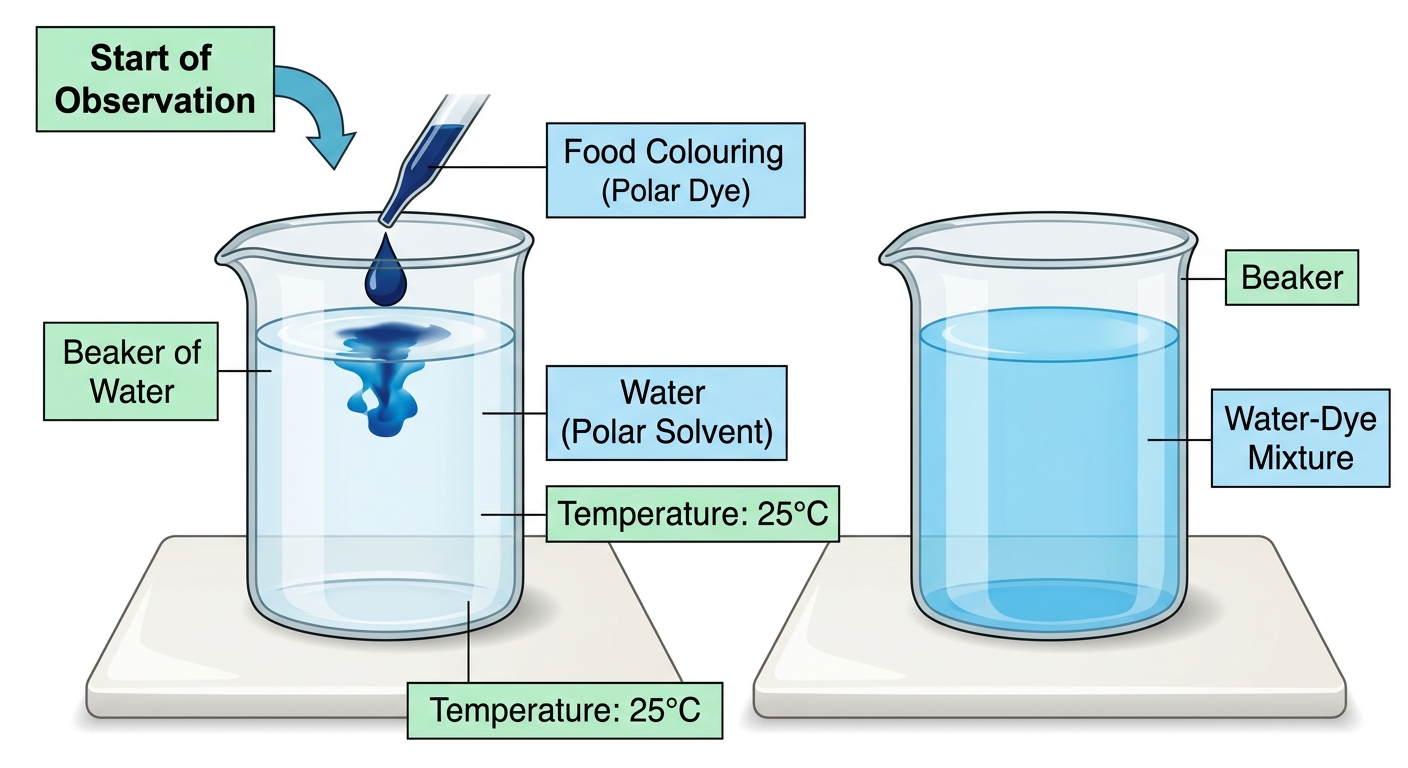
A drop of polar food dye is added to a beaker of still water at 25 °C. After several minutes, the colour is distributed evenly throughout the water without stirring. Which statement best explains this observation?
Solutions
10FoundationMCQWater as a solvent1 markPaper 1~2 min
A student prepares two solutions: Solution X contains NaCl dissolved in water, and Solution Y contains iodine () dissolved in ethanol. Which statement best explains why NaCl dissolves readily in water but not in ethanol, while dissolves readily in ethanol but not in water?
Solutions
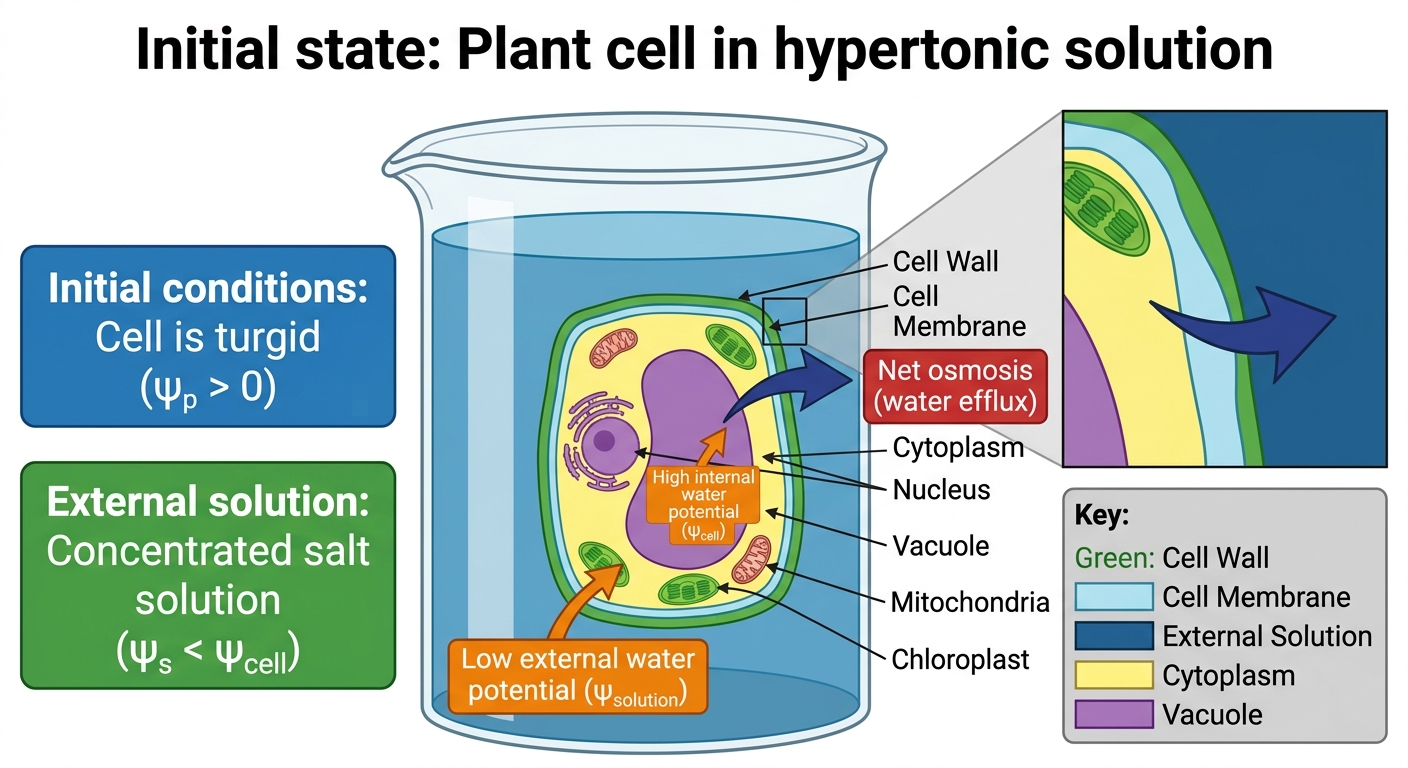
11FoundationMCQWater potential in plants1 markPaper 1~2 min
A plant cell is placed in a solution and becomes flaccid. Which statement correctly describes the water potentials of the cell () and the solution () at the start of the experiment?
Solutions
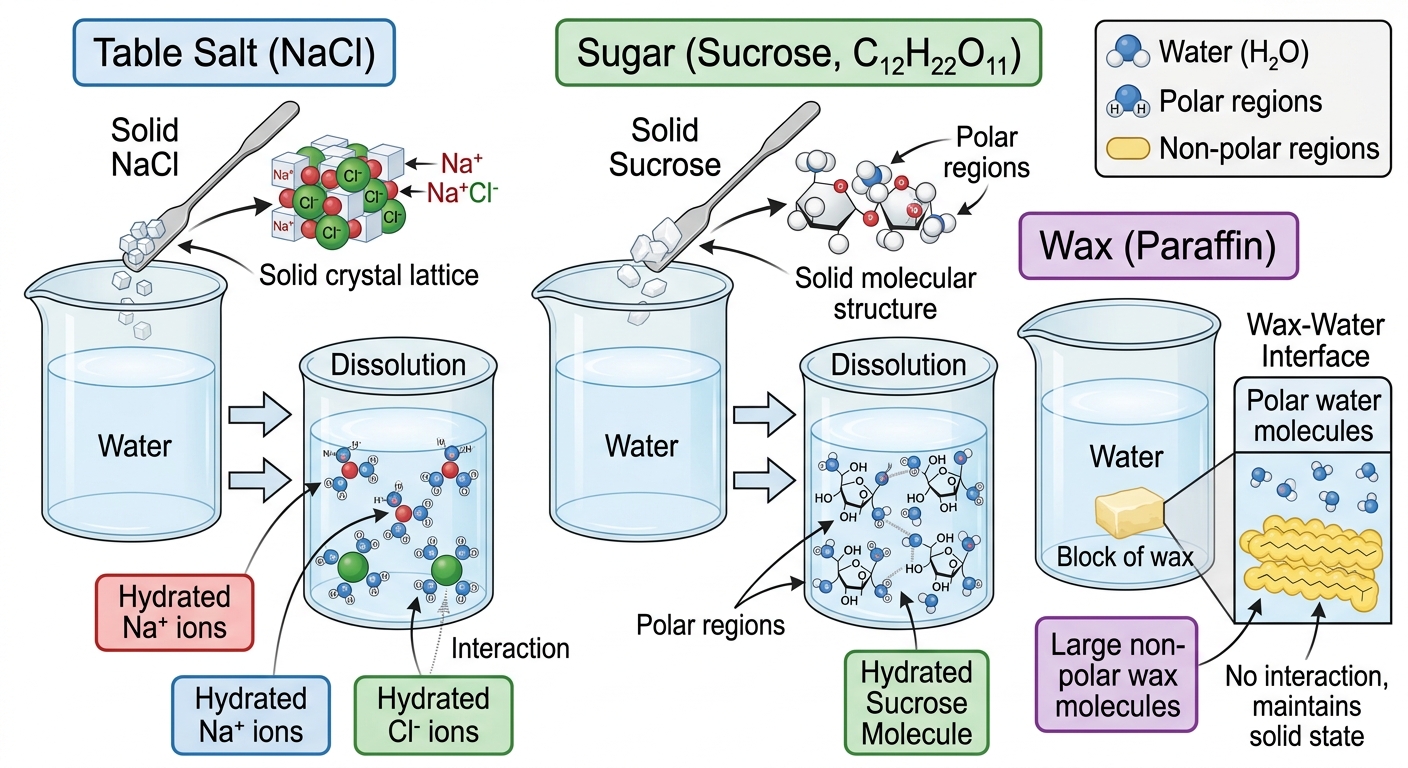
12FoundationMCQWater as a solvent1 markPaper 1~2 min
Salt (NaCl) is ionic and sugar (sucrose) is a polar covalent molecule, yet both dissolve readily in water while wax does not. Which property do salt and sugar share that best explains their solubility in water?
Solutions
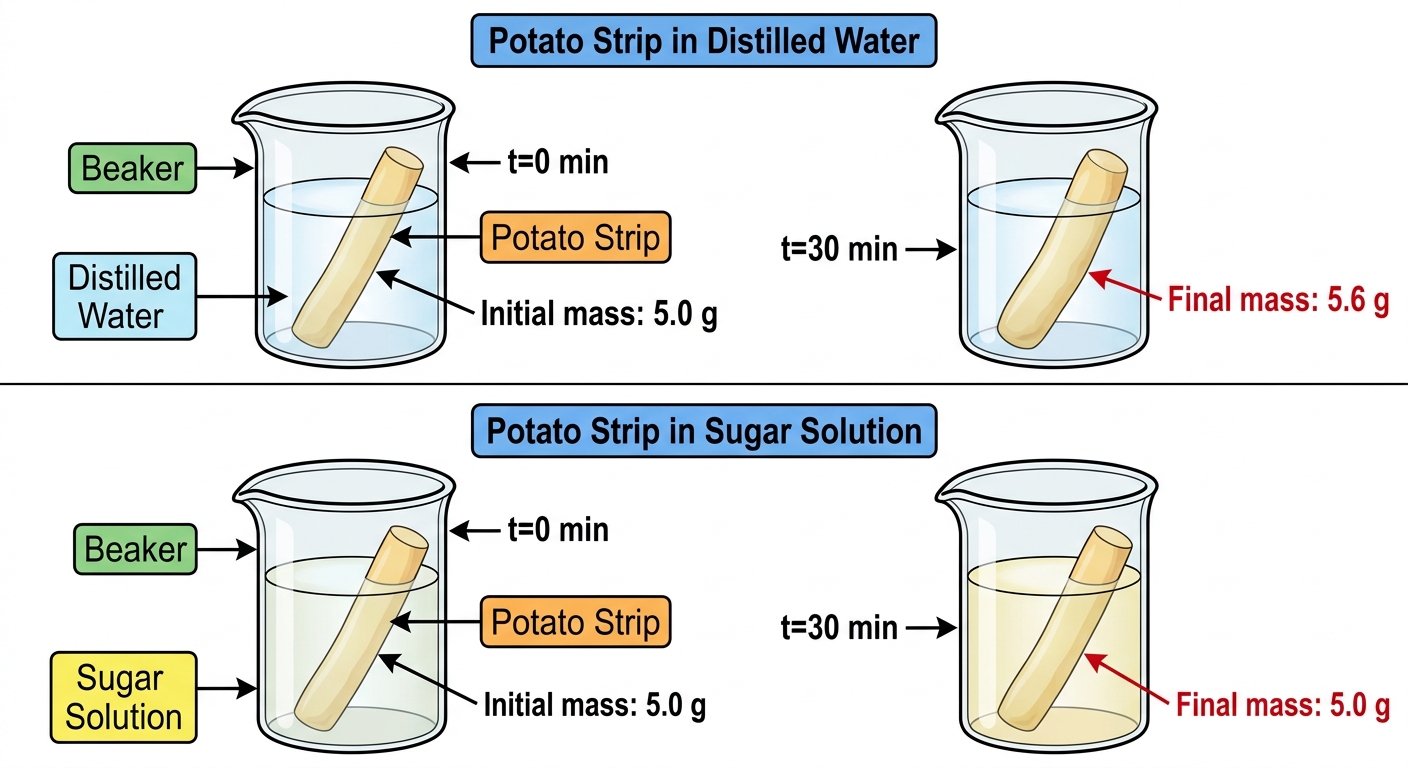
13FoundationMCQWater potential in plants1 markPaper 1~2 min
A student places a potato strip of initial mass into distilled water for 30 minutes; its mass increases to . An identical potato strip of mass is placed into a sugar solution for 30 minutes; its mass remains unchanged at . What is the water potential of the sugar solution?
Solutions
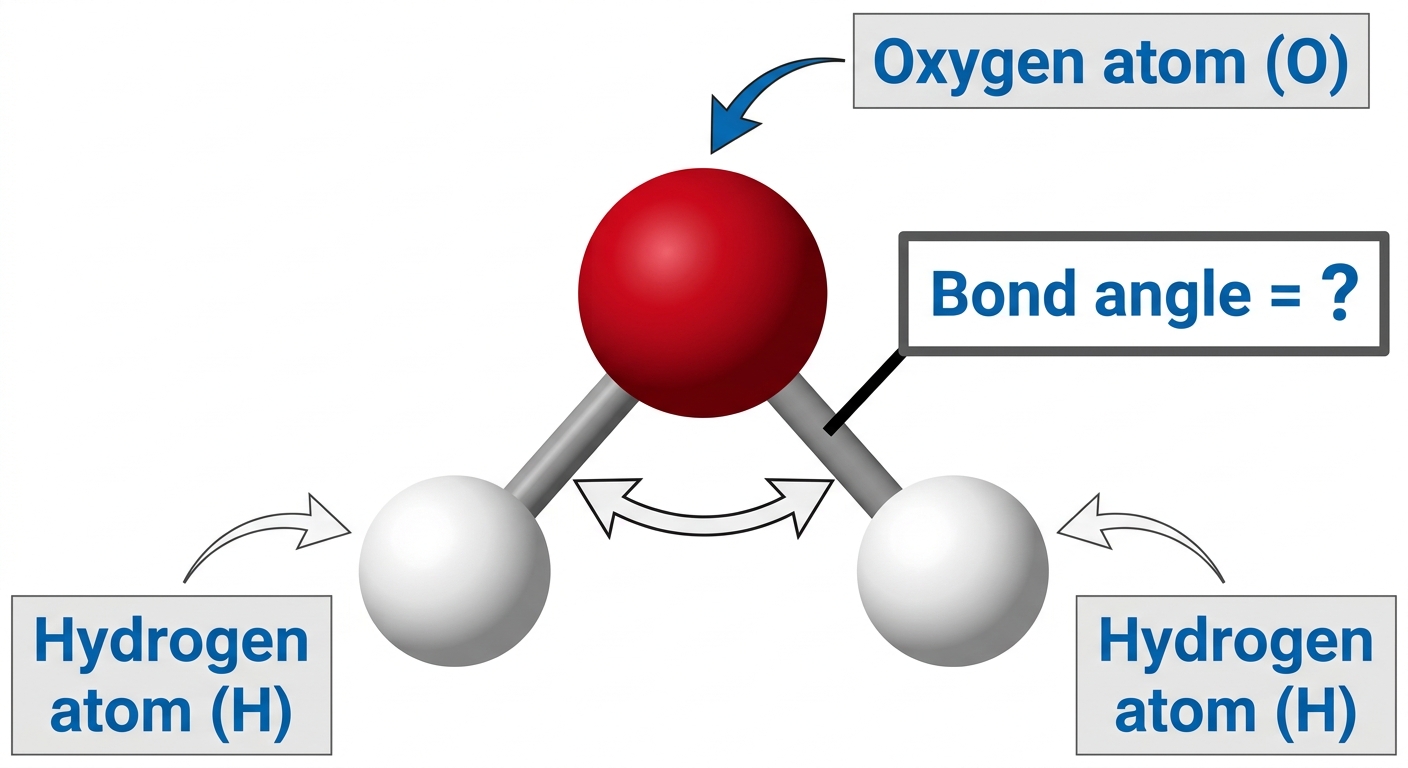
14FoundationMCQProperties of water1 markPaper 1~2 min
Which of the following correctly describes both the shape of a water molecule and the H–O–H bond angle?
Solutions
15FoundationMCQProperties of water1 markPaper 1~2 min
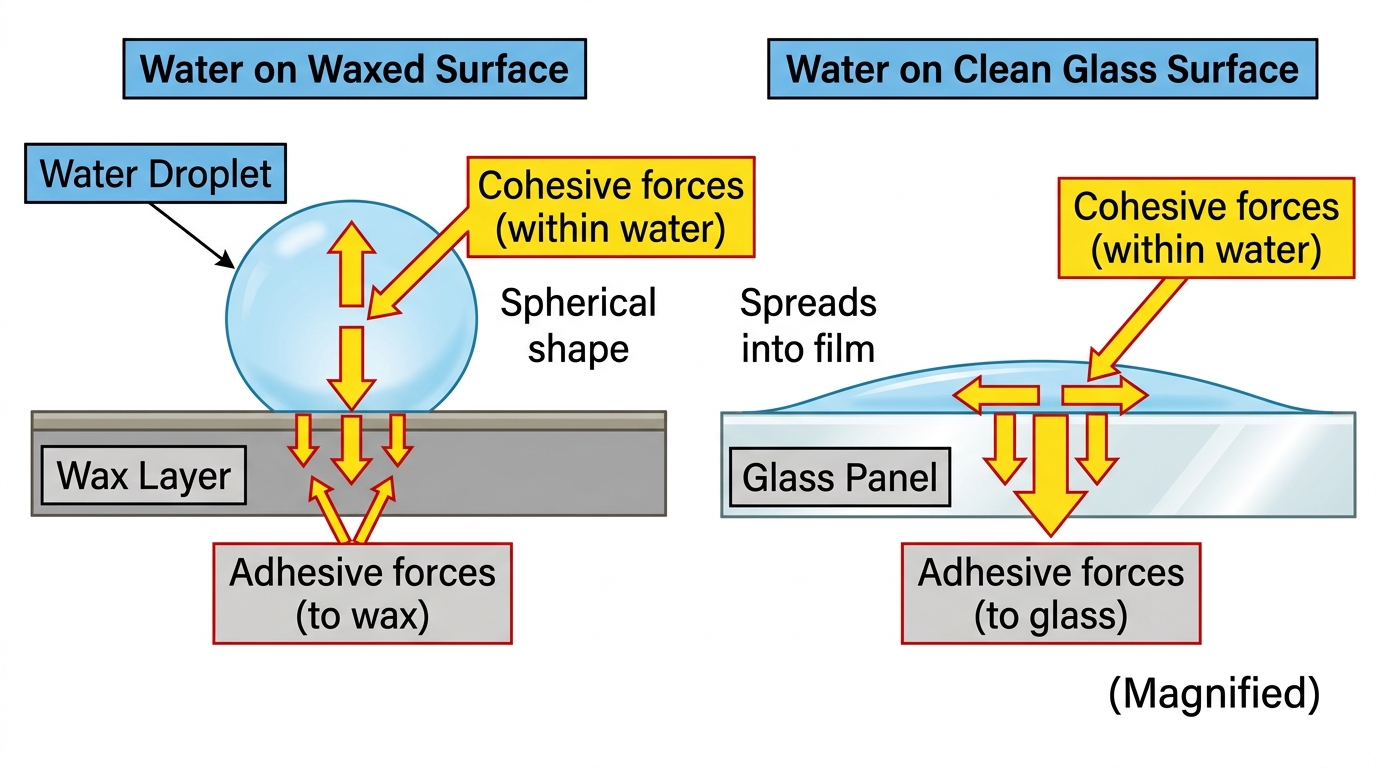
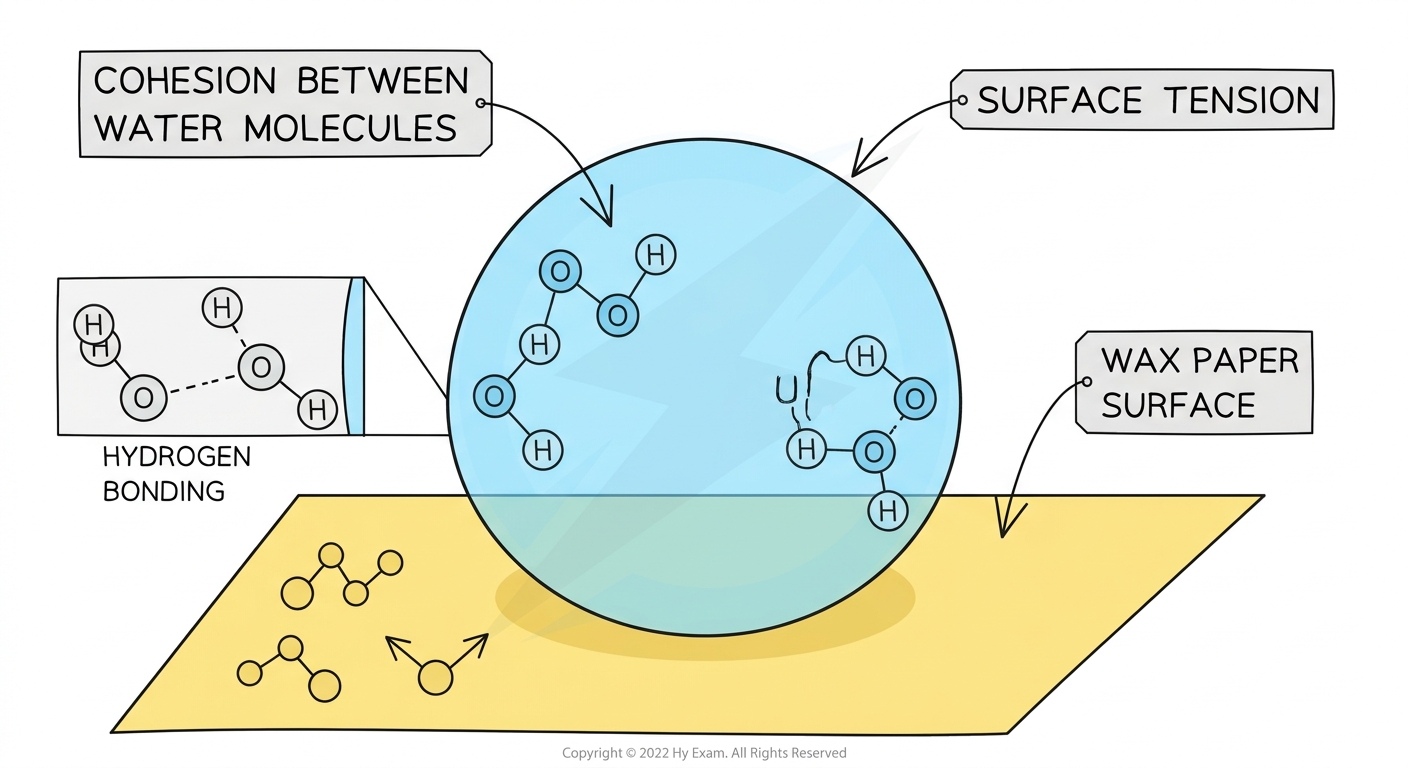
A drop of water forms a nearly spherical bead on a waxed surface but spreads into a thin film on clean glass. Which of the following best explains this difference?
Solutions
16FoundationMCQWater as a solvent1 markPaper 1~2 min
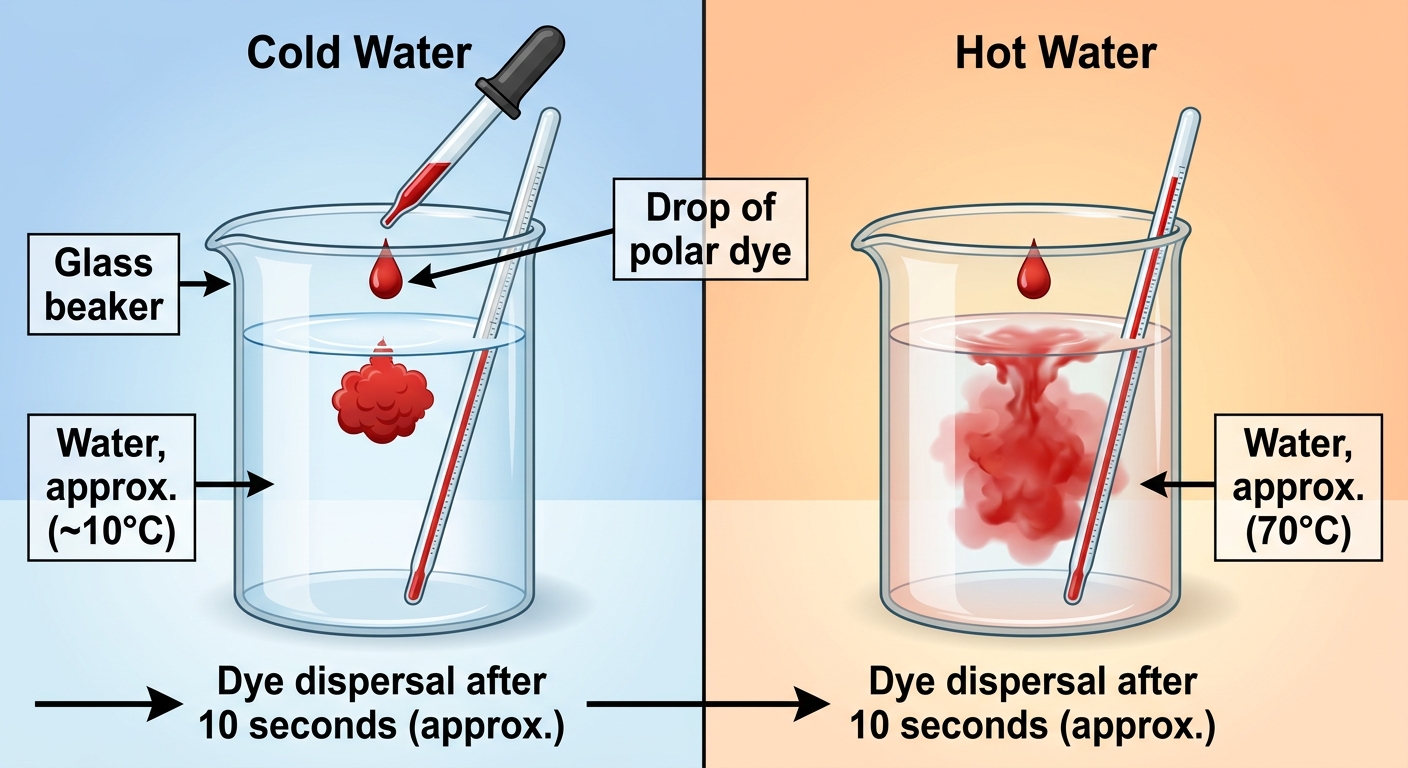
A student places a drop of polar food dye into a glass of cold water and a glass of hot water. The dye disperses noticeably faster in the hot water. Which property of water best explains this difference?
Solutions
17FoundationMCQWater’s role in temperature regulation1 markPaper 1~2 min
Marine iguanas spend time basking on sun-warmed rocks and swimming in cold ocean water. Their bodies contain a high proportion of water. Which statement best explains how the high specific heat capacity of water helps marine iguanas survive these rapid environmental temperature changes?
Solutions
18FoundationMCQWater potential in plants1 markPaper 1~2 min
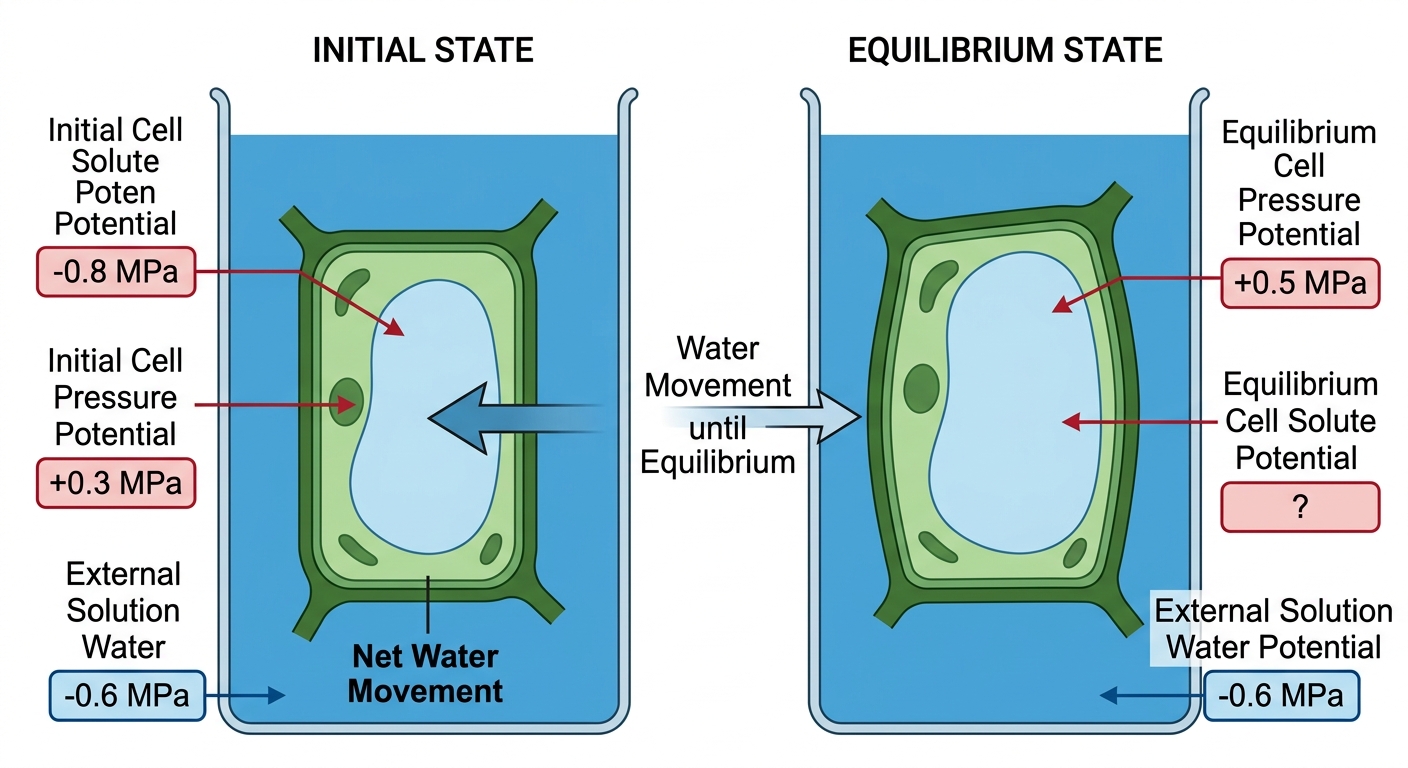
A plant cell has a solute potential of and a pressure potential of . It is placed in a solution with a water potential of . At equilibrium, the pressure potential of the cell has risen to . What is the solute potential of the cell at equilibrium?
Solutions
19FoundationMCQProperties of water1 markPaper 1~2 min
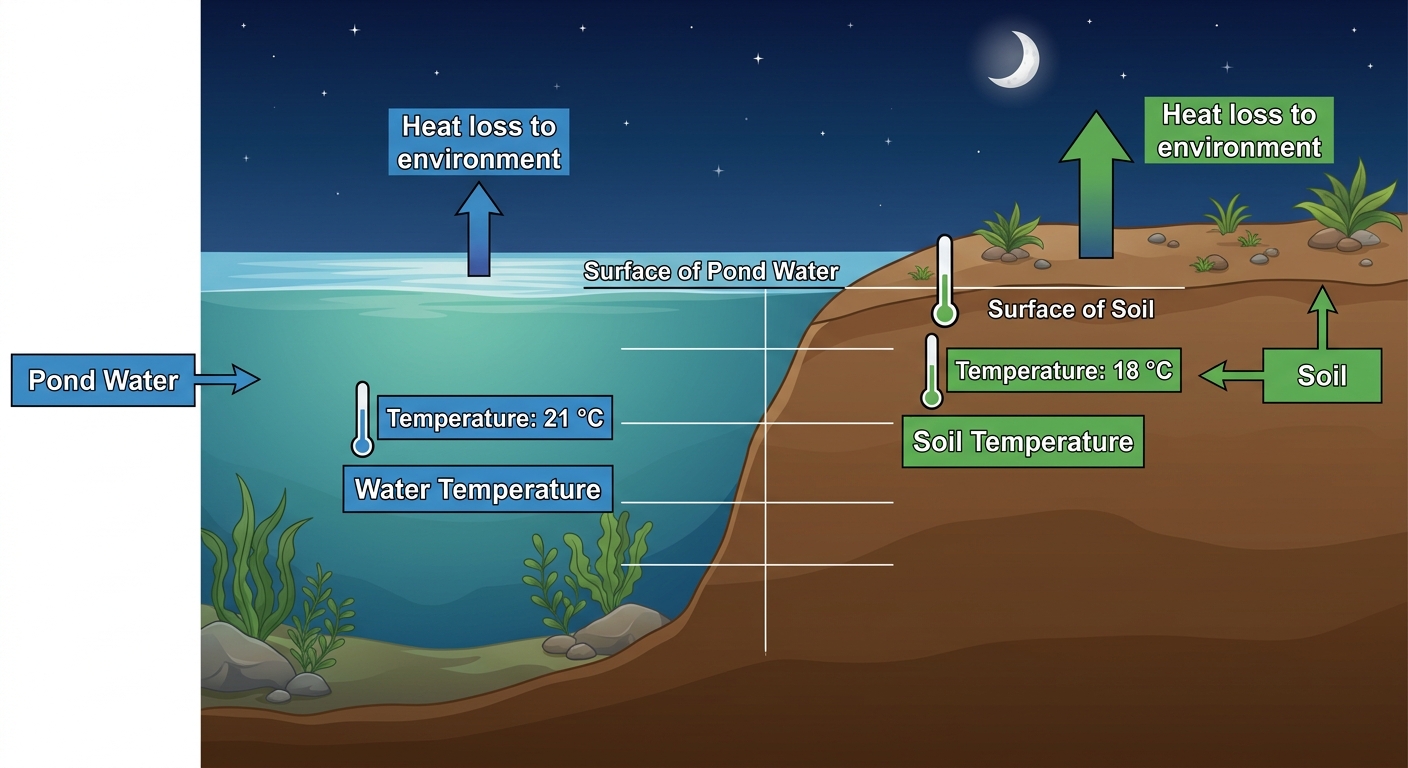
A pond retains heat longer than the surrounding soil after sunset. Which property of water best explains this observation?
Solutions
20FoundationMCQProperties of water1 markPaper 1~2 min
A drop of water placed on a waxed, non-polar surface forms a near-spherical bead rather than spreading flat. Which property of water is most directly responsible for this behaviour?
Solutions
Showing 20 of 181 free questions
That's every free question here — 181 of 182.
+1 more questions, plus Mock Papers & Worksheets, are waiting in Premium.