You're viewing 4 free preview questions for Chemistry HL — subscribe to unlock 149 more, plus the Full Question Bank, Mock Papers & Worksheets.Upgrade
How Fast? The Rate of Chemical Change · Paper 1 — Free Chemistry HL Practice Questions

1FoundationMCQCollision theory and activation energy1 markPaper 1~2 min
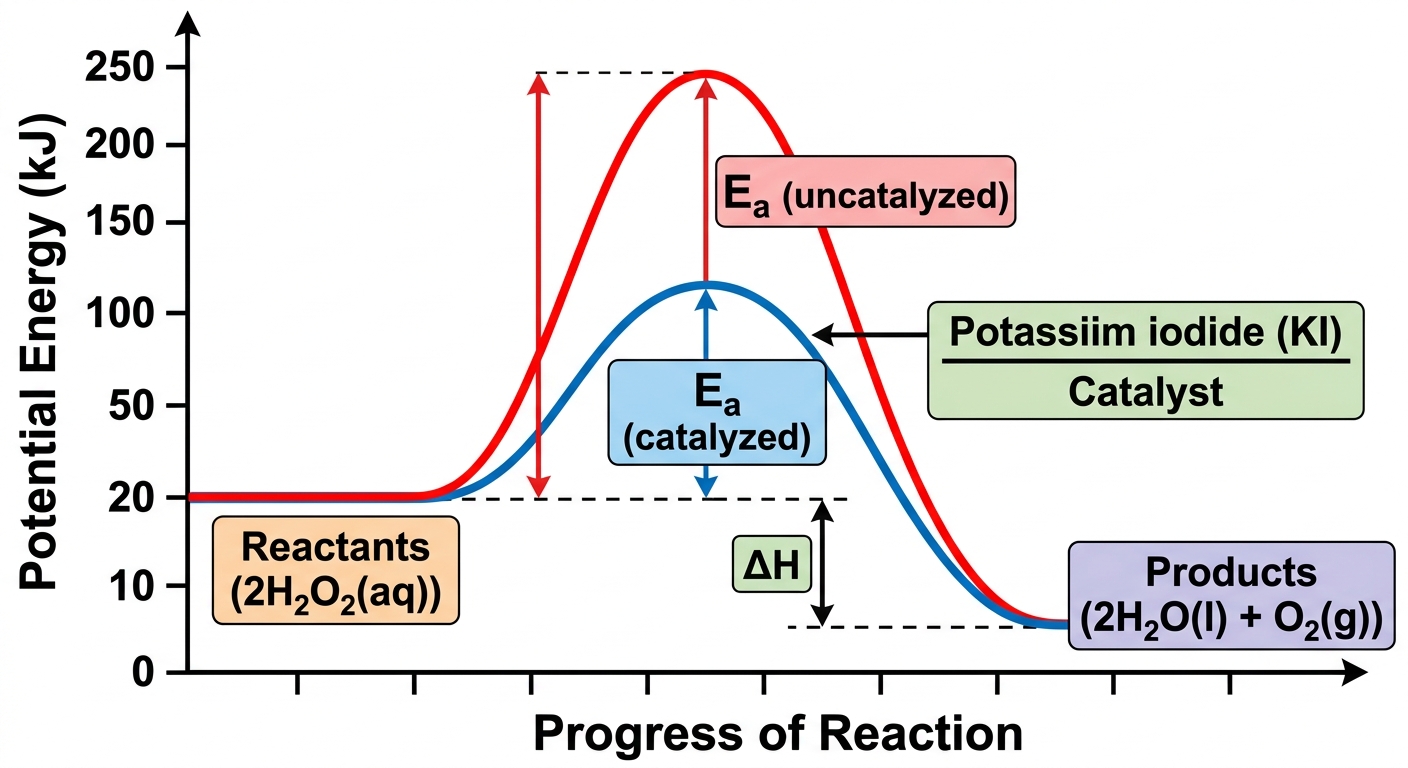
When a few drops of potassium iodide solution are added to a solution of hydrogen peroxide, the rate of decomposition according to increases dramatically. Which statement best explains this observation in terms of collision theory?

Solutions
2FoundationMCQCollision theory and activation energy1 markPaper 1~2 min
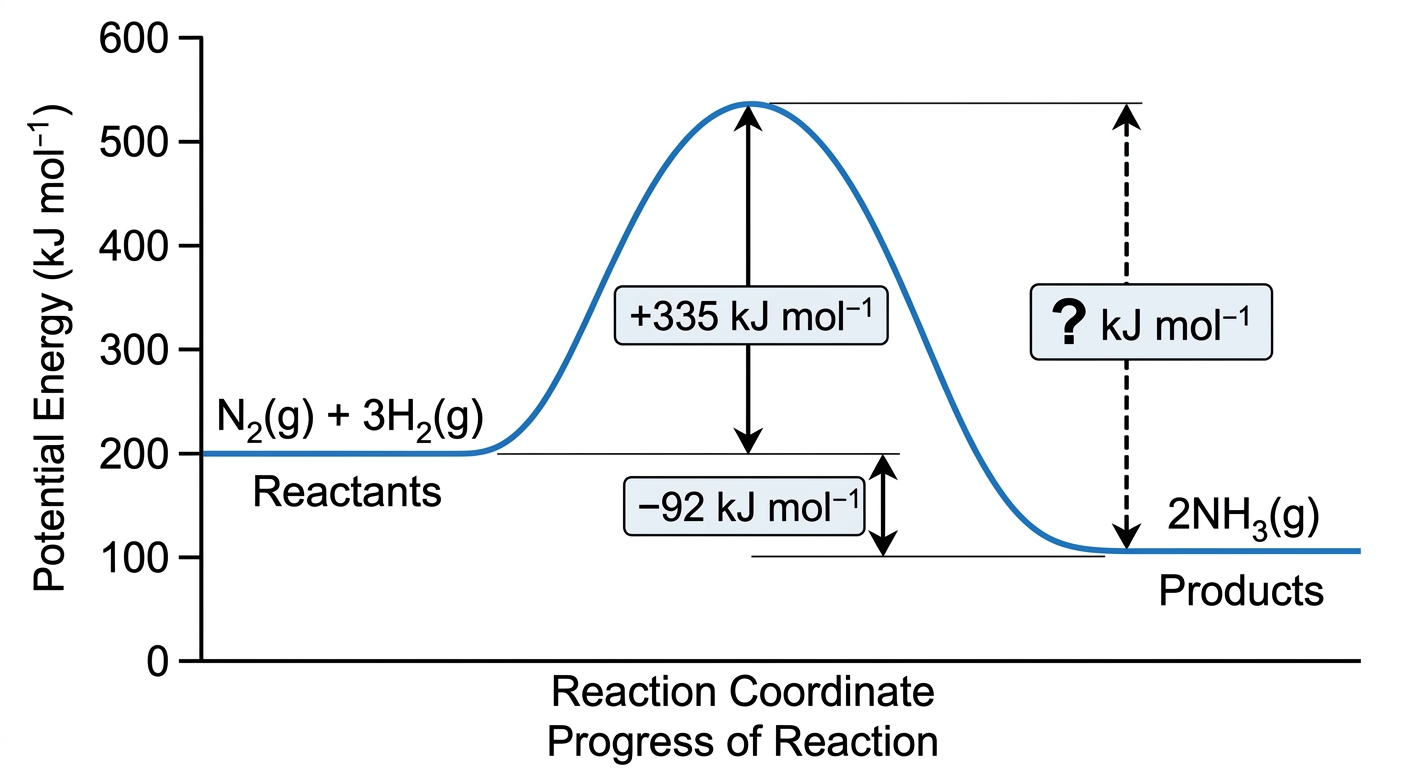
For the reaction , the activation energy for the forward reaction is and . What is the activation energy for the reverse reaction?
Solutions
3MasteryMCQFactors affecting reaction rates: Concentration, temperature, surface area, catalysts1 markPaper 1~2 min
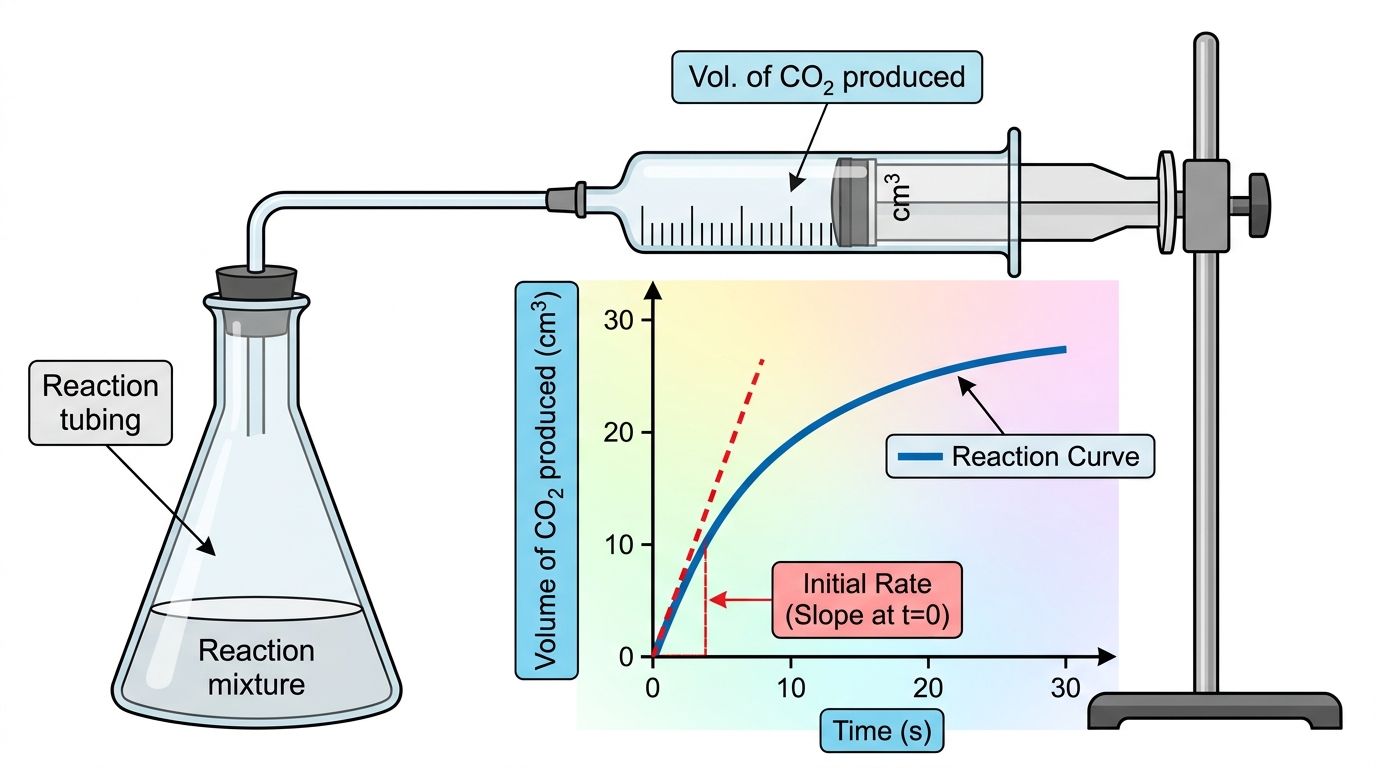
The reaction between marble chips (calcium carbonate) and excess hydrochloric acid is first order with respect to HCl. A student monitors the volume of produced over time and determines the initial rate from the gradient of the curve at . The experiment is repeated with the concentration of HCl doubled, all other conditions remaining constant. What is the expected ratio of the new initial rate to the original initial rate?
Solutions
4MasteryMCQFactors affecting reaction rates: Concentration, temperature, surface area, catalysts1 markPaper 1~2 min
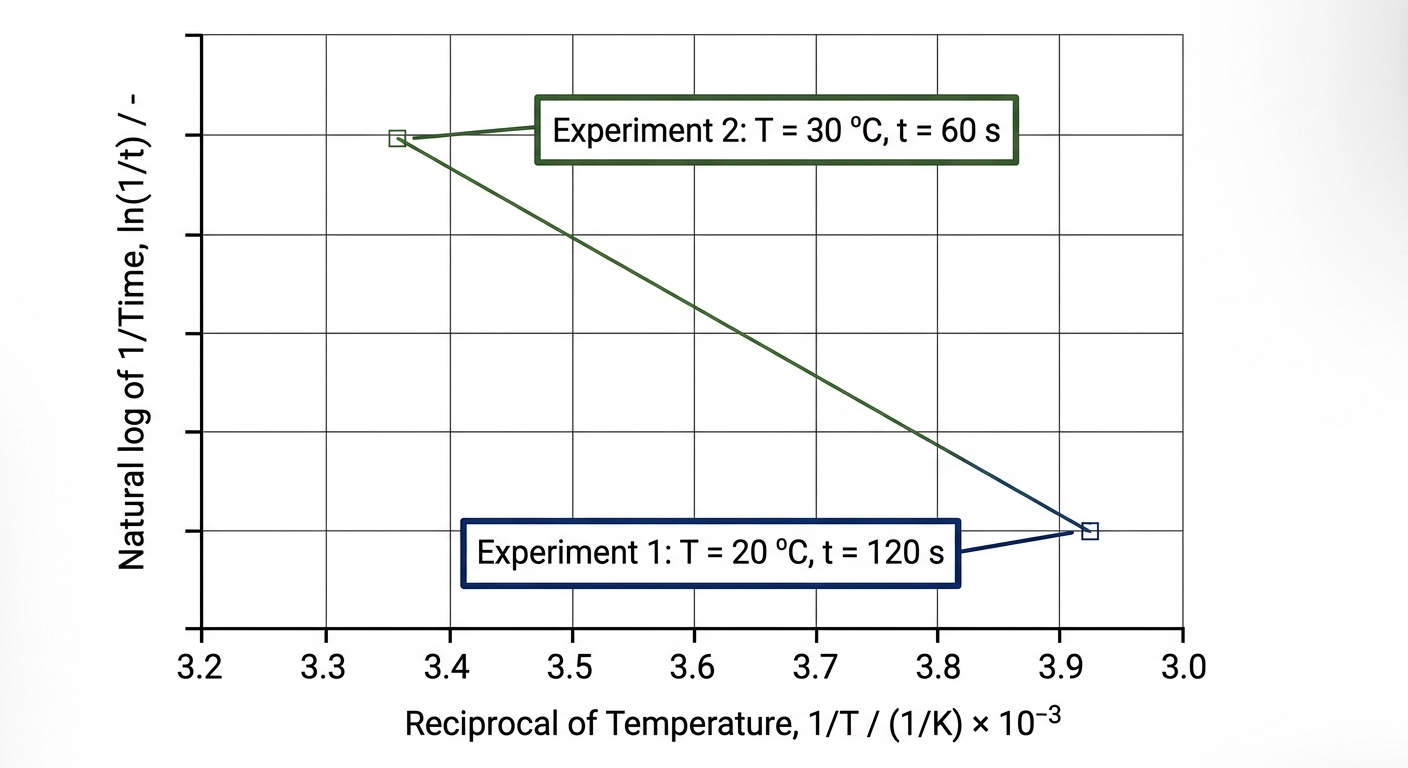
In an experiment, the time for a sulfur precipitate to obscure a cross is measured for the reaction between sodium thiosulfate solution and dilute hydrochloric acid at two temperatures. At the time is , and at the time is . Using the Arrhenius equation with , what is the approximate activation energy for this reaction?
Solutions
That's every free question here — 4 of 153.
+149 more questions, plus Mock Papers & Worksheets, are waiting in Premium.