How Much? The Amount of Chemical Change · Paper 1 — Free Chemistry HL Practice Questions
Free questions
Open in full, with answers, mark scheme and examiner insights.
Stoichiometry and mole-to-mole ratios
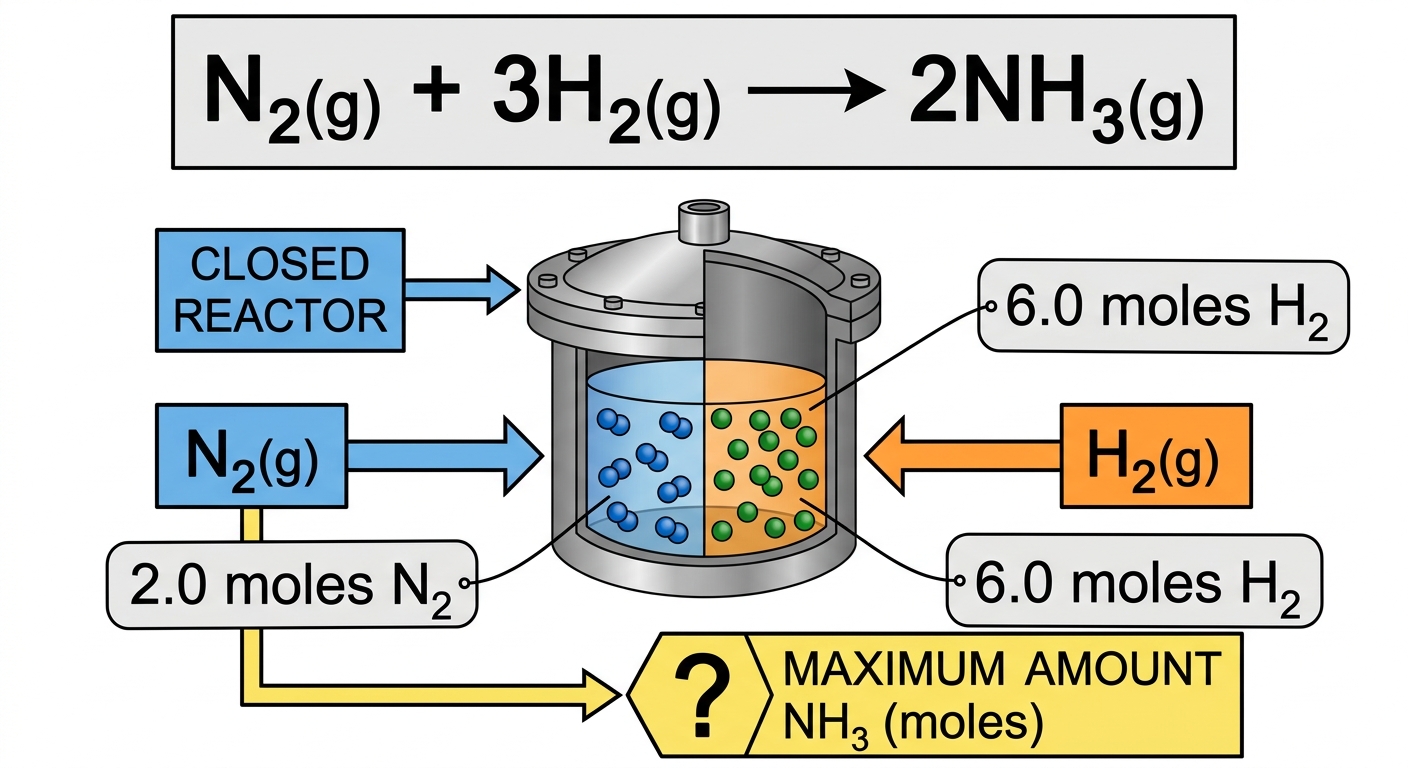
The shows the amounts of nitrogen and hydrogen charged into a closed reactor. The gases react completely:
What is the maximum amount of ammonia formed, and the total amount of gas in the reactor when the reaction is complete?
revisionprep.com
Summary Answer
Not available for this question.
Model Answer
Not available for this question.
Marking Scheme
Not available for this question.
Examiner Insights
Not available for this question.
Limiting reagents and theoretical yield
Salicylic acid reacts with ethanoic anhydride to form aspirin:
A chemist reacts of salicylic acid () with of ethanoic anhydride () and obtains of aspirin (). What is the percentage yield?
revisionprep.com
Summary Answer
Not available for this question.
Model Answer
Not available for this question.
Marking Scheme
Not available for this question.
Examiner Insights
Not available for this question.
Stoichiometry and mole-to-mole ratios
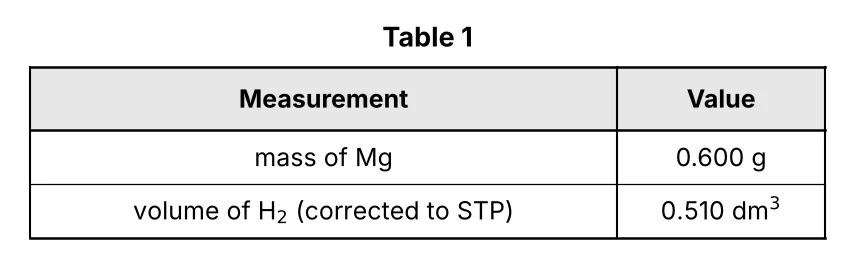
A student reacts magnesium ribbon with excess dilute hydrochloric acid:
The mass of magnesium used and the volume of hydrogen collected are shown in Table 1.
; molar volume of an ideal gas at STP
State why the hydrochloric acid is used in excess.
Calculate the theoretical volume, in , of hydrogen at STP.
Calculate the percentage yield.
Suggest one systematic error that explains the lower volume.
revisionprep.com
Summary Answer
Not available for this question.
Model Answer
Not available for this question.
Marking Scheme
Not available for this question.
Examiner Insights
Not available for this question.
Limiting reagents and theoretical yield
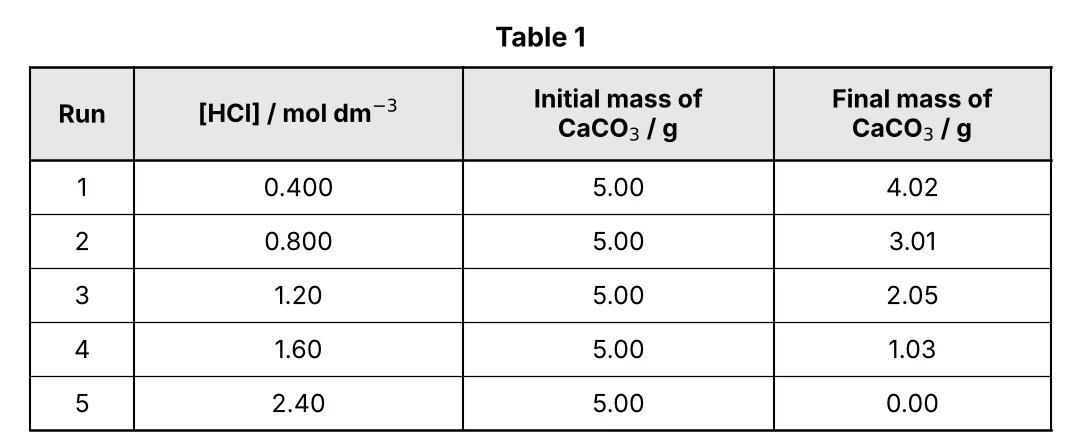
A student added of calcium carbonate chips to of hydrochloric acid of different concentrations. When bubbling stopped, any chips left were rinsed, dried and weighed.
The results are shown in Table 1.
Calculate the amount, in mol, of HCl in run 3.
Calculate the theoretical mass of calcium carbonate that reacts in run 3, and the percentage difference between this and the experimental mass that reacted.
Deduce, with reference to the data, the limiting reactant in runs 1 to 4 and in run 5.
Calculate the amount, in mol, of HCl left at the end of run 5.
In runs 1 to 4 the mass that reacted is always slightly less than the theoretical value. Suggest one cause of this systematic error and one improvement.
revisionprep.com
Summary Answer
Not available for this question.
Model Answer
Not available for this question.
Marking Scheme
Not available for this question.
Examiner Insights
Not available for this question.
Limiting reagents and theoretical yield
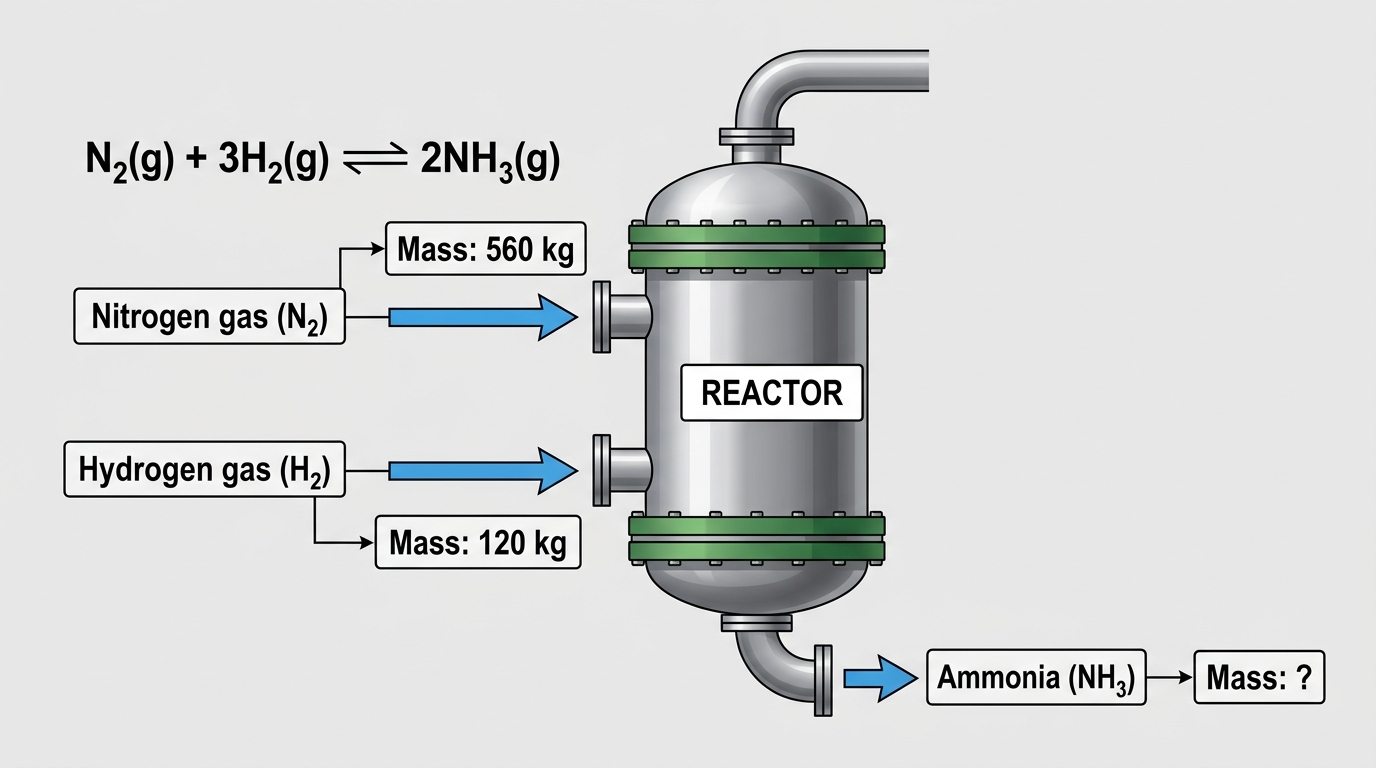
The shows the masses of nitrogen and hydrogen fed into a reactor. Assume the reaction goes to completion:
/ : 28.02; 2.02; 17.04. What is the theoretical yield of ammonia?
revisionprep.com
Summary Answer
Not available for this question.
Model Answer
Not available for this question.
Marking Scheme
Not available for this question.
Examiner Insights
Not available for this question.
Concentration, volume, and number of particles
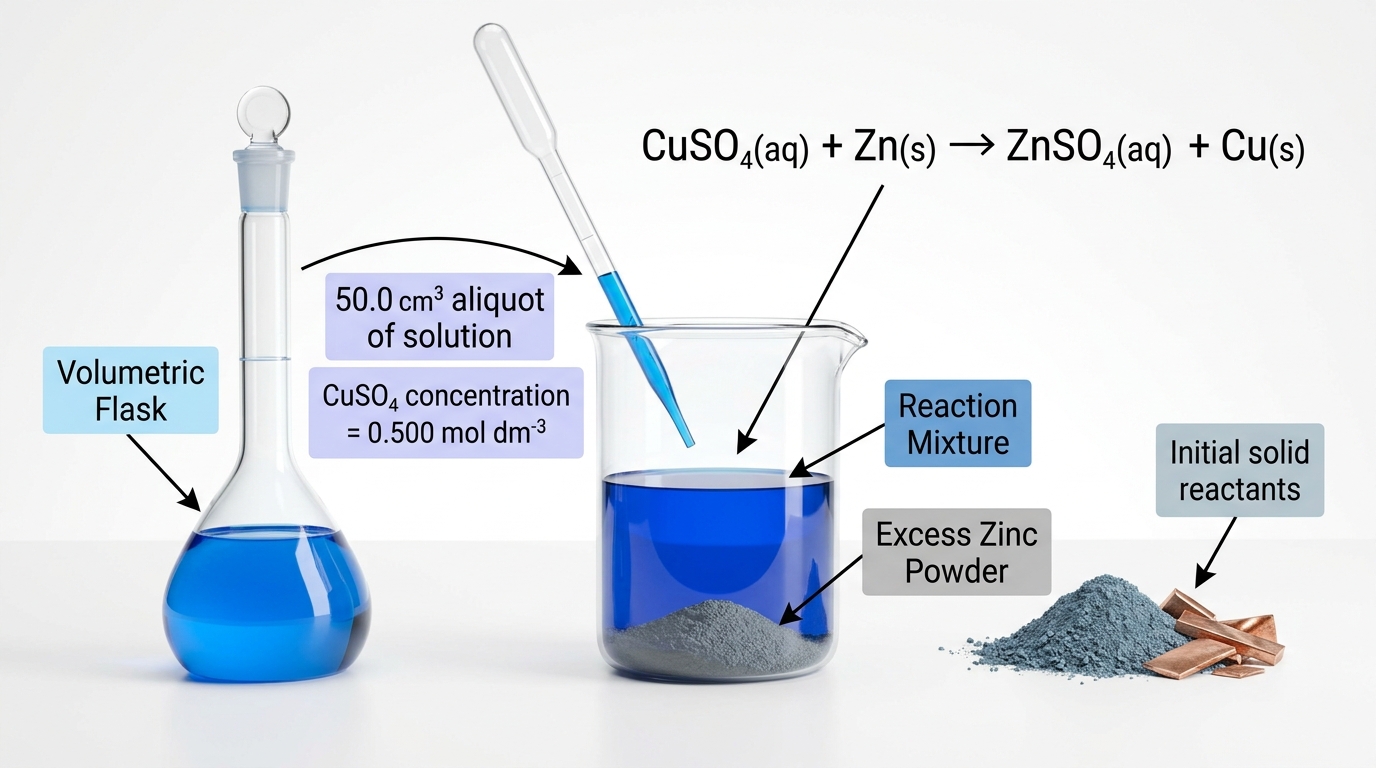
of copper(II) sulfate solution is added to excess zinc powder, as shown:
When the reaction is complete, the solid is filtered off, washed and dried. Compared with the original zinc powder, how has the mass of the solid changed? : Zn ; Cu
revisionprep.com
Summary Answer
Not available for this question.
Model Answer
Not available for this question.
Marking Scheme
Not available for this question.
Examiner Insights
Not available for this question.
That's every free question here — 6 of 162.
+156 more questions, plus Mock Papers & Worksheets, are waiting in Premium.