You're viewing 4 free preview questions for Chemistry HL — subscribe to unlock 140 more, plus the Full Question Bank, Mock Papers & Worksheets.Upgrade
Electron Sharing Reactions · Paper 1 — Free Chemistry HL Practice Questions

1FoundationMCQPolar vs non-polar covalent bonds in molecular compounds1 markPaper 1~2 min
A molecule of has polar C–Cl bonds yet a zero net dipole moment. Which statement correctly explains this?
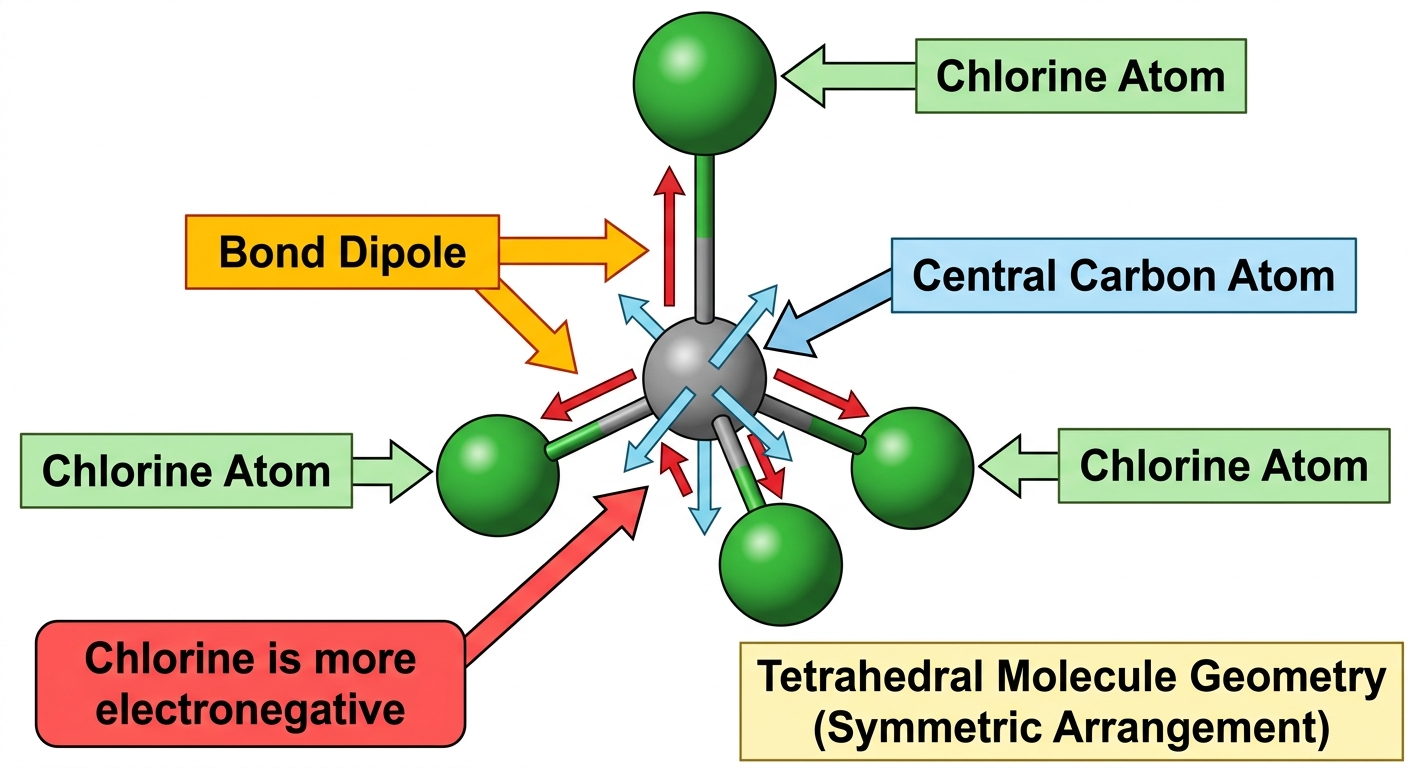

Solutions
2FoundationMCQPolar vs non-polar covalent bonds in molecular compounds1 markPaper 1~2 min
Elements X, Y, and Z have Pauling electronegativity values of , , and respectively. Which bond formed between a pair of these elements has the smallest electronegativity difference and is therefore closest to non-polar covalent?
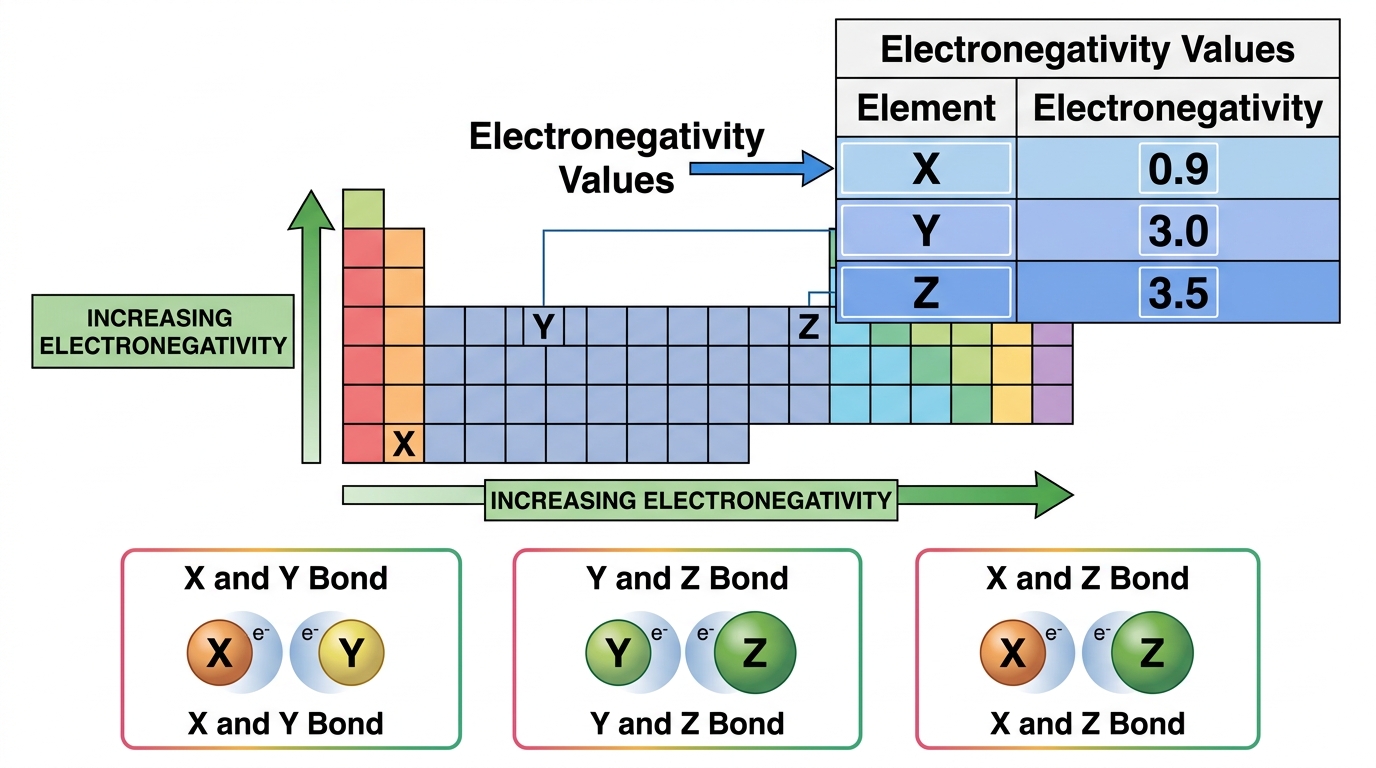
Solutions
3FoundationMCQPolar vs non-polar covalent bonds in molecular compounds1 markPaper 1~2 min
Oxygen gas and nitrogen gas are both homonuclear diatomic molecules, yet they differ in bond order: has a bond order of 2 and has a bond order of 3. Which statement correctly describes the polarity and bond order of these molecules?
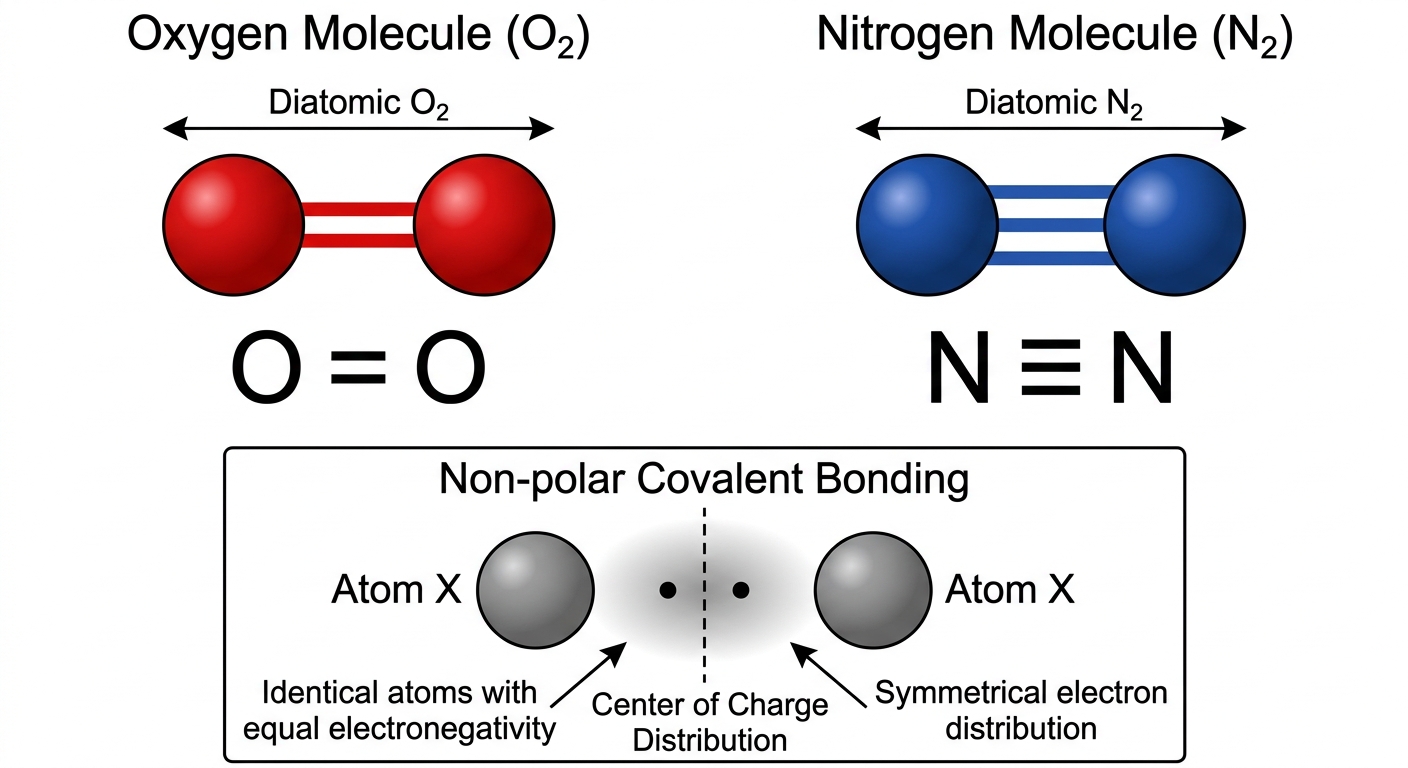
Solutions
4MasteryMCQCovalent bonds and electron sharing1 markPaper 1~2 min
In ethene (), the carbon–carbon double bond consists of one bond and one bond. During electrophilic addition of bromine (), the bond breaks preferentially. Which statement correctly explains why the bond is weaker and more reactive than the bond?
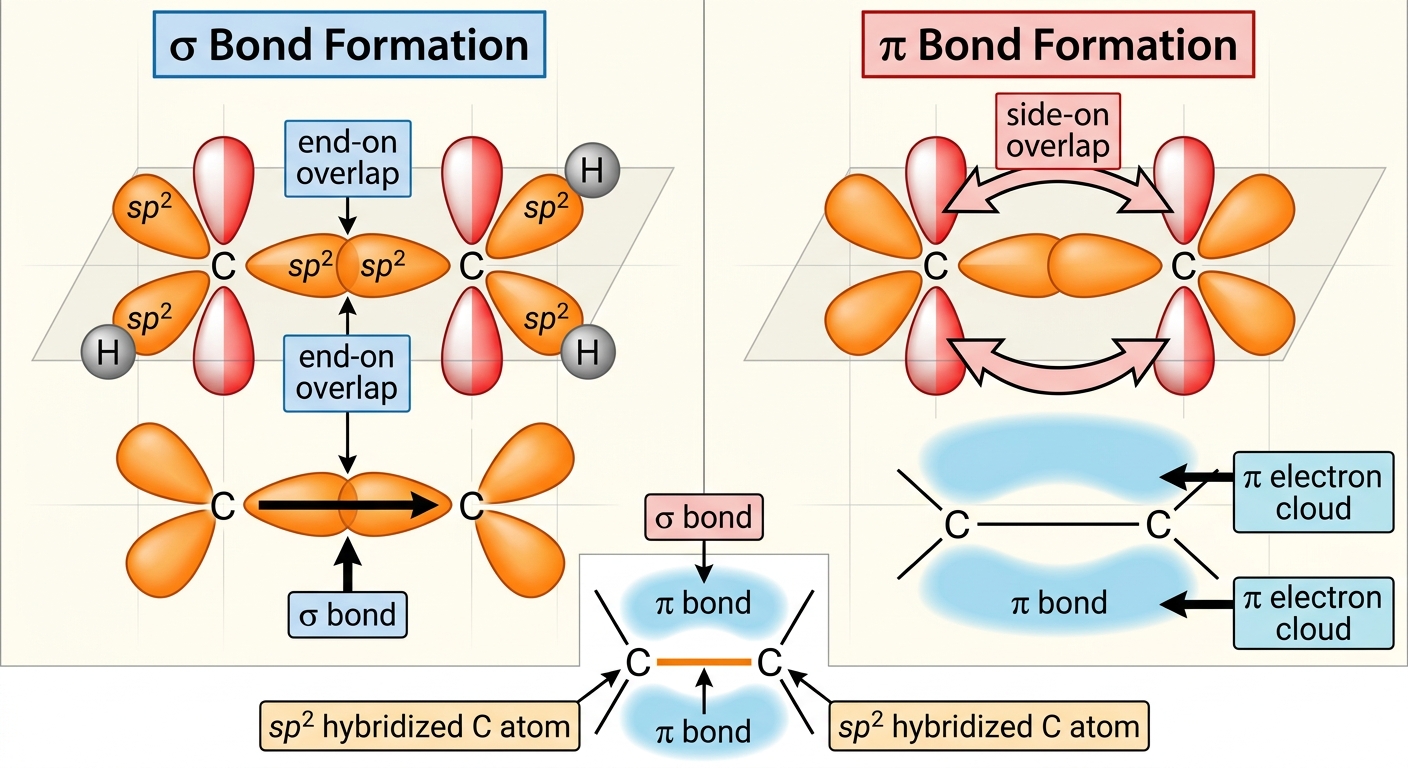
Solutions
That's every free question here — 4 of 144.
+140 more questions, plus Mock Papers & Worksheets, are waiting in Premium.