You're viewing 4 free preview questions for Chemistry HL — subscribe to unlock 154 more, plus the Full Question Bank, Mock Papers & Worksheets.Upgrade
The Covalent Model · Paper 1 — Free Chemistry HL Practice Questions

1FoundationMCQBonding in simple molecules (e.g., H₂O, CO₂)1 markPaper 1~2 min
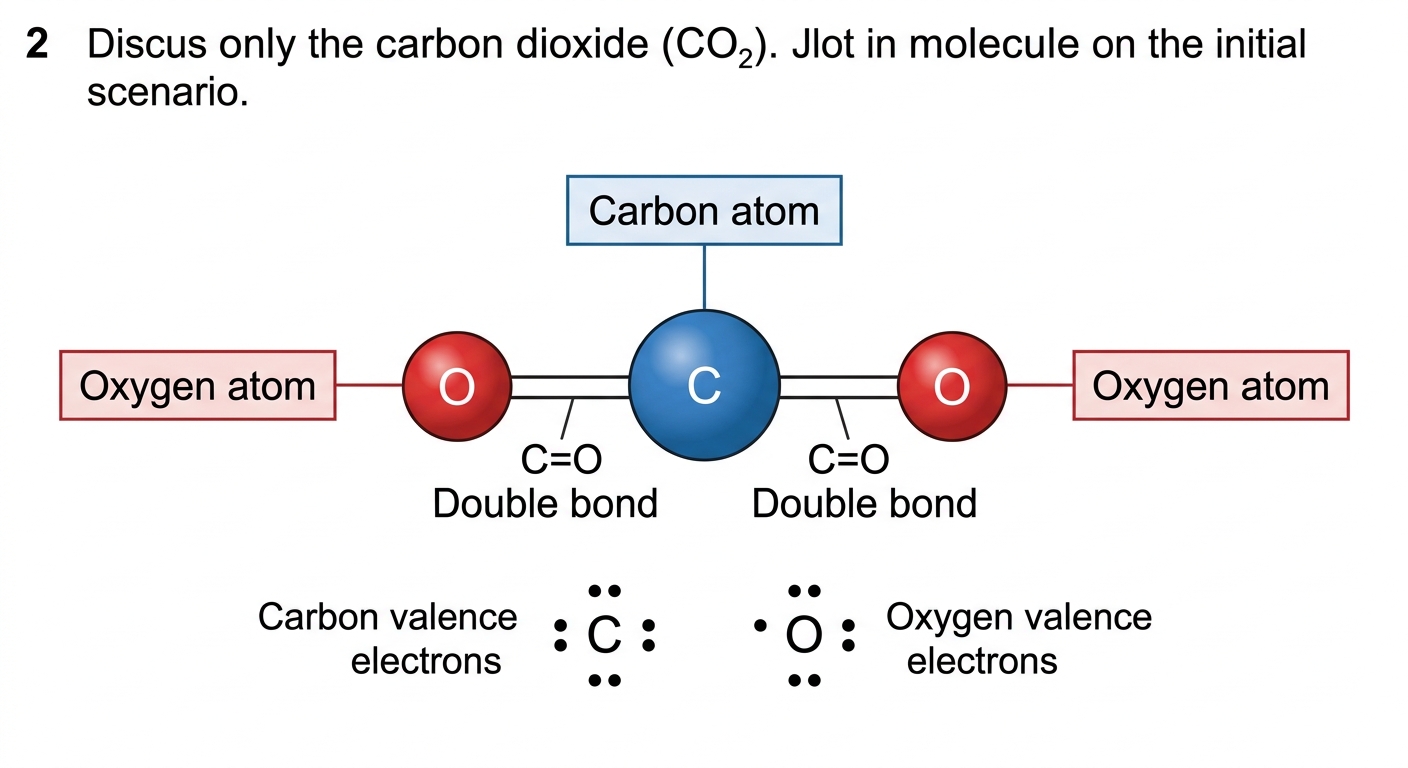
A molecule of contains two polar C=O bonds, yet the overall dipole moment is zero. Which row correctly identifies the molecular geometry and the number of lone pairs on the central carbon atom?

Solutions
2FoundationMCQBonding in simple molecules (e.g., H₂O, CO₂)1 markPaper 1~2 min
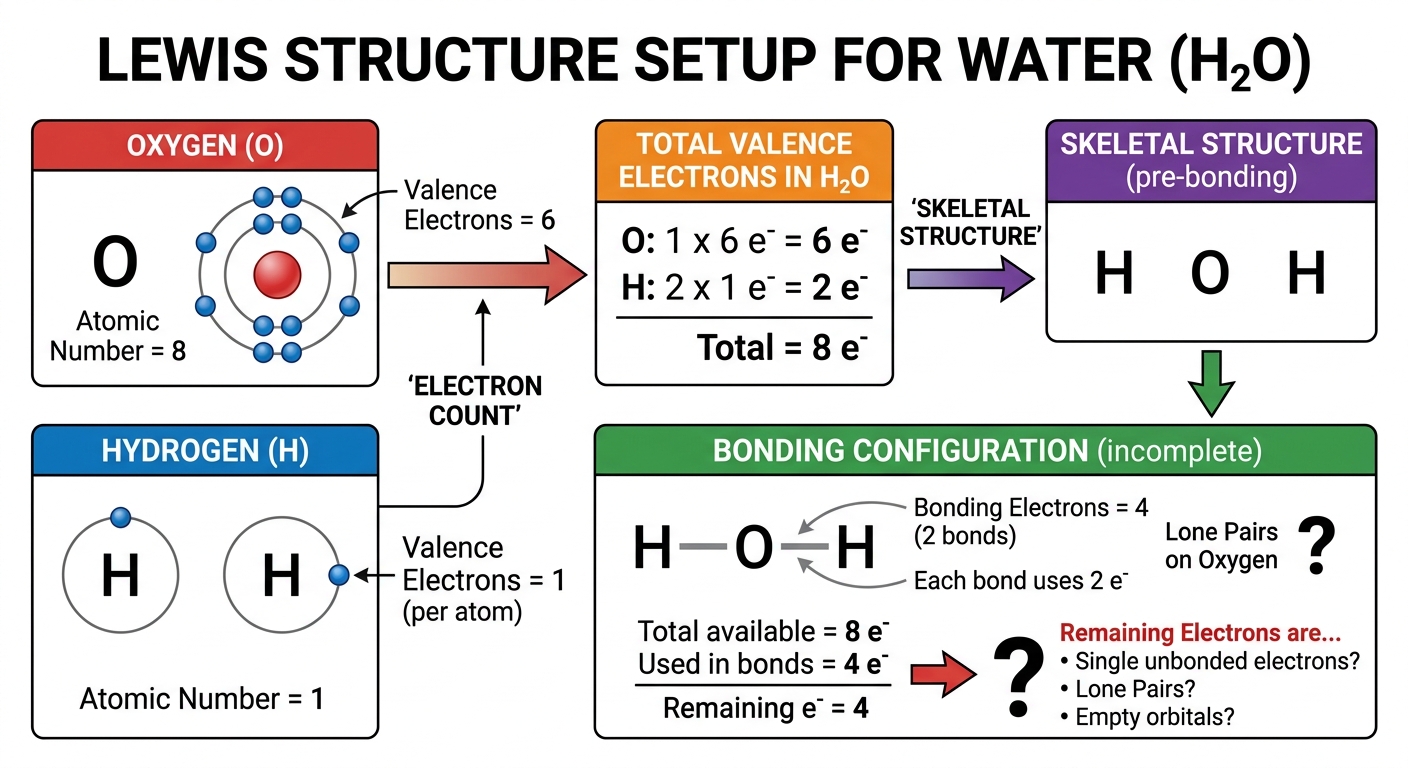
A water molecule () has a total of 8 valence electrons. In its Lewis structure, two O–H single bonds are formed. The remaining non-bonding electrons on oxygen are arranged as lone pairs. A student then uses this Lewis structure to predict molecular geometry using VSEPR theory. How many lone pairs are present on the oxygen atom, and what electron-domain geometry does VSEPR predict?
Solutions
3FoundationMCQBonding in simple molecules (e.g., H₂O, CO₂)1 markPaper 1~2 min
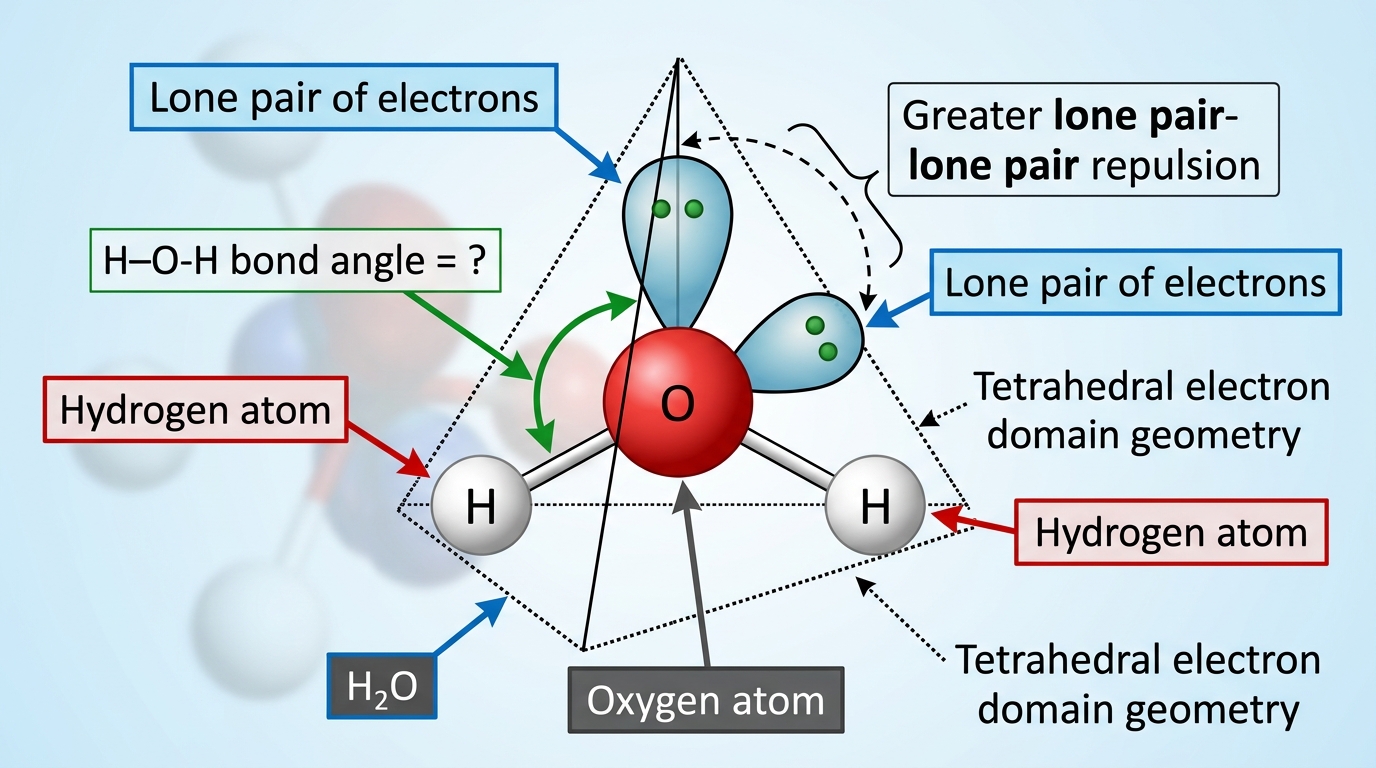
In water, , the oxygen atom has two bonding pairs and two lone pairs of electrons. According to VSEPR theory, lone pair–lone pair repulsion is greater than lone pair–bonding pair repulsion, which in turn is greater than bonding pair–bonding pair repulsion. What is the approximate H–O–H bond angle?
Solutions
4MasteryMCQCovalent bonding and electron sharing1 markPaper 1~2 min
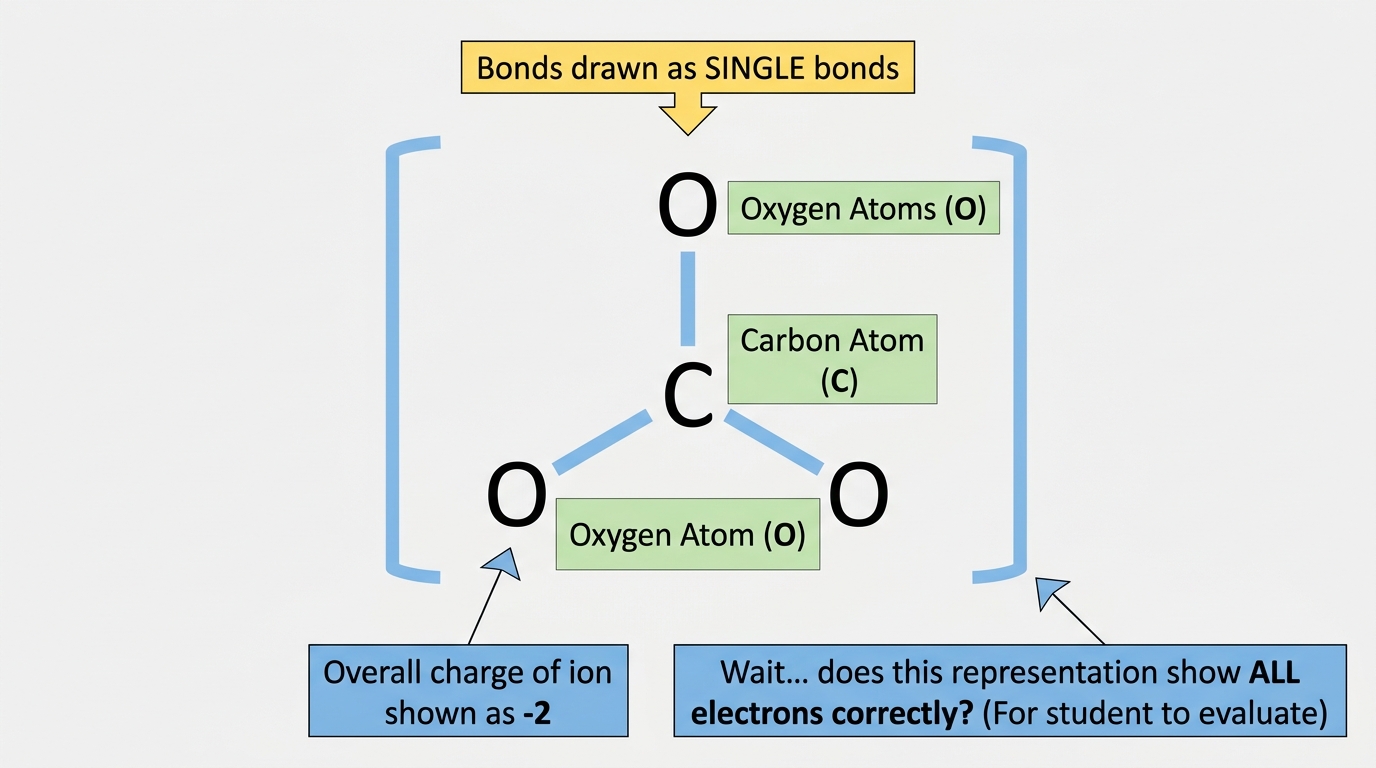
A student draws the Lewis structure of showing all three C–O bonds as single bonds. Why is this structure incorrect?
Solutions
That's every free question here — 4 of 158.
+154 more questions, plus Mock Papers & Worksheets, are waiting in Premium.