You're viewing 4 free preview questions for Chemistry HL — subscribe to unlock 154 more, plus the Full Question Bank, Mock Papers & Worksheets.Upgrade
The Ionic Model · Paper 1 — Free Chemistry HL Practice Questions

1FoundationMCQProperties of ionic compounds1 markPaper 1~2 min
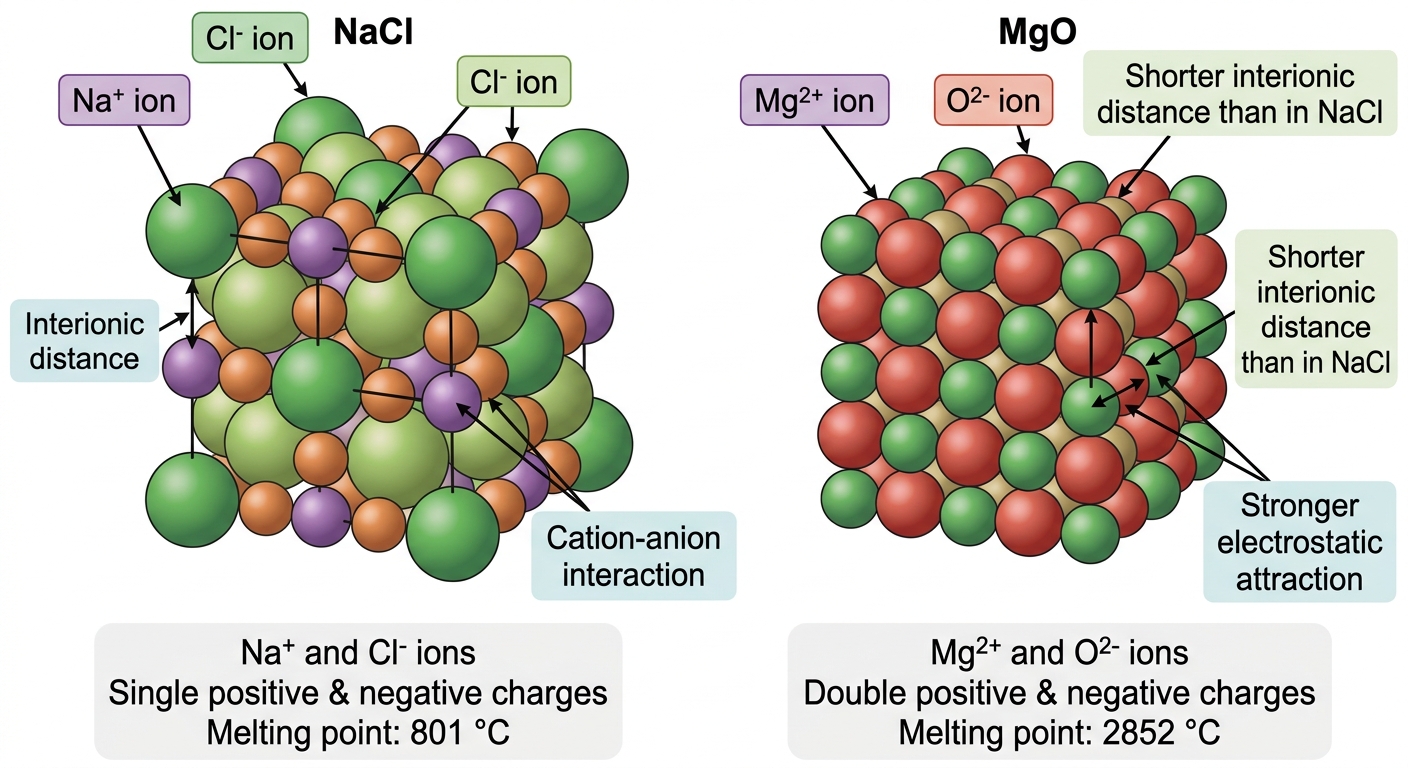
Sodium chloride and magnesium oxide both adopt the rock-salt crystal lattice structure. The melting point of NaCl is 801 °C, while that of MgO is 2852 °C. Which statement best explains why MgO has a significantly higher melting point?

Solutions
2FoundationMCQProperties of ionic compounds1 markPaper 1~2 min
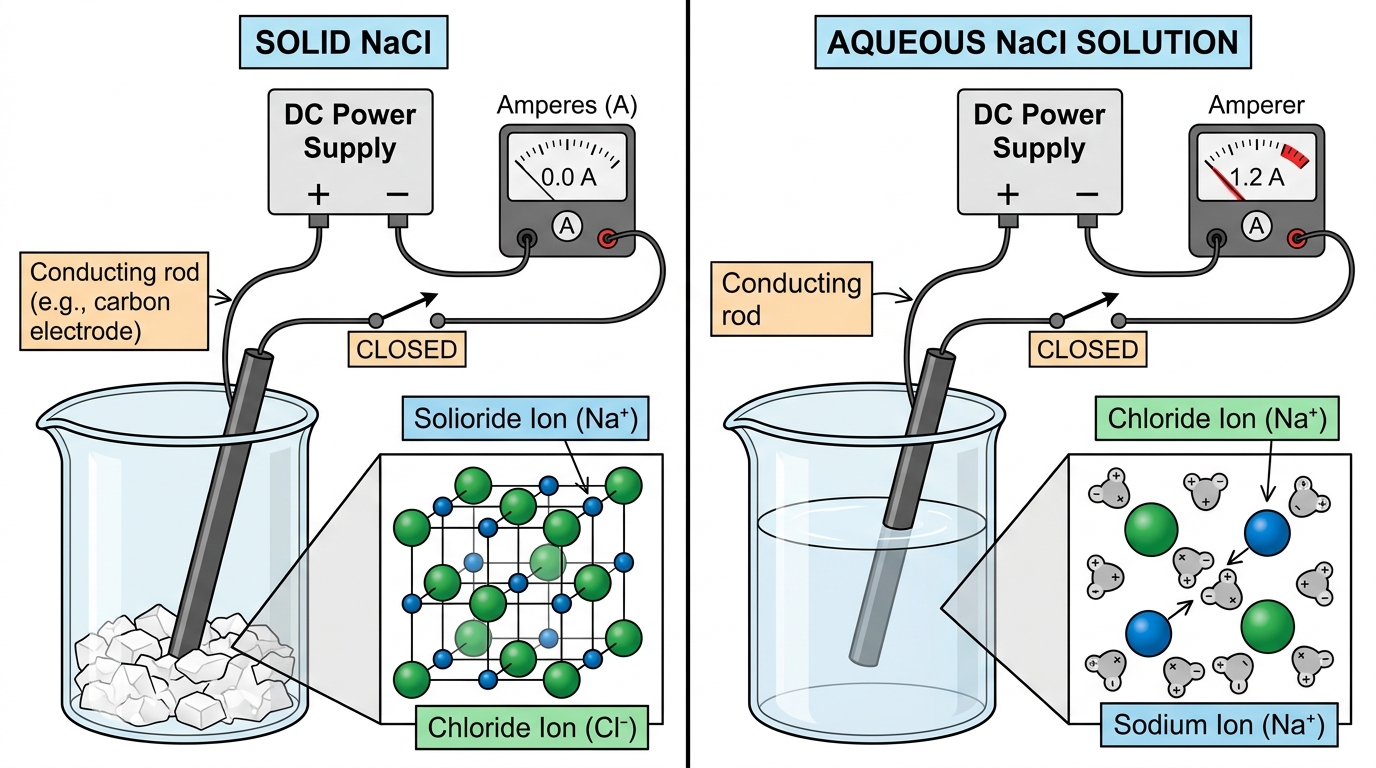
A solid sample of sodium chloride does not conduct electricity, but an aqueous solution of sodium chloride does. Which statement correctly explains both observations?
Solutions
3MasteryMCQProperties of ionic compounds1 markPaper 1~2 min
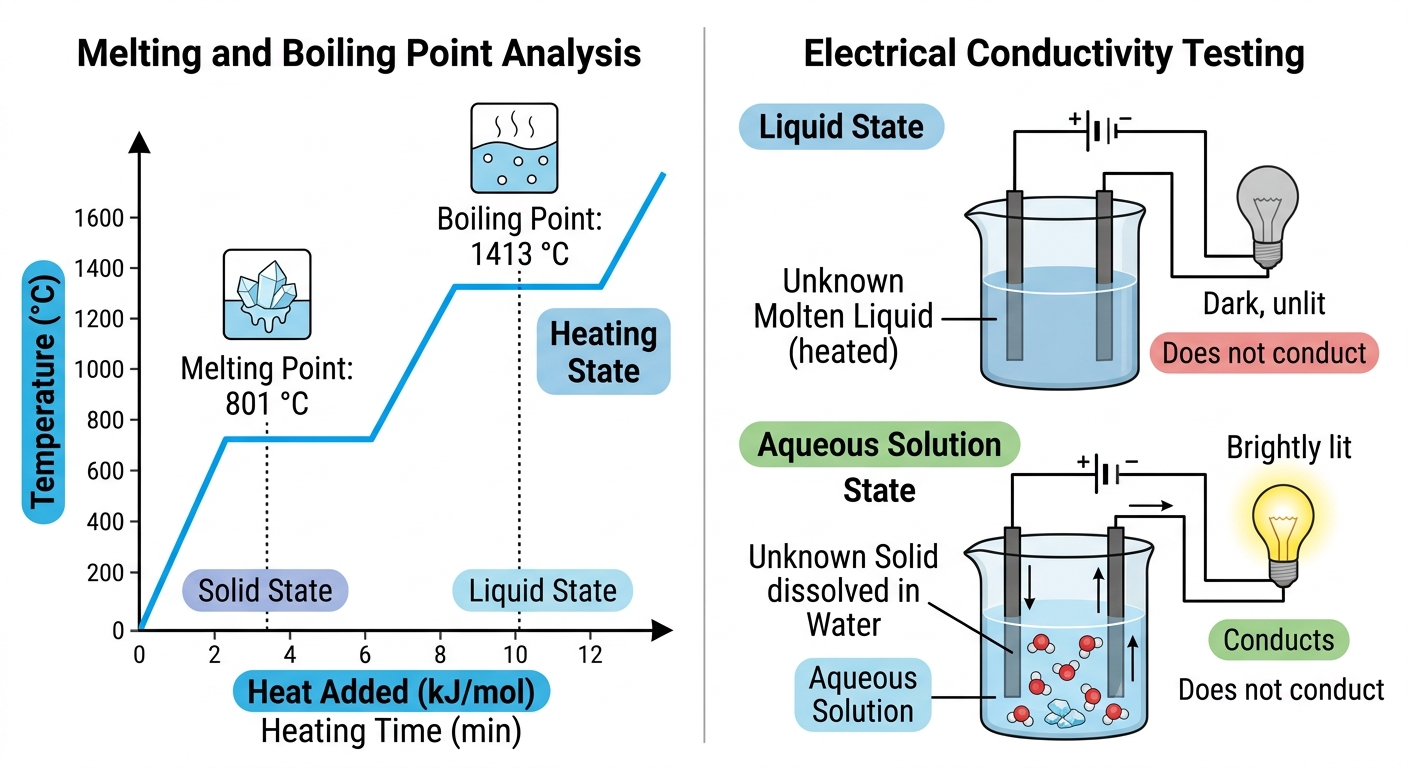
A white crystalline solid melts at and boils at . The molten liquid does not conduct electricity, but an aqueous solution of the solid does conduct electricity. Which type of bonding is present in the solid?
Solutions
4MasteryMCQProperties of ionic compounds1 markPaper 1~2 min
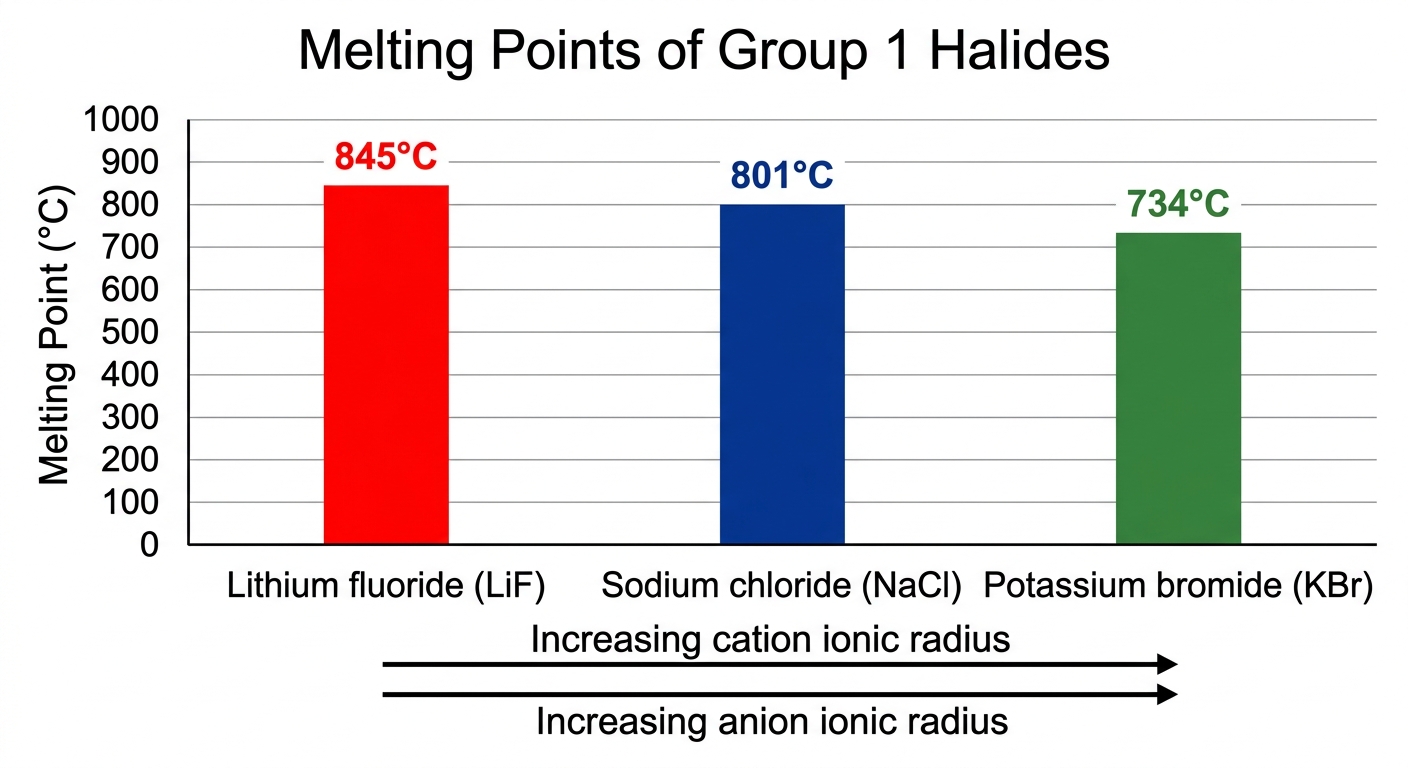
Lithium fluoride (LiF), sodium chloride (NaCl), and potassium bromide (KBr) all adopt the same ionic crystal structure and carry ions of charge . Their melting points are: LiF , NaCl , KBr . Which statement correctly explains this trend?
Solutions
That's every free question here — 4 of 158.
+154 more questions, plus Mock Papers & Worksheets, are waiting in Premium.