You're viewing 4 free preview questions for Chemistry HL — subscribe to unlock 119 more, plus the Full Question Bank, Mock Papers & Worksheets.Upgrade
Electron Configurations · Paper 1 — Free Chemistry HL Practice Questions

1FoundationMCQAufbau principle, Pauli exclusion principle, Hund's rule1 markPaper 1~2 min
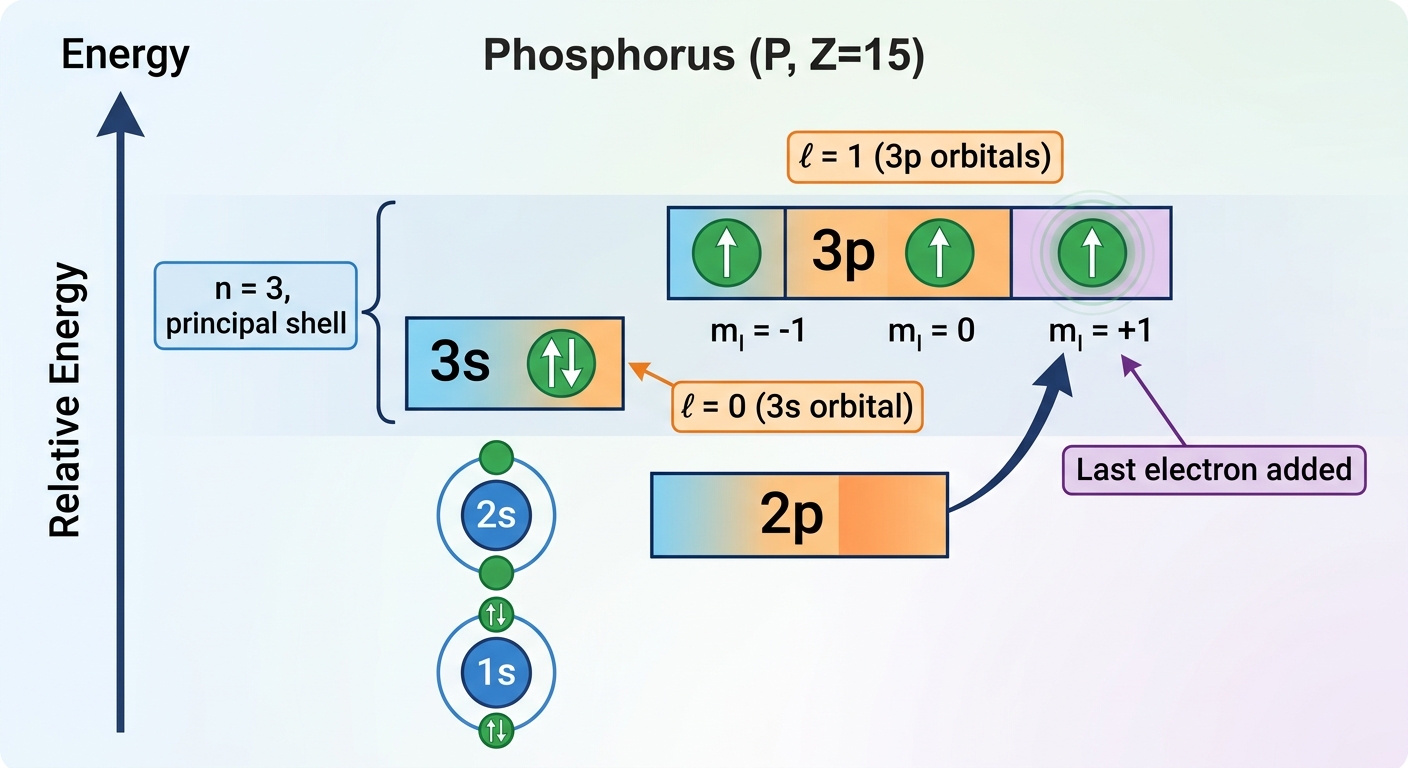
Phosphorus has atomic number 15 and electron configuration . Using the Aufbau principle, Pauli exclusion principle, and Hund's rule, and filling the orbitals in order of increasing , what are the quantum numbers of the last electron added?

Solutions
2FoundationMCQAufbau principle, Pauli exclusion principle, Hund's rule1 markPaper 1~2 min
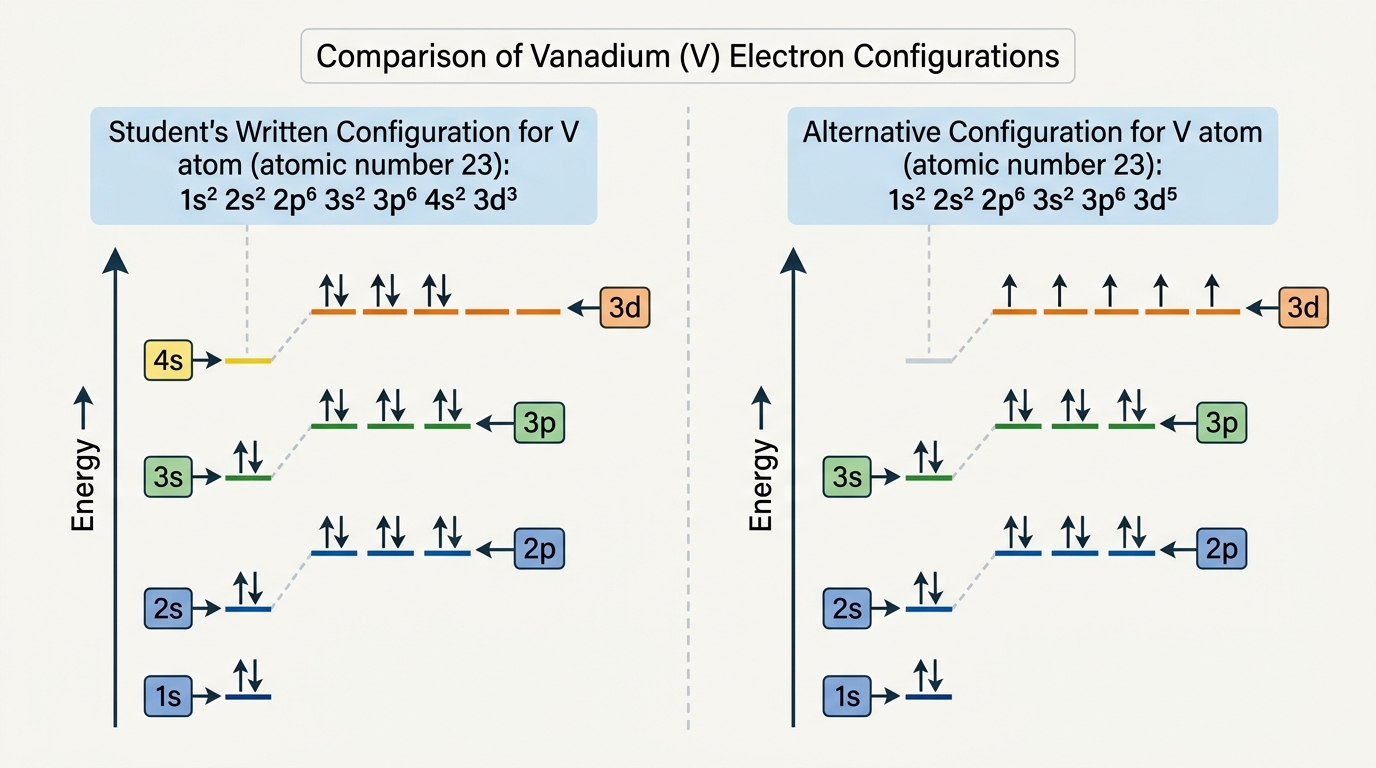
A vanadium atom (atomic number 23) has the electron configuration . A student instead writes the configuration as , keeping the total electron count correct. Which principle is most directly violated by the student's configuration?
Solutions
3FoundationMCQAufbau principle, Pauli exclusion principle, Hund's rule1 markPaper 1~2 min
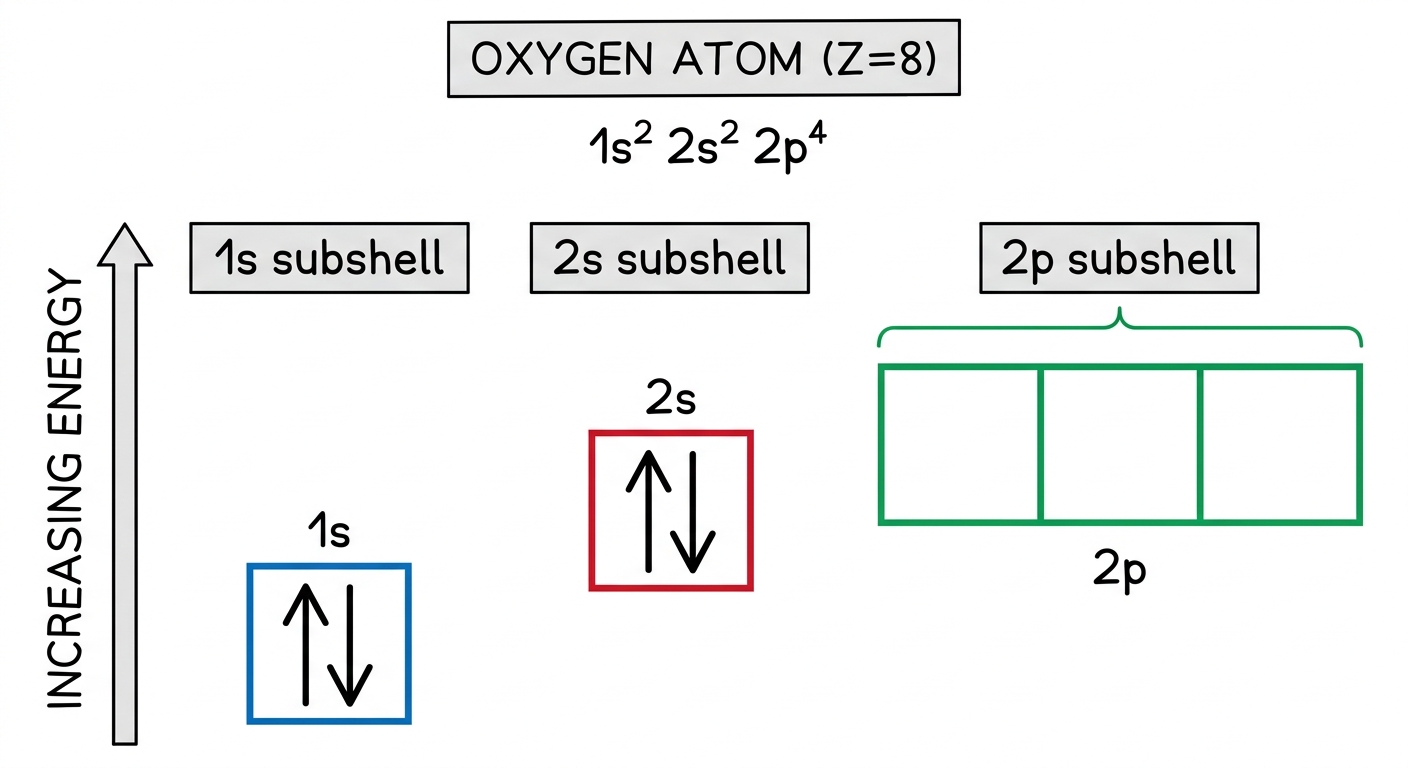
The ground-state electron configuration of oxygen () is . How many unpaired electrons does an oxygen atom have in its ground state?
Solutions
4MasteryMCQPeriodicity of electron configurations1 markPaper 1~2 min
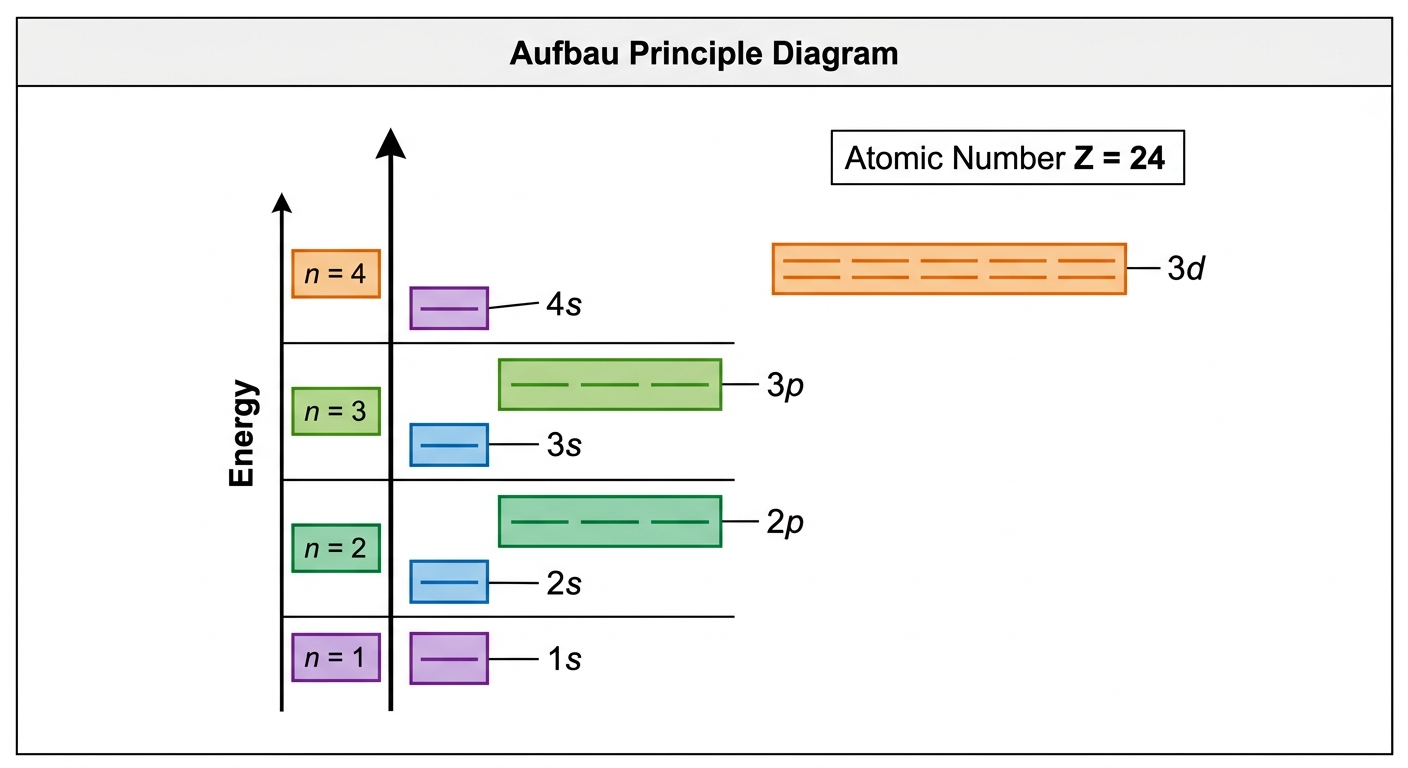
A neutral chromium atom (atomic number 24) has anomalous ground-state electron configuration. Which of the following correctly represents this configuration?
Solutions
That's every free question here — 4 of 123.
+119 more questions, plus Mock Papers & Worksheets, are waiting in Premium.