You're viewing free preview questions. Upgrade to access more Chemistry HL questions.Upgrade
Introduction to the Particulate Nature of Matter · Paper 1 — Free Chemistry HL Practice Questions

1FoundationMCQProperties of matter1 markPaper 1~2 min
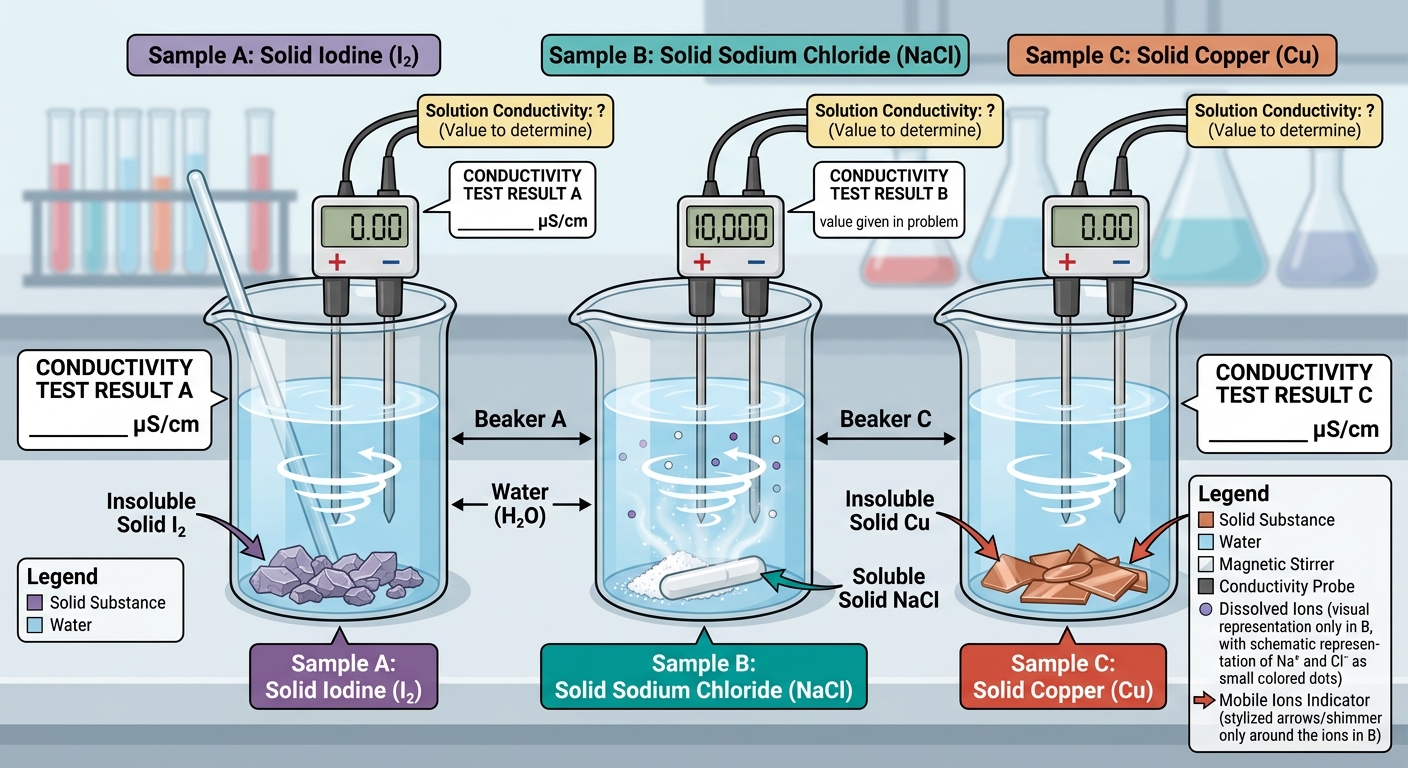
A student tests three unlabelled solids: iodine (), sodium chloride (NaCl), and copper (Cu). A small sample of each is added to water; the electrical conductivity of each mixture is then measured. Iodine is insoluble and its mixture does not conduct; sodium chloride dissolves and its solution conducts; copper is insoluble and its mixture does not conduct. Which explanation accounts for all three observations?

Solutions
2FoundationMCQProperties of matter1 markPaper 1~2 min
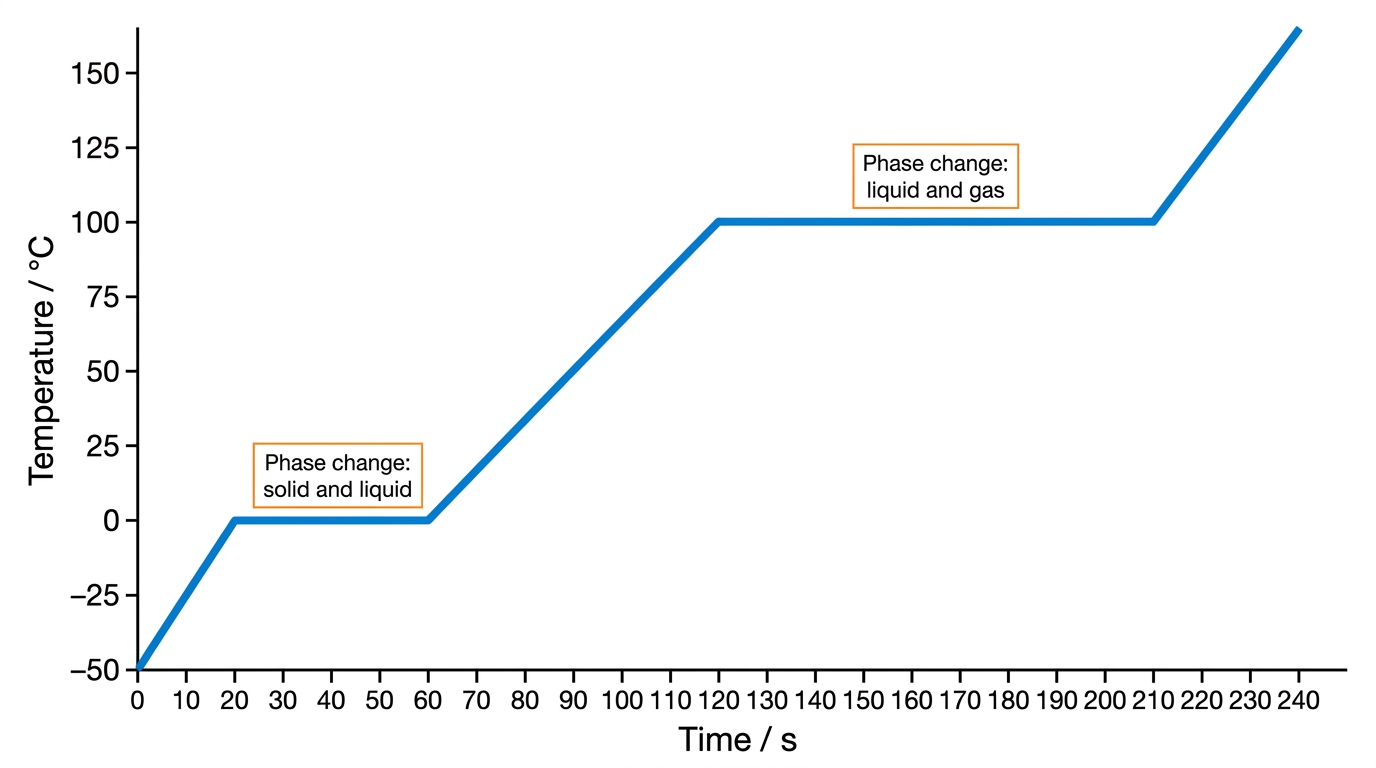
A pure substance is heated at constant pressure from to . A temperature–time graph shows two horizontal plateaus: one at , where solid and liquid coexist, and one at , where liquid and gas coexist. Which row correctly identifies the phase change occurring at each plateau and the substance?
Solutions
3FoundationMCQProperties of matter1 markPaper 1~2 min
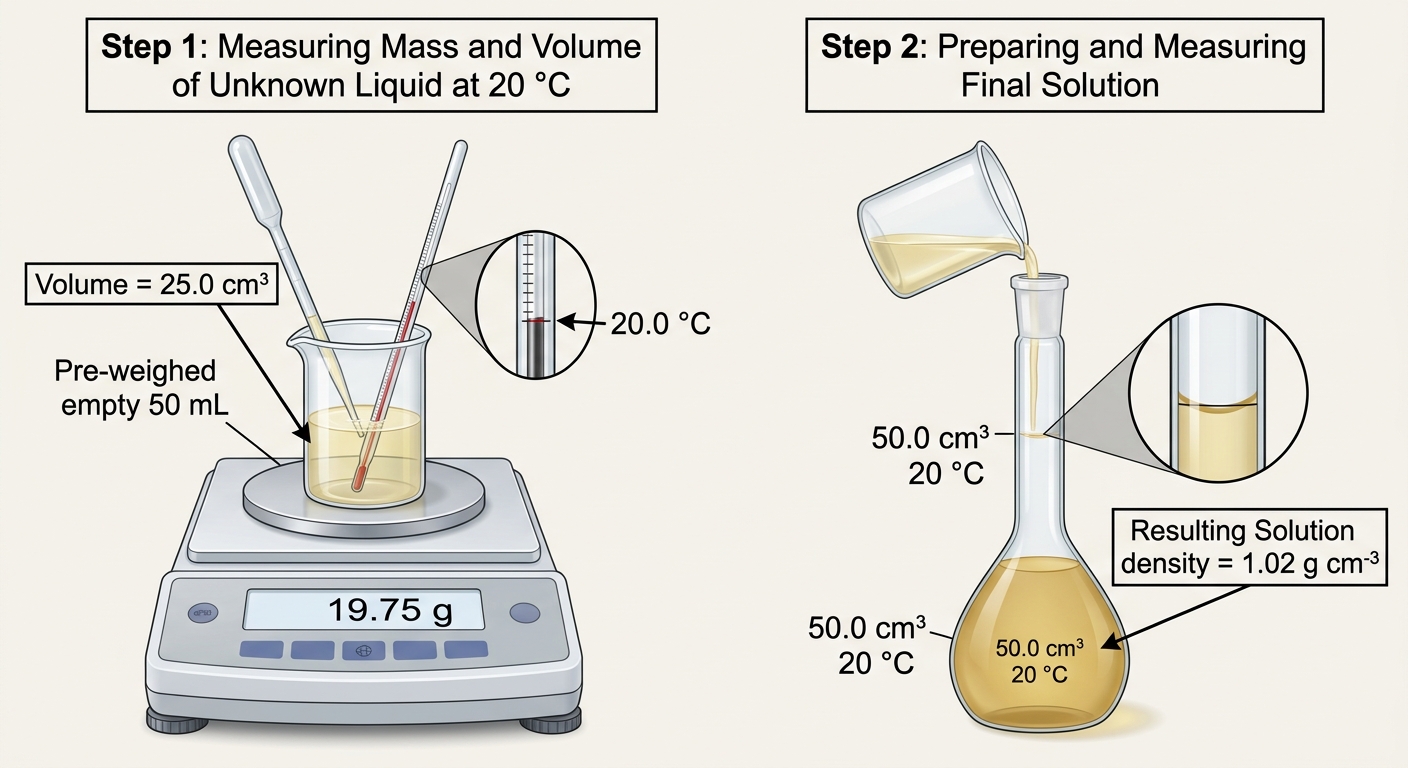
A student measures the mass of a 25.0 cm³ sample of an unknown liquid at 20 °C and finds it to be 19.75 g. She transfers the liquid into a 50.0 cm³ volumetric flask and adds distilled water to the graduation mark. The resulting solution has a density of 1.02 g cm⁻³. What is the density of the original liquid?
Solutions
4FoundationMCQMolecular theory and the nature of matter1 markPaper 1~2 min
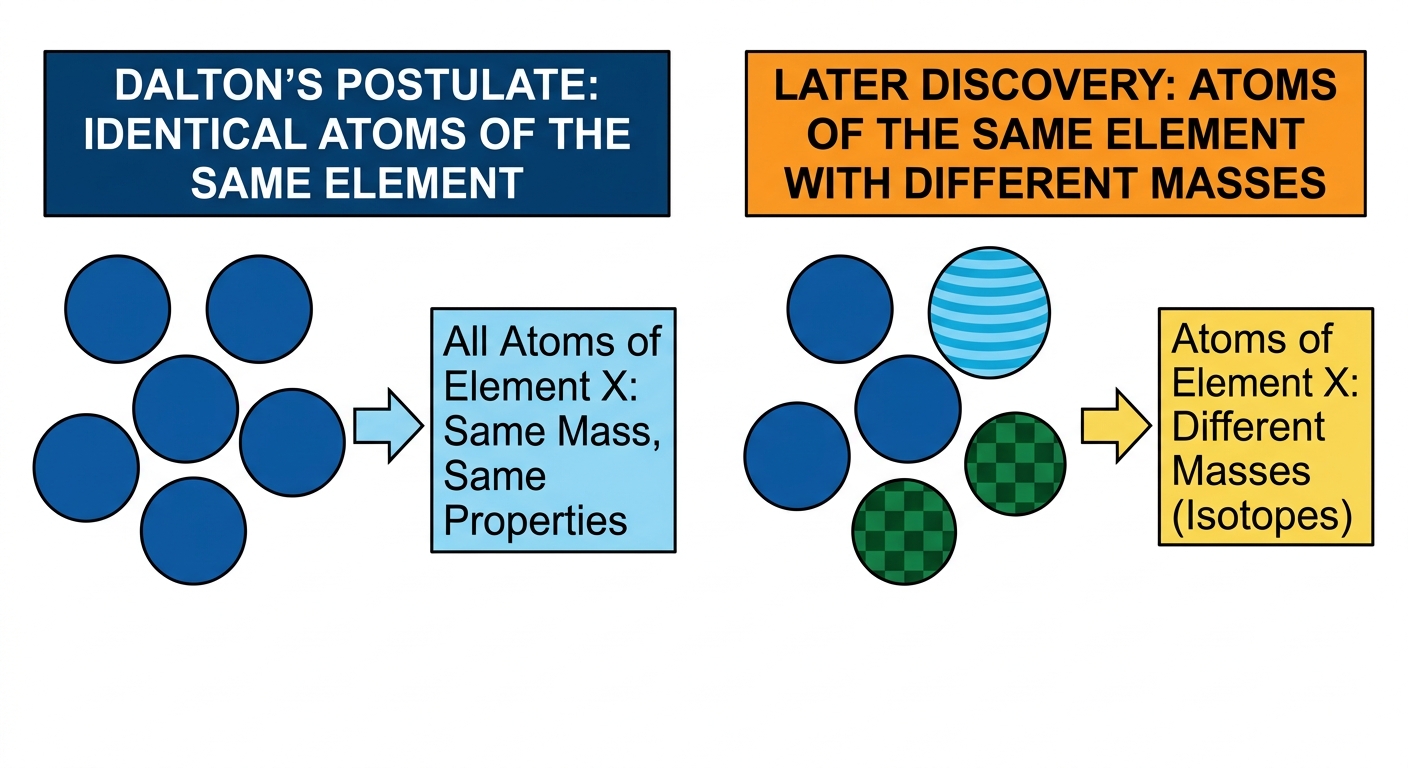
Dalton's atomic theory included the postulate that all atoms of a given element are identical in mass. Which 20th-century discovery directly contradicts this postulate?
Solutions
5FoundationMCQProperties of matter1 markPaper 1~2 min
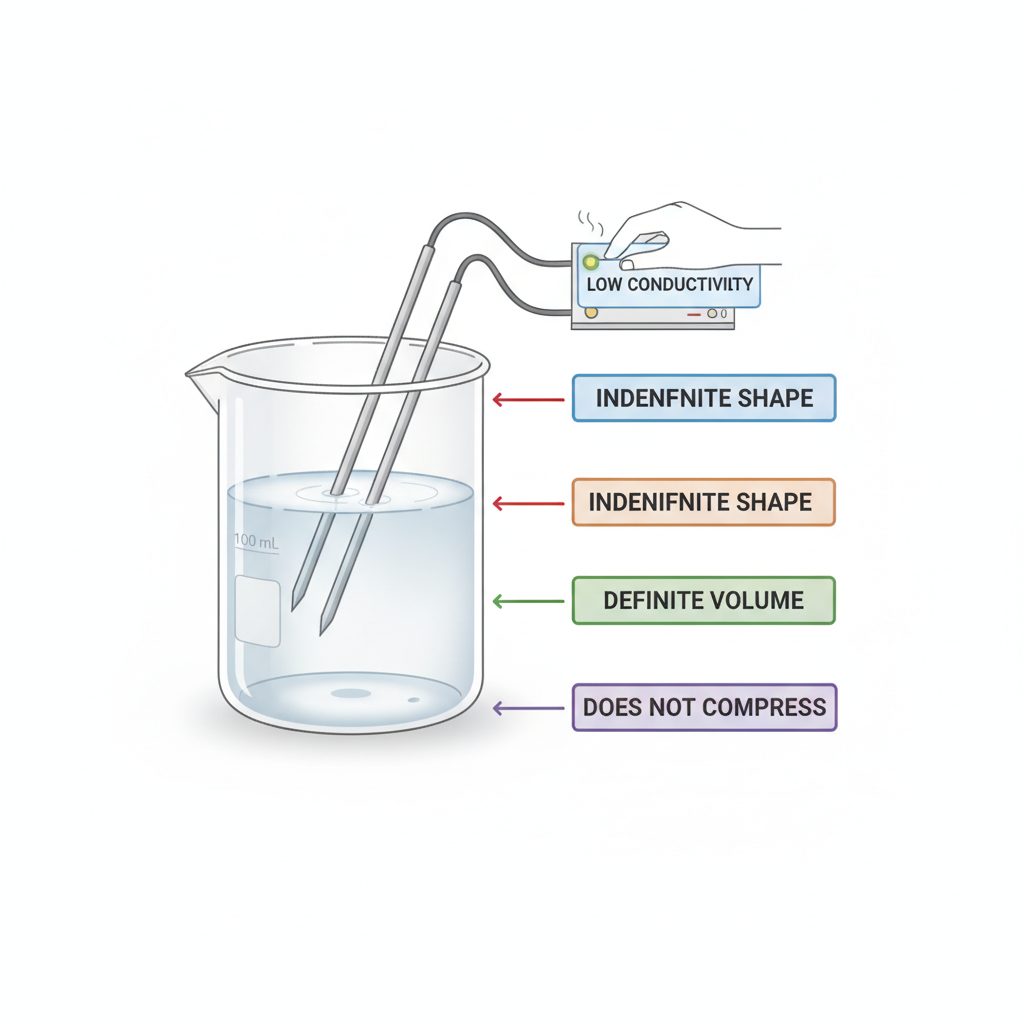
A non-polar molecular compound has low electrical conductivity, takes the shape of its container, has a fixed volume at constant temperature and pressure, and shows negligible change in volume when the applied pressure is increased from to . Which combination of properties is consistent with this description?
Solutions
6FoundationMCQProperties of matter1 markPaper 1~2 min
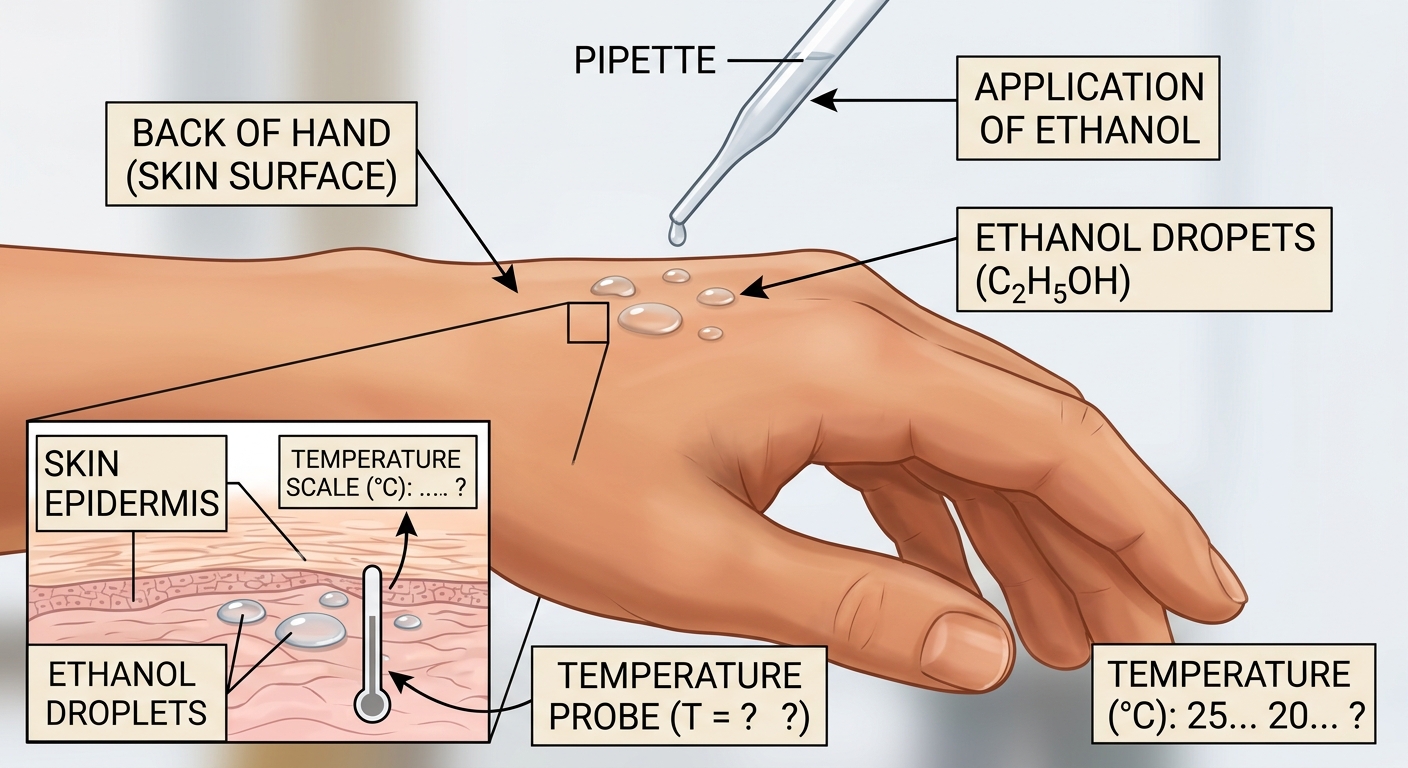
A few drops of ethanol (, boiling point ) placed on the back of a hand produce a noticeable cooling sensation. Which property of ethanol is the primary reason for this observation?
Solutions
7FoundationMCQProperties of matter1 markPaper 1~2 min
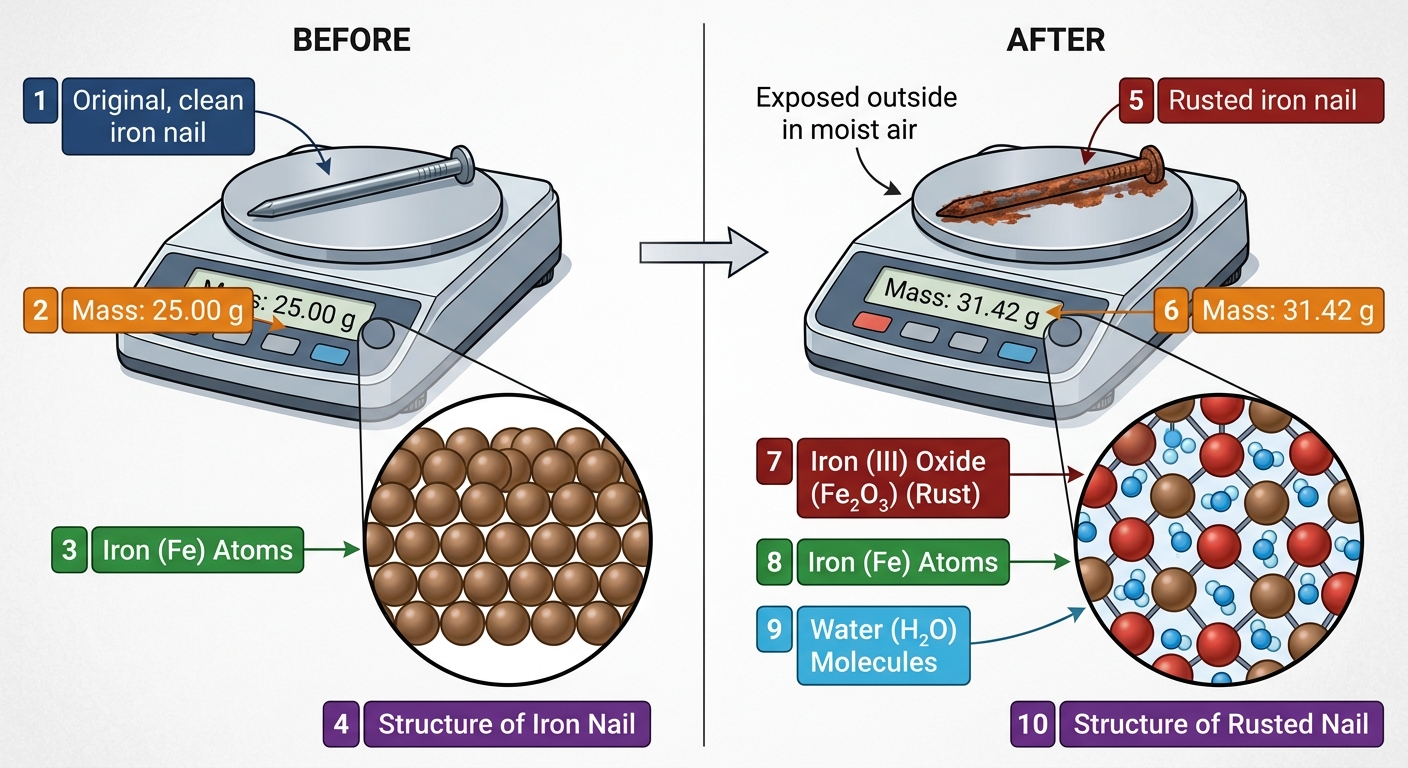
An iron nail is left outside and gradually forms rust (hydrated iron(III) oxide). The mass of the rusted nail is greater than the mass of the original nail. Which statement best explains this observation in terms of the particulate nature of matter?
Solutions
8FoundationMCQSolid, liquid, gas phases and changes of state1 markPaper 1~2 min
At 25 °C, three pure substances W, X, and Y are observed. W has a fixed volume, takes the shape of its container, and its particles are close together but able to flow past one another. X has a fixed shape and fixed volume, with particles arranged in a regular lattice and undergoing only vibrational motion. Y has no fixed shape or volume, its particles move rapidly and independently, and it expands to fill any container.
Which row correctly identifies the states of matter of W, X, and Y?
Solutions
9FoundationMCQMolecular theory and the nature of matter1 markPaper 1~2 min
Dalton's atomic theory proposed that all atoms of a given element are identical and have the same mass. Which experimental observation most directly contradicts this postulate?
Solutions
10FoundationMCQMolecular theory and the nature of matter1 markPaper 1~2 min
A student burns of carbon in excess oxygen, producing of carbon dioxide. Dalton's atomic theory states that atoms are neither created nor destroyed in a chemical reaction, and that chemical reactions involve the rearrangement of atoms. Which conclusion is best supported by this experiment within the context of Dalton's theory?
Solutions
11FoundationMCQProperties of matter1 markPaper 1~2 min
A white crystalline solid has a melting point of 801 °C. It does not conduct electricity in the solid state, but conducts well when molten. Which type of bonding is present in this solid?
Solutions
12FoundationMCQMolecular theory and the nature of matter1 markPaper 1~2 min
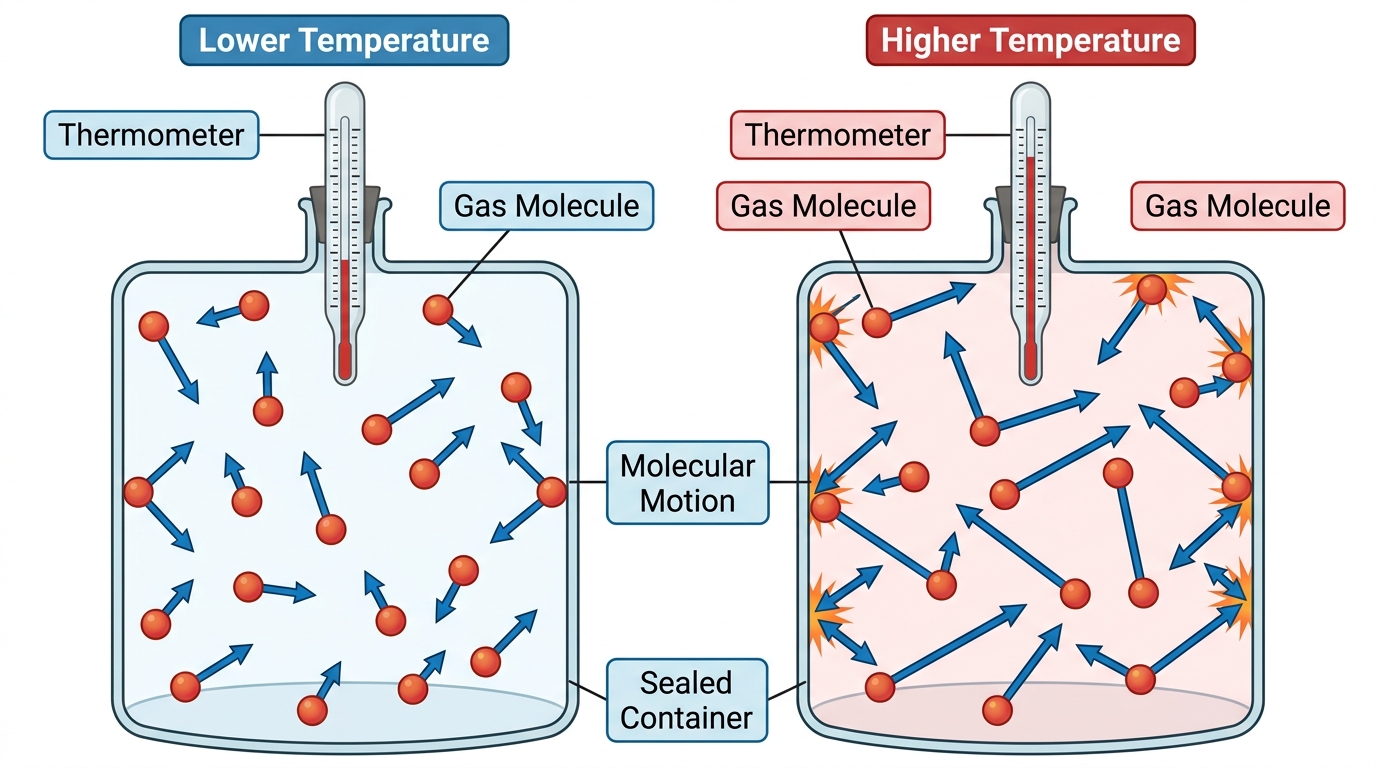
A sealed rigid container holds an ideal gas. When the container is heated, the pressure of the gas increases. Which statement from kinetic molecular theory best explains this observation?
Solutions
13FoundationMCQMolecular theory and the nature of matter1 markPaper 1~2 min
A drop of food colouring is added to a beaker of hot water and an identical drop is added to a beaker of cold water. The colouring disperses significantly faster in the hot water. Which statement provides the most direct molecular explanation for this observation?
Solutions
14FoundationMCQSolid, liquid, gas phases and changes of state1 markPaper 1~2 min
The phase of carbon dioxide shows a triple point at and , and a critical point at and . A sample of solid carbon dioxide is placed in a sealed, rigid container at and . The container is warmed to while maintaining a constant pressure of . Which statement correctly describes the physical change that occurs?
Solutions
15FoundationMCQMolecular theory and the nature of matter1 markPaper 1~2 min
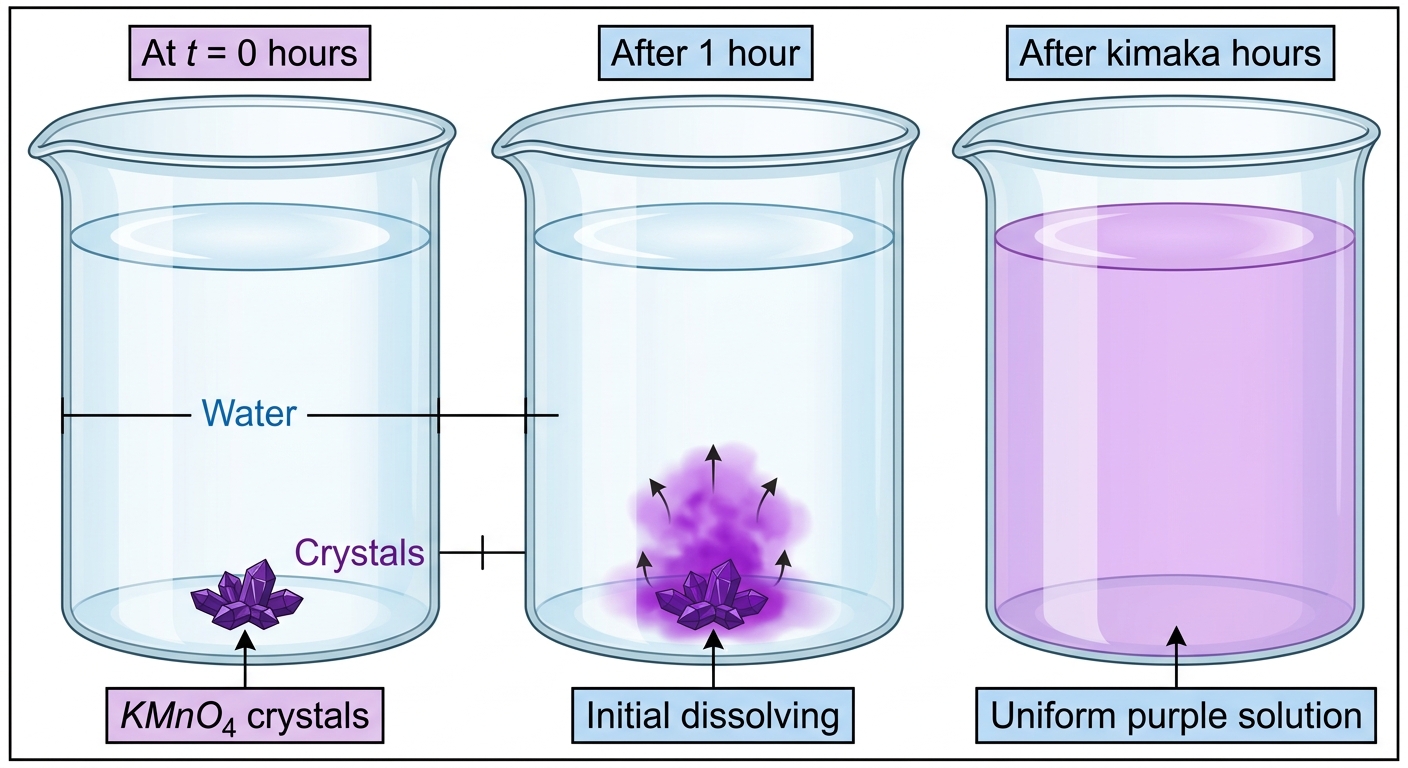
A student places a few crystals of potassium manganate(VII) at the bottom of a beaker of water at room temperature. Over several hours, the purple colour spreads throughout the water without stirring. Which statement best explains this observation in terms of the kinetic molecular theory?
Solutions
16FoundationMCQSolid, liquid, gas phases and changes of state1 markPaper 1~2 min
The triple point of iodine occurs at approximately and . A student heats a sample of pure solid iodine at standard atmospheric pressure () and observes that it converts directly to a purple vapour without forming a liquid. Which statement best explains this observation?
Solutions
17FoundationMCQSolid, liquid, gas phases and changes of state1 markPaper 1~2 min
A sealed syringe contains of nitrogen gas at and . The plunger is pushed in rapidly until the volume is , while the temperature remains constant at . Which of the following correctly describes the nitrogen molecules after compression compared to before?
Solutions
18FoundationMCQProperties of matter1 markPaper 1~2 min
A sealed syringe contains of air at room temperature. The plunger is pushed in, reducing the volume to at constant temperature. Which statement correctly describes the change in the particulate behaviour of the air?
Solutions
19FoundationMCQProperties of matter1 markPaper 1~2 min
The boiling point of an unknown colourless liquid is measured as at standard pressure. The three candidate substances are water (, bp ), ethanol (, bp ), and hexane (, bp ). Which identity is correct, and what is the best explanation for why this substance has the highest boiling point of the three?
Solutions
20FoundationMCQSolid, liquid, gas phases and changes of state1 markPaper 1~2 min
Liquid mercury is poured into a glass graduated cylinder at room temperature and forms a convex meniscus. Which statement best explains why mercury forms a convex rather than a concave meniscus in glass?
Solutions
Showing 20 of 138 free questions