Electron-Pair Sharing Reactions · Paper 1 — Free Chemistry SL Practice Questions
Free questions
Open in full, with answers, mark scheme and examiner insights.
Nucleophiles and nucleophilic substitution
Which statement describes a nucleophile?
revisionprep.com
Summary Answer
Not available for this question.
Model Answer
Not available for this question.
Marking Scheme
Not available for this question.
Examiner Insights
Not available for this question.
Heterolytic fission
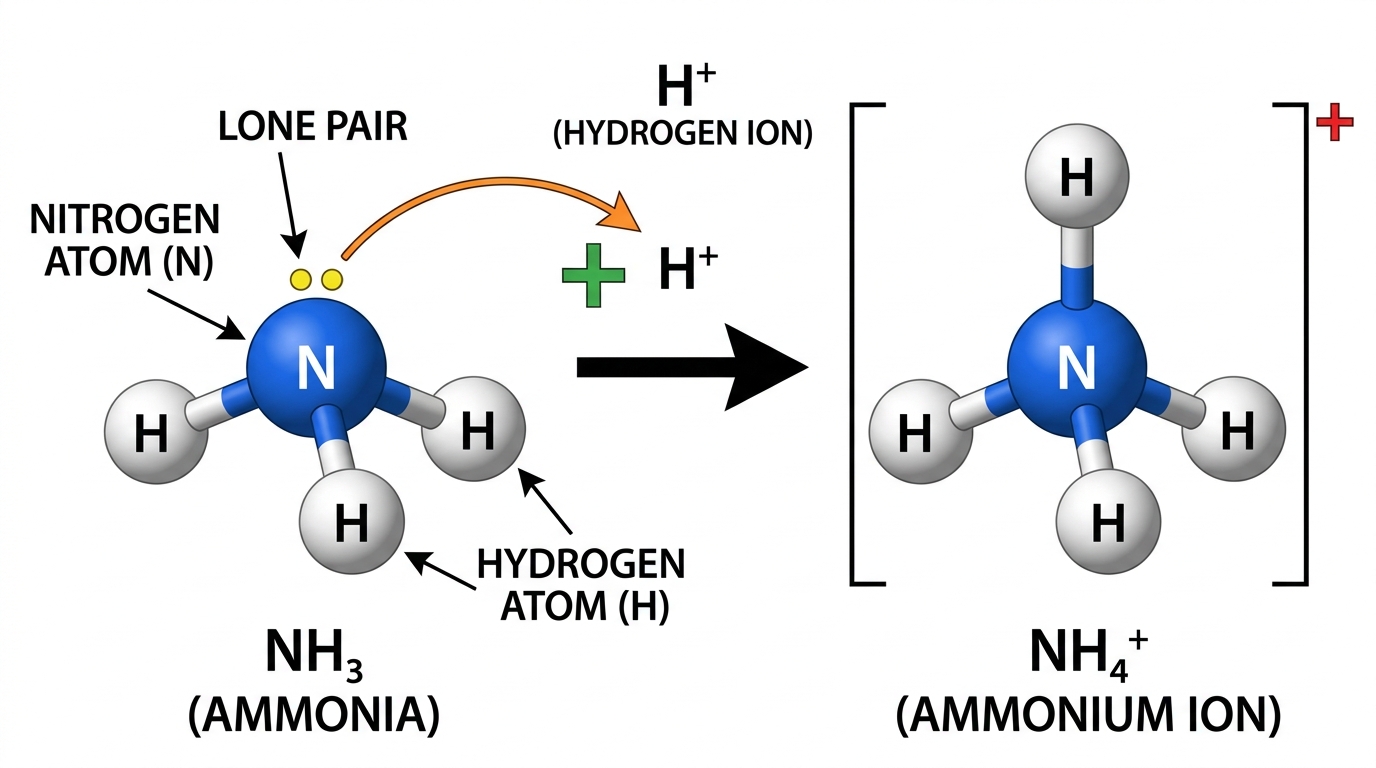
The shows ammonia forming the ammonium ion. When ammonium ions are warmed with hydroxide ions, ammonia is released again. Which statement describes the N–H bond that breaks in ?
revisionprep.com
Summary Answer
Not available for this question.
Model Answer
Not available for this question.
Marking Scheme
Not available for this question.
Examiner Insights
Not available for this question.
Nucleophiles and nucleophilic substitution
A student measured the initial rate of reaction between bromomethane, , and several species. Each species and the bromomethane were at in the same solvent at .
Table 1 shows the results.
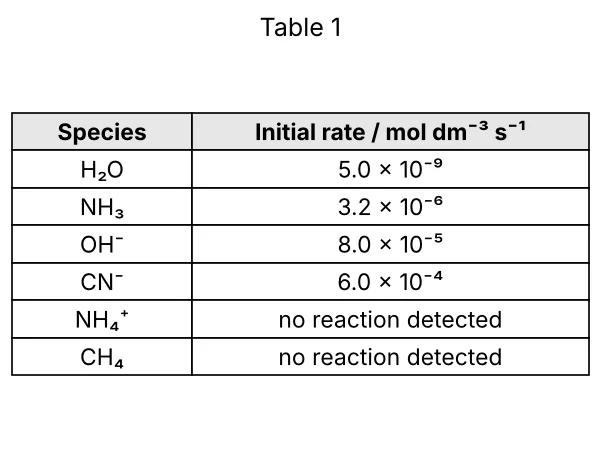
Explain why no reaction was detected with or .
Calculate how many times faster and each react than .
Explain why reacts faster than , although both attack through an oxygen atom.
The student concludes: “Negative ions are always better nucleophiles than neutral molecules.” Evaluate this conclusion using the data.
State one variable, other than the concentrations, that must be controlled for a valid comparison, and explain why.
revisionprep.com
Summary Answer
Not available for this question.
Model Answer
Not available for this question.
Marking Scheme
Not available for this question.
Examiner Insights
Not available for this question.
Heterolytic fission
2-Bromo-2-methylpropane, , reacts slowly with water in a water–propanone solvent at :
A student followed the reaction by measuring the electrical conductivity of the mixture (Figure 1). The error bars show the uncertainty of the meter.
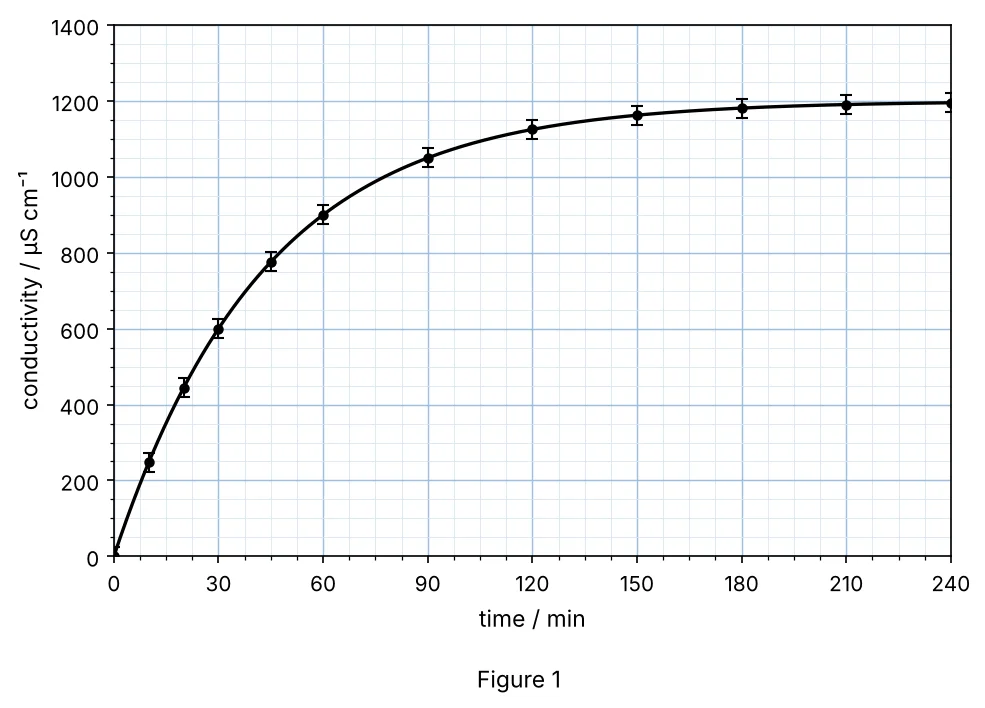
Explain, in terms of bond fission, why the conductivity increases as the reaction proceeds.
Determine, from Figure 1, the time taken for the conductivity to reach half of its final value.
Suggest why the temperature of the mixture must be controlled during the measurements.
revisionprep.com
Summary Answer
Not available for this question.
Model Answer
Not available for this question.
Marking Scheme
Not available for this question.
Examiner Insights
Not available for this question.
Nucleophiles and nucleophilic substitution
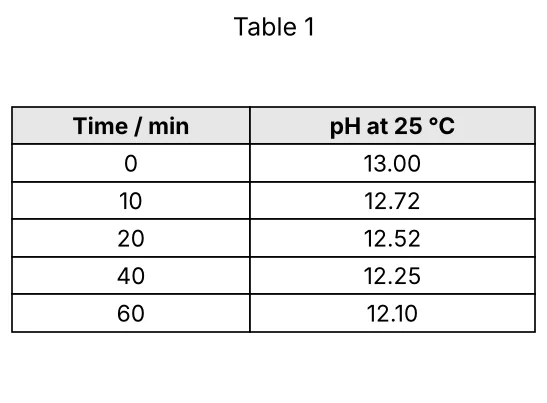
A student followed the reaction between 1-chlorobutane and hydroxide ions at in a water–ethanol solvent, in which both reactants dissolve. The initial concentrations of 1-chlorobutane and of hydroxide ions were both . Samples were removed, cooled quickly to and their pH measured.
at
Table 1 shows the results.
Deduce the ionic equation for the reaction.
Calculate the hydroxide ion concentration after .
Determine the percentage of the 1-chlorobutane that had reacted after .
Explain why the pH decreases as the reaction proceeds.
Suggest one limitation of following this reaction by pH measurement, and how it could be reduced.
revisionprep.com
Summary Answer
Not available for this question.
Model Answer
Not available for this question.
Marking Scheme
Not available for this question.
Examiner Insights
Not available for this question.
Heterolytic fission
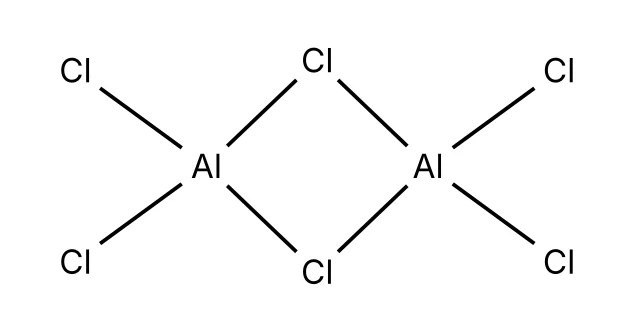
The shows aluminium chloride vapour, . On strong heating it dissociates into two molecules. In each bridging bond that breaks, both electrons of the bond stay with the chlorine atom. Which statement is correct?
revisionprep.com
Summary Answer
Not available for this question.
Model Answer
Not available for this question.
Marking Scheme
Not available for this question.
Examiner Insights
Not available for this question.
That's every free question here — 6 of 90.
+84 more questions, plus Mock Papers & Worksheets, are waiting in Premium.