You're viewing 1 free preview question for Chemistry SL — subscribe to unlock 86 more, plus the Full Question Bank, Mock Papers & Worksheets.Upgrade
Electron-Pair Sharing Reactions · Paper 2 — Free Chemistry SL Practice Questions
1MasterySAQ-SCoordinate covalent bonding5 marksPaper 2~8 min

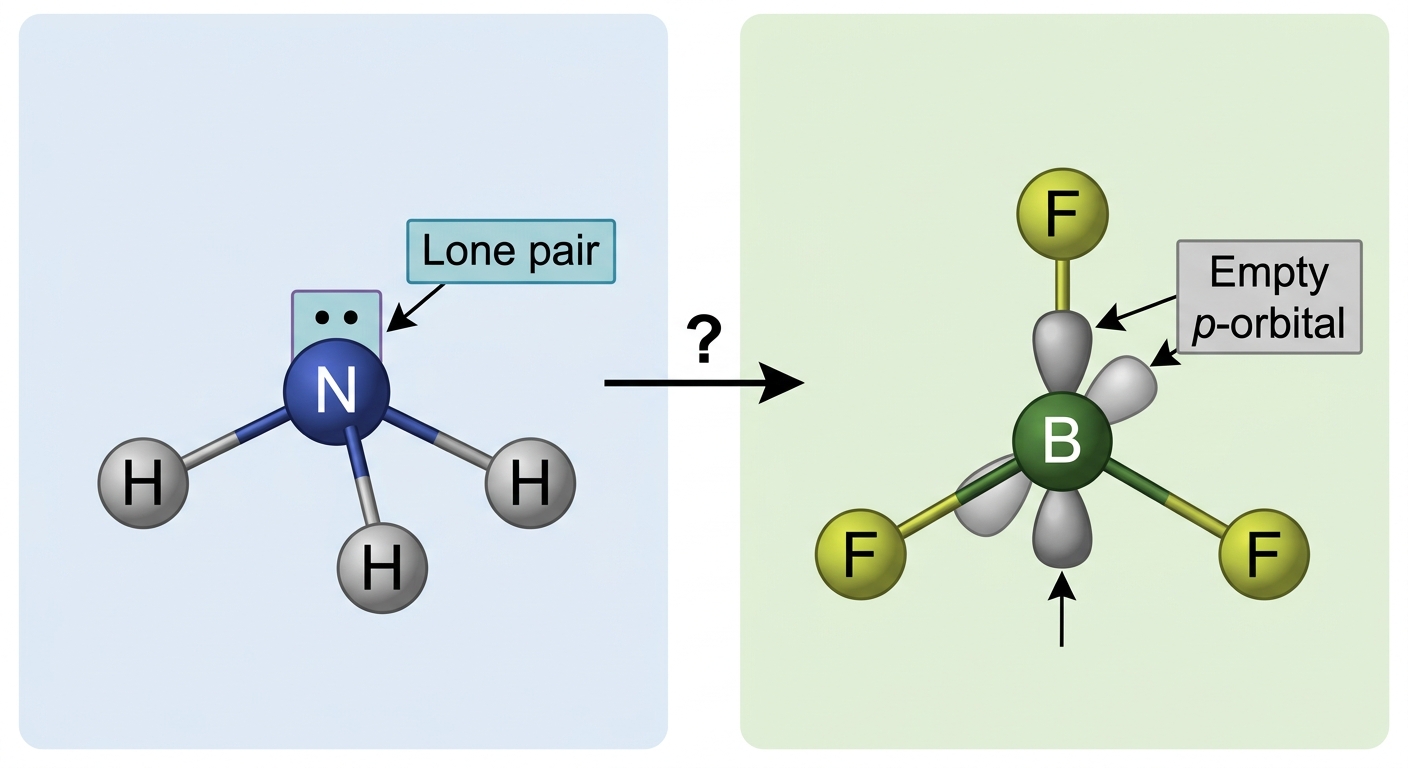
Ammonia () can act as a Lewis base and form a coordinate bond with boron trifluoride (), producing the adduct .
(a)
State which atom in acts as the electron pair donor and which atom in acts as the electron pair acceptor. [1 mark]
(b)
The bond enthalpy of the N–B coordinate bond in is . A sample of of is formed from its gaseous components. Calculate the total energy change, in kJ, for this process, considering only the formation of the coordinate bond. State whether energy is released or absorbed. [2 marks]
(c)
Explain why the geometry around the boron atom changes from trigonal planar in to tetrahedral in . [2 marks]

Solutions
That's every free question here — 1 of 87.
+86 more questions, plus Mock Papers & Worksheets, are waiting in Premium.