You're viewing 3 free preview questions for Economics HL — subscribe to unlock 73 more, plus the Full Question Bank, Mock Papers & Worksheets.Upgrade
Benefits of International Trade · Paper 2 — Free Economics HL Practice Questions
1MasteryLAQGains from trade10 marksPaper 2~15 min

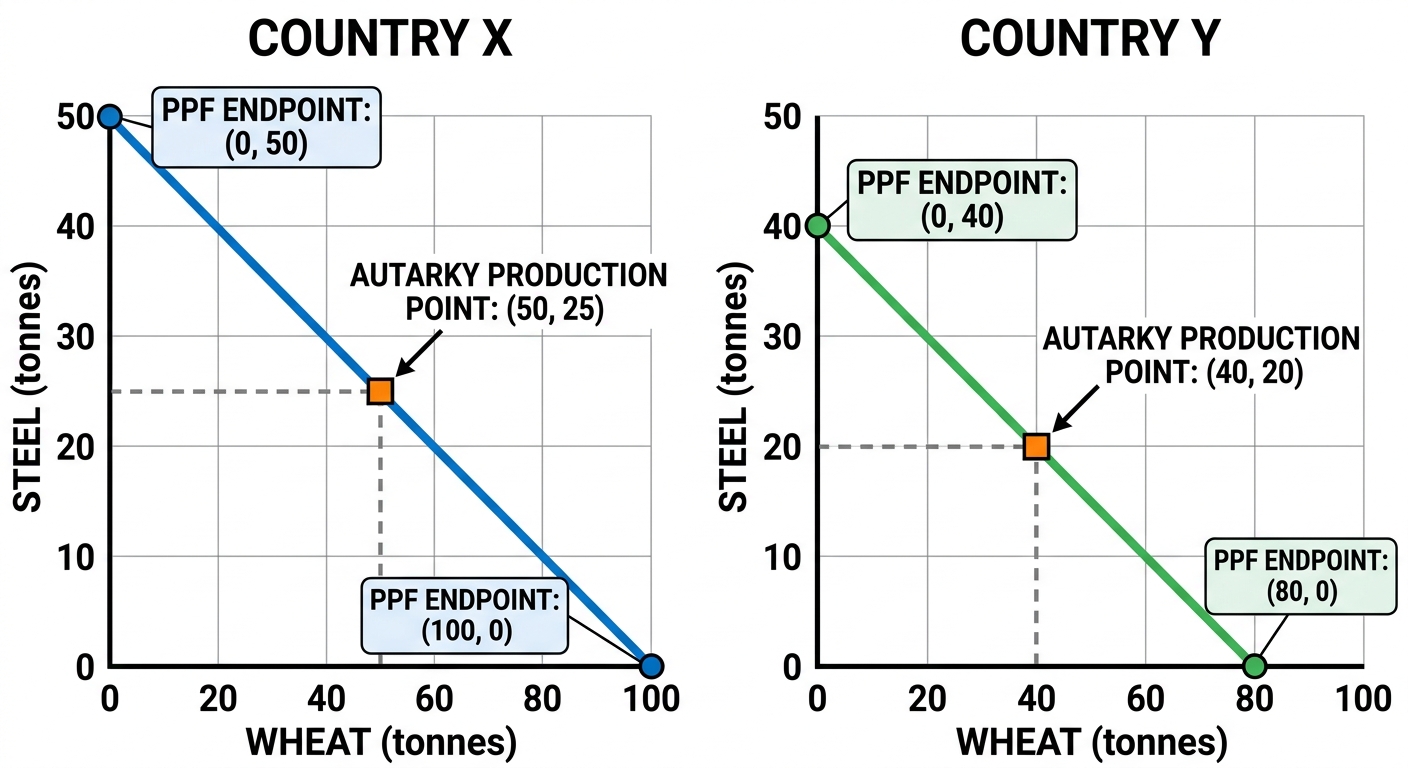
Country X and Country Y are two small open economies. Country X can produce tonnes of wheat or tonnes of steel using all its resources. Country Y can produce tonnes of wheat or tonnes of steel using all its resources. Currently, both countries operate in autarky, allocating half their resources to each good. The world price for wheat is tonnes of steel per tonne of wheat.
(a)
Calculate the opportunity cost of producing one tonne of wheat for each country. [2 marks]
(b)
Using your calculations from (a), explain whethere is a basis for mutually beneficial trade between Country X and Country Y. [2 marks]
(c)
Evaluate the extent to which theory of comparative advantage explains the potential gains from trade for Country X and Country Y if they specialise completely and trade at the world price of tonnes of steel per tonne of wheat. [6 marks]

Solutions
2MasteryLAQGains from trade10 marksPaper 2~15 min
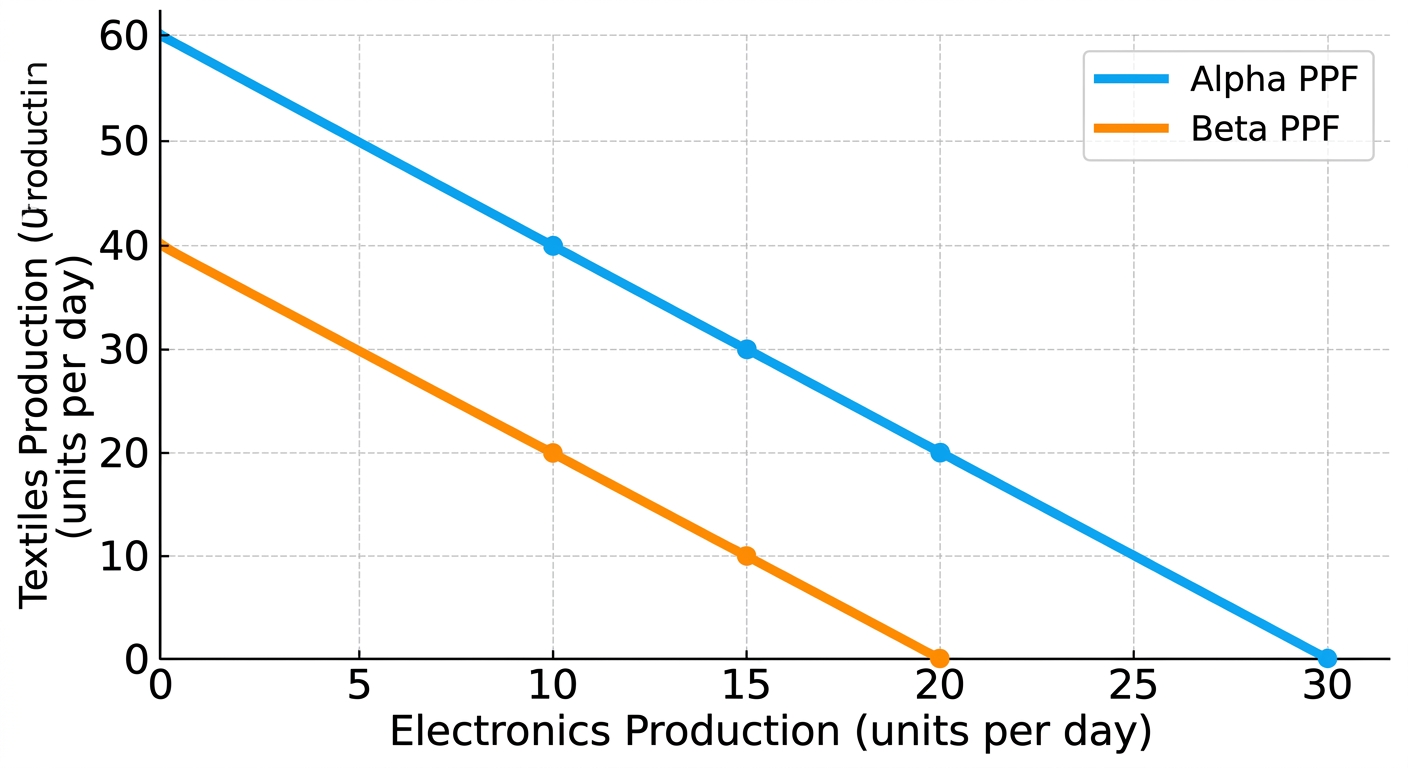
Consider two neighbouring countries, Alpha and Beta. In one day, Alpha can produce 60 units of textiles or 40 units of electronics. Beta can produce 40 units of textiles or 20 units of electronics. Both countries have linear production possibility frontiers (PPFs). Before trade, each country divides its resources equally between the two goods.
(a)
State the opportunity cost of producing one unit of textiles for each country. [1 mark]
(b)
Identify which country has a comparative advantage in each good and calculate the total world output of textiles and electronics if each country specialises completely according to comparative advantage. [2 marks]
(c)
Using a PPF for one country, explain how specialisation and trade at a terms of trade of 1 unit of textiles for 1 unit of electronics allows that country to consume at a point beyond its PPF. [3 marks]
(d)
Evaluate one real-world criticism of theory of comparative advantage as a guide to trade policy. [4 marks]
Solutions
3ChallengeLAQComparative advantage and specialization10 marksPaper 2~15 min
Data
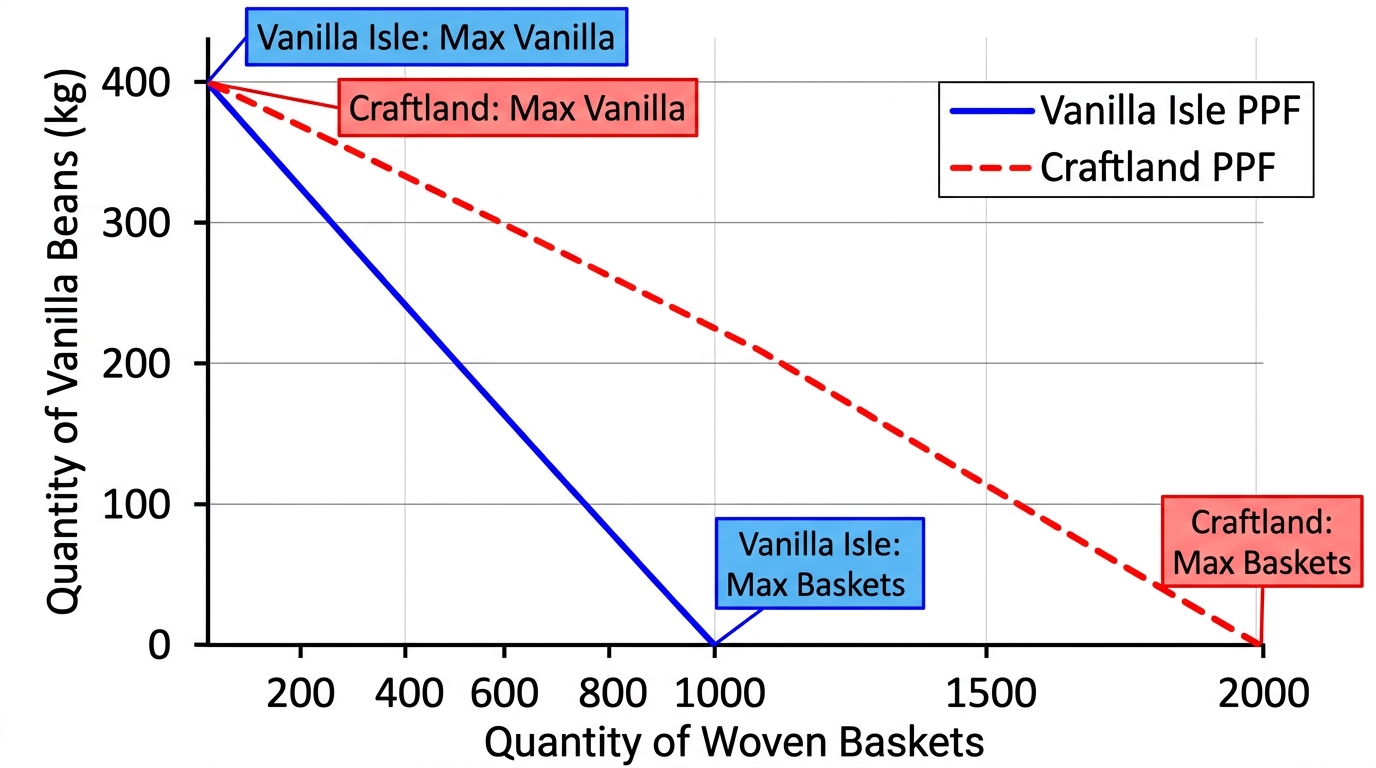
In 2022, a small island nation, Vanilla Isle, produced only two goods: vanilla beans and woven baskets. Vanilla Isle has hours of labour per month. Producing of vanilla beans requires hours of labour; producing woven basket requires hours of labour. The neighbouring country, Craftland, can produce of vanilla beans in hours and woven basket in hours. Craftland has hours of labour per month.
(a)
Calculate the opportunity cost of producing one woven basket in each country. [2 marks]
(b)
Using a numerical example, explain how total global output increases when each country specialises according to comparative advantage. [4 marks]
(c)
Using a labour market and real-world evidence from a named developing country, evaluate the view that free trade based on comparative advantage benefits all workers in both countries. [4 marks]
Solutions
That's every free question here — 3 of 76.
+73 more questions, plus Mock Papers & Worksheets, are waiting in Premium.