You're viewing 2 free preview questions for Economics HL — subscribe to unlock 88 more, plus the Full Question Bank, Mock Papers & Worksheets.Upgrade
Exchange Rates · Paper 2 — Free Economics HL Practice Questions
1MasteryLAQTypes of exchange rate systems: Floating vs fixed12 marksPaper 2~18 min

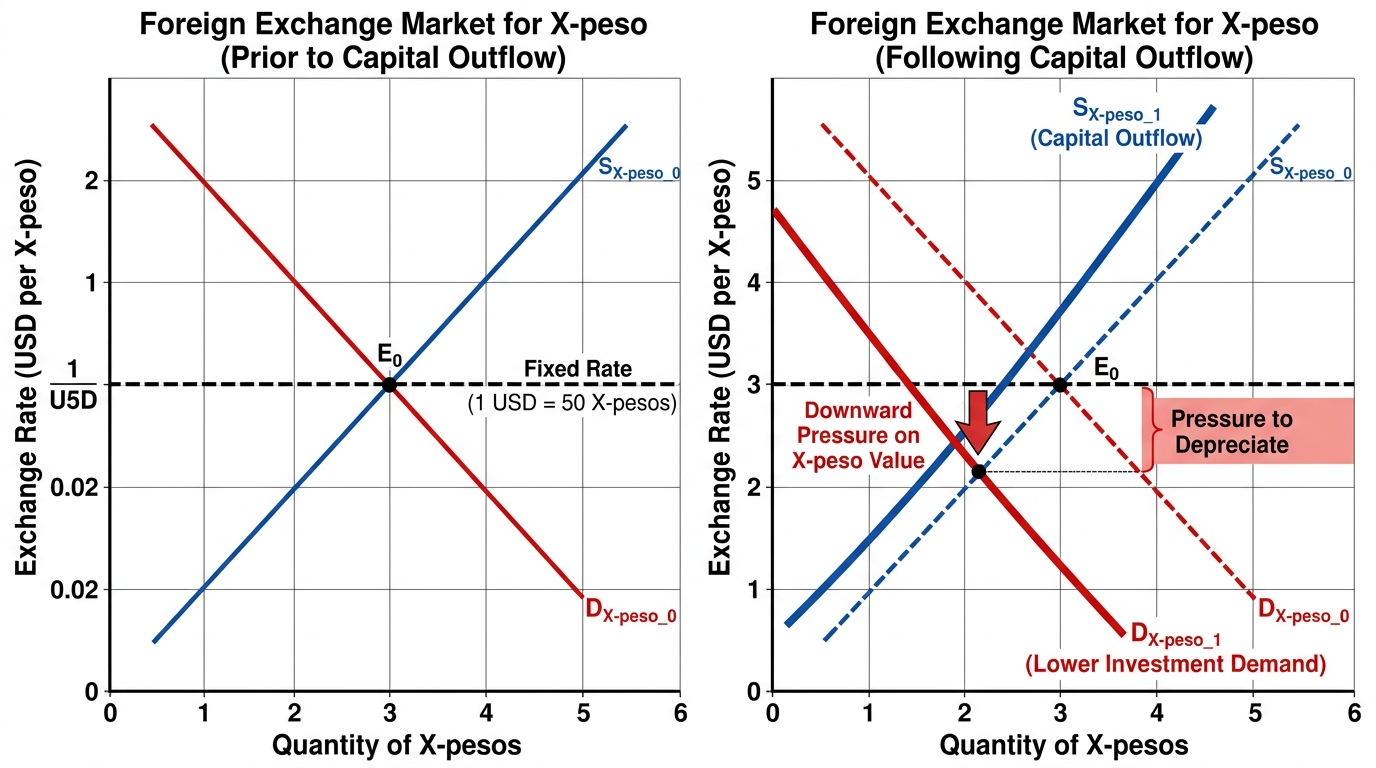
Country X is a small, open economy that has operated a fixed exchange rate system against the US dollar for 15 years. The currency of Country X is the X-peso. The fixed rate is . Country X's central bank holds foreign exchange reserves of USD 120 billion. In 2023, a significant increase in global interest rates led by the US Federal Reserve caused a large capital outflow from Country X as investors sought higher returns in US dollar-denominated assets. To maintain the fixed exchange rate, the central bank has been selling US dollars and buying X-pesos in the foreign exchange market. In six months, USD 40 billion of reserves have been spent. Economists are debating whether Country X should abandon the fixed exchange rate and allow the X-peso to float freely.
(a)
Using a foreign exchange market for the X-peso, explain the market pressure Country X is facing and how the central bank has intervened to defend the fixed rate. [4 marks]
(b)
Explain two potential economic consequences for Country X if it continues to defend the fixed exchange rate. [4 marks]
(c)
Using the data provided, evaluate whether abandoning the fixed exchange rate in favour of a floating exchange rate system would be more beneficial for Country X. [4 marks]

Solutions
2MasteryLAQTypes of exchange rate systems: Floating vs fixed12 marksPaper 2~18 min
Data
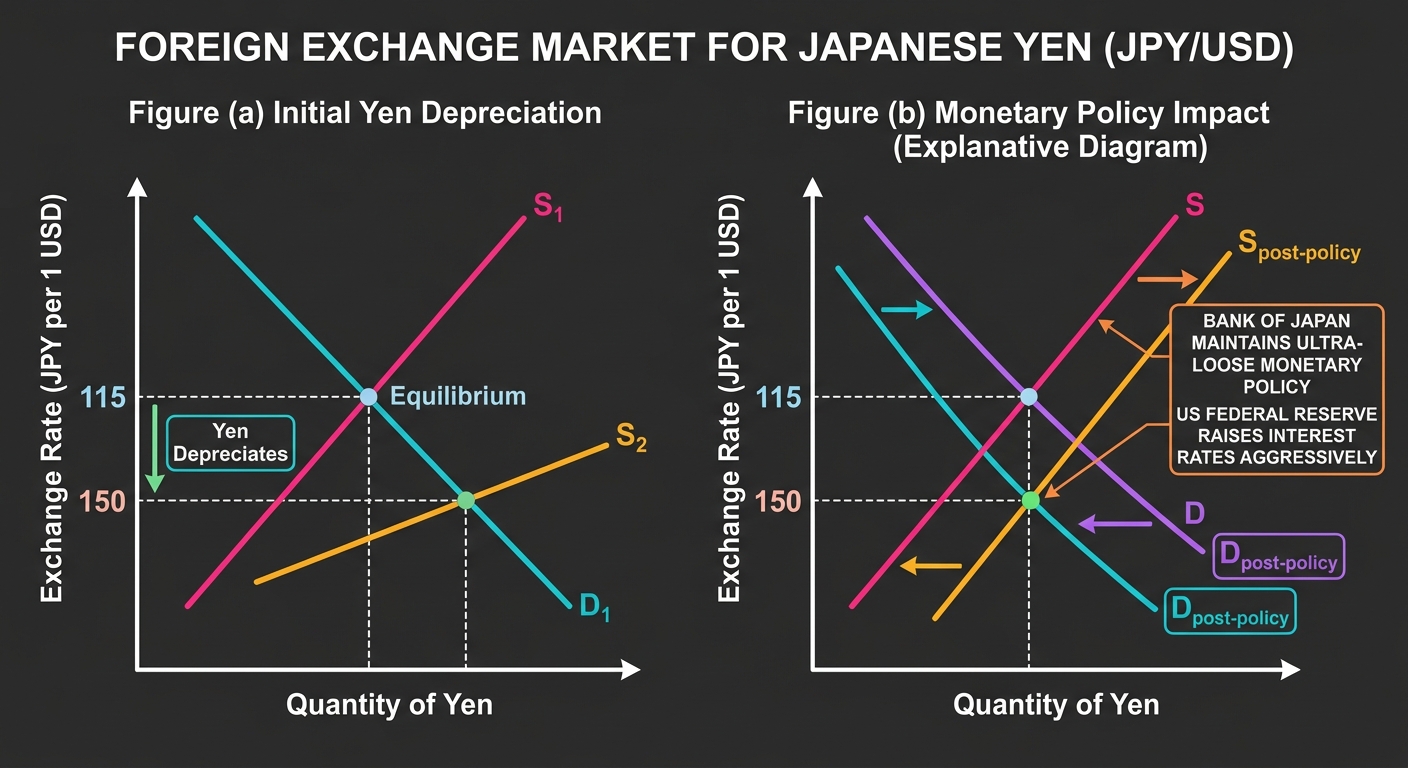
In 2022, the Japanese yen depreciated significantly against the US dollar, falling from per USD to per USD over 12 months. Japan operates a floating exchange rate system. The Bank of Japan (BoJ) maintained an ultra-loose monetary policy (negative interest rates and quantitative easing) during this period, while the US Federal Reserve raised interest rates aggressively to combat inflation. Japanese exporters such as Toyota and Sony reported record profits in yen terms. However, Japanese households faced higher prices for imported food, energy, and raw materials. Japan imports approximately of its energy needs and of its food. Japan's inflation rate rose from in early 2022 to by early 2023.
(a)
Using a labelled foreign exchange market for the yen, explain how the difference in monetary policy between Japan and the US contributed to the depreciation of the yen. [4 marks]
(b)
Using evidence from the data, explain how the yen's depreciation affected Japanese exporters and Japanese households differently. [4 marks]
(c)
Using your knowledge of exchange rate systems and the information provided, evaluate whether the Bank of Japan should have raised interest rates to prevent the yen from depreciating. [4 marks]
Solutions
That's every free question here — 2 of 90.
+88 more questions, plus Mock Papers & Worksheets, are waiting in Premium.