You're viewing 3 free preview questions for Economics HL — subscribe to unlock 91 more, plus the Full Question Bank, Mock Papers & Worksheets.Upgrade
Demand Management — Fiscal Policy · Paper 1 — Free Economics HL Practice Questions
1FoundationSAQ-STools of fiscal policy (taxation, government spending)5 marksPaper 1~8 min

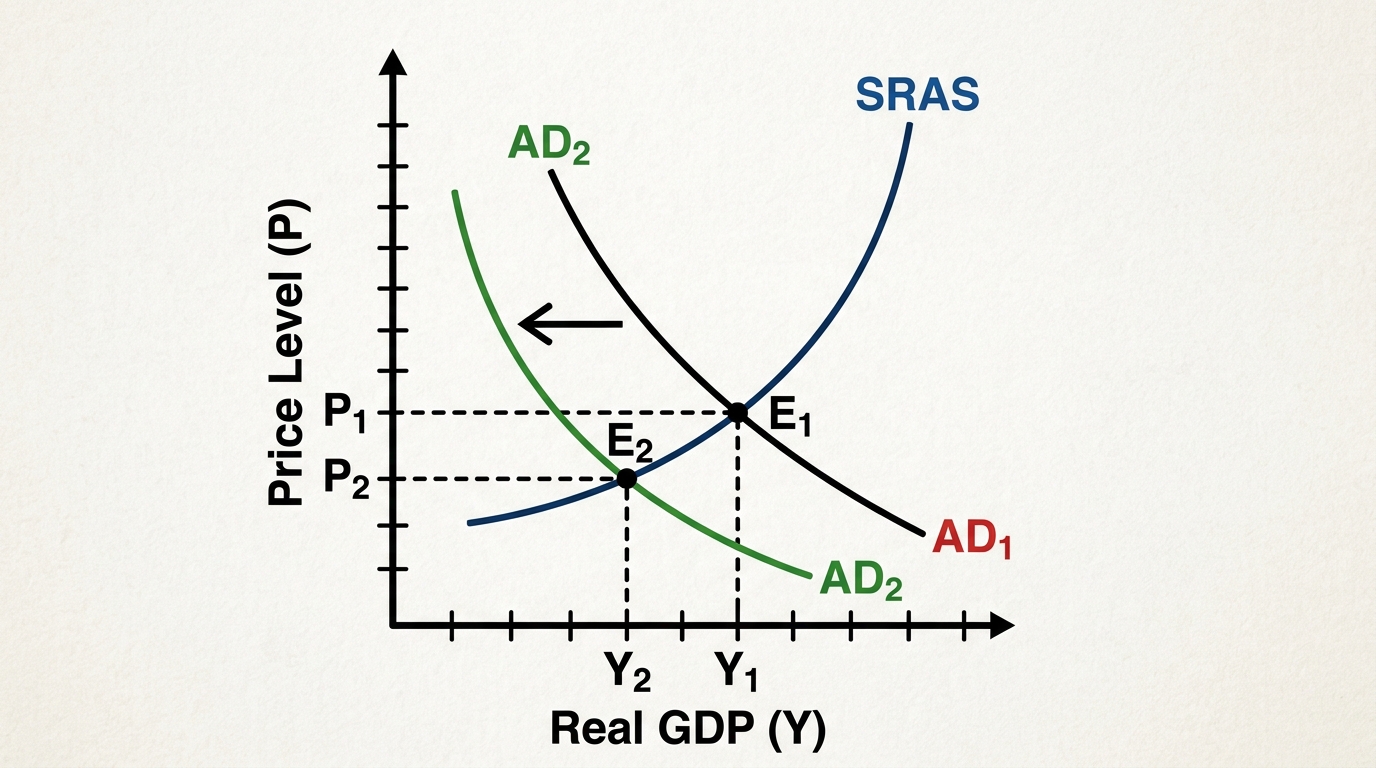
In 2023, the government of Ghana increased the Value Added Tax (VAT) rate from to to raise revenue for public infrastructure.
(a)
Define taxation as a tool of fiscal policy. [1 mark]
(b)
Explain how this VAT increase could reduce aggregate demand (AD) in Ghana. [2 marks]
(c)
Discuss one reason why the negative impact on AD may be limited in Ghana's context. [2 marks]

Solutions
2FoundationSAQ-STools of fiscal policy (taxation, government spending)7 marksPaper 1~11 min
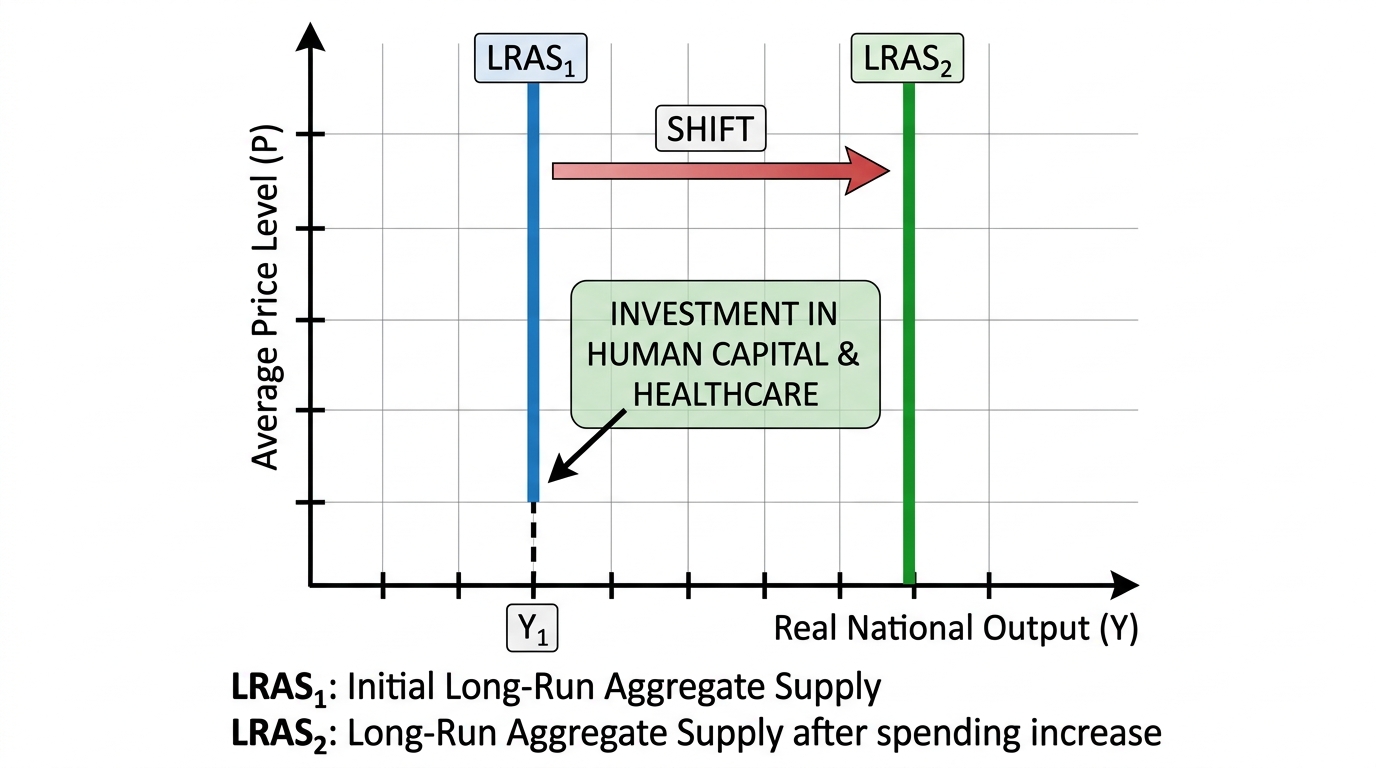
The government of Japan decides to increase spending on early childhood education and healthcare as part of its fiscal policy strategy.
(a)
Define the term "fiscal policy". [1 mark]
(b)
Explain how increased government spending on education and healthcare can increase Japan's long-run aggregate supply (LRAS). [2 marks]
(c)
Evaluate the extent to which such government spending will successfully increase Japan's productive capacity in the long run. [4 marks]
Solutions
3MasterySAQ-STools of fiscal policy (taxation, government spending)4 marksPaper 1~6 min
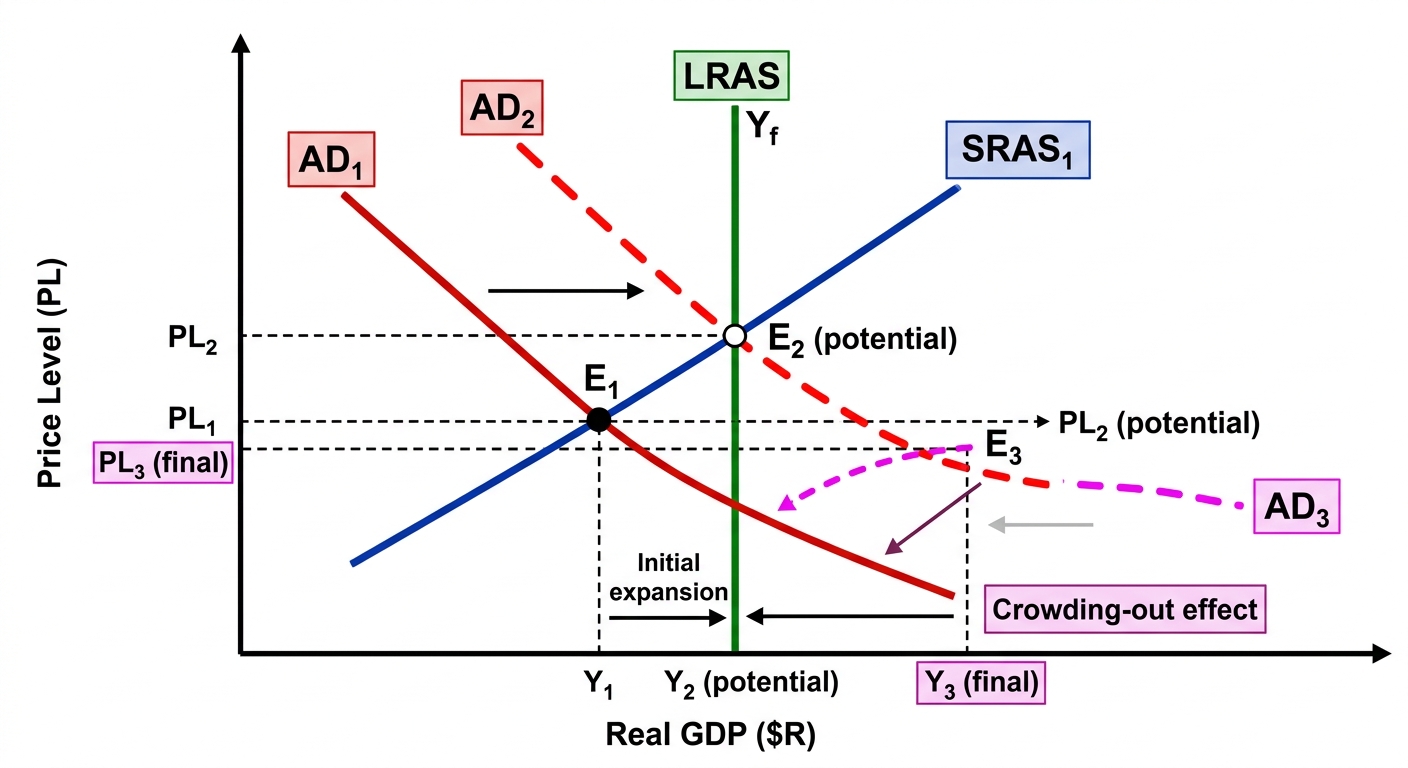
In 2023, the Brazilian government implemented an expansionary fiscal policy to combat a recession, increasing spending on public works and cutting personal income taxes. To finance this spending, the government increased its borrowing in domestic financial markets.
(a)
Draw a correctly labelled AD/AS showing the initial effect of this expansionary fiscal policy on Brazil's real GDP and price level. [2 marks]
(b)
Using your , analyse how increased government borrowing may lead to a crowding-out effect, and explain why the final increase in real GDP is smaller than the full multiplier effect would predict. [2 marks]
Solutions
That's every free question here — 3 of 94.
+91 more questions, plus Mock Papers & Worksheets, are waiting in Premium.