Economics of Inequality and Poverty · Paper 2 — Free Economics HL Practice Questions
Free questions
Open in full, with answers, mark scheme and examiner insights.
Causes and consequences of income inequality
Data
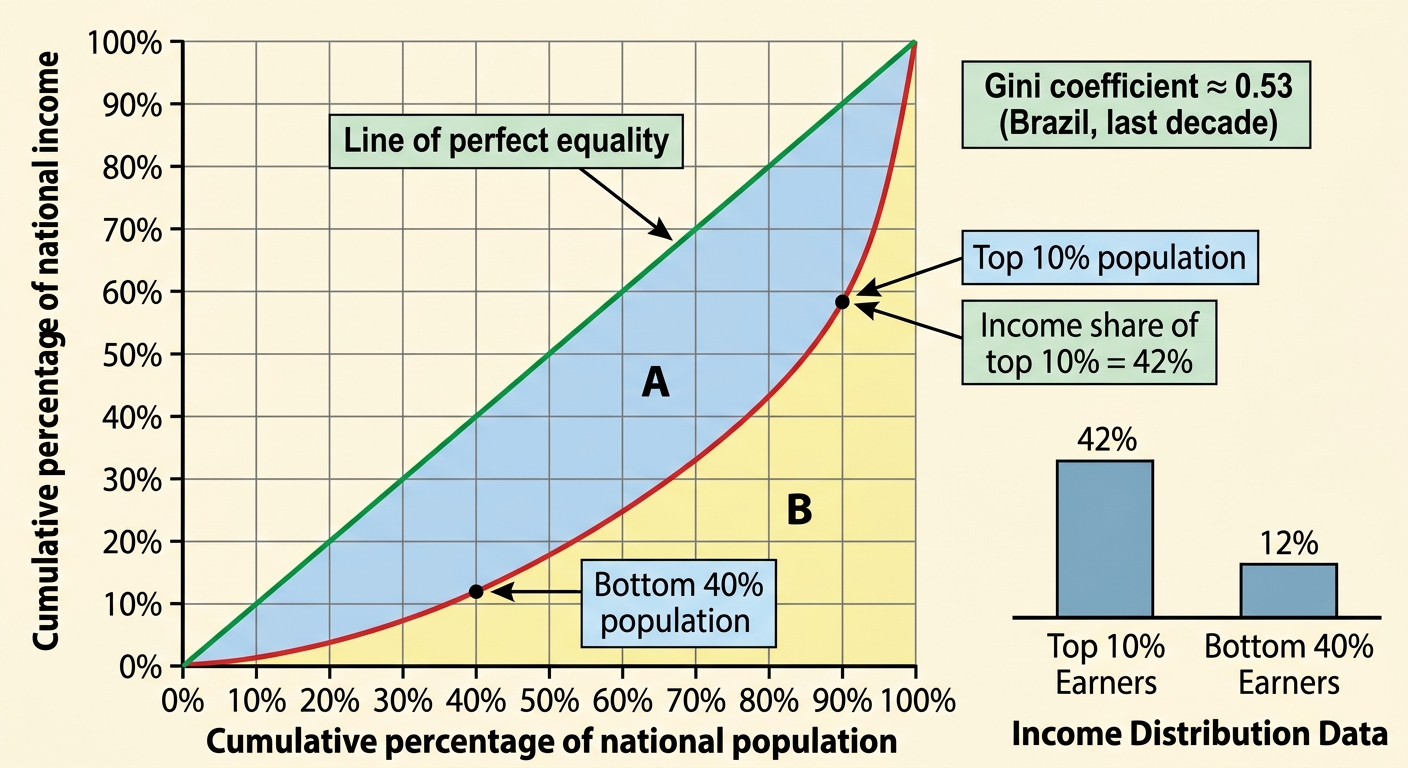
Using the data provided, explain what a Gini coefficient of 0.53 and a top 10% income share of 42% indicate about income inequality in Brazil.
Analyse the likely impact of Policy A on income distribution in Brazil, identifying one reason why its effectiveness may be limited.
Evaluate whether Policy B is likely to be more effective than Policy A in reducing income inequality in Brazil.
revisionprep.com
Summary Answer
Not available for this question.
Model Answer
Not available for this question.
Marking Scheme
Not available for this question.
Examiner Insights
Not available for this question.
The role of government in reducing inequality
A developing country has a Gini coefficient of . The government introduces a minimum wage law set at above the current market wage for unskilled labour.
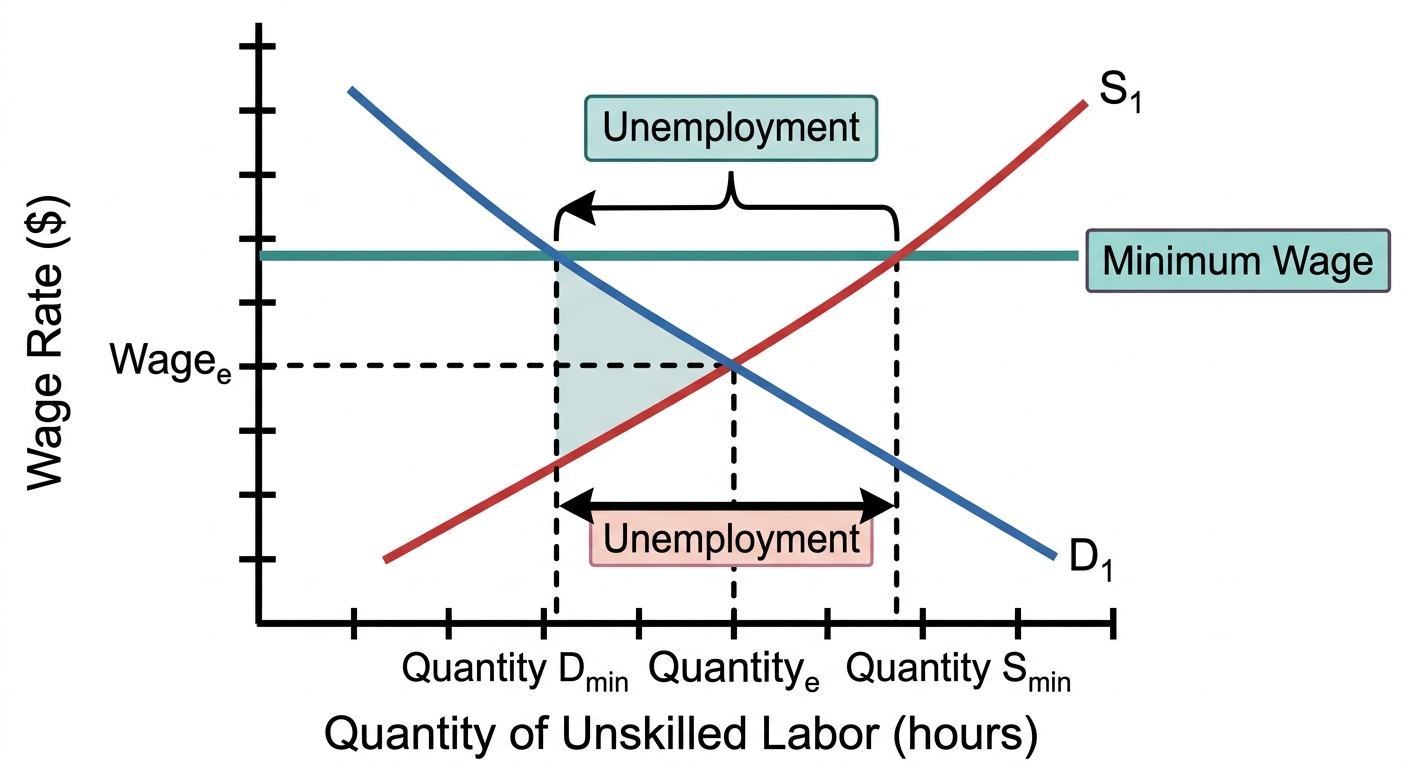
Define the term 'minimum wage'.
Explain one reason why this minimum wage policy might fail to reduce income inequality in this country.
revisionprep.com
Summary Answer
Not available for this question.
Model Answer
Not available for this question.
Marking Scheme
Not available for this question.
Examiner Insights
Not available for this question.
The poverty trap and measures to address it
In rural Malawi, a smallholder farmer, Grace, grows maize on a one-hectare plot. Her annual income is USD 300. To increase her harvest, she needs USD 50 for improved seeds and fertiliser, which would raise her income to USD 450. To access a government microfinance loan, she must first prove she holds a minimum of USD 20 in savings, which she does not have.
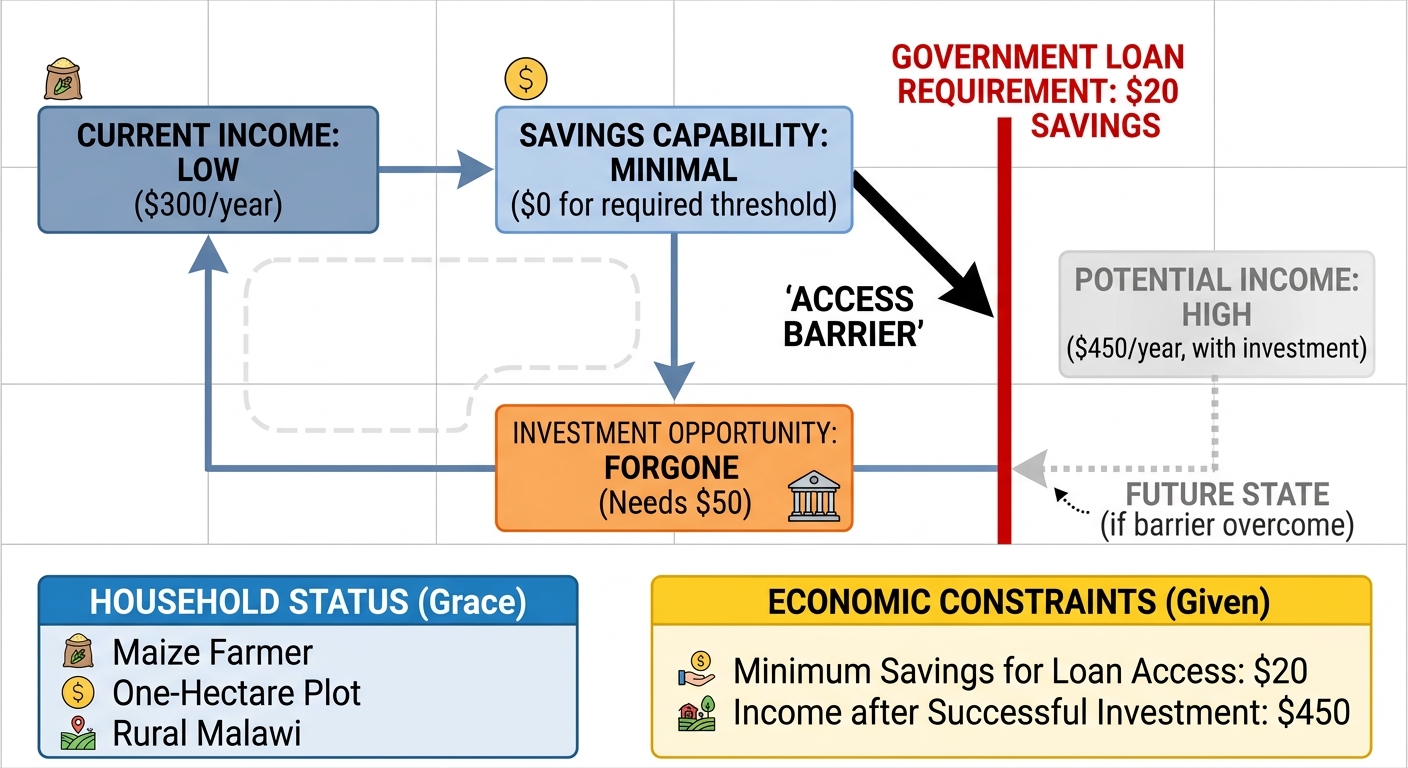
Explain why Grace is unable to escape low income, using the concept of the poverty trap.
Analyse whether replacing the USD 20 savings threshold with a group-lending requirement — where five farmers jointly guarantee each other's loans — would be sufficient to break the poverty trap for Grace.
revisionprep.com
Summary Answer
Not available for this question.
Model Answer
Not available for this question.
Marking Scheme
Not available for this question.
Examiner Insights
Not available for this question.
The role of government in reducing inequality
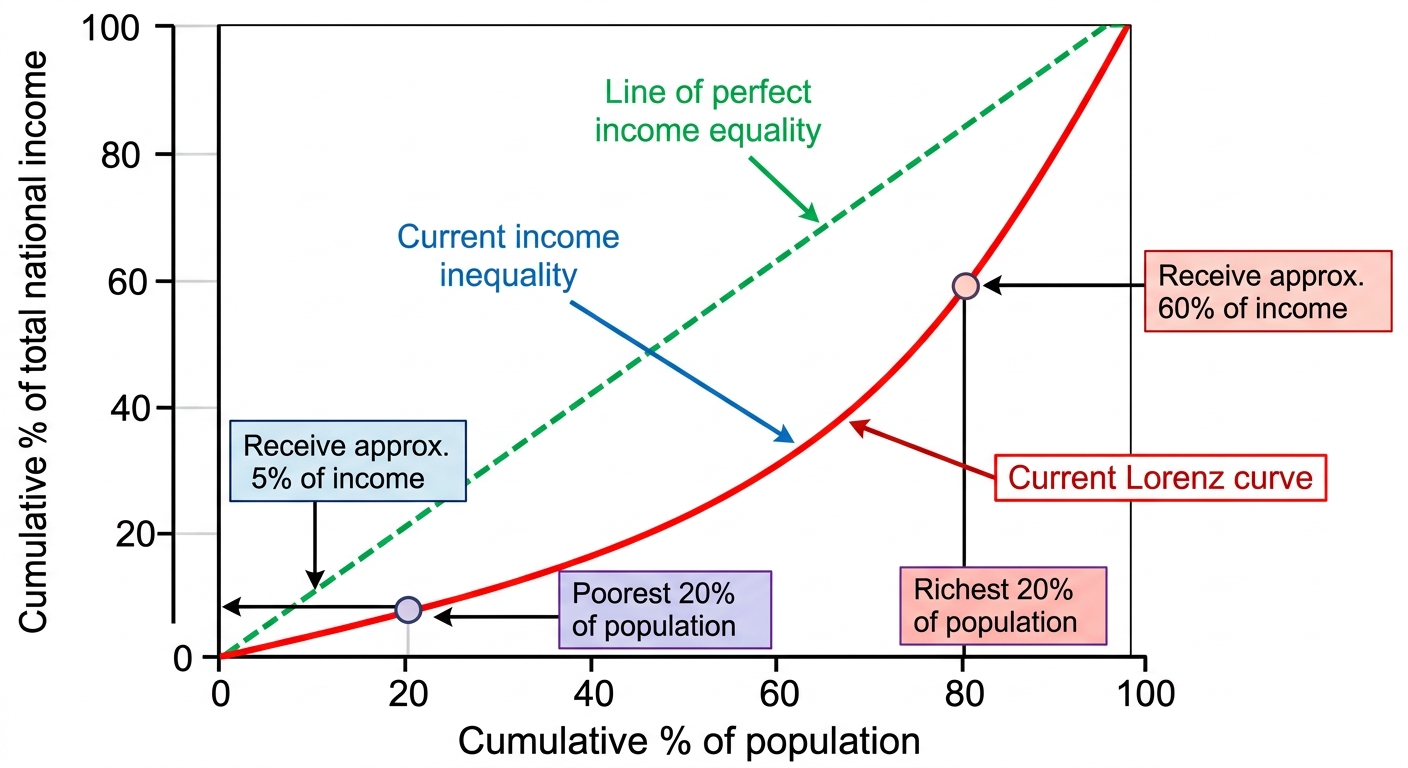
The government of Country X is concerned about rising income inequality. The Gini coefficient has increased from to over the past decade. The government is considering introducing a progressive income tax system.
Define the term 'progressive income tax'.
Using the concept of the Lorenz curve, explain how a progressive income tax could reduce income inequality in Country X.
Evaluate the extent to which a progressive income tax is likely to be effective in reducing the Gini coefficient in Country X.
revisionprep.com
Summary Answer
Not available for this question.
Model Answer
Not available for this question.
Marking Scheme
Not available for this question.
Examiner Insights
Not available for this question.
Causes and consequences of income inequality
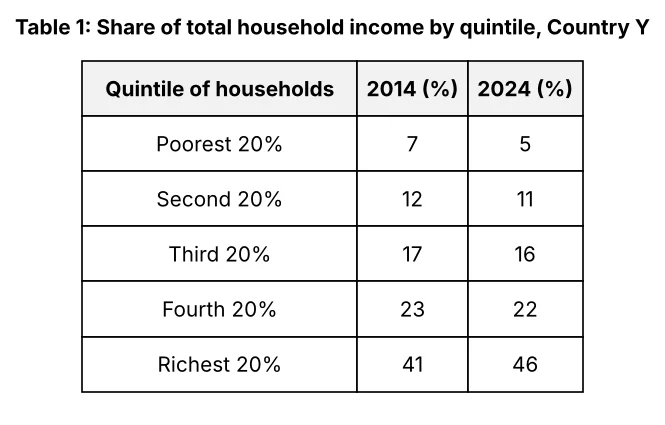
Country Y is a high-income economy with an ageing population. In the past ten years the government cut the top marginal income tax rate from 50% to 35% and reduced inheritance tax. A study finds that 70% of the increase in top incomes comes from profits, dividends and capital gains rather than from wages. The central bank has kept its interest rate at 0.5% for eight years, which has pushed up the prices of housing and shares. The poorest 40% of households own only 3% of total financial assets. Table 1 shows the share of total household income received by each quintile (fifth) of households, from the poorest to the richest, in 2014 and in 2024. The Gini coefficient was 0.34 in 2014 and 0.38 in 2024.
Define the term Gini coefficient.
Using Table 1, calculate the cumulative share of total income received by the poorest 60% of households in 2014 and in 2024.
Using a Lorenz curve diagram, explain how the distribution of income in Country Y changed between 2014 and 2024.
Using information from the text/data and your knowledge of economics, evaluate the extent to which the choices of the government are the main cause of the rise in income inequality in Country Y.
revisionprep.com
Summary Answer
Not available for this question.
Model Answer
Not available for this question.
Marking Scheme
Not available for this question.
Examiner Insights
Not available for this question.
The poverty trap and measures to address it
In the rural region of Nyanza, Kenya, many smallholder farming families live on less than USD 1.90 per day. A typical family cultivates one acre of maize, producing enough for subsistence but unable to save for improved seeds, fertilizer, or irrigation. When a drought occurs, the harvest fails, forcing families to sell livestock or borrow from local moneylenders at monthly interest to buy food. The resulting debt prevents purchase of inputs for the next planting season, leading to another poor harvest.
The Government of Kenya is considering two policies:
- Policy 1: A conditional cash transfer (CCT) providing USD 50 per month to families who send their children to school and attend regular health check-ups. - Policy 2: A fertilizer subsidy reducing the price of a bag from USD 40 to USD 10.
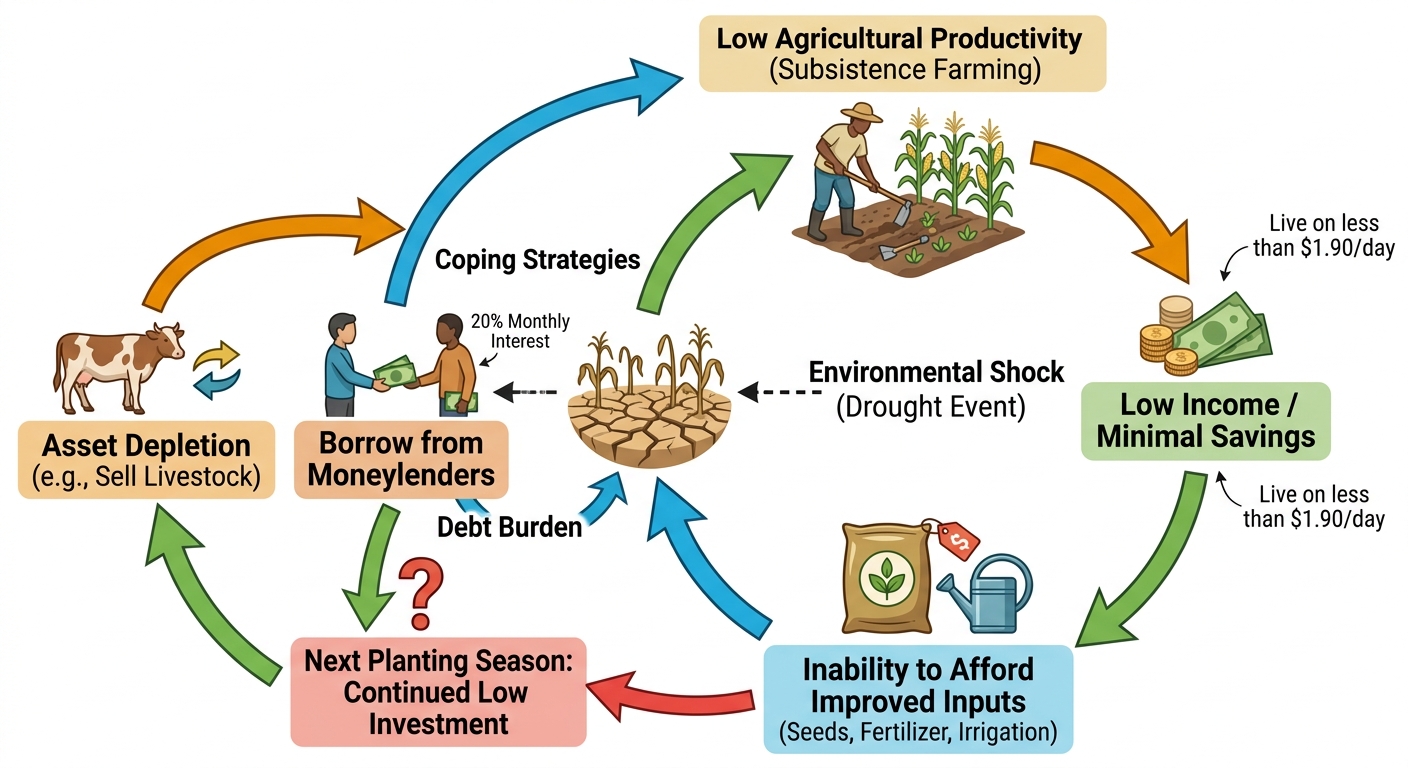
Using the concept of a vicious cycle of poverty, explain how the situation in Nyanza creates a poverty trap for smallholder farming families.
Using information from the text/data and your knowledge of economics, evaluate the effectiveness of the conditional cash transfer and the fertilizer subsidy as ways of breaking the poverty trap for smallholder farming families in Nyanza.
revisionprep.com
Summary Answer
Not available for this question.
Model Answer
Not available for this question.
Marking Scheme
Not available for this question.
Examiner Insights
Not available for this question.
That's every free question here — 6 of 234.
+228 more questions, plus Mock Papers & Worksheets, are waiting in Premium.