You're viewing 3 free preview questions for Economics HL — subscribe to unlock 79 more, plus the Full Question Bank, Mock Papers & Worksheets.Upgrade
Elasticity of Supply · Paper 1 — Free Economics HL Practice Questions
1FoundationSAQ-SFactors affecting PES5 marksPaper 1~8 min

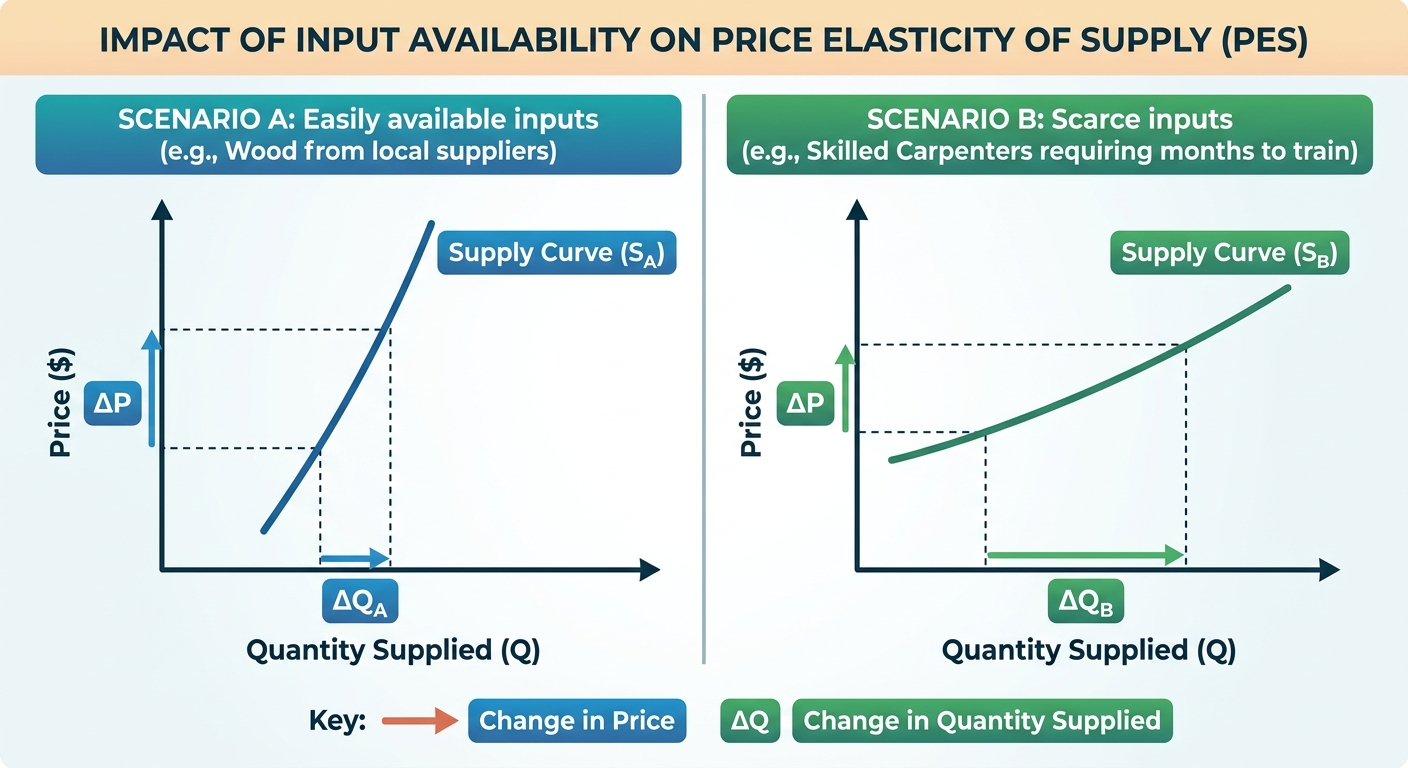
A furniture manufacturer uses two main inputs: wood (easily sourced from many local suppliers) and skilled carpenters (who are scarce and require months of training). Following a rise in the price of chairs, the firm wishes to increase its quantity supplied.
(a)
Define the term price elasticity of supply (PES). [1 mark]
(b)
Explain how the availability of each input affects the firm's ability to increase the quantity of chairs supplied. [2 marks]
(c)
Using your answer to (b), deduce whether the overall PES for the firm's chairs is likely to be elastic or inelastic. Justify your answer. [2 marks]

Solutions
2FoundationSAQ-SFactors affecting PES4 marksPaper 1~6 min
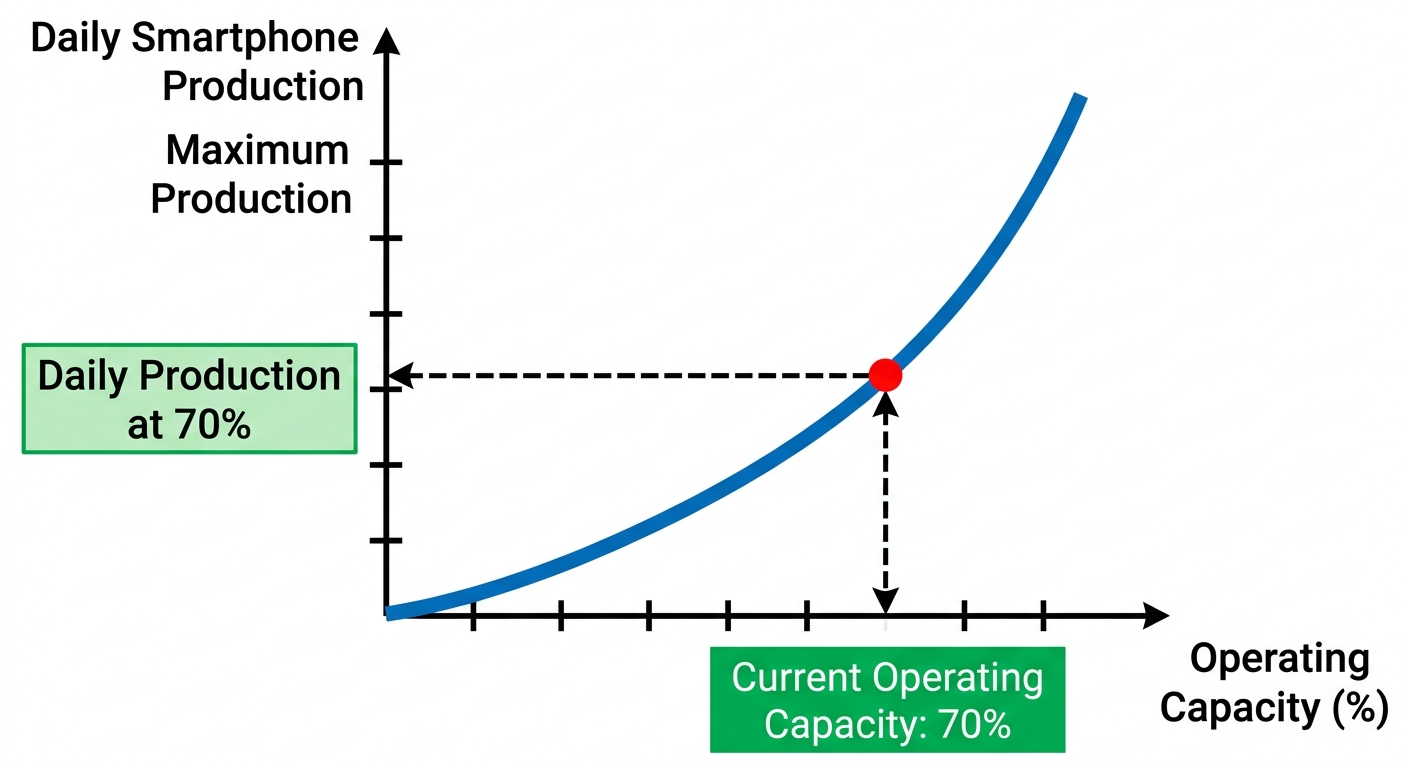
A smartphone factory currently operates at of its maximum production capacity. The market price of smartphones suddenly rises. The factory manager must decide how much to increase output.
(a)
Define the term price elasticity of supply (PES). [1 mark]
(b)
Explain how the factory's spare production capacity affects the PES of its smartphones. [3 marks]
Solutions
3MasterySAQ-SPrice elasticity of supply (PES)4 marksPaper 1~6 min
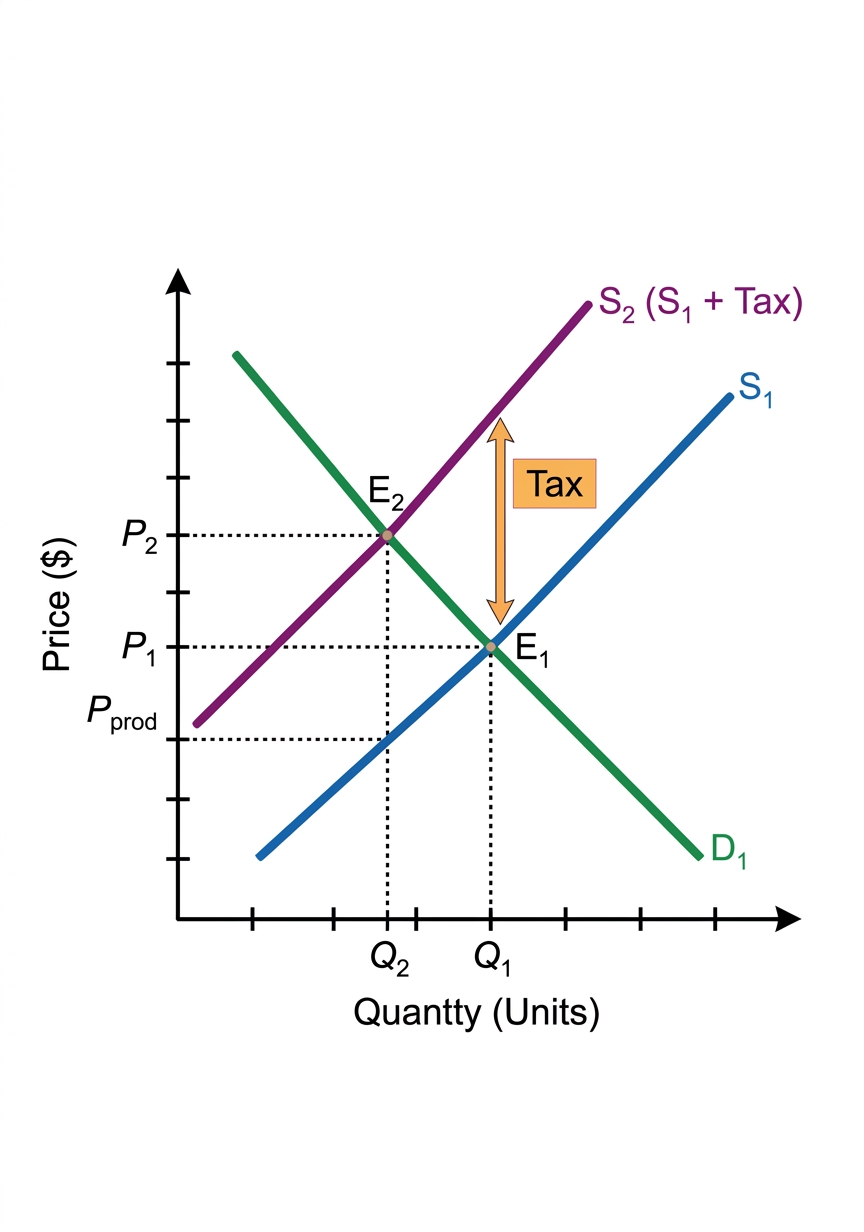
A government introduces a per-unit tax on the production of a good. Producers of this good have a price elasticity of supply (PES) of in the short run.
(a)
State what a PES of indicates about the supply of this good. [1 mark]
(b)
Calculate the percentage change in quantity supplied if the producer price rises by following the tax. [1 mark]
(c)
Using a fully labelled supply and demand , show the effect of the per-unit production tax on equilibrium price and quantity. [1 mark]
(d)
Explain, with reference to the PES of , how the tax burden is distributed between producers and consumers. [1 mark]
Solutions
That's every free question here — 3 of 82.
+79 more questions, plus Mock Papers & Worksheets, are waiting in Premium.