Market Failure — Asymmetric Information · Paper 2 — Free Economics HL Practice Questions
Free questions
Open in full, with answers, mark scheme and examiner insights.
Definition and examples of asymmetric information
The figure shows Country Z's state health insurance scheme. Buying the basic policy at USD 200 a year is compulsory, but the law is weakly enforced and many people do not buy. Healthy people expect medical costs of USD 50 a year; people with chronic conditions expect USD 800. The government is considering letting private insurers offer different premiums to the two groups.
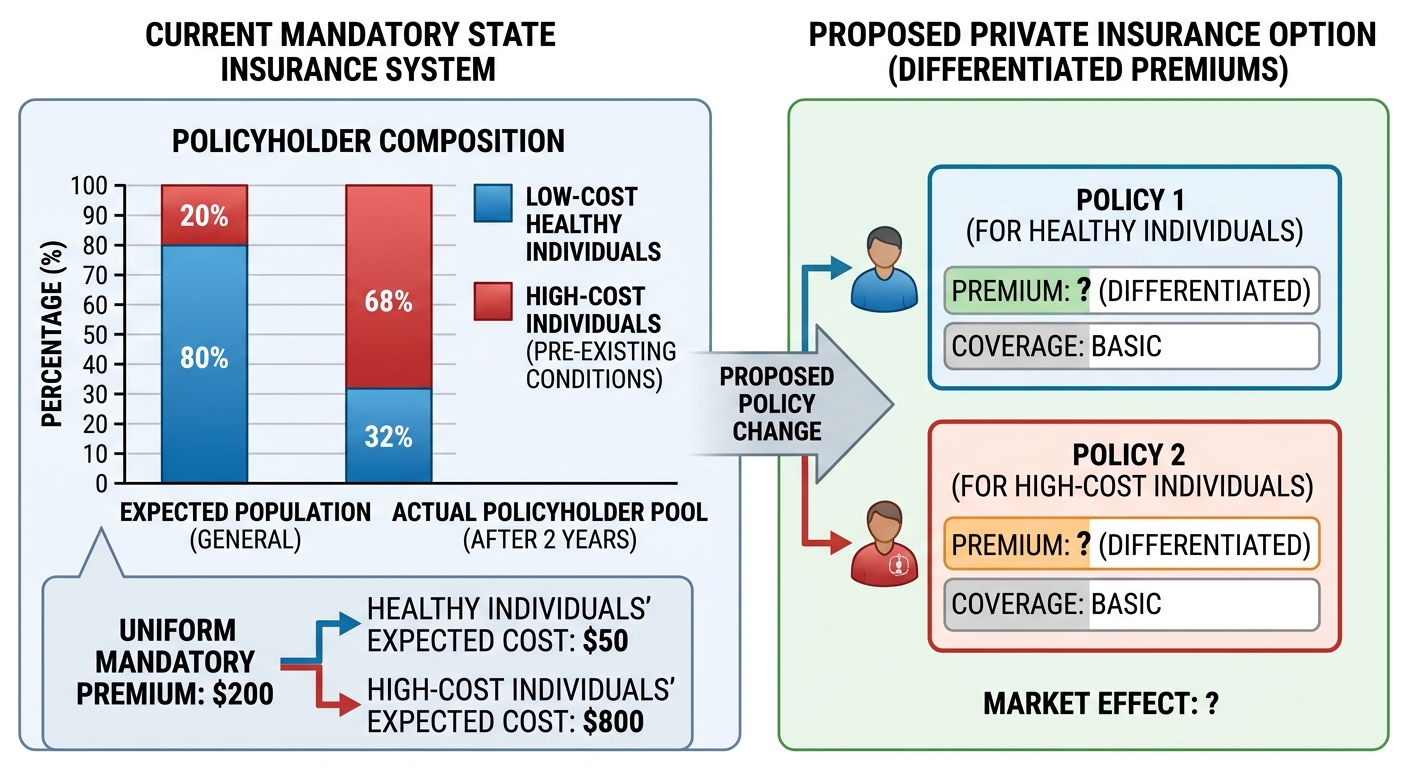
Using the figure, calculate the expected cost per policyholder after two years.
Explain why the policyholder pool differs from the population despite the compulsory scheme.
revisionprep.com
Summary Answer
Not available for this question.
Model Answer
Not available for this question.
Marking Scheme
Not available for this question.
Examiner Insights
Not available for this question.
Solutions to asymmetric information
The figure shows Country K's private health insurance market, which covers about 12% of the population at an average premium of KES 45,000 a year. A study found that many applicants knowingly withheld information about pre-existing conditions when applying.
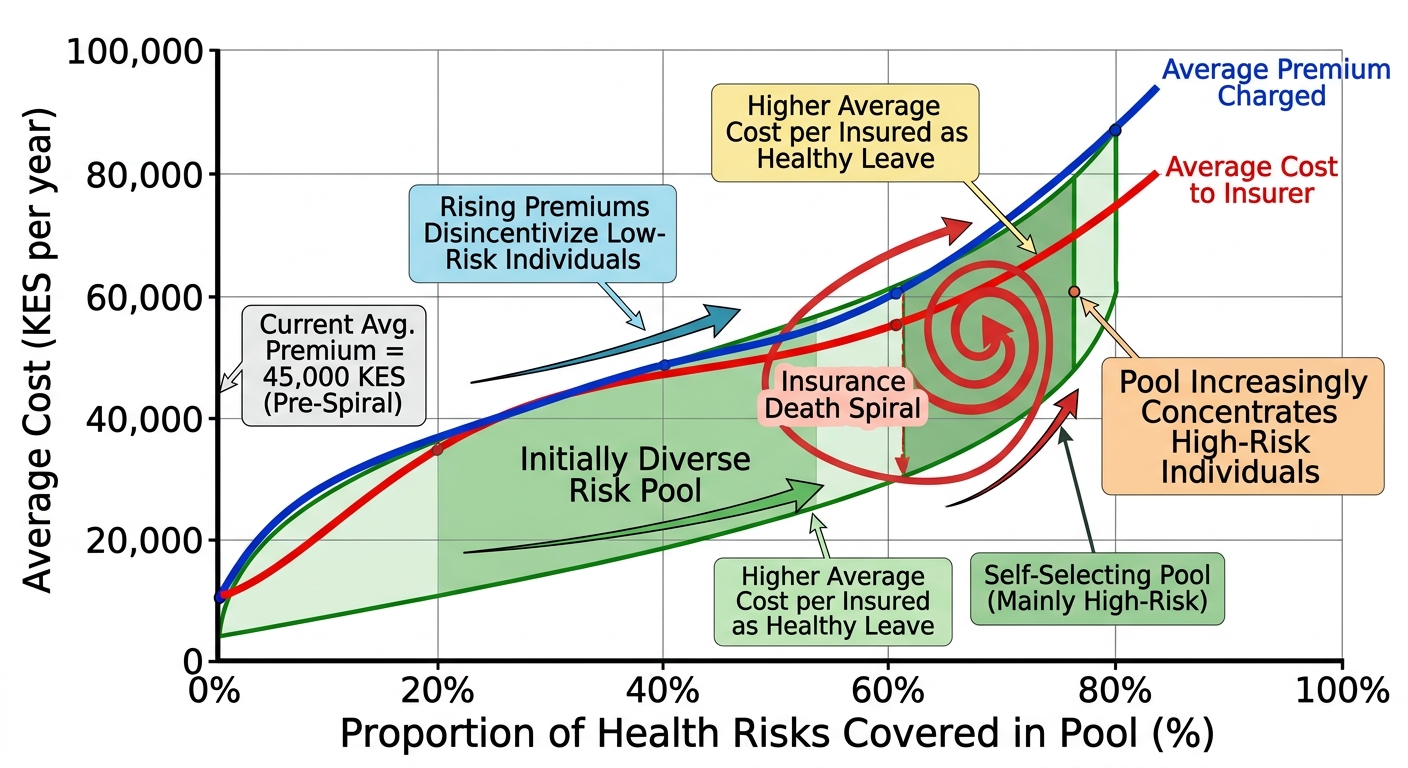
Explain how withholding information creates adverse selection.
Using the figure, explain the 'death spiral'.
revisionprep.com
Summary Answer
Not available for this question.
Model Answer
Not available for this question.
Marking Scheme
Not available for this question.
Examiner Insights
Not available for this question.
Definition and examples of asymmetric information
1. The figure shows a health insurance market in Country Y. Half of the customers are low-risk, with a 10% chance of medical costs of USD 50,000 a year; half are high-risk, with a 90% chance of the same costs. Insurers cannot tell the types apart and the market is perfectly competitive, so the single premium just covers expected payouts.
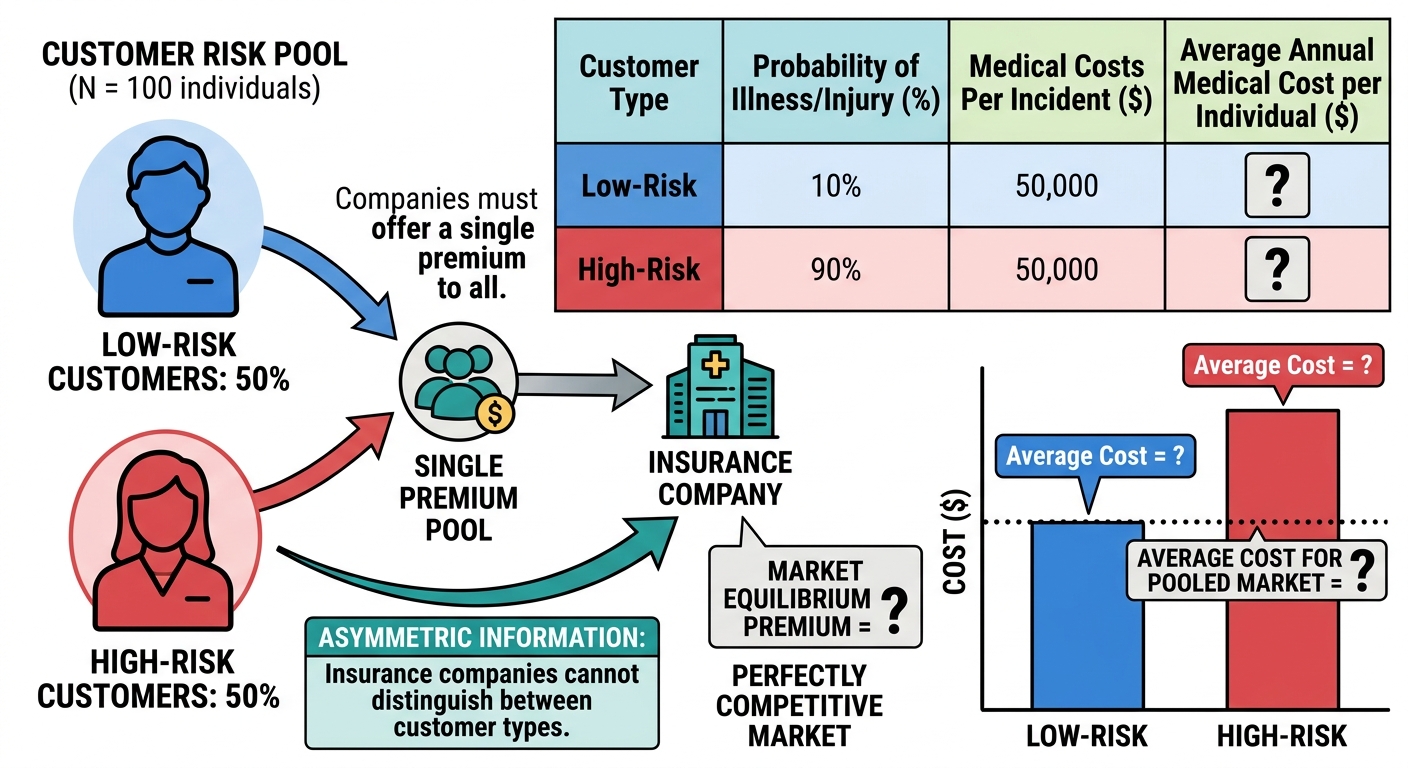
Calculate the expected annual medical cost of each type of customer.
Calculate the pooled premium.
Explain why a market with this pooled premium is unlikely to survive.
Using information from the data and your knowledge of economics, evaluate risk-based premiums, in which each type of customer is charged its own expected cost, as a response to adverse selection in this health insurance market.
revisionprep.com
Summary Answer
Not available for this question.
Model Answer
Not available for this question.
Marking Scheme
Not available for this question.
Examiner Insights
Not available for this question.
Definition and examples of asymmetric information
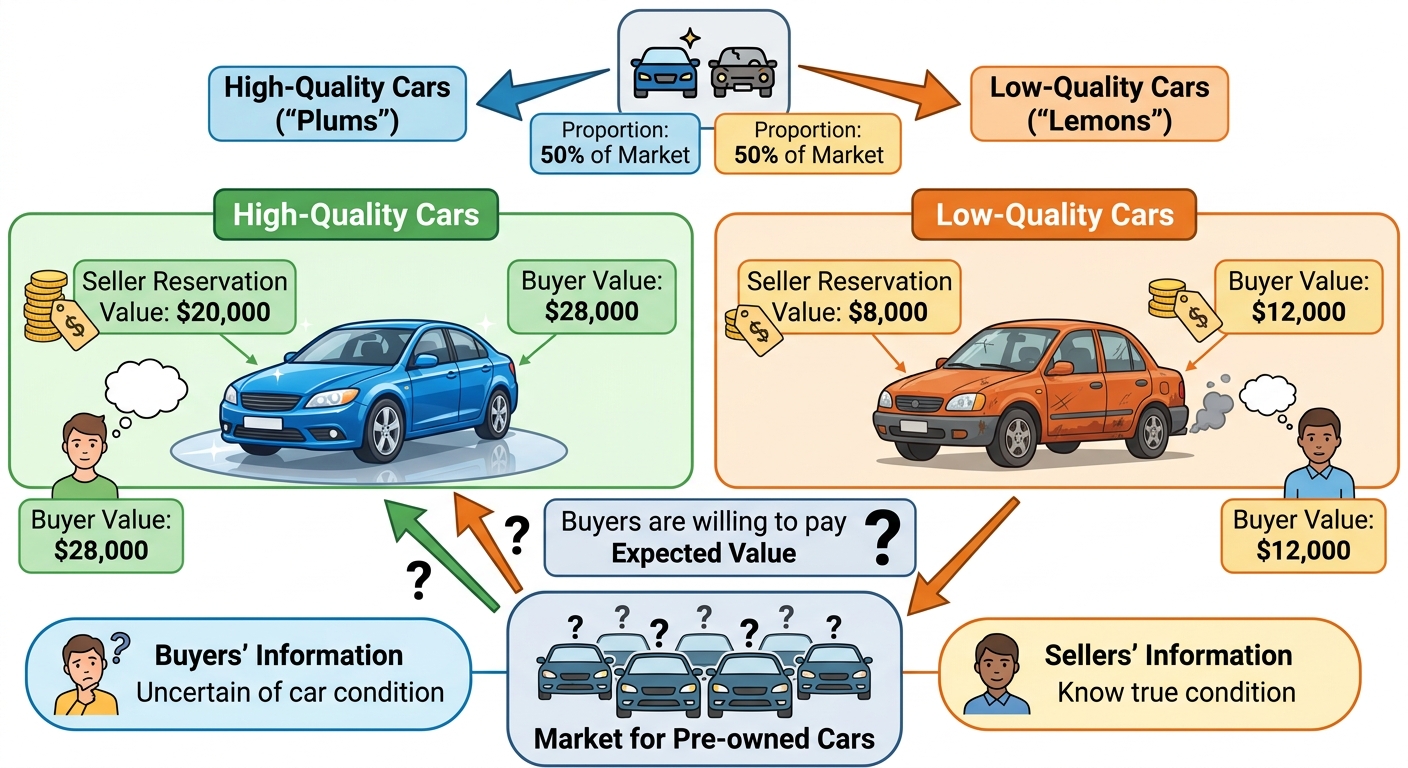
1. Sellers of used cars in Country X know the condition of their vehicles; buyers do not. The figure shows the values each side places on high-quality cars (plums) and low-quality cars (lemons), which make up equal shares of the market. Buyers cannot tell the two types apart, so they are willing to pay only the expected value of a car chosen at random.
2. Motoring groups report that many buyers are risk-averse: after one bad purchase, they are reluctant to pay the full expected value again. Plum owners complain that they 'cannot get a fair price', and the number of plums advertised has fallen. The government is considering a law requiring every used car to pass an independent inspection before sale, with the result published on the advertisement. Inspections would cost sellers about USD 300 per car.
Define asymmetric information.
Define adverse selection.
Using the figure, calculate the expected value of a car chosen at random.
Explain why the market for plums is fragile even though buyers' expected value equals the plum sellers' reservation price.
Using a demand and supply diagram, explain the effect of buyers' uncertainty on the market for plums.
Using information from the text/data and your knowledge of economics, evaluate the proposed inspection law as a response to asymmetric information in this market.
revisionprep.com
Summary Answer
Not available for this question.
Model Answer
Not available for this question.
Marking Scheme
Not available for this question.
Examiner Insights
Not available for this question.
Adverse selection and moral hazard
1. The figure shows City Z's used car market. 40% of cars are high quality and 60% low quality. High-quality cars are worth USD 20,000 to buyers and USD 15,000 to sellers; low-quality cars are worth USD 10,000 to buyers and USD 5,000 to sellers. Buyers pay the expected value of a car.
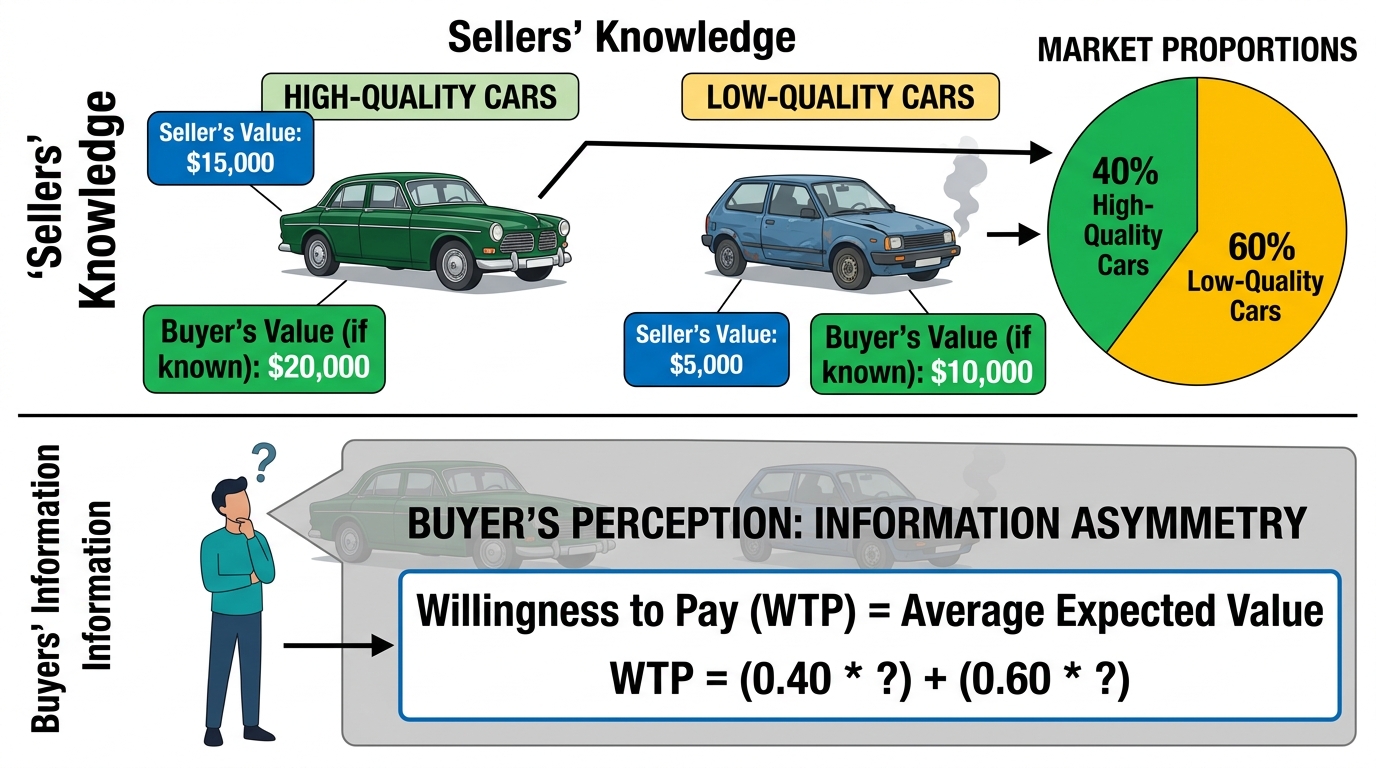
Complete the buyer's calculation in the figure to find willingness to pay.
Explain why the market for high-quality cars disappears.
Calculate the smallest share of high-quality cars for which they would be offered at buyers' expected value.
Using information from the data and your knowledge of economics, evaluate the view that a compulsory independent inspection of every used car, paid for by the seller, would solve the problem in City Z's used car market.
revisionprep.com
Summary Answer
Not available for this question.
Model Answer
Not available for this question.
Marking Scheme
Not available for this question.
Examiner Insights
Not available for this question.
Solutions to asymmetric information
The figure shows Country X's private health insurance market. Panel 1 shows willingness to pay and the average cost of claims as the insured pool becomes riskier. Panel 2 shows a proposal to make insurance compulsory for all citizens at a fixed basic premium, with subsidies for low-risk individuals and higher premiums for high-risk individuals.
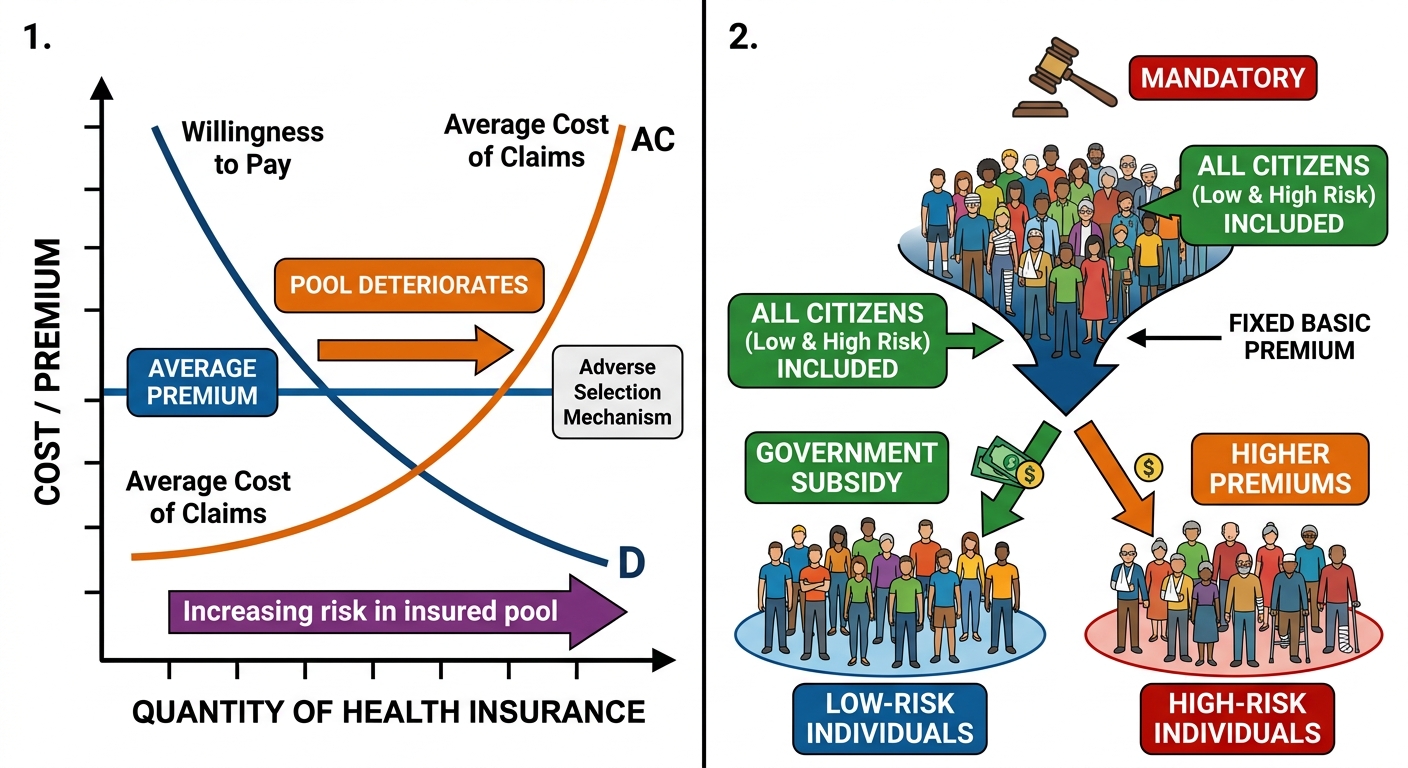
Using Panel 1, explain how the market can unravel.
Using Panel 2, explain how compulsory insurance prevents unravelling.
Explain one cost of the compulsory scheme.
revisionprep.com
Summary Answer
Not available for this question.
Model Answer
Not available for this question.
Marking Scheme
Not available for this question.
Examiner Insights
Not available for this question.
That's every free question here — 6 of 254.
+248 more questions, plus Mock Papers & Worksheets, are waiting in Premium.