You're viewing 2 free preview questions for Economics HL — subscribe to unlock 155 more, plus the Full Question Bank, Mock Papers & Worksheets.Upgrade
Role of Government in Microeconomics · Paper 2 — Free Economics HL Practice Questions
1MasteryLAQEffects of government policies on markets10 marksPaper 2~15 min

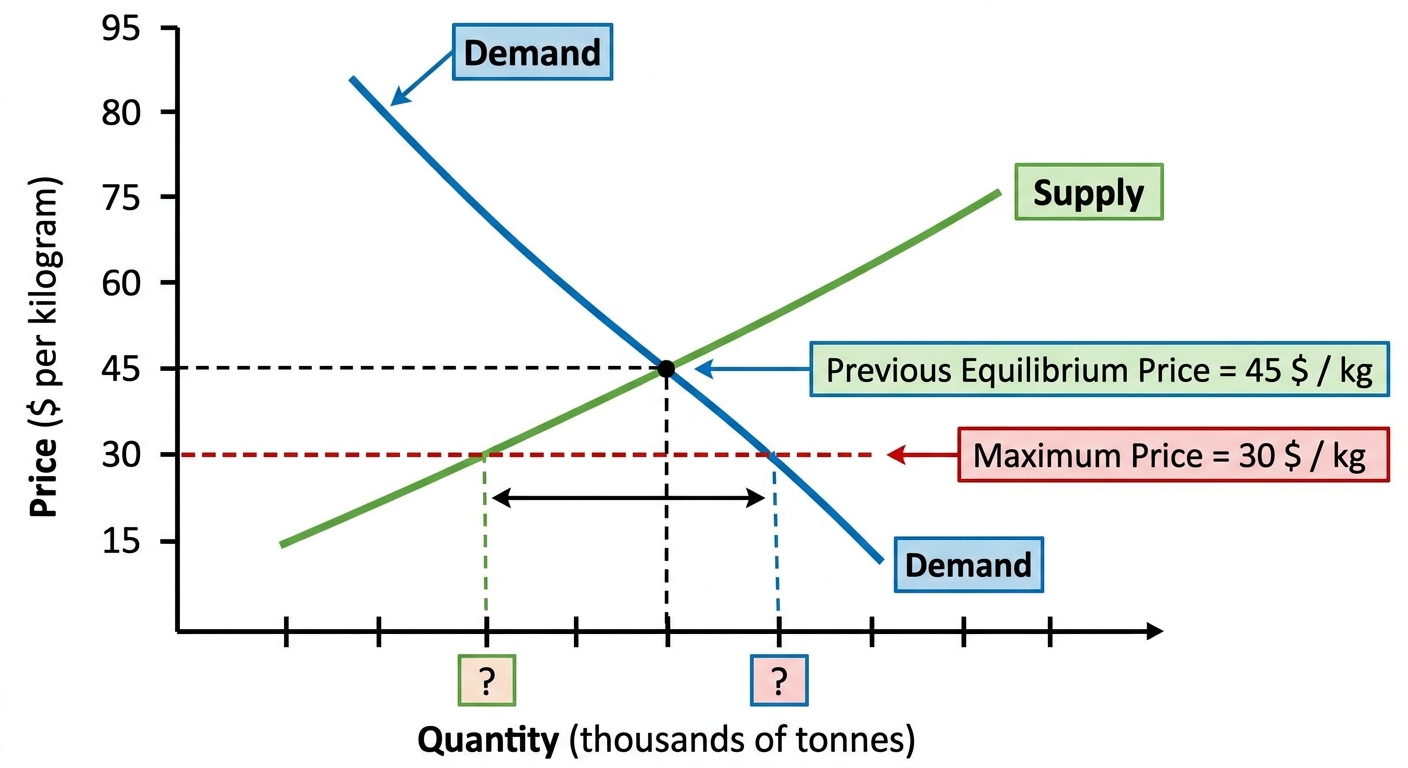
The government of Country X, a developing nation in Southeast Asia, has imposed a maximum price (price ceiling) on rice at USD 30 per kilogram. The previous equilibrium price was USD 45 per kilogram. The demand for rice is relatively price inelastic, while the supply of rice is relatively price elastic in the short run. The government's stated goal is to ensure affordable food for low-income households. Local farmers' associations claim the policy will reduce their income and cause a long-run shortage.
(a)
Using a fully labelled supply and demand , explain the effect of this price ceiling on the market for rice in Country X. [3 marks]
(b)
Evaluate whether this price ceiling is likely to achieve the government's goal of improving the welfare of low-income households in Country X. [7 marks]

Solutions
2MasteryLAQEffects of government policies on markets10 marksPaper 2~15 min
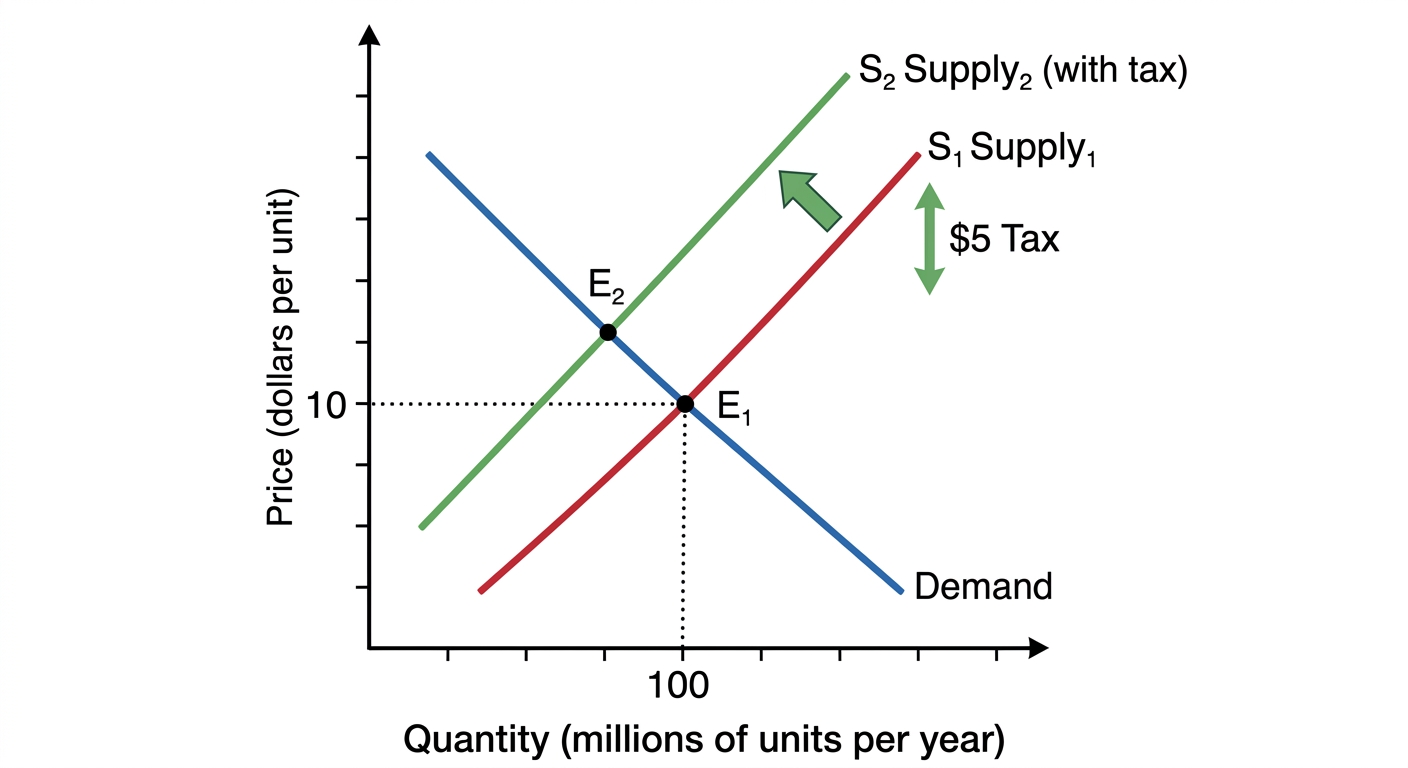
The government of Country Y, a high-income European nation, imposes a specific tax of USD 5 per unit on the production of sugary soft drinks. Before the tax, the equilibrium price was USD 10 per unit and equilibrium quantity was 100 million units per year. The demand for sugary soft drinks is relatively price elastic, as consumers can easily switch to diet drinks or water. The supply is relatively price inelastic in the short run due to fixed production capacity. The government intends to reduce consumption and use tax revenue to fund public health programmes.
(a)
Using a fully labelled supply and demand , explain the effect of this specific tax on the market for sugary soft drinks in Country Y. [3 marks]
(b)
Analyse the impact of this specific tax on consumers and producers in Country Y, referring to the price elasticity conditions given. [4 marks]
(c)
Evaluate whether this specific tax is likely to achieve the government's objectives in Country Y. [3 marks]
Solutions
That's every free question here — 2 of 157.
+155 more questions, plus Mock Papers & Worksheets, are waiting in Premium.