You're viewing 3 free preview questions for Economics SL — subscribe to unlock 73 more, plus the Full Question Bank, Mock Papers & Worksheets.Upgrade
Benefits of International Trade · Paper 2 — Free Economics SL Practice Questions
1MasteryLAQComparative advantage and specialization10 marksPaper 2~15 min

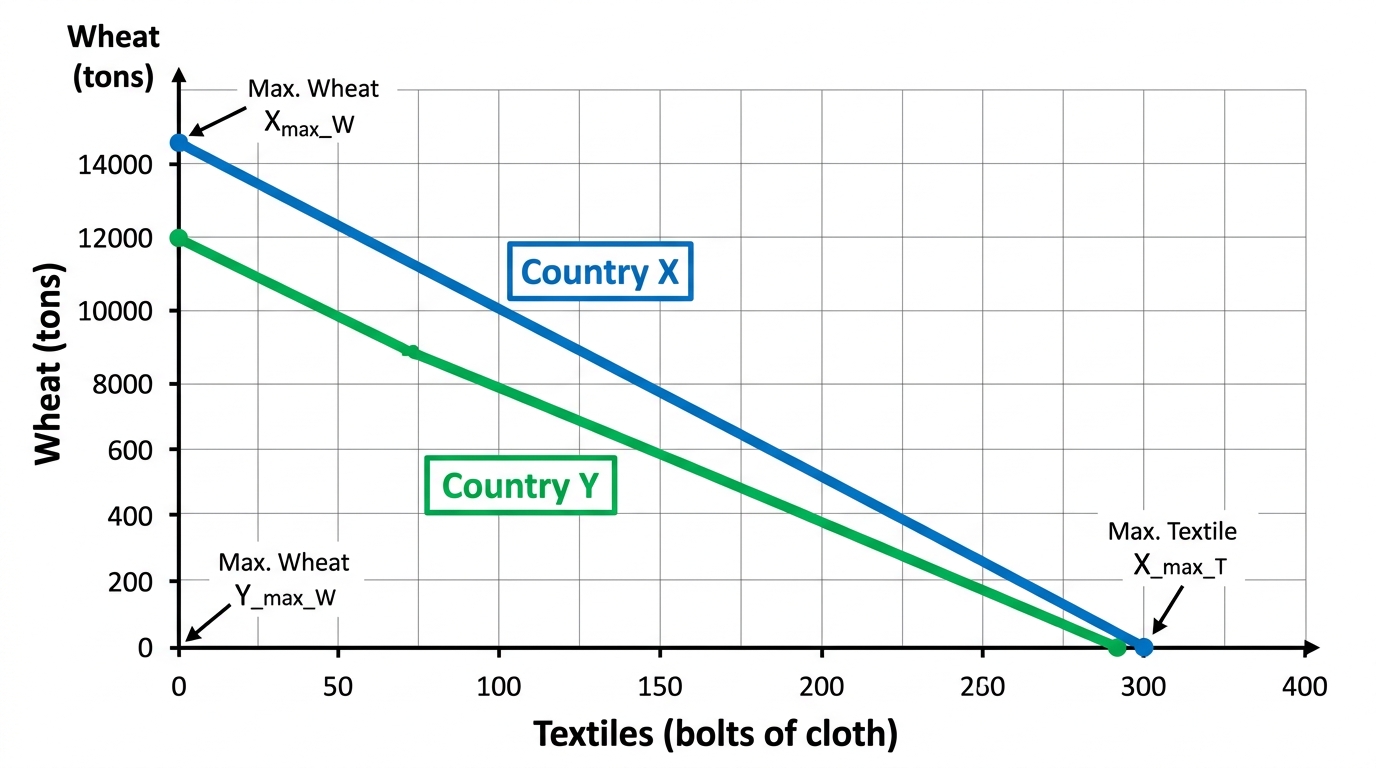
The table below shows labour requirements for producing wheat and textiles in Country X and Country Y in 2023. Both countries have units of labour available.
Country X — —
Country Y — —
(a)
Calculate the opportunity cost of producing one tonne of wheat in Country X and in Country Y. Hence state which country has a comparative advantage in wheat production and identify which good Country Y should specialise in. [4 marks]
(b)
Using the data provided, explain how specialisation and trade based on comparative advantage could benefit both countries, and evaluate the extent to which these benefits are likely to be equally shared between Country X and Country Y. [6 marks]

Solutions
2MasteryLAQComparative advantage and specialization7 marksPaper 2~11 min
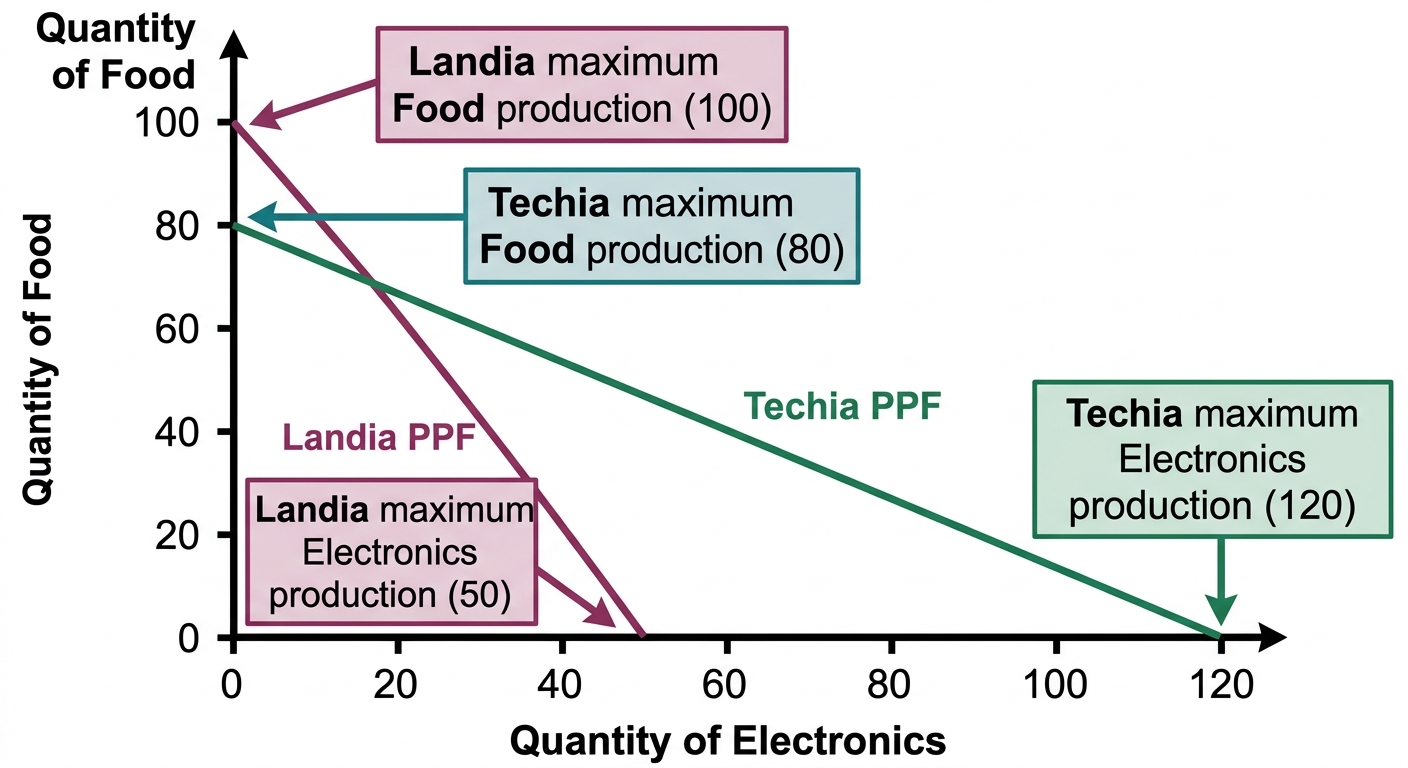
Landia can produce units of food or units of electronics using all its resources. Techia can produce units of food or units of electronics using all its resources. Currently, both countries are in autarky, each consuming half of each good they produce.
(a)
State which country has an absolute advantage in food production and which has an absolute advantage in electronics production. [1 mark]
(b)
Calculate the opportunity cost of producing one unit of food for each country, and identify which country has a comparative advantage in food production. [3 marks]
(c)
(i) Explain, using the data, how specialisation and free trade would affect consumers and producers in each country. [3 marks]
(ii) Evaluate whether Landia and Techia are likely to benefit equally from free trade. Total: 10 marks [3 marks]
(ii) Evaluate whether Landia and Techia are likely to benefit equally from free trade. Total: 10 marks [3 marks]
Solutions
3ChallengeLAQComparative advantage and specialization10 marksPaper 2~15 min
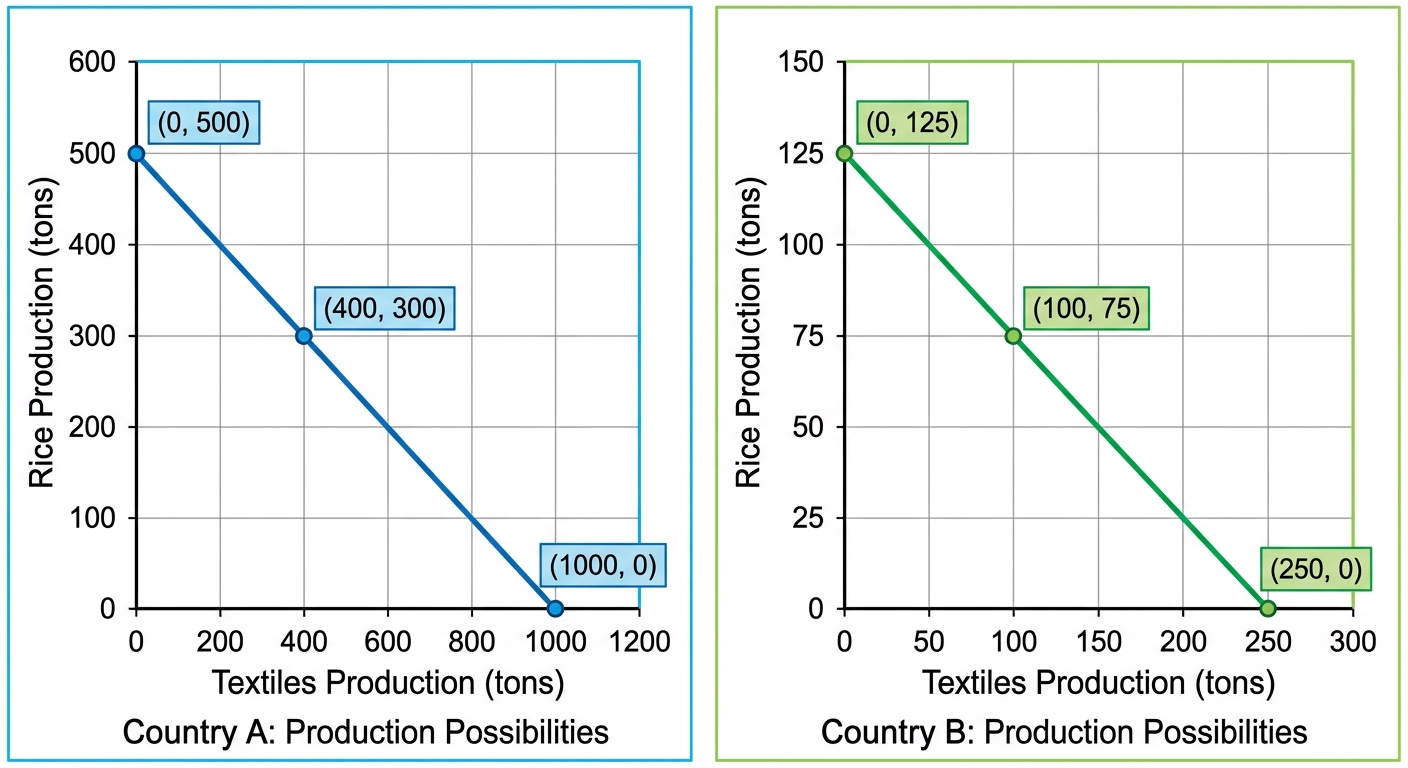
In 2023, Country A can produce tonne of rice using worker-hours and tonne of textiles using worker-hour. Country B can produce tonne of rice using worker-hours and tonne of textiles using worker-hours. Both countries have worker-hours available per week.
(a)
Calculate the opportunity cost of producing one tonne of rice in Country A and in Country B. [2 marks]
(b)
Using the concept of comparative advantage, explain whether specialisation and trade between Country A and Country B would lead to mutual gains from trade. [3 marks]
(c)
Evaluate the view that specialisation according to comparative advantage will always lead to mutual gains from trade. In your answer, include a correctly labelled showing the gains from trade under standard assumptions, and refer to real-world evidence from at least one named developing country. [5 marks]
Solutions
That's every free question here — 3 of 76.
+73 more questions, plus Mock Papers & Worksheets, are waiting in Premium.