You're viewing 3 free preview questions for Economics SL — subscribe to unlock 87 more, plus the Full Question Bank, Mock Papers & Worksheets.Upgrade
Exchange Rates · Paper 2 — Free Economics SL Practice Questions
1MasteryLAQTypes of exchange rate systems: Floating vs fixed10 marksPaper 2~15 min

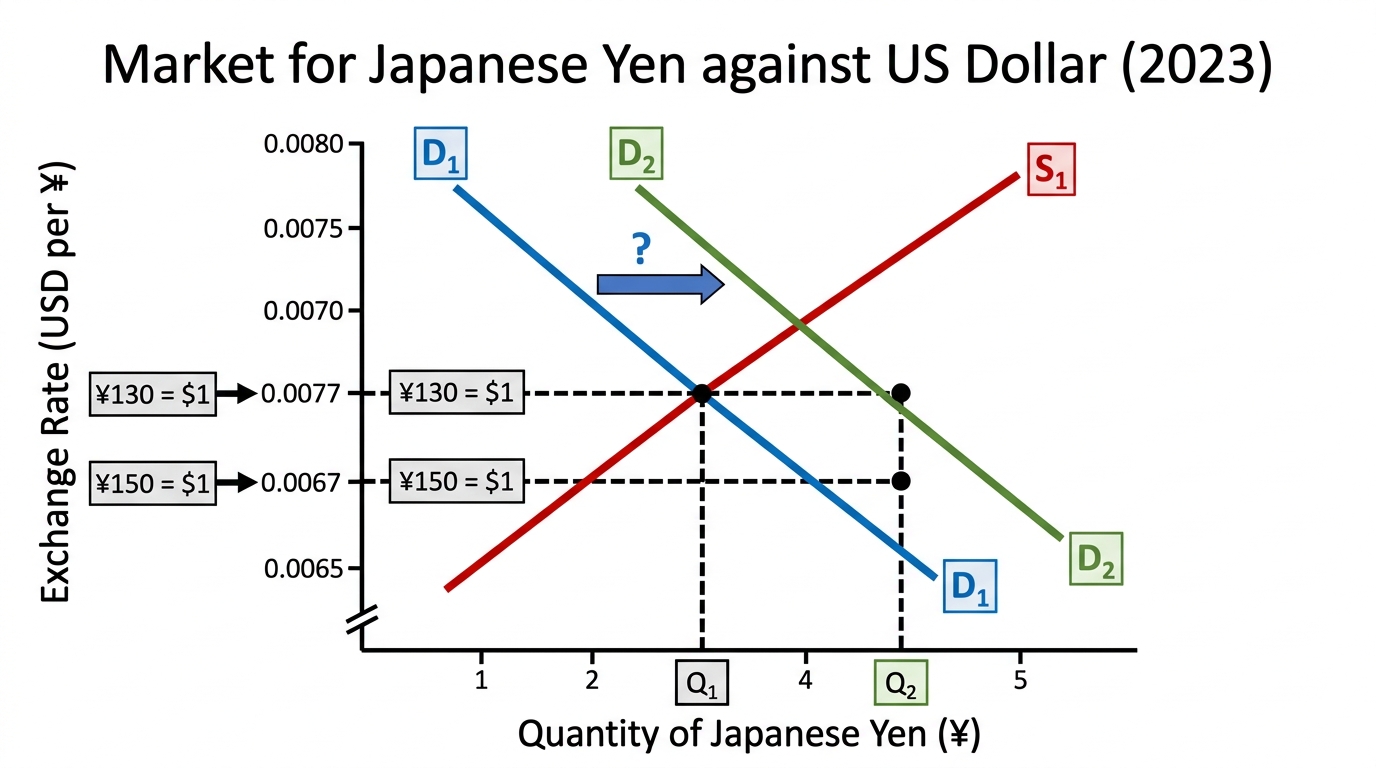
Japan is a major exporter of automobiles and electronics and imports large quantities of oil, natural gas, and raw materials. In 2023, the Japanese yen depreciated against the US dollar, falling from per dollar to per dollar. The Bank of Japan maintained an ultra-loose monetary policy during this period, while the US Federal Reserve raised interest rates aggressively to combat inflation. Japanese consumers reported sharp increases in the price of imported food and fuel, while Toyota and Sony reported record profits from overseas sales.
(a)
Using an exchange rate , explain how the difference in monetary policy between Japan and the United States contributed to the depreciation of the yen. [4 marks]
(b)
Explain the likely impact of the yen's depreciation (i) Japanese consumers and
(ii) Japanese export firms. [4 marks]
(ii) Japanese export firms. [4 marks]
(c)
Using your answers to (a) and (b), evaluate whether the overall effect of the yen's depreciation the Japanese economy is likely to be positive or negative. [2 marks]

Solutions
2MasteryLAQTypes of exchange rate systems: Floating vs fixed10 marksPaper 2~15 min
Nigeria's fixed exchange rate and parallel market, 2022
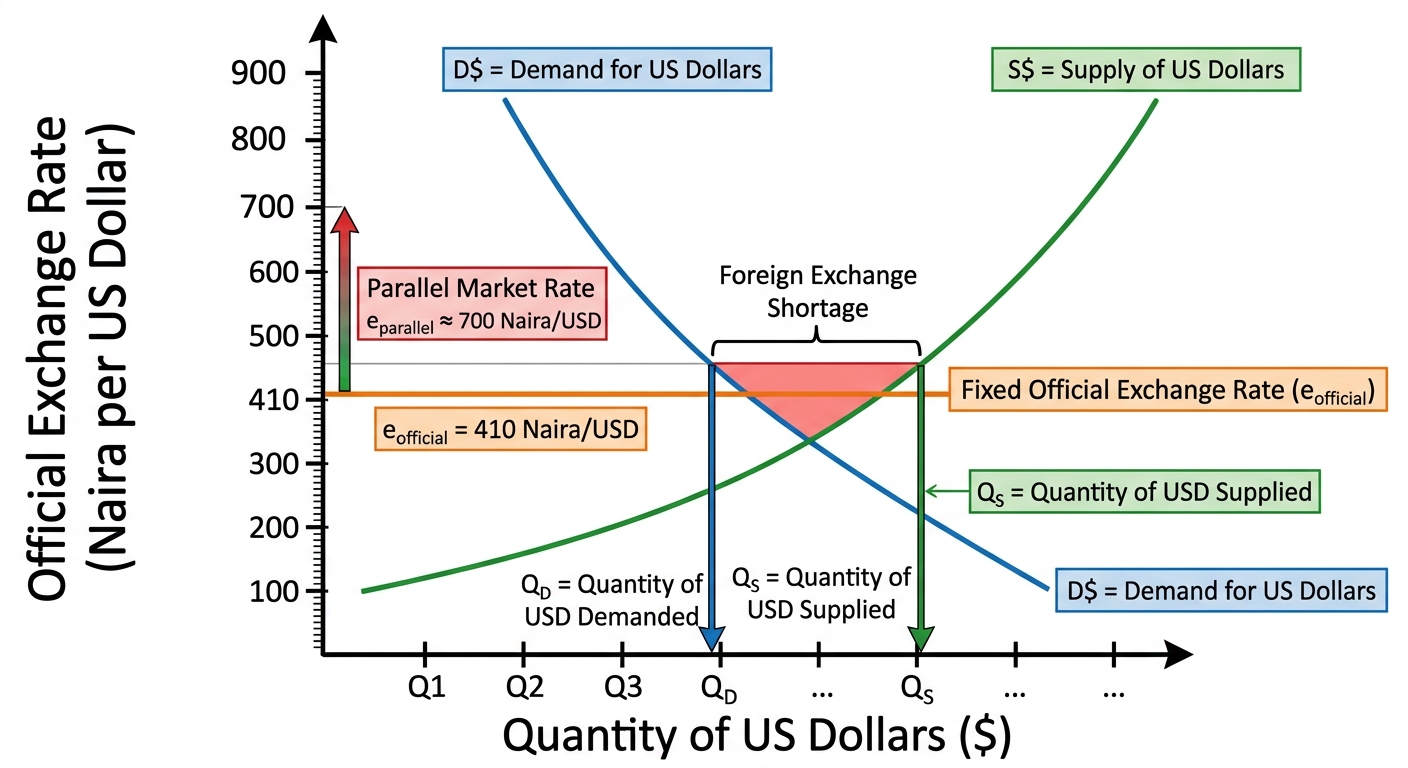
In 2022, the Central Bank of Nigeria (CBN) maintained a fixed exchange rate of naira per US dollar. On the parallel ("black") market, the naira traded at approximately naira per dollar. Nigeria is Africa's largest oil exporter but imports most manufactured goods, food, and fuel. Official foreign exchange reserves fell from USD 40 billion in 2018 to USD 35 billion in 2022. The CBN restricted access to foreign currency for importing certain goods, including rice and textiles, to protect domestic industries.
(a)
Explain why the gap between the official exchange rate ( naira/USD) and the parallel market rate ( naira/USD) indicates that Nigeria's fixed exchange rate is overvalued. [4 marks]
(b)
(i) Explain two economic consequences of the CBN's foreign currency restrictions for Nigerian consumers. [4]
(ii) Using the data and your knowledge of exchange rate policy, evaluate whether Nigeria's fixed exchange rate and import restrictions are likely to promote domestic manufacturing in the long run. [6 marks]
(ii) Using the data and your knowledge of exchange rate policy, evaluate whether Nigeria's fixed exchange rate and import restrictions are likely to promote domestic manufacturing in the long run. [6 marks]
Solutions
3ChallengeLAQTypes of exchange rate systems: Floating vs fixed10 marksPaper 2~15 min
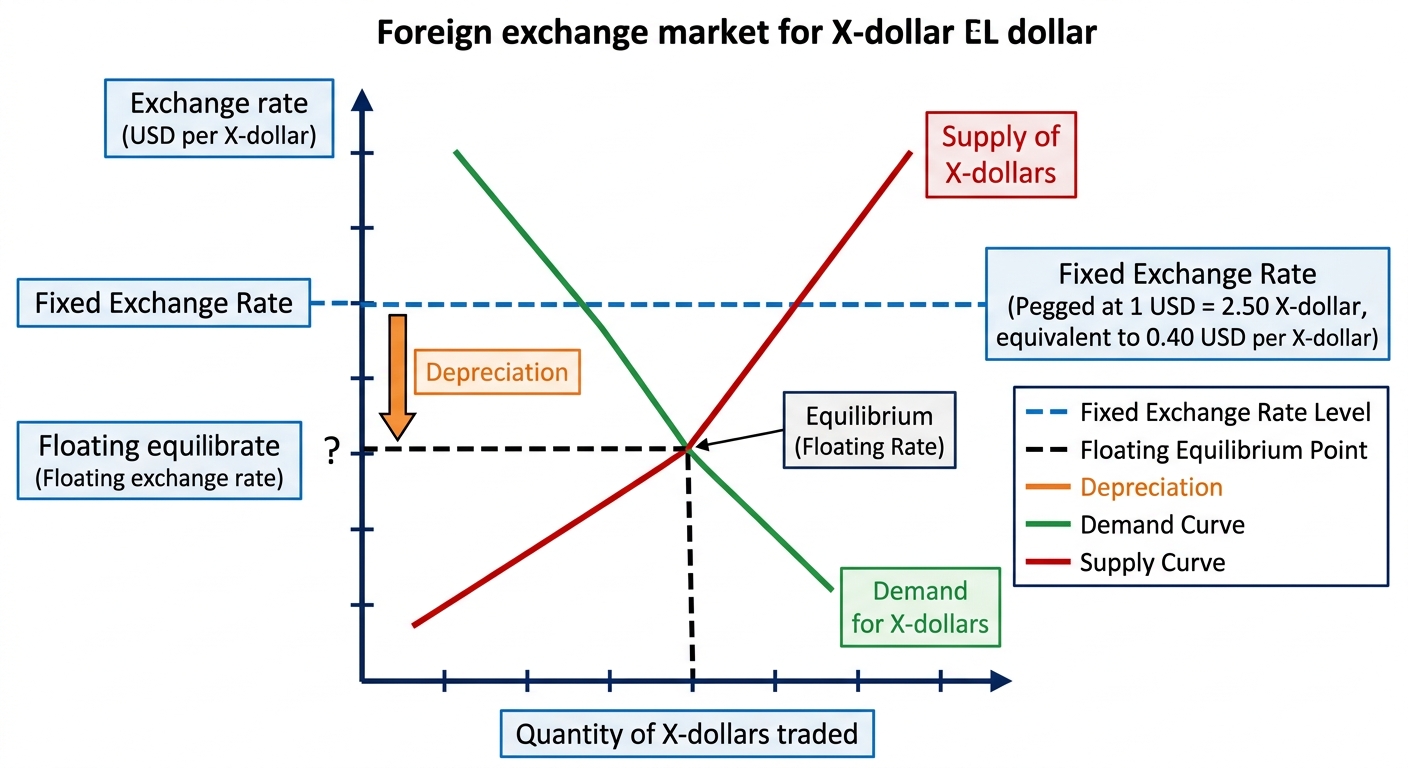
In 2022, the Central Bank of Country X, a small open economy heavily reliant on tourism exports, abandoned its long-standing fixed exchange rate against the US dollar (pegged at X-dollars) and adopted a floating exchange rate system. In the first six months after the float, the X-dollar depreciated by against the USD. The government had previously argued that the fixed rate provided stability for international trade and investment. However, tourism industry revenues fell by in the year following the float, while foreign direct investment (FDI) inflows decreased by . Simultaneously, the domestic inflation rate rose from to . The Minister of Finance now claims the float was a mistake and is considering re-pegging the currency.
(a)
Using an appropriate exchange rate , explain how the decision to float the X-dollar could have led to the observed depreciation against the US dollar. [4 marks]
(b)
Evaluate the view that Country X should return to a fixed exchange rate system to address its current economic problems. In your answer, refer to the data provided and consider arguments both for and against re-pegging. [6 marks]
Solutions
That's every free question here — 3 of 90.
+87 more questions, plus Mock Papers & Worksheets, are waiting in Premium.