You're viewing 3 free preview questions for Economics SL — subscribe to unlock 152 more, plus the Full Question Bank, Mock Papers & Worksheets.Upgrade
Demand Management — Fiscal Policy · Paper 2 — Free Economics SL Practice Questions
1MasteryLAQTools of fiscal policy (taxation, government spending)11 marksPaper 2~17 min

Data
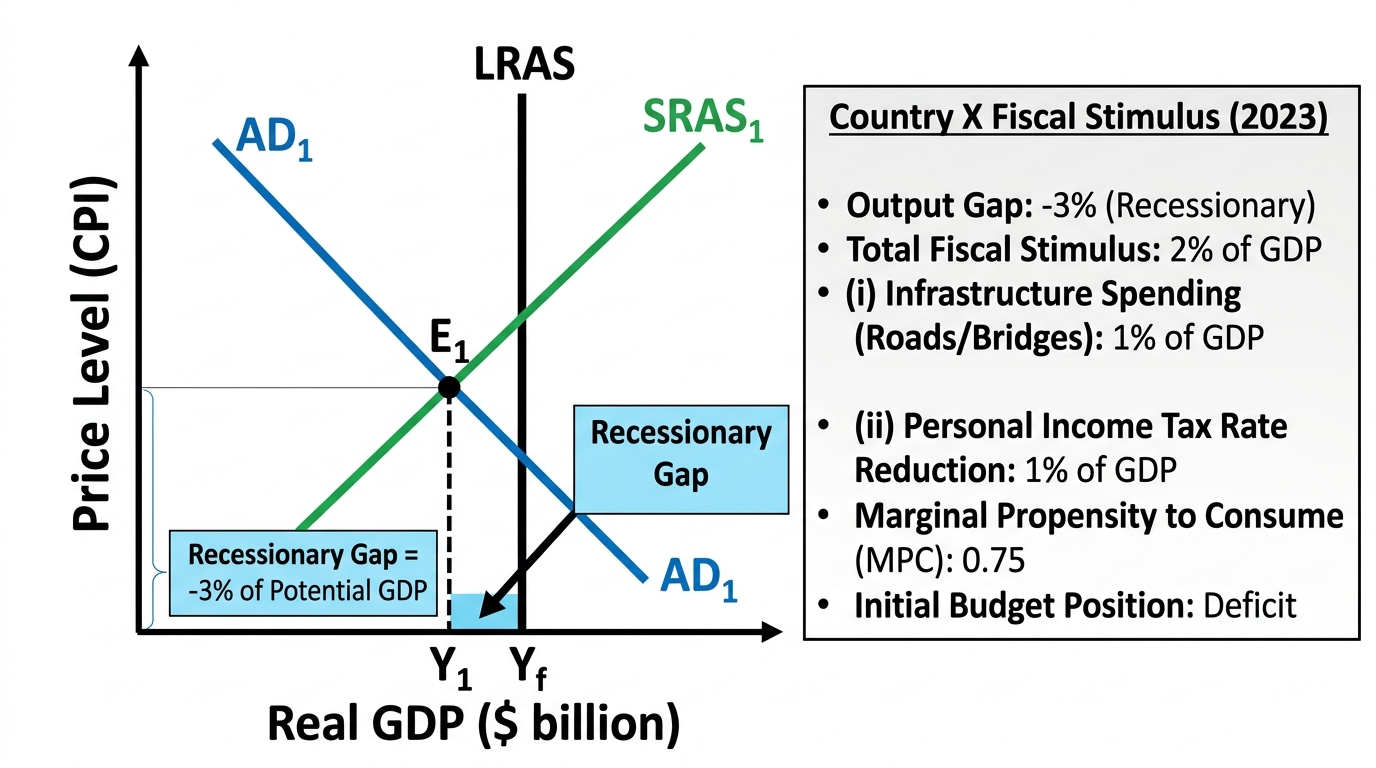
In 2023, the government of Country X, a medium-income economy, implemented a fiscal stimulus package worth of GDP to address a recessionary output gap of . The package consisted of: (i) a of GDP increase in government spending on infrastructure (roads and bridges), and (ii) a of GDP reduction in personal income tax rates. The marginal propensity to consume (MPC) in Country X is estimated to be . The government's budget was already in deficit before the stimulus.
(a)
Calculate the value of the Keynesian multiplier in Country X. [1 mark]
(b)
Using the multiplier from (a), explain the process by which the increase in government infrastructure spending is expected to raise national income in Country X. [4 marks]
(c)
Evaluate whether the reduction in personal income tax rates or the increase in government infrastructure spending is more likely to close the recessionary gap in Country X. [6 marks]

Solutions
2MasteryLAQTools of fiscal policy (taxation, government spending)10 marksPaper 2~15 min
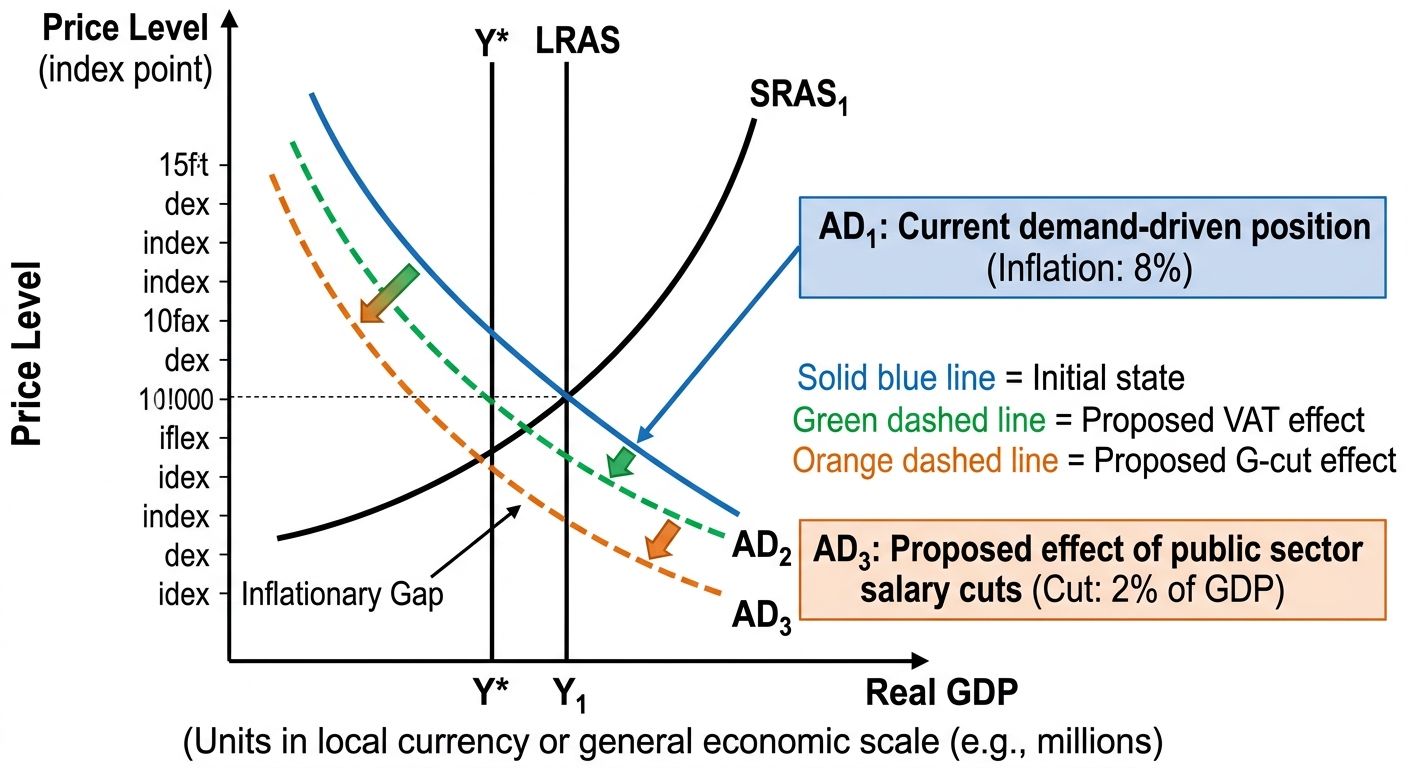
Country Y is experiencing demand-pull inflation of annually. The government is considering two contractionary fiscal policy tools: (A) increasing the rate of Value Added Tax (VAT) from to , and (B) cutting government spending on public sector salaries by an amount equal to of GDP. Economic advisors note that consumers in Country Y have a high marginal propensity to import () and that the country operates under a flexible exchange rate system.
(a)
Using an AD/AS , explain how an increase in VAT is expected to reduce demand-pull inflation in Country Y. [4 marks]
(b)
Evaluate whether cutting government spending on public sector salaries (Policy B) is a more effective tool than increasing VAT (Policy A) for reducing demand-pull inflation in Country Y. In your answer, refer to the multiplier, the marginal propensity to import, and the flexible exchange rate. [6 marks]
Solutions
3ChallengeLAQTools of fiscal policy (taxation, government spending)10 marksPaper 2~15 min
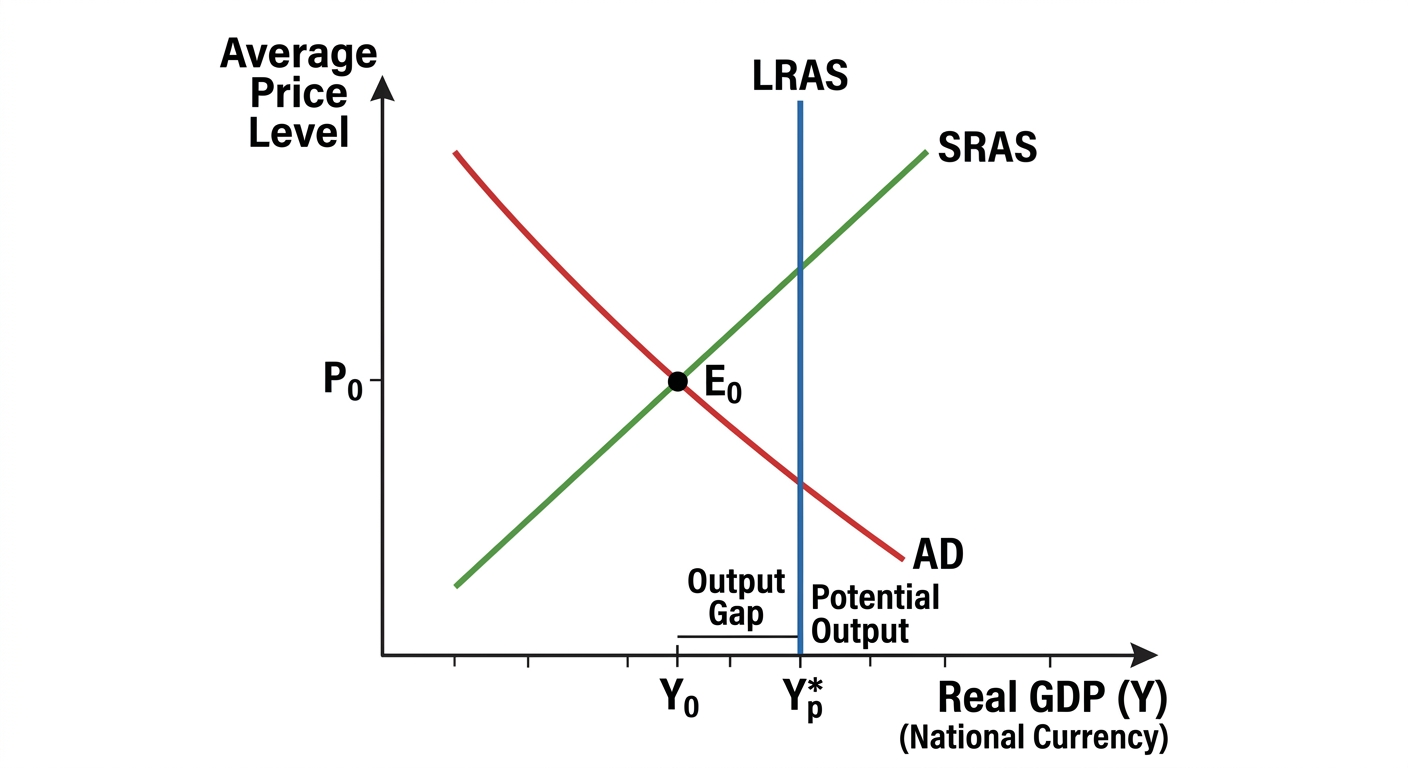
The government of Country X, a high-income economy with an ageing population, is considering two fiscal policy options to address a persistent negative output gap (real GDP is below potential).
- Option A: A permanent reduction in the marginal rate of personal income tax from to , financed by issuing government bonds.
- Option B: An increase in government spending on early childhood education and care (ECEC) equal to of GDP, financed by a new annual wealth tax of on net assets above USD 1 million.
(a)
Using an AD/AS , explain how Option B would affect aggregate demand in the short run. [2 marks]
(b)
Explain one reason why Option A may produce a smaller short-run increase in aggregate demand than Option B. [2 marks]
(c)
Evaluate which of the two fiscal policy options is likely to be more effective in closing the output gap in Country X. In your answer, refer to the impact on long-run aggregate supply and to the interests of at least two distinct stakeholder groups. [6 marks]
Solutions
That's every free question here — 3 of 155.
+152 more questions, plus Mock Papers & Worksheets, are waiting in Premium.