You're viewing 2 free preview questions for Economics SL — subscribe to unlock 103 more, plus the Full Question Bank, Mock Papers & Worksheets.Upgrade
Elasticity of Demand · Paper 1 — Free Economics SL Practice Questions
1FoundationSAQ-SPrice elasticity of demand (PED)5 marksPaper 1~8 min

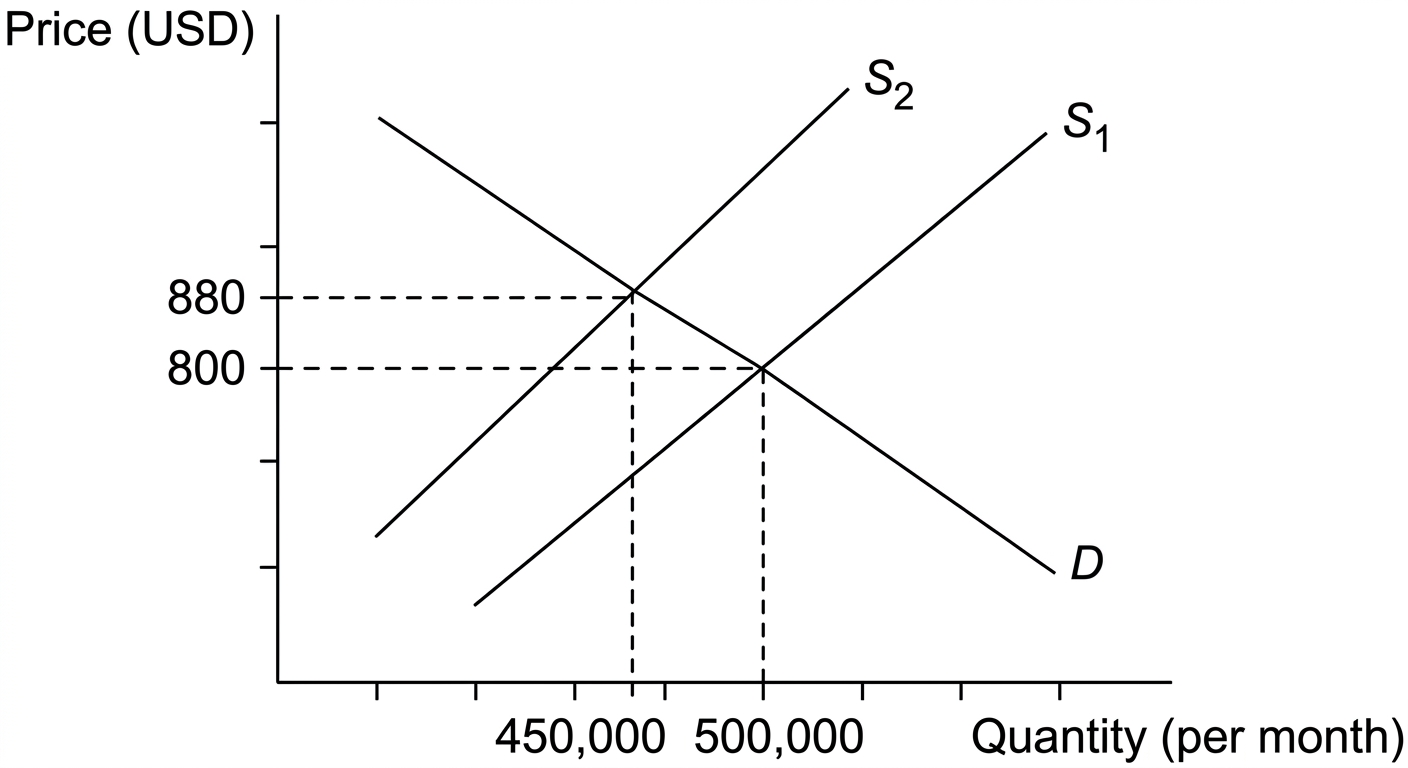
The market for a popular brand of smartphones in equilibrium at a price of USD 800 and a quantity of 500,000 units per month. A new tax shifts the supply curve, raising the market price to USD 880 and causing the quantity demanded to fall to 450,000 units per month.
(a)
State the formula for price elasticity of demand (PED). [1 mark]
(b)
Using the data provided, calculate the PED for this smartphone. [2 marks]
(c)
Using your answer to (b), explain what the value of PED implies for the change in total consumer expenditure on this smartphone following the price increase. [2 marks]

Solutions
2MasterySAQ-SPrice elasticity of demand (PED)5 marksPaper 1~8 min
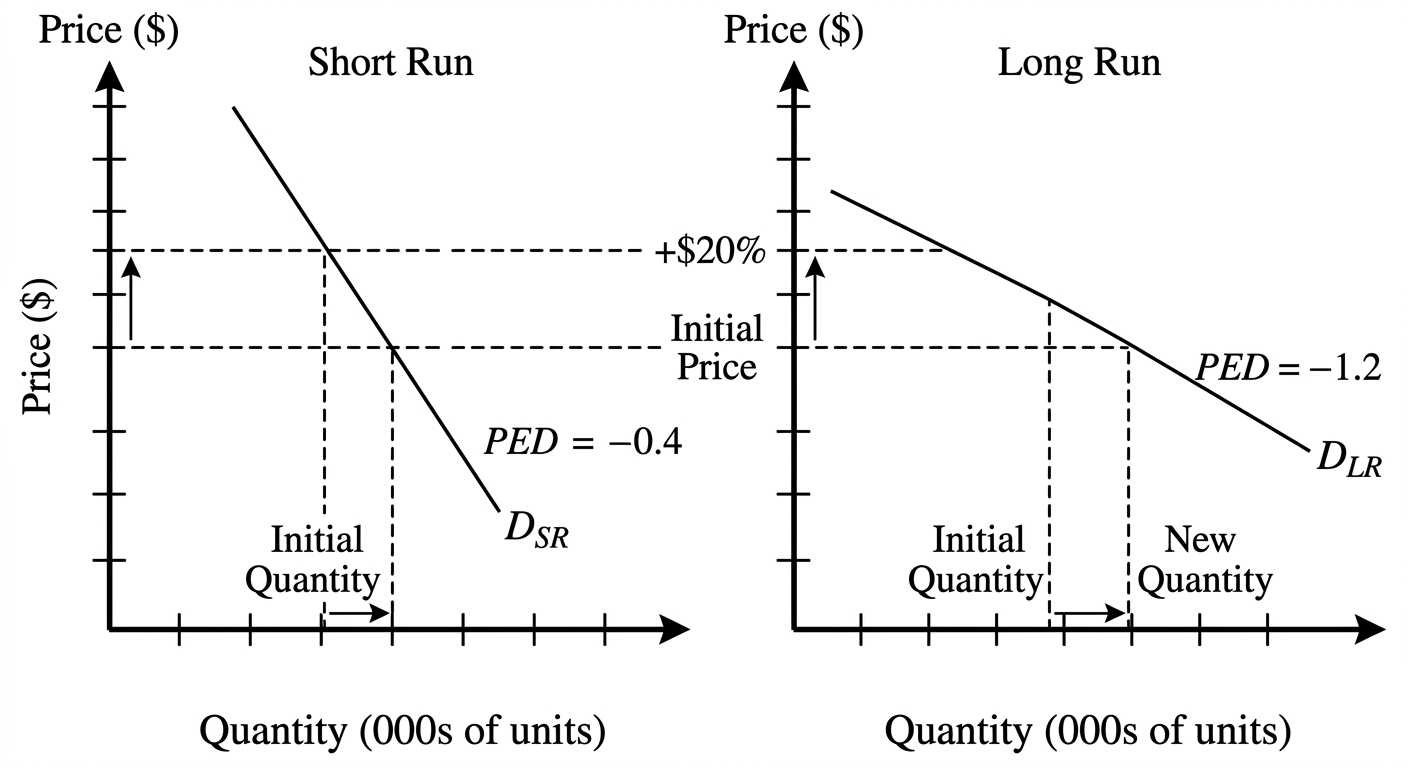
In a small Caribbean island nation, the government is considering imposing a tax on sugar-sweetened beverages to reduce consumption. Research indicates that the price elasticity of demand (PED) for these beverages is in the short run and in the long run. A proposed tax would raise the price of these beverages by percent.
(a)
Define price elasticity of demand (PED). [1 mark]
(b)
Calculate the percentage change in quantity demanded in both the short run and the long run following the percent price increase, and explain how total consumer expenditure on sugar-sweetened beverages would change differently in each period. [2 marks]
(c)
Evaluate the effectiveness of the sugar tax as a policy tool for reducing consumption of sugar-sweetened beverages, with reference to the PED values given. [2 marks]
Solutions
That's every free question here — 2 of 105.
+103 more questions, plus Mock Papers & Worksheets, are waiting in Premium.