You're viewing 3 free preview questions for Economics SL — subscribe to unlock 150 more, plus the Full Question Bank, Mock Papers & Worksheets.Upgrade
Competitive Market Equilibrium · Paper 2 — Free Economics SL Practice Questions
1MasteryLAQThe concept of equilibrium price and quantity10 marksPaper 2~15 min

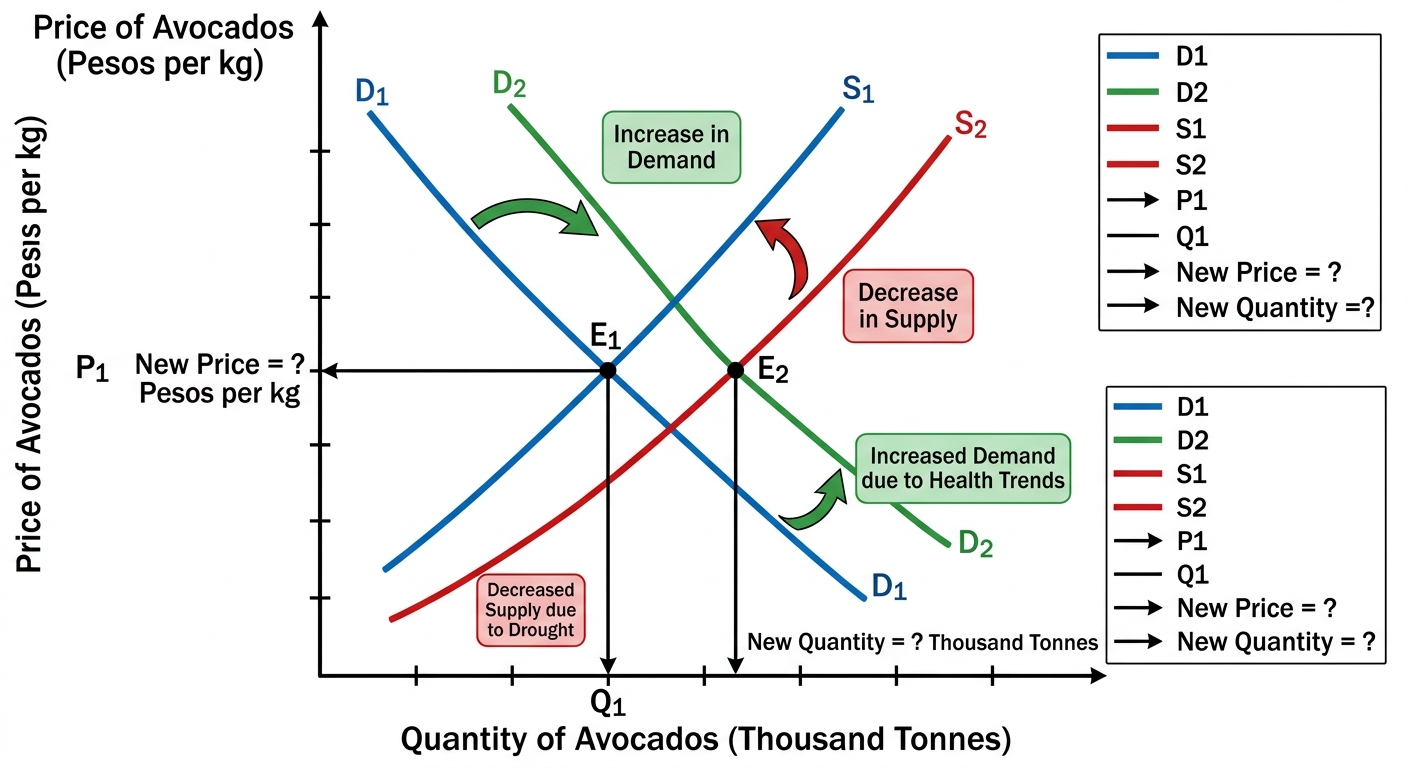
In 2023, the market for avocados in Mexico experienced significant changes. Severe droughts reduced the avocado harvest by compared to the previous year. At the same time, consumer preferences shifted strongly towards healthier diets, increasing the demand for avocados.
(a)
Using a fully labelled supply and demand , explain how the simultaneous decrease in supply and increase in demand affected the equilibrium price and equilibrium quantity of avocados in Mexico. [4 marks]
(b)
Evaluate the likely impact of these market changes on two different stakeholder groups in Mexico. In your answer, make a reasoned judgement about which stakeholder group experiences the greater net welfare change. [6 marks]

Solutions
2MasteryLAQThe concept of equilibrium price and quantity10 marksPaper 2~15 min
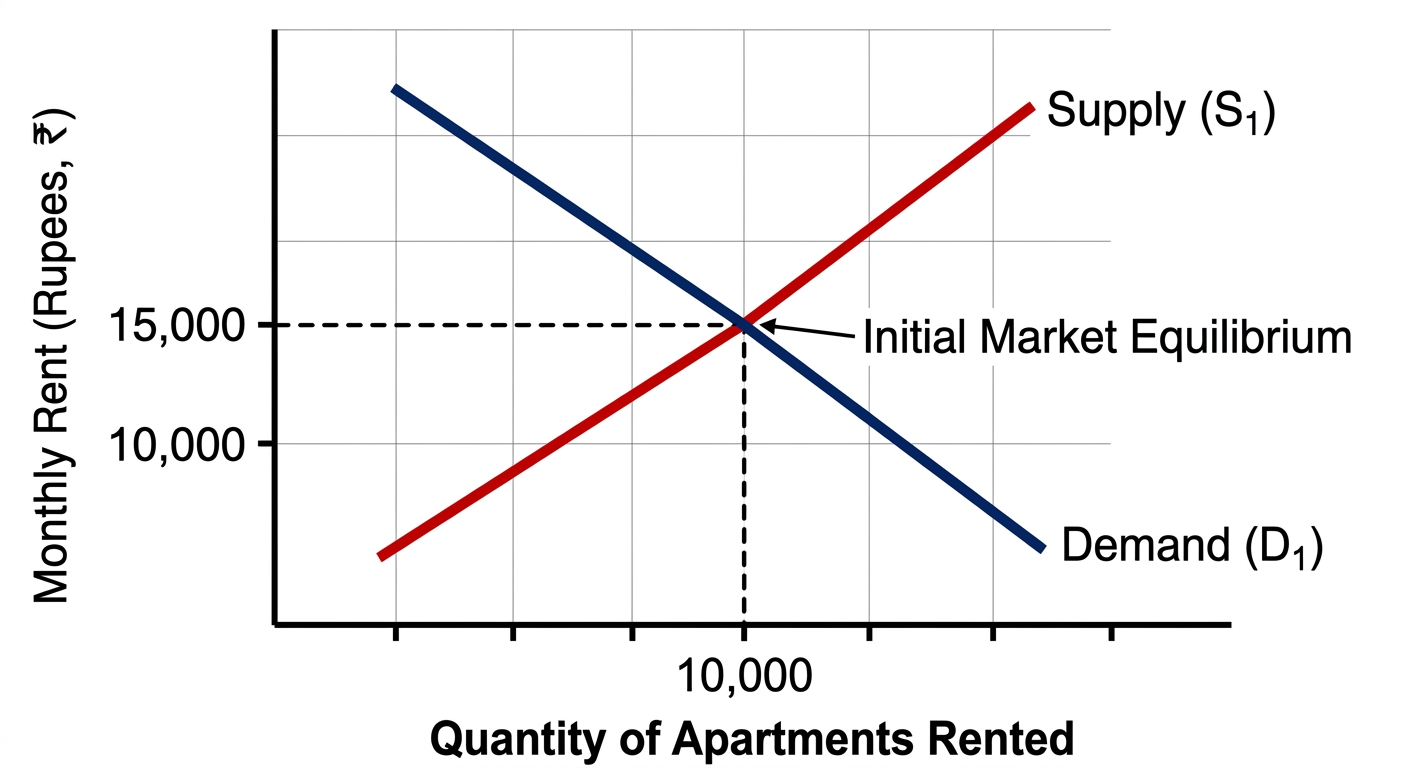
The market for rented apartments in Mumbai, India, is currently in equilibrium at a monthly rent of with apartments rented. The city government is considering two housing affordability policies:
- Policy A: a rent ceiling set at per month
- Policy B: a subsidy paid directly to low-income tenants, shifting market demand to the right
(a)
Using a fully labelled supply and demand , explain the effect of Policy A on the price and quantity of rented apartments in Mumbai. [4 marks]
(b)
Compare Policy A and Policy B in terms of economic efficiency and equity. [4 marks]
(c)
Justify which policy a government primarily concerned with long-run housing affordability should adopt. [2 marks]
Solutions
3ChallengeLAQThe concept of equilibrium price and quantity9 marksPaper 2~14 min
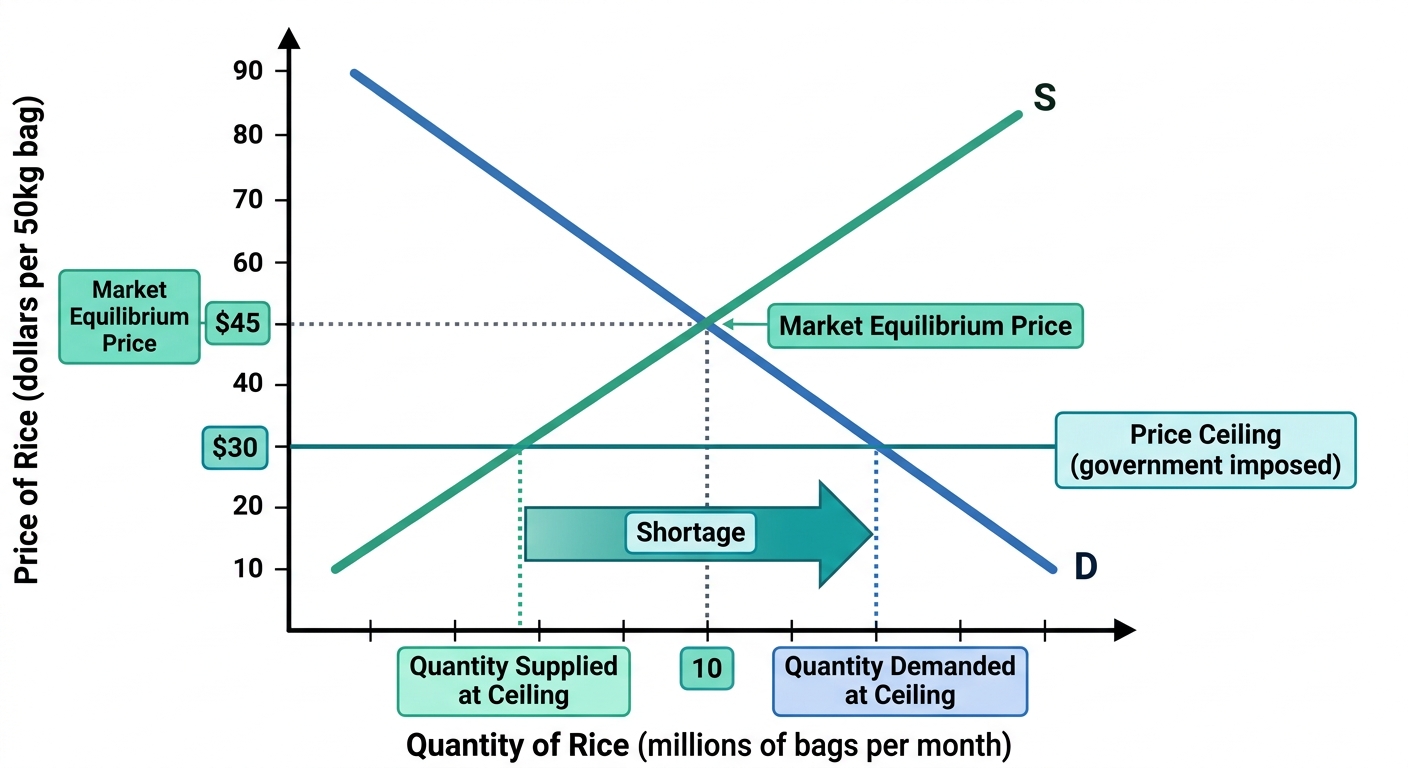
The government of Country X, a low-income nation heavily dependent on rice as a staple food, has implemented a price ceiling on rice at USD 30 per 50 kg bag. The current market equilibrium price is USD 45 per bag and the equilibrium quantity is 10 million bags per month. The price elasticity of demand (PED) for rice is and the price elasticity of supply (PES) is .
The government argues that this policy will improve food security for low-income households.
(a)
(i) Using a fully labelled supply and demand , explain the impact of the price ceiling on the rice market in Country X, identifying whether a shortage or surplus results. [2 marks]
(ii) Using the PED and PES values provided, calculate the approximate size of the shortage created by the price ceiling and explain how the elasticities of demand supply determine its magnitude. [3 marks]
(ii) Using the PED and PES values provided, calculate the approximate size of the shortage created by the price ceiling and explain how the elasticities of demand supply determine its magnitude. [3 marks]
(b)
Evaluate the effectiveness of the price ceiling in improving food security for low-income households. In your answer, consider the perspectives of consumers, farmers, and the government, and assess the consequences of the disequilibrium created. [6 marks]
Solutions
That's every free question here — 3 of 153.
+150 more questions, plus Mock Papers & Worksheets, are waiting in Premium.