You're viewing 3 free preview questions for Economics SL — subscribe to unlock 157 more, plus the Full Question Bank, Mock Papers & Worksheets.Upgrade
Elasticity of Demand · Paper 2 — Free Economics SL Practice Questions
1MasteryLAQPrice elasticity of demand (PED)12 marksPaper 2~18 min

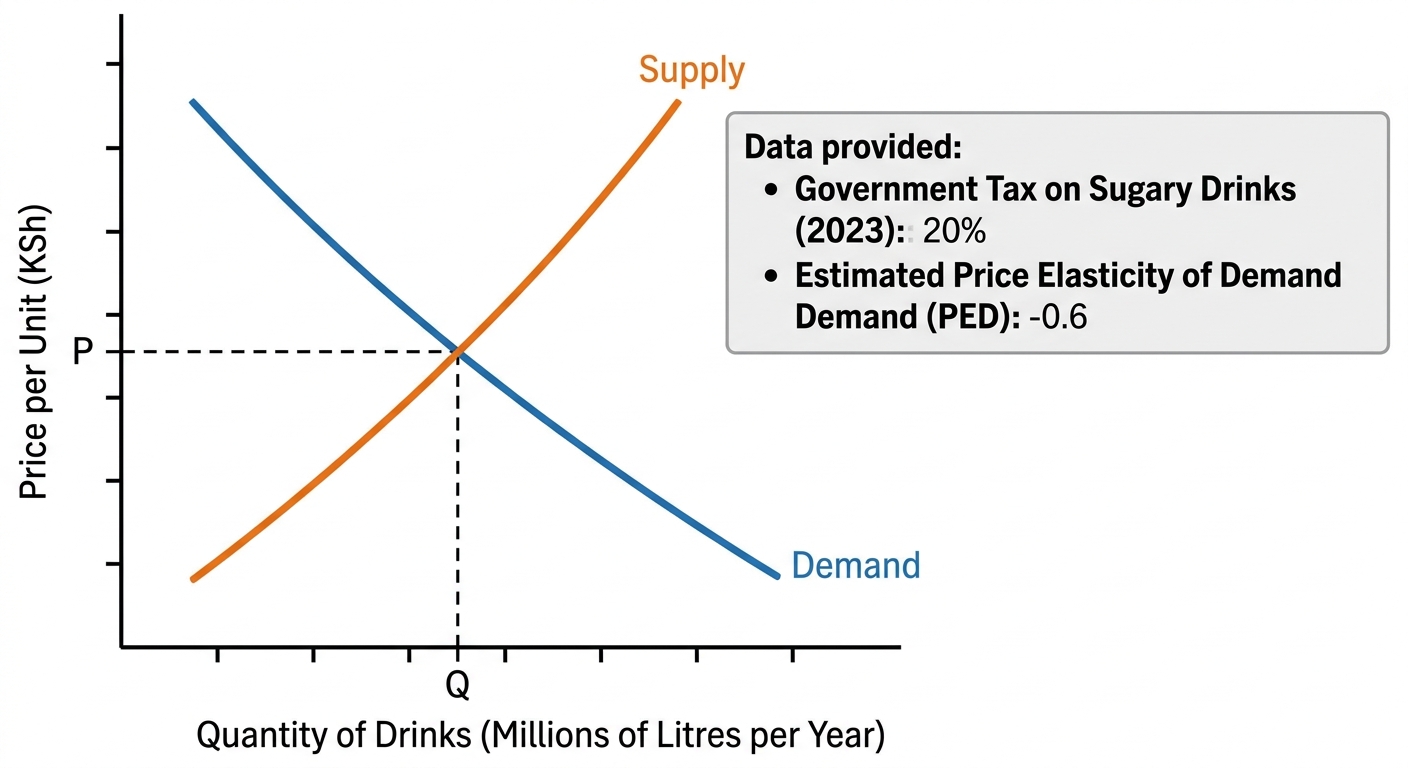
In 2023, the government of Kenya introduced a tax on sugary carbonated drinks, aiming to reduce consumption and address rising healthcare costs related to diabetes. The price elasticity of demand (PED) for these drinks in Kenya is estimated to be . The market is dominated by two large producers, and consumers have limited access to close substitutes such as diet drinks or fresh juice, particularly in rural areas.
(a)
Define the term price elasticity of demand (PED). [1 mark]
(b)
Using the data above, calculate the percentage change in quantity demanded for sugary carbonated drinks following the tax-induced price rise. [2 marks]
(c)
Explain two determinants of PED that account for the inelastic demand for sugary drinks in Kenya. [4 marks]
(d)
Evaluate the likely effectiveness of the sugar tax as a policy tool, considering its impact on government revenue, consumer health outcomes, and the distribution of the tax burden between producers and consumers. [5 marks]

Solutions
2ChallengeLAQPrice elasticity of demand (PED)8 marksPaper 2~12 min
Data
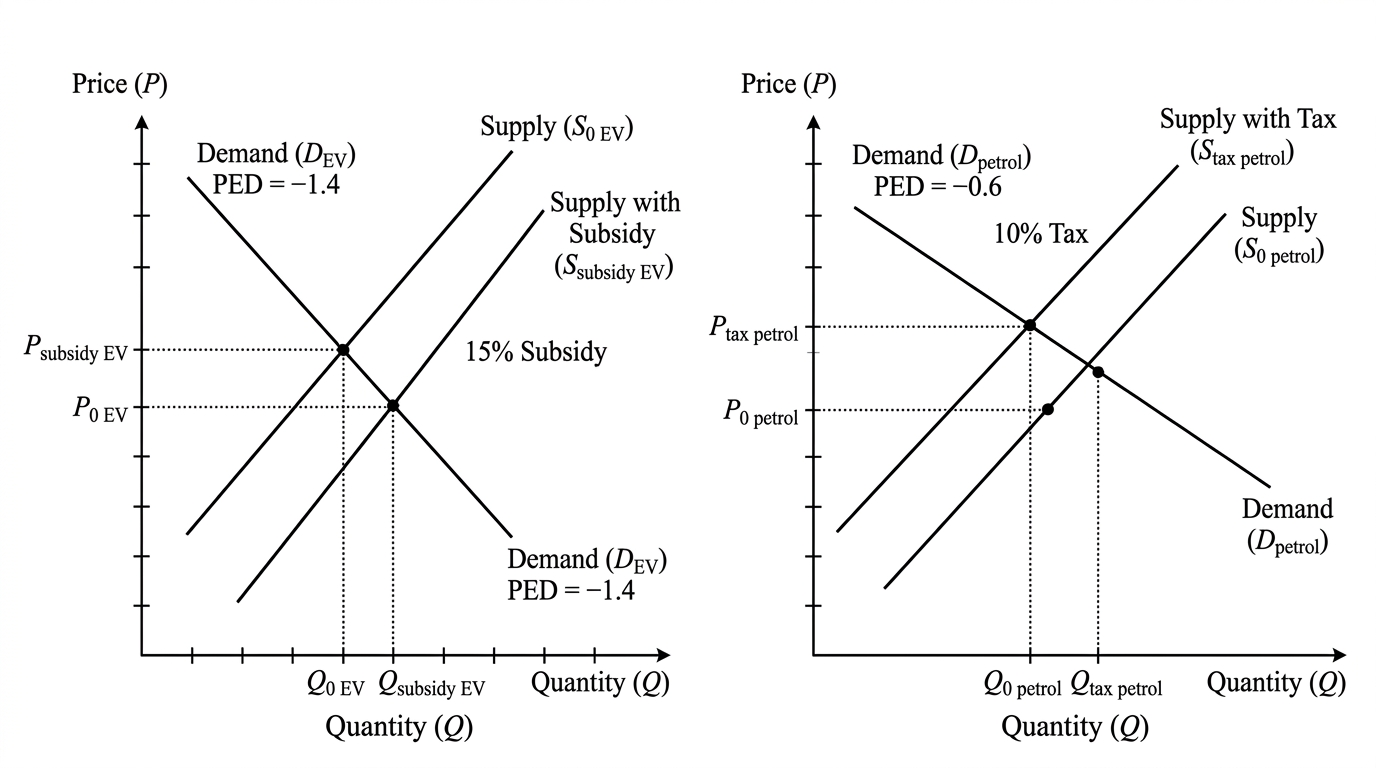
In 2023, the government of Country X introduced a subsidy on the purchase of new electric vehicles (EVs) to reduce carbon emissions. The price elasticity of demand (PED) for EVs in Country X is estimated to be . The market for petrol cars, a close substitute, has a PED of . The government is now considering replacing the subsidy with a tax on petrol cars, claiming this achieves an equivalent reduction in carbon emissions at a lower fiscal cost.
(a)
Using the PED values given, explain why a fall in the price of EVs produces a larger change in quantity demanded than a rise in the price of petrol cars produces in its market. [4 marks]
(b)
(i) Draw a two-panel showing:
- the EV market with the subsidy in place
- the petrol car market with the proposed tax
Label equilibrium prices and quantities before and after each policy. [2 marks]
(ii) With reference to the data and your , evaluate whether replacing the EV subsidy with a tax on petrol cars is likely to improve government revenue and consumer welfare. [4 marks]
(ii) With reference to the data and your , evaluate whether replacing the EV subsidy with a tax on petrol cars is likely to improve government revenue and consumer welfare. [4 marks]
Solutions
3ChallengeLAQPrice elasticity of demand (PED)14 marksPaper 2~21 min
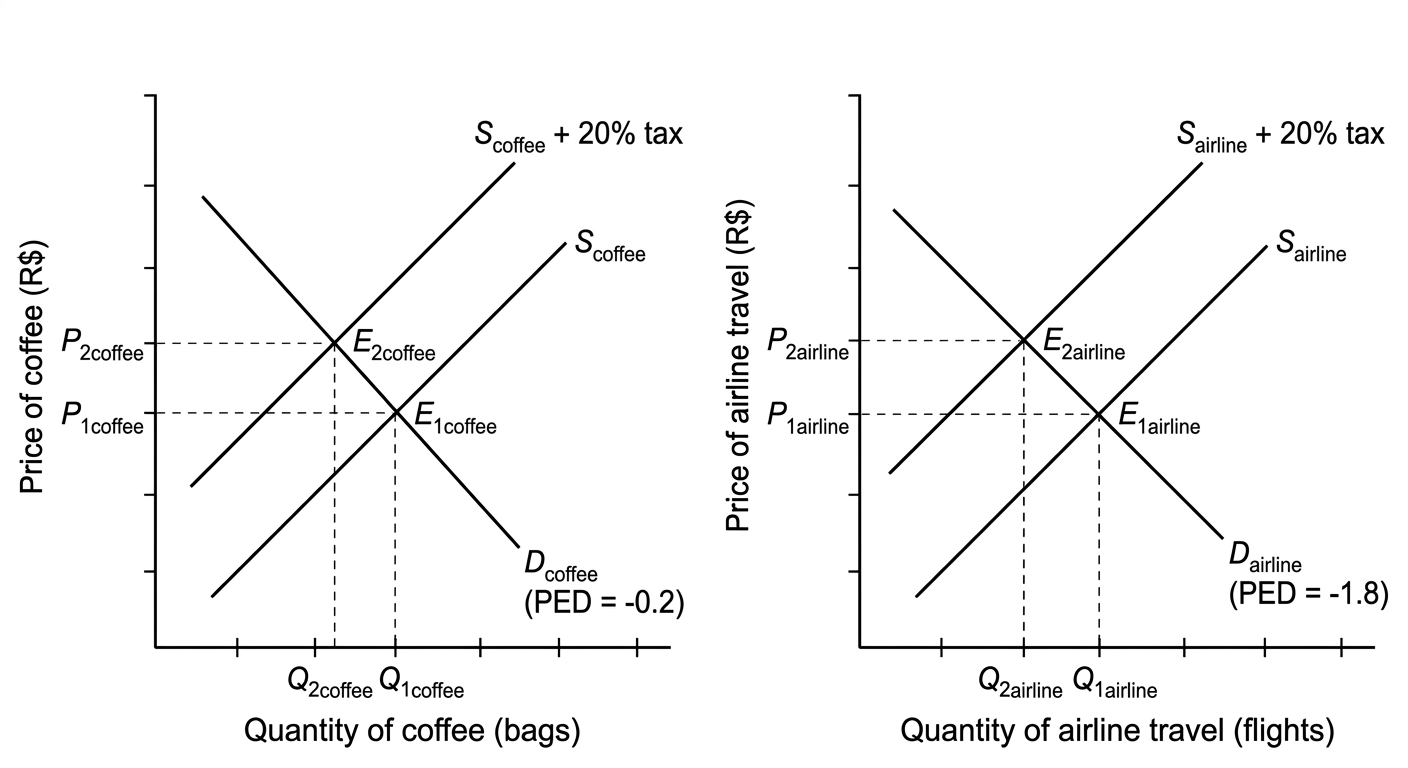
In Brazil, the price elasticity of demand (PED) for coffee is estimated to be , while the PED for airline travel is estimated to be . The Brazilian government is considering imposing a tax on both goods to raise revenue for public health programmes.
(a)
Using the PED data, calculate the percentage change in quantity demanded for coffee and for airline travel following the tax. Hence compare the tax revenue effect for each good. [4 marks]
(b)
Explain two determinants of PED that account for the difference in elasticity between coffee and airline travel in Brazil. [4 marks]
(c)
Evaluate the statement: "A government should always tax goods with inelastic demand because the tax revenue will be higher and more stable." [6 marks]
Solutions
That's every free question here — 3 of 160.
+157 more questions, plus Mock Papers & Worksheets, are waiting in Premium.