Applications of Differentiation · Paper 1 — Free Maths AA HL Practice Questions
Free questions
Open in full, with answers, mark scheme and examiner insights.
Increasing and decreasing functions
The diagram shows the graph of for . The graph has a local maximum at and a local minimum at .
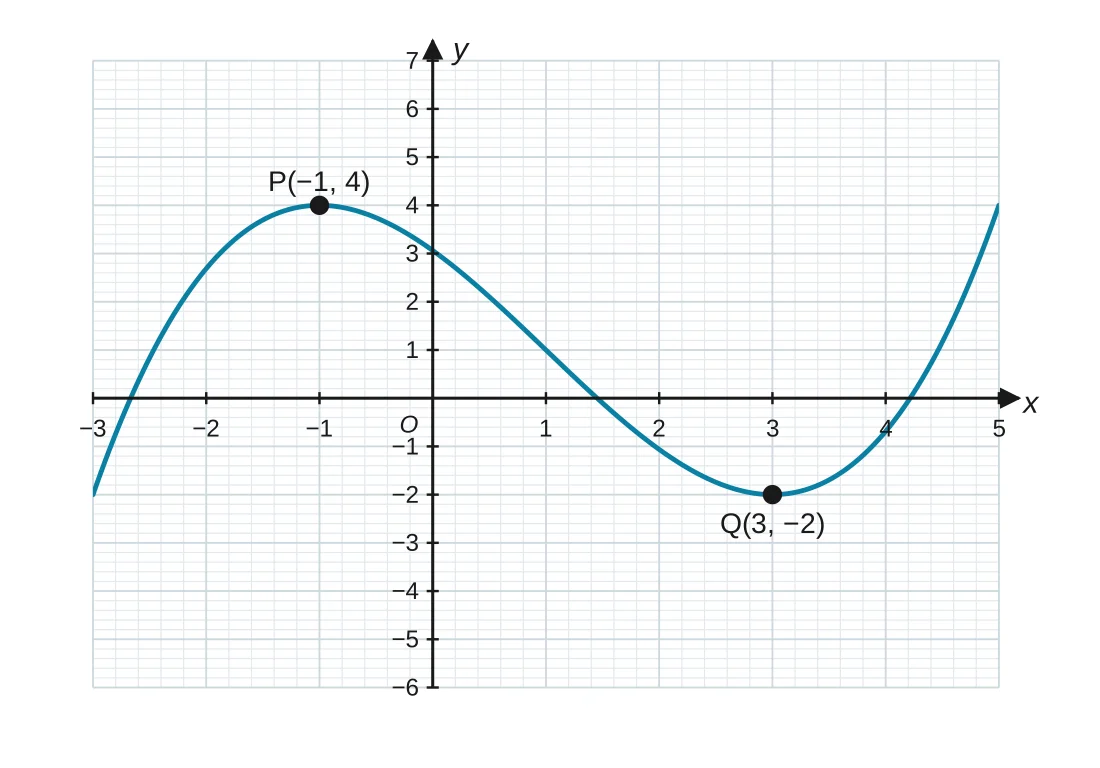
Write down the intervals on which is increasing.
Write down the interval on which .
Write down the value of .
revisionprep.com
Summary Answer
Not available for this question.
Model Answer
Not available for this question.
Marking Scheme
Not available for this question.
Examiner Insights
Not available for this question.
Kinematics: displacement, velocity, acceleration
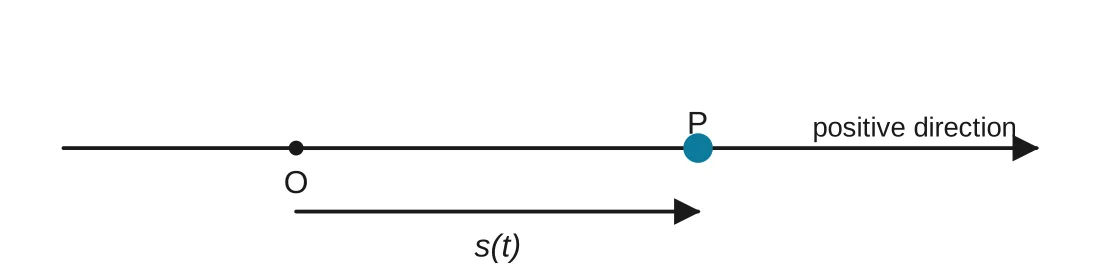
A particle moves along a straight line. Its displacement from a fixed point on the line, metres, at time seconds is
The diagram shows the line, the point and the positive direction.
Find an expression for the velocity .
Find an expression for the acceleration .
Find the values of at which is at rest.
Find the acceleration of the first time it is at rest.
revisionprep.com
Summary Answer
Not available for this question.
Model Answer
Not available for this question.
Marking Scheme
Not available for this question.
Examiner Insights
Not available for this question.
Increasing and decreasing functions
The derivative of a function is . The diagram shows the graph of .
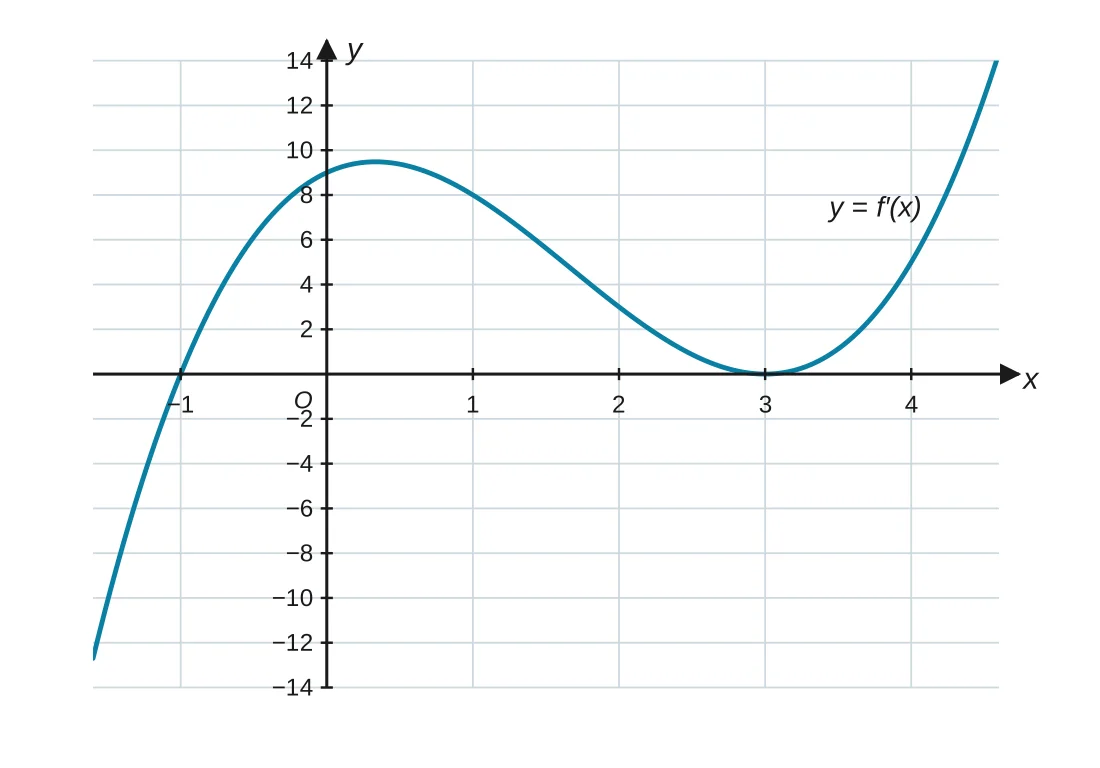
Find the interval on which is decreasing.
Determine the nature of the stationary point of at . Justify your answer.
Explain why the graph of does not have a turning point at .
revisionprep.com
Summary Answer
Not available for this question.
Model Answer
Not available for this question.
Marking Scheme
Not available for this question.
Examiner Insights
Not available for this question.
Tangents and normals
The diagram shows the curve and the normal to the curve at the point . The normal meets the curve again at the point .
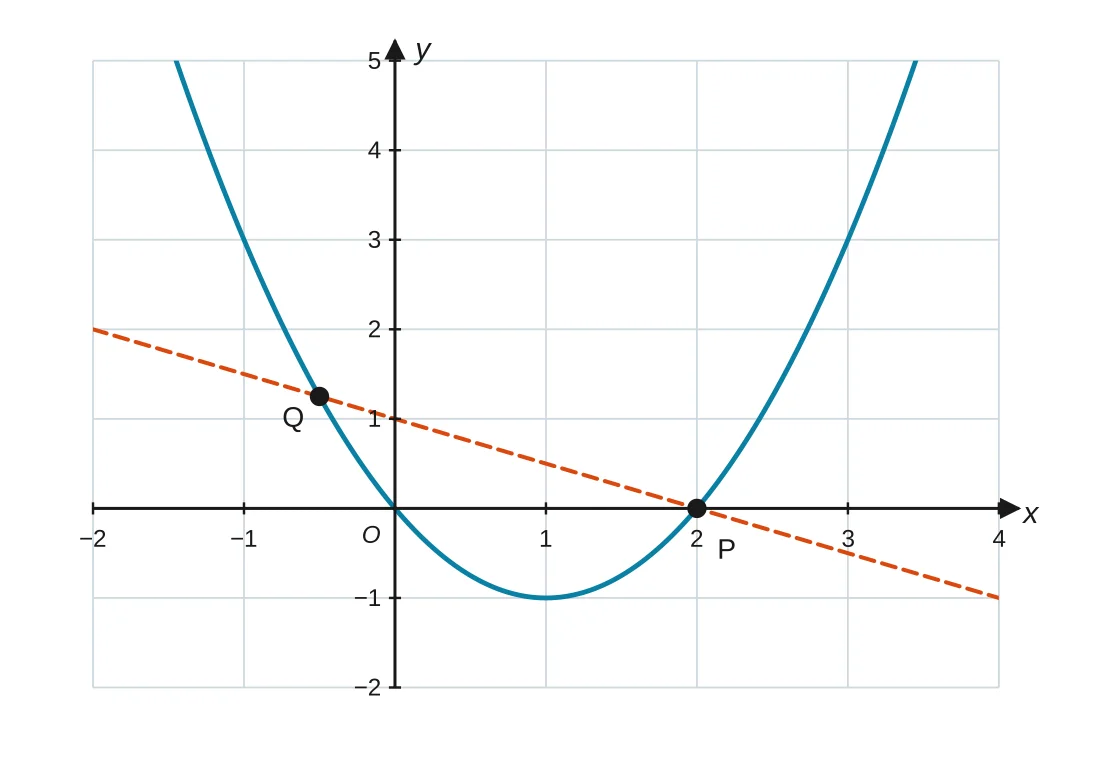
Find the equation of the normal at .
Find the coordinates of .
revisionprep.com
Summary Answer
Not available for this question.
Model Answer
Not available for this question.
Marking Scheme
Not available for this question.
Examiner Insights
Not available for this question.
Tangents and normals
The diagram shows part of the curve , for , and the point . The point , where , lies on the curve.
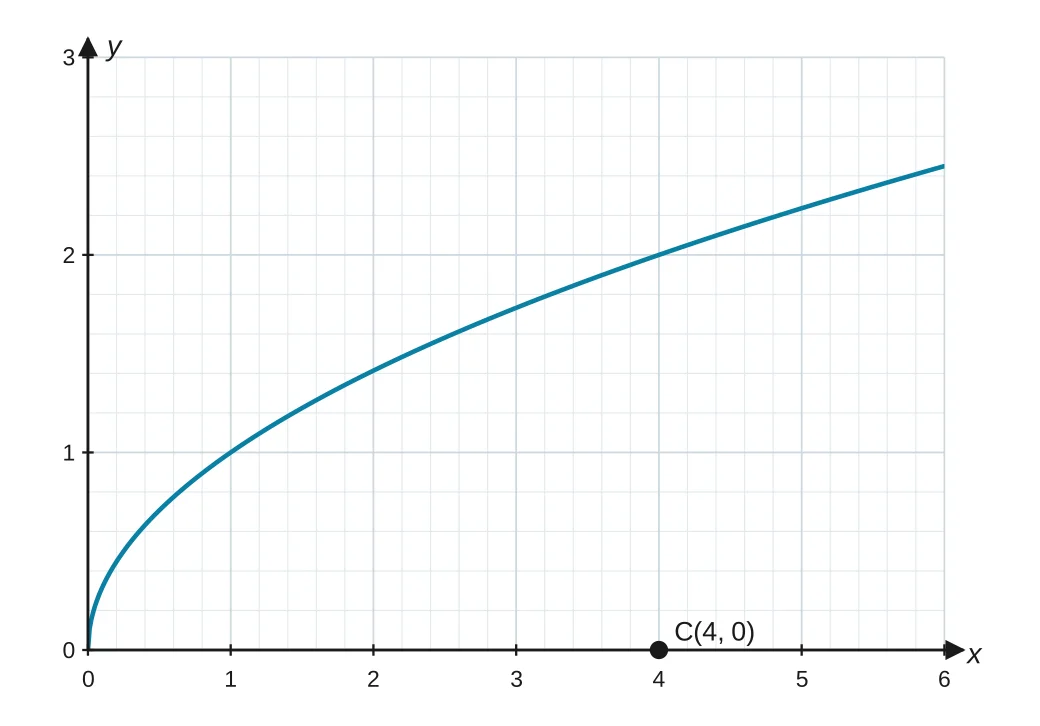
Find the gradient of the curve at , in terms of .
Show that the normal to the curve at has equation .
The normal at passes through . Find the value of .
For this value of , find the exact distance .
Explain why the circle with centre and radius touches the curve at .
Find the set of values of for which a normal to the curve at some point with passes through the point .
revisionprep.com
Summary Answer
Not available for this question.
Model Answer
Not available for this question.
Marking Scheme
Not available for this question.
Examiner Insights
Not available for this question.
Local maxima and minima; optimization; points of inflexion
The diagram shows the cross-section of a water trough. The base is m wide and each sloping side is m long, making an angle with the horizontal, where .
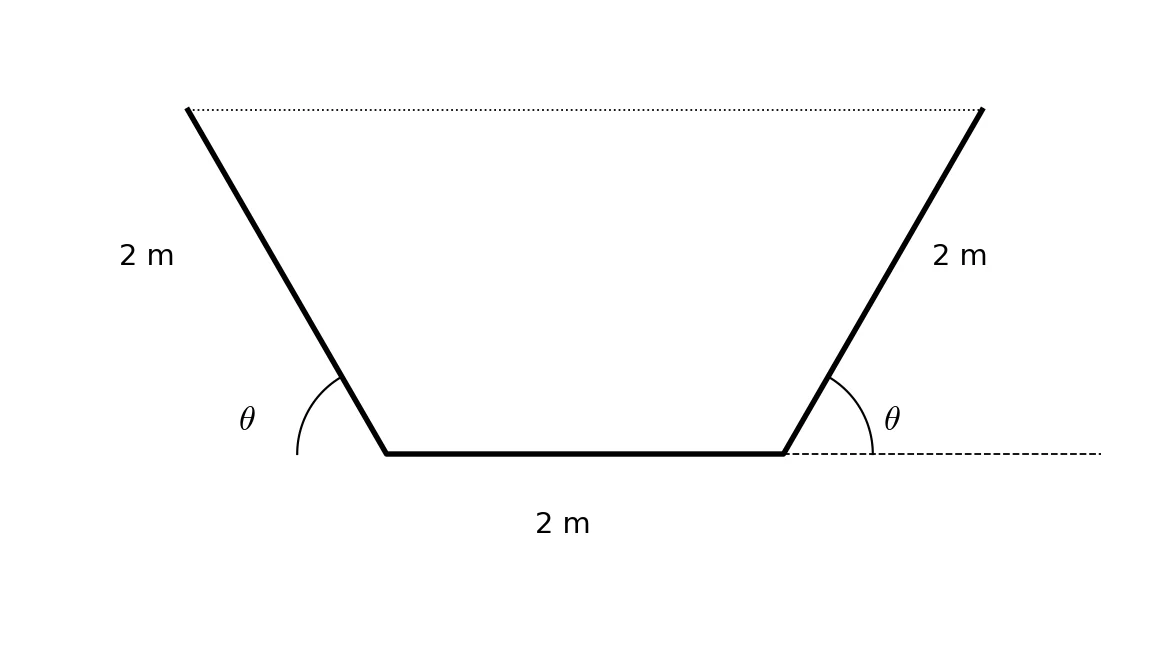
Show that the area of the cross-section is .
Show that .
Find the value of that maximises , justify that it gives a maximum, and find the exact maximum area.
revisionprep.com
Summary Answer
Not available for this question.
Model Answer
Not available for this question.
Marking Scheme
Not available for this question.
Examiner Insights
Not available for this question.
That's every free question here — 6 of 176.
+170 more questions, plus Mock Papers & Worksheets, are waiting in Premium.